What Is GFSI Certification and How Do Food Businesses Get Certified?
GFSI certification involves choosing a recognized food safety standard, implementing HACCP-based systems, and passing third-party audits to meet retailer requirements.
Saro Loucks is the Director of Content and a Food Safety Advisor for FoodReady. Saro is certified in HACCP and a trained SQF Practitioner. When Saro is not editing, writing, or advising new customers on what food safety goals they should pursue, she enjoys spending time with her family, baking gluten-free sourdough bread, and playing Mahjong.

Saro Loucks is a certified HACCP expert and SQF Practitioner who serves as Sales Operations Manager and Food Safety Advisor at FoodReady. She plays a vital role in translating technical food safety requirements into actionable, easy-to-implement solutions that help clients confidently prepare for GFSI, SQF, GMP, USDA, FDA, and local health inspections.
As Director of Content and Food Safety Advisor, Saro is responsible for developing and editing food safety documentation, ensuring that FoodReady’s platform content remains accurate, audit-ready, and aligned with the latest regulatory standards. Her expertise supports clients from onboarding through certification, helping them build robust HACCP programs and improve operational readiness with confidence.
With a background in CRM systems, process improvement, and cross-functional collaboration, Saro helps food companies, from startups to established manufacturers, streamline their food safety workflows while maintaining compliance with evolving industry standards. Her passion for clear communication and practical compliance tools makes her an invaluable resource for FoodReady’s customers navigating the complexities of food safety management.

GFSI certification involves choosing a recognized food safety standard, implementing HACCP-based systems, and passing third-party audits to meet retailer requirements.

Learn what GFSI is, how it improves global food safety, how benchmarking works, and which GFSI-recognized certification schemes food businesses use.

GFSI-recognized certifications include SQF, BRCGS, FSSC 22000, IFS Food, GLOBALG.A.P., and PrimusGFS, covering food safety standards across manufacturing and agriculture.
Compare GFSI-recognized certifications, understand key requirements, and choose the right food safety certification for your business.

A HACCP plan is essential for GFSI certification, supporting food hazard control, GMP compliance, traceability, and audit preparation under SQF, BRCGS, and FSSC 22000.

Costco audit which is somewhat like a GFSI audit and GFSI certification. FoodReady can help you pass a Costco or GFSI audit.

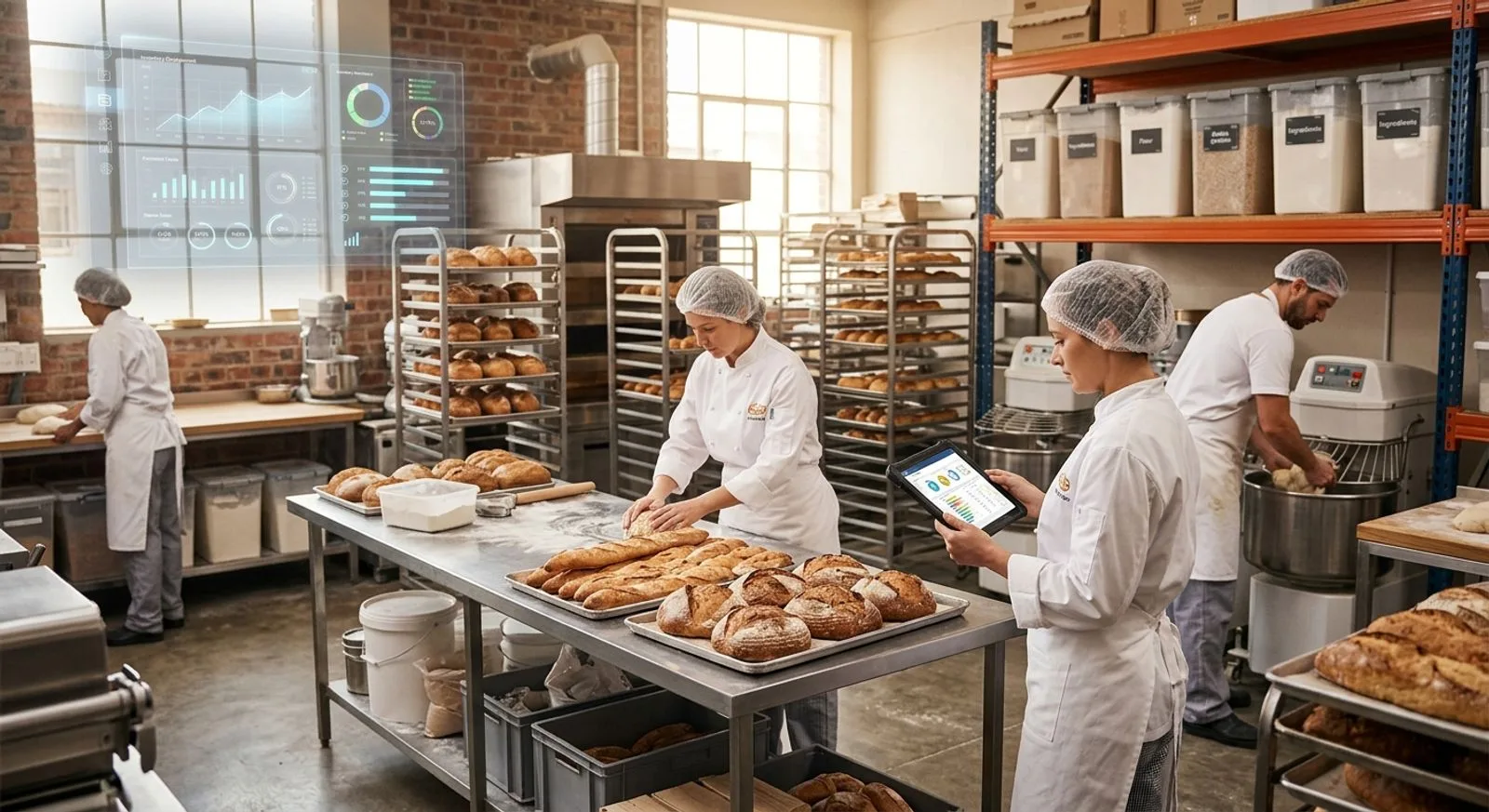
Compare the best bakery inventory management systems for ingredient traceability, recipe costing, production planning, purchasing, lot control, and food safety. This guide reviews 10 platforms, their pricing, strengths, limitations, and ideal use cases.

Compare 10 SOP software platforms for food manufacturers, including pricing, document control, frontline execution, training, audit readiness, and implementation fit. See where FoodReady, SafetyCulture, MaintainX, Dozuki, SwipeGuide, VKS, Tulip, QT9 QMS, MasterControl, and ETQ Reliance differ.

Compare the best commissary kitchen software for centralized production, inventory, recipes, purchasing, catering orders, food safety, and multi-location distribution. This in-depth guide evaluates 10 platforms by operational fit, usability, capabilities, value, and implementation requirements.

Compare 10 leading food service management platforms for inventory, purchasing, menu planning, nutrition, production, labor, and multi-site control. This in-depth guide explains where each system excels, its tradeoffs, pricing approach, and the operation it fits best.

Compare 10 leading food safety checklist software platforms for food and beverage manufacturers. This guide evaluates inspection workflows, HACCP support, corrective actions, analytics, implementation fit, and overall value.

Compare ten recipe management software platforms for food and beverage manufacturers, culinary production teams, and product developers. This guide evaluates recipe control, costing, allergen data, scalability, integrations, and implementation fit.