
Why Is Food Safety Important?
Learn why food safety is important for preventing foodborne illnesses, protecting consumers, maintaining compliance, and building trust.
Published:Last updated:Author:Luke Duffy
Food safety is a critical aspect of the food and beverage manufacturing industry, directly impacting public health, brand reputation, and regulatory compliance. The importance of food safety goes far beyond meeting regulatory standards; it’s about protecting consumers from harmful contaminants, allergens, and foodborne illnesses.
Food safety failures cause approximately $95.2 billion in productivity losses per year in low- and middle-income countries, underscoring the significant economic consequences of foodborne illnesses.
Ensuring food safety requires stringent controls, continuous monitoring, and a proactive risk management approach. Food safety is everyone’s responsibility, including consumers, food business operators, and government regulatory bodies. This article delves into why food safety is crucial, particularly for manufacturers, and how businesses can prioritize it to build consumer trust and ensure compliance.
Key Takeaways
- Food safety is essential to protect public health by preventing foodborne diseases caused by harmful bacteria, chemical hazards, and physical contaminants throughout the entire food chain.
- Proper handling, storage, and preparation of raw and cooked foods, including the use of separate cutting boards and food thermometers, are critical to preventing food poisoning and foodborne infections.
- Food safety regulations, such as the Food Safety Modernization Act (FSMA) and standards like ISO 22000, provide frameworks for food manufacturers and food handlers to maintain compliance and ensure safe food supply.
- Consumers, food businesses, and government agencies all share responsibility in preventing foodborne diseases by following food safety practices and responding promptly to food safety incidents.
- Implementing food safety management systems and leveraging food safety technology solutions, including AI-powered software and real-time monitoring dashboards, can improve compliance, reduce food safety risks, and minimize costly recalls.
- Maintaining food safety supports brand reputation, consumer trust, economic stability, and sustainable development within the food industry.
Understanding Food Safety: What Does It Entail?
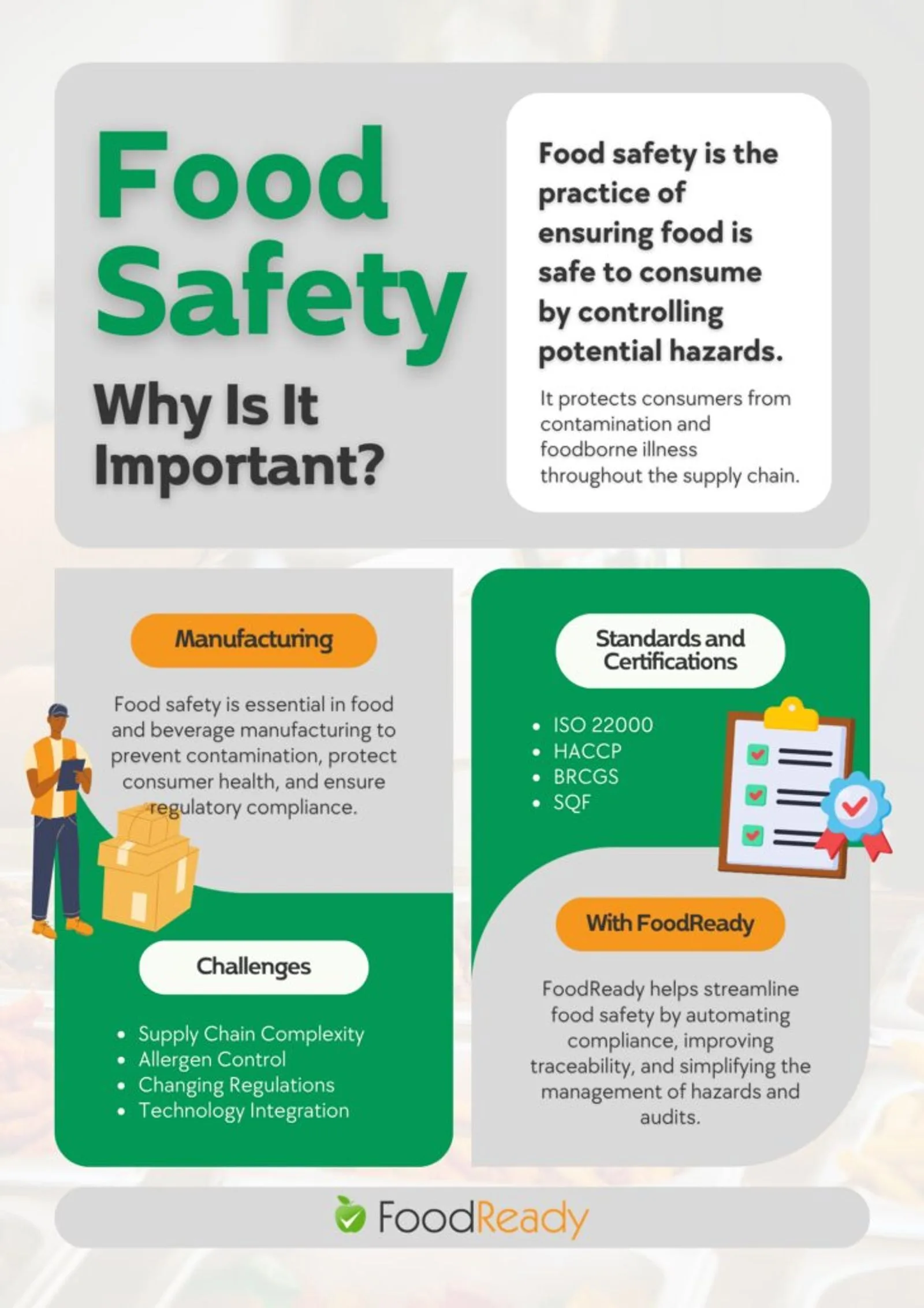
Food safety refers to the practices and measures implemented to ensure food is safe to consume. This involves controlling hazards that could cause foodborne illnesses or harm to consumers. For manufacturers, food safety encompasses everything from ingredient sourcing, manufacturing processes, packaging, and storage to distribution, with handling food safely at every stage of the supply chain being critical.
Food safety is an integral part of the food production process. It consists of several vital components. Hygiene practices play an essential role in guaranteeing cleanliness in every step, From employees' personal hygiene to the construction of hygienic equipment. Use a hazard analysis critical control point (HACCP) system to identify, assess, and control potential food safety hazards. Handling allergens is a vital component that helps ensure compliance with established food safety regulations. This complies with regulatory standards such as FDA guidelines, ISO 22000, and the Food Safety Modernization Act (FSMA), which includes proper labeling and control measures to prevent cross-contact with allergens. Food safety guidelines and national food control systems provide the legal framework for maintaining food safety. Traceability and recall processes are essential for tracking products throughout the supply chain and effectively managing recalls when necessary. Food safety regulations are enforced by government agencies to protect consumers from foodborne illnesses and ensure safe food practices.
The Importance of Food Safety in Food and Beverage Manufacturing
1. Protecting Consumer Health
The most fundamental reason for maintaining food safety is to protect consumer health. Foodborne illnesses caused by pathogens such as Salmonella, E. coli, and Listeria can lead to severe health consequences, including hospitalization and death. Consumption of pathogens in food can cause mild to fatal health consequences, including food poisoning. According to the World Health Organization (WHO), an estimated 600 million people fall ill every year due to contaminated food, leading to 420,000 deaths.
For manufacturers, a single lapse in food safety can have devastating consequences for consumers and the business itself. Ensuring food safety minimizes the risk of contamination and prevents harmful outbreaks, safeguarding public health and human health. Food safety is essential to provide adequate access to safe, nutritious, and delicious food to all members of the community.
2. Building Brand Reputation and Trust
In the competitive food and beverage industry, brand reputation is everything. The food safety importance for food businesses cannot be overstated, as maintaining high standards is essential for protecting public health, preventing foodborne illnesses, and safeguarding both reputation and financial stability. Consumers are increasingly concerned about the safety and quality of the food they consume, and any food safety incident can lead to a loss of trust. Food safety risks, such as contamination, fraud, and safety violations, can severely damage consumer trust and threaten the long-term viability of food businesses. Foodborne illnesses are a major threat to food businesses and affect everyone all over the world as a result of inadequate food safety. News of recalls or contamination spreads quickly, damaging a brand’s image and leading to a decline in sales.
By prioritizing food safety, manufacturers demonstrate their commitment to quality and consumer well-being, building trust and loyalty. Brands with high safety standards are more likely to retain customers and gain a competitive edge.
3. Regulatory Compliance and Avoidance of Legal Consequences
Food safety regulations are in place to protect consumers, and non-compliance can result in severe penalties, including fines, shutdowns, and legal action. In the U.S., the Food Safety Modernization Act (FSMA) grants the FDA increased authority to enforce food safety standards, and companies found in violation can face significant repercussions. Government agencies are responsible for enforcing food safety regulations, conducting inspections, and ensuring compliance within the industry. Food safety guidelines and national food control systems provide the framework for compliance, helping businesses understand and meet regulatory requirements. Food businesses must establish protocols to ensure food safety, including staff training and the implementation of effective management systems.
Globally, standards like ISO 22000 set the framework for food safety management systems. By adhering to these regulations, manufacturers avoid legal consequences and enhance operational efficiency and marketability.
4. Reducing Costs Associated with Recalls and Wastage
Food recalls are costly and damaging to businesses. They involve the direct costs of removing products from the market, lost sales, legal fees, and potential compensation claims. According to a study by the Grocery Manufacturers Association and Food Marketing Institute, the average cost of a food recall for a company is $10 million in direct costs alone.
Implementing robust food safety measures helps prevent contamination and errors, reducing the likelihood of costly recalls. Effective food safety practices also minimize waste by ensuring products meet quality standards throughout production. Safe food handling and proper management of food products are essential for reducing waste and supporting sustainable production practices. Additionally, food safety software can provide real-time dashboards to monitor food safety operations and compliance status, helping businesses maintain high standards and avoid costly incidents.
5. Ensuring Consistent Product Quality
Food safety and quality are closely linked. Focusing on food safety ensures that products are manufactured under controlled conditions, maintaining consistency in taste, texture, and appearance. Proper management of perishable food and cooked foods is essential to prevent spoilage and contamination, helping to maintain both product quality and safety. For manufacturers, this means fewer defects, better shelf life, and a product always meeting customer expectations.
Consistent quality builds consumer confidence in the brand, leading to repeat purchases and positive word-of-mouth referrals. It also reduces the frequency of customer complaints and returns, further protecting the company’s bottom line.
6. Enhancing Global Market Access
Compliance with global food safety standards is a prerequisite for food and beverage manufacturers looking to expand into international markets. Markets like the European Union, Japan, and the United States have strict food safety regulations, and failure to comply can ban access. Food safety also plays a crucial role in supporting food security and sustainable development by ensuring reliable access to safe food, preventing hazards that could disrupt the food supply chain, and supporting economic prosperity in both local and global markets.
By implementing internationally recognized food safety standards such as ISO 22000, manufacturers can enhance their marketability and gain access to new markets, increasing revenue opportunities.

Key Food Safety Standards and Certifications
Food safety standards and certifications provide a structured approach for manufacturers to manage risks and demonstrate their commitment to safety. Some of the key standards include:
ISO 22000: A globally recognized standard for food safety management systems that integrates HACCP principles.
HACCP (Hazard Analysis and Critical Control Points): A systematic preventive approach to food safety that identifies physical, chemical, and biological hazards.
BRCGS (British Retail Consortium Global Standards): A leading global food safety standard used by over 29,000 suppliers in over 130 countries.
SQF (Safe Quality Food): A rigorous and credible food safety and quality program recognized by retailers and food service providers worldwide.
Challenges in Maintaining Food Safety
Maintaining food safety has its challenges. Manufacturers must navigate complex supply chains, manage allergens, control contamination risks, and stay updated with evolving regulations. Some common challenges include:
Supply Chain Complexity: Multiple suppliers and distributors increase the risk of contamination and make traceability more difficult.
Allergen Control: Cross-contamination of allergens during production can lead to severe consumer health risks.
Changing Regulations: Keeping up with new regulations and standards requires ongoing training and procedural updates.
Technology Integration: Implementing food safety software and digital solutions can be costly but is essential for efficient monitoring and compliance.
How To Improve Food Safety in Manufacturing?
Implement Robust Food Safety Management Systems: Establish controls at every stage of the production process using frameworks like ISO 22000 and HACCP.
Train Employees Regularly: Ensure all staff are trained in food safety practices, personal hygiene, and proper equipment handling.
Utilize Food Safety Software: Tools like FoodReady can help manufacturers manage food safety plans, automate compliance, and monitor critical control points effectively.
Conduct Regular Audits and Inspections: Regular audits help identify gaps in food safety practices and ensure that controls work as intended.
Improve Traceability Systems: Implement traceability solutions that allow for quickly identifying and recalling affected products if necessary.
Use a Food Thermometer: Always use a food thermometer to check the internal temperature of foods, especially raw meat, deli meats, and seafood, to ensure they are cooked to safe levels and to prevent foodborne illness.
Avoid High-Risk Foods: Be aware of the risks associated with consuming undercooked seafood, raw or undercooked seafood (such as sashimi, ceviche, raw fish, shellfish, shrimp, and crab), raw meat, and unpasteurized milk. Proper cooking and pasteurization are essential to reduce the risk of foodborne pathogens.
Handle Fresh Produce Safely: Wash and handle fresh produce carefully to prevent microbiological contamination, especially from water sources.
Read Food Labels and Expiration Dates: Always read food labels and check expiration dates to avoid potential food safety hazards.
Practice Proper Handwashing and Sanitizing: Maintain food safety in your kitchen by practicing proper handwashing and sanitizing of surfaces and utensils.
Maintain Food Safe Practices: Ensure food safe practices during food consumption and storage, particularly during power outages or supply chain disruptions, to keep food safe and prevent spoilage or contamination.
Want to simplify food safety and stay compliant?
Try FoodReady to manage risks and streamline your processes.

Dashboard
Conclusion
Food safety is a regulatory requirement and a critical responsibility for food and beverage manufacturers. It protects consumer health, builds trust, ensures compliance, reduces costs, and enhances product quality.
By prioritizing food safety, manufacturers can safeguard their brand reputation, meet regulatory standards, and contribute to the global effort of providing safe food to all. With the proper practices, tools, and a proactive approach, food safety can become a cornerstone of success in the food and beverage industry.
FAQs
What is food safety, and why is it important?
Food safety refers to practices that ensure food is free from contaminants and safe to consume. It is essential because it protects consumers from foodborne illnesses, helps maintain food quality, and aids in compliance with regulations.
How do food safety standards like ISO 22000 help manufacturers?
ISO 22000 provides a framework for food safety management systems that help manufacturers control hazards, comply with regulations, and improve operational efficiency.
What are common food safety hazards in manufacturing?
Common hazards include biological contaminants (bacteria, viruses), chemical contaminants (allergens, toxins), and physical contaminants (foreign objects).
How can manufacturers reduce the risk of foodborne illnesses?
Manufacturers can reduce risks by implementing HACCP, maintaining hygiene standards, training employees, and using food safety software to monitor and control critical points.
What role does food safety software play in manufacturing?
Food safety software, like FoodReady, helps automate compliance, track safety measures, manage documentation, and streamline the food safety management process.
What are the consequences of not complying with food safety regulations?
Non-compliance can lead to legal action, fines, product recalls, brand reputation damage, and loss of market access.
How often should food safety audits be conducted?
Regular audits should be conducted at least annually, with additional inspections whenever significant changes occur in processes or regulations.
What is the main objective of food safety?
The main objective of food safety is to ensure that food is safe to consume by preventing contamination from biological, chemical, and physical hazards. This protects consumers from foodborne illnesses and ensures products meet regulatory and quality standards throughout the supply chain.
Why is food storage important?
Food storage is important because it helps prevent spoilage, contamination, and the growth of harmful microorganisms. Proper storage conditions, such as temperature control and separation of raw and ready-to-eat foods, are essential for maintaining food quality and reducing the risk of foodborne illness.
What are the principles of food safety?
The core principles of food safety include maintaining cleanliness, preventing cross-contamination, cooking food to safe temperatures, storing food at appropriate temperatures, and using safe, high-quality raw materials. These principles help reduce hazards and ensure food remains safe throughout production and handling.
Speak with our Expert Consultants
15–30 minutes. We map FoodReady to your process, plug in your real HACCP plan, and show you the auditor view before the call ends.
About the author

Luke Duffy
Senior Director of Quality & Customer Success
Luke Duffy is a Senior Director of Quality & Customer Success with extensive expertise in SQF, BRC, USDA, and FSQA. He specializes in developing food safety programs, leading teams, conducting audits, and guiding clients to achieve GFSI certification success. Luke Duffy led quality at companies like Boston Bakery and Do & Co.