

What Is Food Hygiene and Why It Matters?
Food hygiene is more than just keeping things clean; it's about protecting your customers, your team, and your brand. In this guide, we break down what food hygiene really means, why it’s critical for every food business, and how modern tools can help you stay compliant, safe, and inspection-ready.
Published:Last updated:Author:Denice Beccard
If there’s one thing I’ve learned from working closely with food manufacturers across the U.S. and beyond, it’s this: food hygiene is non-negotiable.
Whether running a multi-line facility in the Midwest or a small-batch operation in California, maintaining hygiene standards isn’t just about ticking compliance boxes; it’s about protecting people, your product, and your brand.
In 2026, food hygiene is more dynamic and tech-driven than ever before. Strict regulations, rising consumer expectations, and real-time digital tools have raised the bar, and for good reason. One lapse in hygiene can lead to costly recalls, regulatory fines, and worse, it can damage hard-earned trust.
This article is my way of breaking down what food hygiene means today, from the basics we sometimes overlook to the innovations shaping the future of food safety. Whether you’re training a new team or evaluating your current systems, this guide is for you.
Let’s get into the essentials of modern food hygiene and how your facility can stay ahead, stay compliant, and most importantly, stay safe.
What Is Food Hygiene?
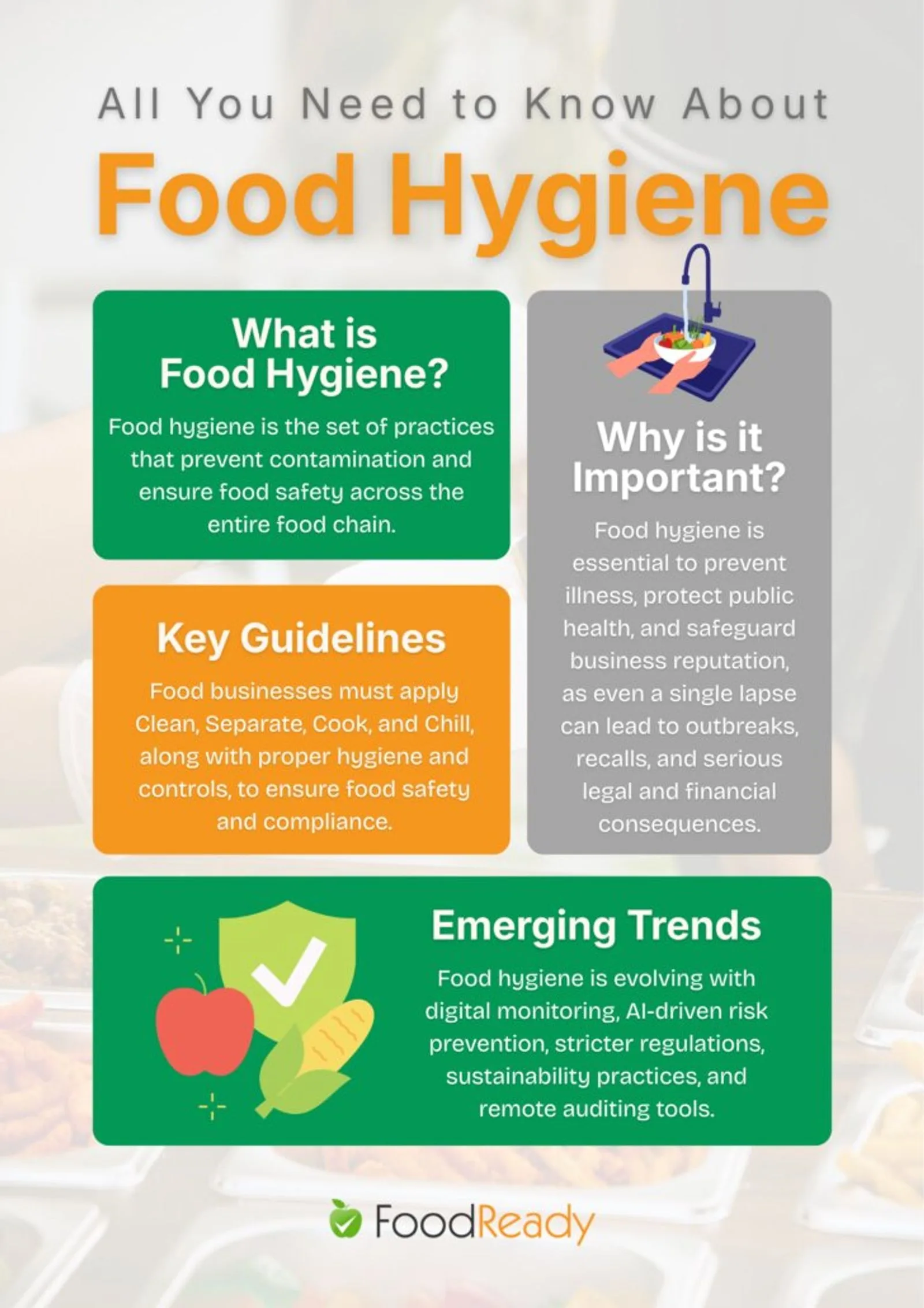
At its core, food hygiene refers to the practices and conditions necessary to ensure the safety of food from production to consumption. Food hygiene aims to protect public health, ensure food quality, and comply with regulations by preventing foodborne illnesses and maintaining high standards of cleanliness. Specifically, food hygiene refers to the practices that protect consumers from risks of foodborne illnesses caused by bacterial contamination or spoilage, including food handling, preparation, and storage. In particular, it’s about controlling hazards that could contaminate food, whether biological (like bacteria or viruses), chemical (like cleaning agents or allergens), or physical (like foreign objects).
Food hygiene starts long before food reaches a consumer’s plate. It involves every stage of the food chain from the sourcing of raw ingredients and food processing, to packaging, distribution, and food handling at the point of service. It covers everything from properly washing hands to designing workflows that actively prevent cross-contamination.
Why Is Food Hygiene Important?
Food hygiene is not just a regulatory obligation, it’s a moral one. Good food hygiene is essential for ensuring food safety, complying with legislation, and protecting your brand reputation. Every year, millions of people get sick due to unsafe food. A 2024 joint report by the FAO and WHO identified human norovirus as the leading cause of foodborne illness globally, accounting for approximately 125 million cases and 35,000 deaths annually. For businesses, this isn’t just a health crisis, but a brand crisis. Maintaining high hygiene standards protects brand reputation and ensures compliance with legal regulations enforced by agencies like the FDA and USDA.
From my experience working with food producers and handlers, I’ve seen that one hygiene fault can cause major operational failures. It can lead to:
- Foodborne illness outbreaks
- Costly product recalls
- Loss of certifications
- Reputational damage
- Legal liabilities
- Contaminated food entering the supply chain, resulting in food poisoning that can range from mild stomach upset to severe dehydration or even death
Good hygiene practices save lives, especially for vulnerable groups such as young children, the elderly, pregnant women, and the immunocompromised. Proper hygiene kills or reduces dangerous foodborne pathogens like E. coli and Salmonella that cause food poisoning. Practicing proper food hygiene can significantly reduce the risk of foodborne illnesses and food spoilage, which in turn minimizes food waste. Food safety and hygiene are both critical in preventing foodborne illnesses and ensuring the highest standards throughout the food chain.
And yet, the inverse is also true: strong food hygiene builds trust, customer loyalty, and operational excellence.
Food Hygiene vs Food Safety
To clarify the distinction, here’s how food hygiene compares to food safety:
| Term | Definition | Focus |
|---|---|---|
| Food Hygiene | The preventive measures taken to ensure food is safe and uncontaminated | Cleanliness, sanitation, proper handling |
| Food Safety | The broader system ensuring food does not cause harm when prepared and consumed | Hazard analysis, risk management, traceability |
Food safety refers to a holistic approach to controlling and managing food safety hazards across the entire food supply chain, including sourcing, processing, packaging, and distribution, often through robust preventive controls for food. Food hygiene is a critical subset focusing specifically on cleanliness, sanitation, and proper food handling to prevent biological contamination.
Key Food Hygiene Guidelines and Principles
Food businesses are responsible for maintaining high standards of hygiene to ensure their products are safe for consumers. Adhering to food safety standards and implementing robust food safety practices are essential for all food businesses.
Core Principles
The four core principles of food hygiene are: Clean, Separate, Cook, and Chill.
Practical Guidelines
- Basic food hygiene rules: Proper handwashing, cleaning surfaces, avoiding cross-contamination, thorough cooking, safe storage, and safe defrosting.
- Personal hygiene: Staff must wash hands with soap and warm water for at least 20 seconds before, during, and after food preparation, wear protective clothing, and stay home if unwell.
- Cross-contamination prevention: Keep raw meat, poultry, and seafood separate from other foods, and use different utensils and cutting boards for raw food. Use designated equipment and structured workflows to handle raw and cooked food separately.
- Temperature control: Refrigerate perishable food within 2 hours, or within 1 hour if the temperature is above 90°F (32°C). Chill food promptly at or below 40°F (4°C) to avoid rapid multiplication of bacteria. Store perishable food at appropriate temperatures; regularly monitor and record temperatures.
- Cleaning and sanitizing: Implement strict cleaning schedules for surfaces, tools, and equipment, following clearly defined cleaning and sanitizing procedures in the food industry.
- Pest control: Maintain clean premises and monitor for signs of infestation.
- Food traceability and documentation: Keep records of suppliers, production, and cleaning logs to support accountability.
- Food safety training: Provide regular food safety training to staff to ensure understanding and implementation of proper hygiene and safety practices.
- Food safety policies and systems: Establish documented food safety policies and comprehensive management systems as required by regulations.
Food Hygiene and Pest Control
Pests such as rodents, insects, and birds can contaminate food and food preparation areas, posing serious hygiene risks. Effective pest control is essential for maintaining food hygiene.
Key practices include:
- Sealing entry points and setting traps.
- Scheduling professional inspections.
- Training staff to recognize and report pest activity.
- Keeping accurate records of pest control activities to demonstrate compliance.
Prioritizing pest control for food safety protects the food supply, supports regulatory compliance, and maintains public trust.
Food Hygiene and Waste Management
Effective waste management is crucial to maintaining a clean and safe food preparation environment. Improper handling of food waste can attract pests and promote bacterial growth.
Best practices include:
- Separating raw and cooked food waste.
- Using leak-proof, clearly labeled containers.
- Storing waste away from food preparation zones.
- Regularly cleaning and disinfecting waste storage areas.
- Training staff on proper waste disposal protocols.
Implementing these practices reduces the risk of foodborne illness and supports a hygienic workplace.
Food Hygiene and Water Quality
Water quality is vital for food hygiene. Contaminated water can introduce harmful pathogens into the food supply.
Food businesses must:
- Ensure all water used in food preparation is potable.
- Regularly test water quality.
- Maintain water treatment and distribution systems.
- Train staff on safe water use to prevent cross-contamination.
Prioritizing water quality safeguards public health and food safety by supporting broader programs focused on preventing foodborne illnesses in the food industry.
Food Hygiene in 2026: Emerging Trends
Food hygiene is becoming more data-driven, automated, and proactive. Key trends include:
- Digital Monitoring Tools: IoT sensors track temperatures, humidity, and sanitation in real time.
- AI and Predictive Analytics: Software identifies risks and preventive strategies immediately.
- Stricter Regulatory Oversight: Enhanced enforcement of standards like FSMA traceability rules and ISO 22000.
- Sustainability Integration: Use of eco-friendly cleaning agents and optimized water usage.
- Remote Auditing: Virtual audits through cloud-based documentation systems accelerate compliance checks.
Everyday Tips for Better Food Hygiene
- Hand Hygiene First: Train staff to wash hands thoroughly, especially after handling raw foods.
- Color-Coded Tools: Use color-coded chopping boards and utensils to prevent cross-contamination.
- Cook Meat Thoroughly: Use food thermometers to ensure safe internal temperatures.
- Storage Safety: Store raw meat on the bottom shelf of refrigerators to prevent drip contamination.
- Clean as You Go: Clean surfaces and utensils promptly after use.
- Proper Labeling: Date food containers and use FIFO (First In, First Out) to reduce waste.
- Dry Storage Checks: Keep storage areas organized, cool, and ventilated.
- Waste Management: Empty bins regularly and keep lids closed.
Regulatory Oversight and Food Hygiene Legislation
Understanding regulatory frameworks is essential for compliance:
United States
- FDA: Oversees 80% of the U.S. food supply and plays a central role in regulating the food industry and enforcing safety standards.
- FSMA: Focuses on prevention of food safety issues and establishes the modern framework for Food Safety Modernization Act (FSMA) requirements.
- FSIS: Ensures safety of meat, poultry, and egg products.
United Kingdom
- Food Standards Agency: Oversees food safety and hygiene inspections and rating schemes.
Global
- WHO and Codex Alimentarius: Provide international leadership and harmonized standards.
Common Myths About Food Hygiene
- Myth: “Freezing kills all bacteria.” Freezing stops growth but doesn’t kill bacteria; thorough cooking is necessary.
- Myth: “Hot food is always safe.” Improper temperature control can still allow bacterial growth.
- Myth: “Clean-looking food is safe food.” Harmful microbes are invisible; proper hygiene is essential.
- Myth: “Cross-contamination isn’t a big deal.” It can transfer harmful bacteria and cause illness.
Food Hygiene Checklist
A practical checklist ensures critical hygiene tasks are consistently completed:
- Staff maintain proper hand hygiene and wear clean uniforms.
- Food safety training is provided and documented, including cost-effective on-the-job training.
- Food is stored at safe temperatures with proper labeling.
- Raw and cooked foods are kept separate.
- Surfaces and equipment are cleaned and sanitized regularly.
- Temperature logs and cleaning records are maintained.
- Waste is disposed of promptly with covered bins.
- Regular pest control checks show no signs of infestation.
- Food hygiene ratings are maintained to build consumer trust.
Final Thoughts
Maintaining good hygiene practices and meeting rising food safety expectations requires smart, proactive management. Investing in food hygiene is investing in your brand’s integrity and long-term success.
If you’re looking to streamline hygiene processes with real-time tracking, checklists, and compliance support, FoodReady’s food safety software offers powerful tools to keep you ahead.
Frequently Asked Questions
How often should a food hygiene audit be conducted?
For most food businesses, internal hygiene audits should be conducted monthly, while external audits may occur annually or semi-annually depending on certification requirements (e.g., SQF, BRCGS, HACCP). In high-risk environments, weekly checks may be necessary.
What is the role of digital tools in modern food hygiene?
Digital tools help automate monitoring, track cleaning logs, send real-time alerts, and document compliance. From IoT temperature sensors to cloud-based audit logs, these tools reduce human error and increase visibility across operations.
Can food hygiene practices differ based on business size?
While core hygiene principles remain the same, smaller businesses may use simpler systems, whereas larger facilities require more specialized equipment, zoning, and automated monitoring to handle scale and complexity.
What training is required for employees regarding hygiene?
All food handlers should receive basic food hygiene training upon hiring and refresher sessions annually. Supervisors may need advanced HACCP or FSMA-related certifications, especially in regulated environments.
Are biodegradable cleaning agents effective for food hygiene?
Watch for early warning signs such as increasing product rejections, inconsistent temperature logs, pest sightings, frequent staff illnesses, and customer complaints about food quality. These issues may indicate weaknesses in your current hygiene practices and signal that it is time to review and strengthen your hygiene protocols.
Are biodegradable cleaning agents effective for food hygiene?
Many eco-friendly or biodegradable cleaners are certified for use in food environments. It’s important to verify they meet EPA or NSF standards and are compatible with the types of surfaces and soils in your facility.
How does poor hygiene affect food shelf life?
Inadequate hygiene can introduce spoilage bacteria, accelerate decomposition, and lead to shortened shelf life, increasing food waste and loss of revenue. Clean environments support longer-lasting, higher-quality products.
Speak with our Expert Consultants
15–30 minutes. We map FoodReady to your process, plug in your real HACCP plan, and show you the auditor view before the call ends.
About the author

Denice Beccard
Food Safety Consultant
Denice Beccard is an SQF consultant (Safe Quality Food), BRC Consultant, GFSI consultant, HACCP certified, and former Director of Quality for multiple food manufacturing companies. Denice Beccard is experienced in food safety and quality management with a strong background in food manufacturing and inventory management. Her certifications include: HACCP, PCQI, GFSI SQF, BRCGS Practitioner/Internal Auditor, Food Defense Awareness for food professionals, ServSafe Instructor/Proctor.