Quality control in food manufacturing has always been like walking a tightrope. The stakes couldn’t be higher. One bad batch, one tiny mistake, or one slip in consistency doesn’t just cost millions in recalls. It destroys the trust you’ve spent years building with customers.
Yes – traditional quality control methods are thorough, but they depend heavily on manual inspection. And let’s face it, people get tired, lose focus, and what looks perfect to one inspector might have a flaw another would catch. Human inspection just isn’t consistent enough.
That’s where AI comes in. It’s not just an improvement. It’s changing the face of quality control and food production.
Food manufacturers are using artificial intelligence to catch problems human eyes miss, prevent contamination before it happens, and ensure every single product (yes, all millions of them) meets the same standards. And it’s not just for giant corporations anymore.
Companies like FoodReady are bringing AI-powered quality control to mid-market manufacturers who need top-tier protection without the complexity or hefty price tag.
Computer Vision Systems
Think about a quality inspector watching thousands of chicken breasts fly by on a conveyor belt. They’re looking for discoloration, bruises, anything that looks off. Even the sharpest inspector can only keep that focus for so long.
Computer vision systems?
They don’t blink, don’t get tired, and can check every product at mind-blowing speeds.
These AI visual systems use advanced cameras and machine learning to spot defects we can’t even see such as microscopic cracks in packaging, subtle color changes that mean spoilage, or foreign objects smaller than a grain of rice.
What’s really amazing is how these systems learn. Show them thousands of images of good and bad products, and they start recognizing patterns like nobody’s business. They know what your product should look like and instantly flag anything different. Machine shedding tiny metal particles? The AI catches it. Portions slightly off? Flagged before boxing.
The speed difference is enormous. Manual inspection might hit 85-90% accuracy on a good day with a fresh inspector. AI systems consistently run at 95-99% accuracy, checking every single product at full speed. That’s something no human team could ever do.
Contamination Prevention
Contamination is every food manufacturer’s worst nightmare. Whether it’s biological, chemical, or physical, the damage is catastrophic. But AI is shifting us from reactive to predictive thinking.
We used to focus on catching contamination after it had happened, testing samples, doing visual checks, or worse, trying to do damage control with customer complaints. Now, AI analyzes everything in real time, including environmental conditions, equipment performance, and production process settings, to predict contamination risks before they become apparent.
AI can monitor slight temperature changes in cold storage, humidity shifts on the floor, and the effectiveness of cleaning cycles to identify conditions where bacteria might grow. If sensors detect an area approaching danger temperatures, operators get alerts immediately, potentially hours before real pathogen risks emerge.
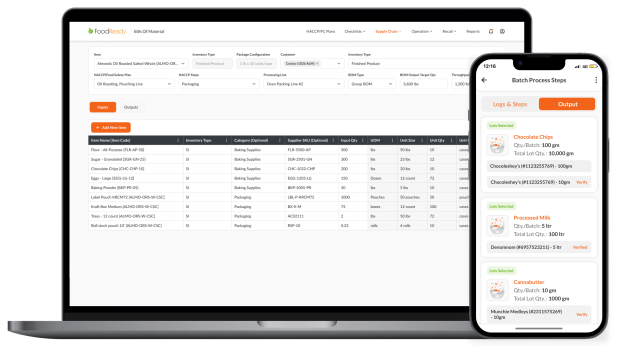
FoodReady’s platform takes it further by connecting all the dots. The software doesn’t just look at a single temperature reading. It combines environmental data, maintenance logs, supplier reports, and production schedules to uncover patterns that humans would easily miss. Could there be a link between a specific seasoning batch and higher rejection rates three days later?
The AI finds these hidden connections, enabling more efficient processes.
This predictive approach means you’re preventing contamination instead of scrambling to contain it. The savings are massive, but more importantly, you’re protecting customers and your brand reputation.
Catch Quality Issues Before They Become Recalls
See how AI monitors production data and predicts contamination risks early.
Maintaining Consistency & Consumer Loyalty
Anyone who’s worked in food manufacturing knows that consistency is king. Customers expect their favorite product to taste, look, and feel identical whether they buy it today or next year, anywhere in the country.
Maintaining that consistency across shifts, seasons, and production lines has always meant endless procedures, constant training, and vigilance. But people make mistakes. Different operators make different calls. Recipes drift. Equipment wears unevenly.
AI systems are consistent champions because they apply the same standard every time. When AI monitors portion weights, it’s not guessing; it measures against precise specs and flags deviations instantly. If you’re aiming for 283 grams and trending toward 285, operators know immediately, preventing giveaways or shortchanging customers.
This monitoring covers everything, mixing speeds, cooking times, seal integrity, and even label placement. It creates a digital quality trail following every batch through production.
How FoodReady Can Help You?
Let’s be honest. Most food manufacturers aren’t tech companies. You’re great at making food products, not at building AI systems. You need quality control that fits your food operation without requiring a data science team.
FoodReady gets this. Instead of forcing you to replace current programs you may already have in place, our platform integrates with your existing MRP, sensors, and quality checkpoints. The AI learns your workflow, products, and standards.
You can deploy computer vision modules wherever you need them, checking ingredients, monitoring processes, and inspecting final products. But it goes beyond catching problems; it helps you understand why they’re happening so you can fix root causes.
The contamination prevention features pull data from environmental monitors, sanitation logs, and production records to give real-time risk scores. You get warnings before contamination can happen.
For consistency, the AI continuously analyzes production data to detect quality drift, optimize settings, and offer practical guidance to maintain standards across all lines and shifts.
Conclusion
AI in food manufacturing quality control isn’t some far-off dream; it’s happening now. Companies using these tools are seeing dramatic improvements in defect detection, massive reductions in waste and recalls, and unprecedented consistency.
The technology’s only getting smarter. We’re moving toward systems that predict equipment failures before they cause quality defects, automatically adjust settings when ingredient composition varies, and guide operators through complex quality decisions.
For food manufacturers, it’s not about whether to adopt AI quality control; it’s about how quickly you can implement it before competitors pull ahead. With platforms like FoodReady making this tech accessible and practical, even mid-sized companies can protect their products and brands with enterprise-grade AI.
At the end of the day, quality isn’t just about following rules or avoiding recalls. It’s about consistently delivering products customers love and trust. And AI gives manufacturers the power to do precisely that, batch after batch, day after day.
FAQs
Traditional methods rely on manual inspection, which is limited by human fatigue and inconsistency. AI systems inspect 100% of products at full production speed with 95-99% accuracy, catching defects human eyes miss while maintaining consistent standards across all shifts.
AI prevents contamination by analyzing real-time data from sensors, equipment monitors, and production settings to predict risks before they materialize. When temperature or humidity levels trend toward dangerous ranges, operators receive alerts hours before actual contamination risks emerge.
No. Platforms like FoodReady integrate with your existing MRP systems, temperature monitors, and quality checkpoints. The AI learns your current workflow and standards, enhancing what you already have without requiring a complete overhaul.
No. FoodReady is built for food production teams with intuitive interfaces. The AI runs in the background while your operators work normally; you get enterprise-grade AI without needing specialized technical staff.
AI applies identical standards every time, monitoring portion weights, mixing speeds, cooking times, and seal integrity. It instantly flags any deviations from specifications, eliminating variability from different operators making different judgment calls.
Manufacturers typically see defect detection rates increase to 95-99%, significant reductions in waste and giveaway, fewer recalls and complaints, and optimized labor allocation. Contamination prevention alone can save millions by avoiding a single recall.
No. FoodReady brings AI quality control to mid-market manufacturers at a scale and price point that makes sense for companies producing millions of units annually, not just large corporations with unlimited budgets.
During setup, the AI is trained on images and data from your production showing acceptable products and various defects. It continues learning over time, becoming increasingly accurate at recognizing your specific standards.
The system alerts operators in real time with specific information about what was detected and where. It provides predictive warnings with risk scores and helps identify root causes by analyzing patterns across environmental data, equipment performance, and production records.
1. How does AI quality control differ from traditional inspection methods?
Traditional methods rely on manual inspection, which is limited by human fatigue and inconsistency. AI systems inspect 100% of products at full production speed with 95-99% accuracy, catching defects human eyes miss while maintaining consistent standards across all shifts.
2. Can AI actually prevent contamination, or does it just detect it faster?
AI prevents contamination by analyzing real-time data from sensors, equipment monitors, and production settings to predict risks before they materialize. When temperature or humidity levels trend toward dangerous ranges, operators receive alerts hours before actual contamination risks emerge.
3. Will implementing AI quality control require replacing all our existing equipment and systems?
No. Platforms like FoodReady integrate with your existing MRP systems, temperature monitors, and quality checkpoints. The AI learns your current workflow and standards, enhancing what you already have without requiring a complete overhaul.
4. Do we need a data science team or technical experts to use AI quality control?
No. FoodReady is built for food production teams with intuitive interfaces. The AI runs in the background while your operators work normally—you get enterprise-grade AI without needing specialized technical staff.
5. How does AI help maintain product consistency across different shifts and production lines?
AI applies identical standards every time, monitoring portion weights, mixing speeds, cooking times, and seal integrity. It instantly flags any deviations from specifications, eliminating variability from different operators making different judgment calls.
6. What kind of ROI can we expect from AI quality control?
Manufacturers typically see defect detection rates increase to 95-99%, significant reductions in waste and giveaway, fewer recalls and complaints, and optimized labor allocation. Contamination prevention alone can save millions by avoiding a single recall.
7. Is this technology only practical for large corporations with huge budgets?
No. FoodReady brings AI quality control to mid-market manufacturers at a scale and price point that makes sense for companies producing millions of units annually, not just large corporations with unlimited budgets.
8. How does the AI learn what’s acceptable versus defective for our specific products?
During setup, the AI is trained on images and data from your production showing acceptable products and various defects. It continues learning over time, becoming increasingly accurate at recognizing your specific standards.
9. What happens when the AI identifies a potential quality issue or contamination risk?
The system alerts operators in real time with specific information about what was detected and where. It provides predictive warnings with risk scores and helps identify root causes by analyzing patterns across environmental data, equipment performance, and production records.