In the wake of several high-profile food safety incidents, the importance of stringent food safety regulations and compliance has never been more apparent. Every year, millions of people fall ill, and many die due to foodborne illnesses.
These incidents not only impact public health but also shake consumer confidence and can lead to significant economic losses for food producers and retailers.
Furthermore, as the world becomes increasingly interconnected, the complexity and scope of food safety challenges grow exponentially. Our global food supply chain is a vast network that spans continents, encompassing a diverse range of cultures, practices, and regulatory environments.
This globalization of food supply, while beneficial in terms of variety and availability, brings with it a heightened risk of contamination and foodborne diseases. The intricacies of tracking food sources, maintaining consistent safety standards across different jurisdictions, and ensuring transparency throughout the supply chain are monumental tasks. The federal government, through agencies like the FDA and USDA, regulates food safety by establishing laws and rules that govern food production, handling, and distribution.
The demands for rigorous food safety protocols are not just about adhering to regulations; they symbolize a commitment to public health, a responsibility to uphold consumer trust, and an ethical obligation to provide safe, healthy food to all. The Food Safety Modernization Act (FSMA) authorizes the FDA to regulate the way food, fruits, vegetables, and cereals are grown, harvested, and processed, and it was enacted in response to millions of cases of foodborne disease reported in the early 2000s. The FDA regulates over 80 percent of the food supply, while the USDA regulates the remaining 20 percent, including meat and poultry.
As we navigate the complexities of a global food supply chain, understanding and adhering to food safety regulations becomes not just a legal obligation but a moral imperative. In this article, we will delve into the world of food safety, exploring the regulations that keep our food supply safe and the best practices for ensuring food regulatory compliance.
Key Takeaways
- Food safety regulations are critical for protecting public health, preventing foodborne illnesses, and maintaining consumer confidence in the food supply.
- The U.S. food safety system involves multiple federal agencies, primarily the FDA and USDA, which regulate different segments of the food supply.
- The Food Safety Modernization Act (FSMA) represents a proactive approach to food safety, emphasizing prevention and risk-based controls across the food supply chain.
- Compliance with food safety regulations requires understanding complex and evolving standards at federal, state, and local levels, alongside international considerations.
- Implementing food safety management systems like HACCP and ISO 22000, along with ongoing training, technology integration, and audits, are best practices for regulatory compliance.
- Globalization of the food supply chain increases the challenges of ensuring consistent food safety standards, traceability, and transparency.
- Consumer demand for transparency and ethical practices is influencing the future direction of food safety regulations toward sustainability and comprehensive traceability.
Key Regulatory Bodies and Standards
- Codex Alimentarius: Established by the FAO (Food and Agriculture Organization) and WHO (World Health Organization), it sets international food standards, guidelines, and codes of practice.
- World Health Organization (WHO): Works globally to promote health, keep the world safe, and serve the vulnerable. WHO’s work on food safety focuses on assessing health risks, setting norms and standards, and offering guidance on food safety issues.
- Food and Agriculture Organization (FAO): A specialized agency of the United Nations that leads international efforts to defeat hunger. FAO’s role in food safety involves improving food quality and safety throughout the food chain, and providing a neutral forum for nations to negotiate food safety guidelines.
- The U.S. Food and Drug Administration (FDA): The FDA regulates over 80 percent of the U.S. food supply, including processed foods, seafood, animal feed, animal drugs, and drugs, while the USDA regulates meat and poultry products. The FDA’s Center for Food Safety and Applied Nutrition (CFSAN) oversees food safety for domestic and imported foods marketed in interstate commerce. The FDA is also responsible for regulating animal feed and animal drugs to ensure food safety, and for monitoring the safety of seafood, including enforcing the final rule on HACCP for seafood. The FDA and the USDA’s Food Safety and Inspection Service (FSIS) share responsibilities for the safety of intact-shell eggs and processed egg products. The FDA’s statutes give it jurisdiction over restaurants, but this responsibility is ceded to states and localities. Quality assurance is a critical component of FDA regulatory activities, ensuring compliance with food safety rules and standards.
- USDA Food Safety and Inspection Service (FSIS): FSIS is the primary inspection service responsible for regulating meat, poultry, and egg products sold in interstate commerce. FSIS conducts inspections to ensure these products are safe, wholesome, and correctly labeled before entering interstate or international commerce. The USDA regulates food safety through various acts, including the Federal Meat Inspection Act and the Poultry Products Inspection Act.
- FDA Food Code: The FDA Food Code is a set of scientific standards and guidelines that states and local jurisdictions may adopt to ensure food safety in restaurants and institutional food service settings. The Food Code provides a model framework for consistent food safety practices at the local and state levels.
- Environmental Protection Agency (EPA): The EPA regulates pesticide use, environmental chemicals, and water quality standards that impact food safety. The EPA registers pesticides, establishes safety tolerances, and enforces environmental laws to control contaminants in air, water, and soil, indirectly protecting food safety and public health.
- European Food Safety Authority (EFSA): Responsible for scientific advice on food-related risks in the European Union.
- ISO 22000: An international standard that specifies the requirements for a food safety management system.
- Hazard Analysis Critical Control Point (HACCP): A systematic preventive approach to food safety.
- Canadian Food Inspection Agency (CFIA): Regulates the safety of food products in Canada, ensuring that they meet health and safety standards while also overseeing the labeling and advertising of food products.
- Food Standards Australia New Zealand (FSANZ): Develops food standards for Australia and New Zealand, focusing on the safety and information of food sold in these countries.
- China’s General Administration of Quality Supervision, Inspection, and Quarantine (AQSIQ): Responsible for regulating food safety, quality control, and quarantine measures in China. It oversees a broad range of food products, ensuring compliance with national standards.
- Asian Pacific Economic Cooperation (APEC) Food Safety Cooperation Forum: Plays a crucial role in harmonizing food safety standards and practices among its member economies in the Asia-Pacific region, promoting trade while ensuring food safety.
- Global Food Safety Initiative (GFSI): A private organization that benchmarks food safety standards against internationally recognized guidelines. While GFSI itself is not a regulatory body, its recognition of various food safety standards (such as SQF, BRC, IFS, FSSC 22000) guides manufacturers and suppliers in achieving high levels of food safety compliance, often exceeding local regulatory requirements.
Evolving Regulations
Food safety regulations are continually evolving in response to new scientific knowledge, emerging risks, and consumer expectations. For example, the FDA’s Food Safety Modernization Act (FSMA) focuses on preventing food safety problems rather than responding to them after they occur.
The Importance of Food Regulatory Compliance
Compliance with food safety regulations is not just about avoiding legal penalties. It’s about protecting consumers, maintaining brand integrity, and ensuring a sustainable business model. Food safety breaches can lead to product recalls, legal liabilities, and irreparable damage to a brand’s reputation.
Challenges in Compliance
The global nature of the food supply chain presents unique challenges. Companies must navigate a patchwork of international, national, and local regulations. Additionally, the rise in consumer demand for organic, non-GMO, and locally sourced foods introduces new complexities in compliance and certification processes.
Best Practices for Ensuring Food Regulatory Compliance
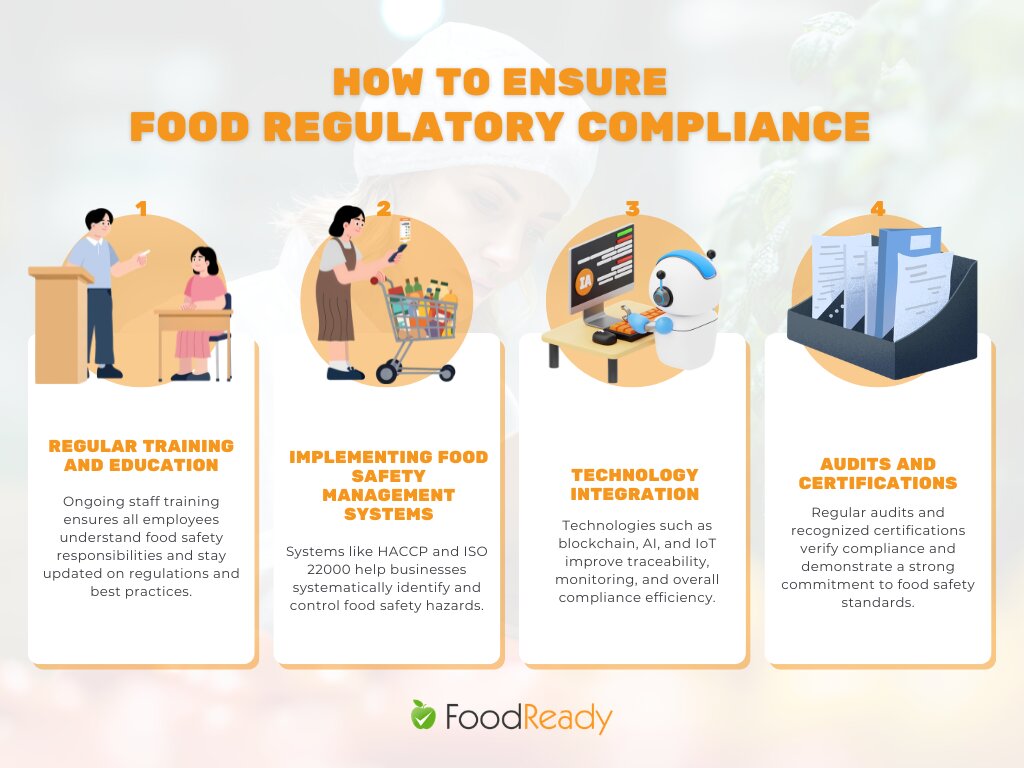
- Regular Training and Education
Continuous education and training of employees at all levels is crucial. This ensures that everyone understands their role in maintaining food safety and stays updated on the latest regulations and best practices. Government agencies such as the USDA, CDC, and FDA provide food safety tips to educate employees and consumers about safe food handling practices.
- Implementing Food Safety Management Systems
Adopting frameworks like HACCP and ISO 22000 can help businesses systematically identify, evaluate, and control food safety hazards.
- Technology Integration
Advanced technologies like blockchain for traceability, AI for hazard analysis, and IoT for monitoring storage conditions can significantly enhance food safety compliance.
- Audits and Certifications
Regular internal and external audits are essential for verifying compliance. Obtaining certifications from recognized authorities can also demonstrate a commitment to food safety.
The Future of Food Safety
Looking ahead, we can expect more stringent regulations, driven by technological advancements and an increased focus on sustainability and ethical practices in the food industry. Consumer awareness and demand for transparency will also play a significant role in shaping future food safety practices.
In summary, navigating the complexities of food safety regulations and compliance is a challenging but essential task. By understanding the regulatory landscape, implementing best practices, and embracing technological advancements, businesses can ensure the safety of their products and the well-being of their consumers.
As we move forward, our collective efforts in upholding food safety standards will pave the way for a healthier, safer, and more sustainable future.
Struggling to stay compliant with food safety regulations?
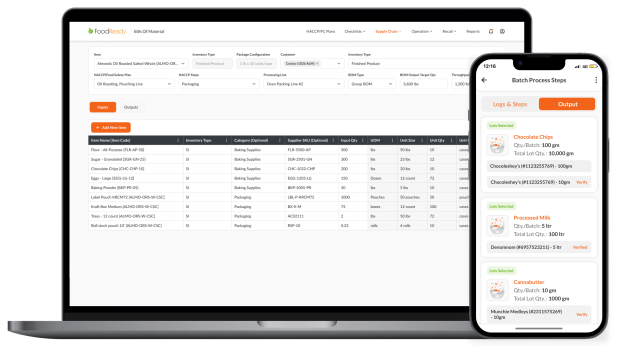
Try FoodReady to simplify HACCP, traceability, and audits in one platform.
FAQs
SMEs should prioritize establishing a robust food safety management system, such as HACCP or ISO 22000, tailored to their operations. Regular training for staff on global food safety standards and engaging in partnerships or consulting services for regulatory guidance can also be effective. Leveraging technology for compliance tracking and staying updated on regulatory changes through industry associations can further streamline adherence to international standards.
The primary challenge lies in the variability of food safety regulations across jurisdictions and the resources required to comply with multiple standards. Addressing this challenge requires a thorough understanding of both local and international regulations, which can be achieved through continuous training and leveraging expert guidance. Building a flexible food safety system that meets the highest applicable standards can also ensure compliance across different markets.
Consumer advocacy for transparency and ethical sourcing is likely to drive stricter food safety regulations, with an increased emphasis on comprehensive traceability, sustainable practices, and clear labeling. Companies can prepare by adopting transparent sourcing policies, investing in technologies that offer greater insight into their supply chains, and engaging in ethical certification programs, thus aligning their operations with consumer expectations and forthcoming regulatory requirements.
Food safety oversight is shared primarily between two agencies:
FDA (Food and Drug Administration): Regulates over 80% of the food supply, including processed foods, seafood, and produce.
USDA (United States Department of Agriculture): Oversees meat, poultry, and certain egg products.
These agencies also collaborate to improve regulatory efficiency and public health protection.
Food safety regulations protect public health by reducing the risk of foodborne illness. In the U.S. alone:
48 million people become ill annually
Approximately 3,000 deaths occur each year
These regulations also help maintain consumer confidence and prevent costly recalls and legal issues.