Effective storage and distribution practices play a crucial role in maintaining food quality and safety through the supply chain. At each stage, food is susceptible to contamination and deterioration, making rigorous management essential. Temperature control is a prime example, serving as a barrier against bacteria growth and spoilage.
Similarly, risks from non-food items or previous loads require strict segregation and cleanliness measures. In environments handling allergens, preventing cross-contact is vital for consumer safety. These practices are key not only in preserving the edibility and quality of food but also in safeguarding public health against foodborne illnesses.
Beyond mere regulatory compliance, high standards in food storage and distribution are integral for protecting consumer health and sustaining the nutritional value and quality of food products. Adequate storage preserves food’s quality and nutritional content, thereby maximizing value and minimizing spoilage.
Furthermore, these practices play a significant role in reducing the risk of foodborne diseases, which are often caused by harmful bacteria.
By implementing stringent storage and distribution protocols, the food industry can ensure the delivery of safe, high-quality food products to consumers, effectively contributing to public health and well-being.
Key Takeaways
- Effective food supply chain distribution and storage practices are essential to maintain food quality, safety, and nutritional value throughout the supply chain.
- Temperature and humidity controls tailored to different food categories prevent spoilage and contamination, preserving product quality and extending shelf life.
- Preventing cross-contamination through proper segregation, handling, and staff training reduces food waste and ensures consumer safety.
- Proper labeling and stock rotation using FIFO principles minimize food loss and enhance traceability and regulatory compliance.
- Well-planned transportation logistics, vehicle hygiene, and real-time tracking systems are critical for maintaining food safety during distribution.
- Cold chain management is vital for perishable foods, requiring continuous temperature monitoring and adherence to legislative directives.
- Implementing technology such as IoT sensors and barcode systems improves monitoring, traceability, and quick response to supply chain challenges.
- Consistent staff training on food safety protocols contributes significantly to maintaining high standards and customer satisfaction.
Key Principles of Food Storage
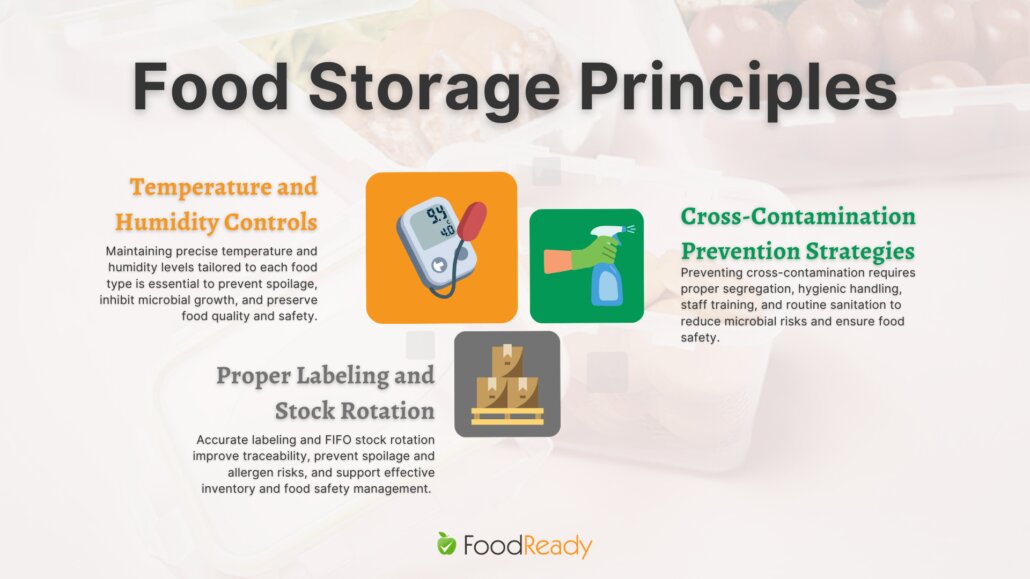
1. Temperature and Humidity Controls
Temperature control stands as a pivotal factor in the realm of food safety, playing a vital role in preventing spoilage and contamination. The diverse range of food items, from raw materials to processed and ready-to-eat products, demands specific storage conditions tailored to their unique temperature and humidity requirements. This precise control is essential to thwart adulteration and maintain food quality. Cold chain logistics are essential for transporting temperature-sensitive products, ensuring real-time monitoring and technology integration throughout the supply chain.
It’s important to recognize the varying needs of different food categories. For instance, dairy products and meat require different storage temperatures compared to fruits and vegetables. This distinction is crucial for inhibiting bacterial growth and preserving the inherent nutritional value of the food.
In addition to temperature, managing humidity levels is equally important. Excess moisture can lead to mold growth in certain foods, while too little can cause dehydration and quality loss.
Maintaining the right humidity and ventilation conditions is key to preserving the quality and safety of food products. This involves storing products in containers designed to protect against contamination and environmental factors, and ensuring that the storage environment is suitable for the specific food type.
Moreover, in the context of ready-to-eat or processed foods, temperature control ensures the longevity of the product without compromising its safety and taste. The integration of technology in monitoring and maintaining optimal conditions has become a standard practice in the food industry.
This advancement not only enhances the efficiency of food storage but also contributes to a significant reduction in food waste, making the entire process more sustainable and economical.
In essence, understanding and implementing these temperature and humidity controls is not just a matter of following guidelines; it’s about ensuring the health and satisfaction of consumers, while also respecting the integrity of our food resources.
2. Cross-Contamination Prevention Strategies
Preventing cross-contamination is a key aspect of food safety in storage. This process includes segregating perishable items, like meat and dairy, from non-perishables to avoid microbial transfer. Proper handling is essential, especially for items that require refrigeration post-opening, to maintain food quality and safety. This segregation also extends to the use of separate storage containers and utensils to further minimize risk.
In addition, training staff on proper storage techniques is vital. They should be aware of the risks associated with cross-contamination and the steps needed to prevent it, such as regular cleaning and disinfecting of storage areas, and maintaining an organized storage system that avoids overcrowding. Regular audits and inspections can help ensure that these practices are consistently followed.
Furthermore, understanding the specific storage requirements of different food types is crucial. Foods that are highly susceptible to bacterial growth, such as meats, seafood, and dairy, should be stored at lower temperatures and checked regularly for signs of spoilage. This vigilance in storage practices not only ensures compliance with food safety regulations but also contributes to reducing food waste and maintaining consumer trust in food products.
3. Importance of Proper Labeling and Stock Rotation
Proper labeling and stock rotation are fundamental for maintaining the quality and safety of food products. Labels serve as a critical source of information, displaying essential details like expiration dates, ingredients, and storage instructions, which are crucial for managing food safety and quality.
The implementation of first-in-first-out (FIFO) principles in stock rotation ensures that older products are used before newer ones, thereby reducing waste and minimizing the risk of selling expired or spoiled goods.
Furthermore, accurate labeling aids in effective inventory management and traceability. It allows businesses to track product batches in case of recalls and ensures that consumers receive accurate information about the food they purchase. This transparency is key in building consumer trust and compliance with regulatory requirements.
In addition, Labeling plays a vital role in allergen management and preventing cross-contact during storage in food operations. By clearly indicating the presence of common allergens on labels, it significantly reduces the risk of accidental exposure to allergens for consumers with allergies.
This is especially critical in environments where multiple products are stored together, as it helps in identifying and segregating allergen-containing products from others. Adequate labeling also assists staff in handling and storing products appropriately, ensuring that allergen cross-contact is minimized. This practice is not just a safety measure for consumers, but also a compliance requirement to meet food safety standards and regulations.
Finally, regular training for staff on proper labeling and stock rotation practices is essential. This ensures that all employees are aware of the importance of these practices and how they contribute to overall food safety and customer satisfaction. By consistently applying these principles, food operations can maintain high standards of food quality and safety, thereby enhancing their reputation and reliability in the market.
Effective Distribution Practices
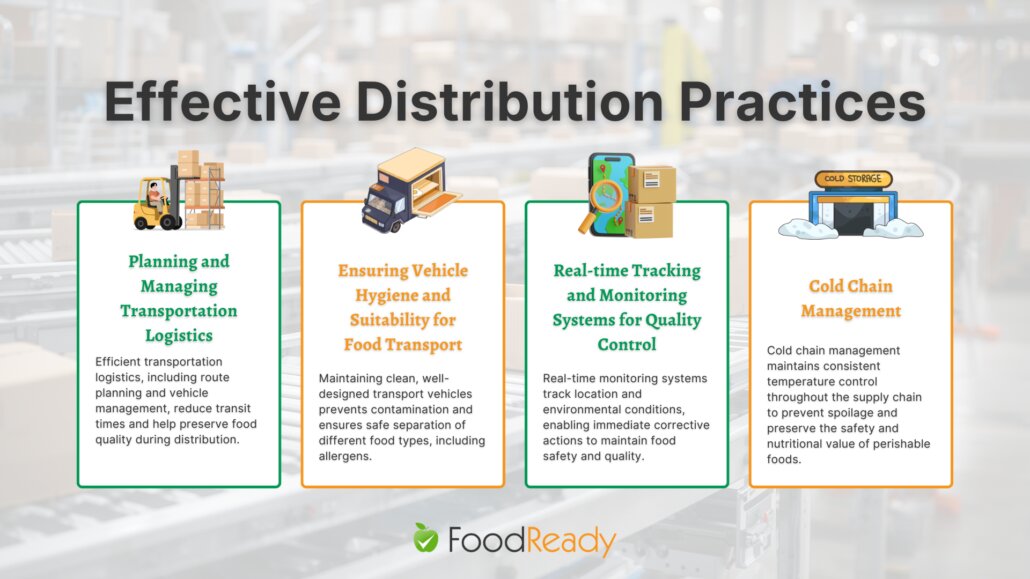
1. Planning and Managing Transportation Logistics
Effective distribution in the food industry is heavily reliant on well-organized transportation logistics. This process encompasses not just the design and maintenance of vehicles but also route planning and scheduling to ensure timely deliveries.
Efficient logistics management helps in reducing transit times, thereby minimizing the risk of spoilage, especially for perishable items. Additionally, adapting to unforeseen circumstances, like traffic or weather conditions, is crucial for maintaining the integrity of food products during transit.
2. Ensuring Vehicle Hygiene and Suitability for Food Transport
Maintaining hygiene in food transport vehicles is as important as their physical maintenance. Regular cleaning and sanitization protocols are necessary to prevent contamination and ensure food safety. This involves thorough cleaning of cargo areas and implementing measures to control pests.
Moreover, vehicles should be designed to prevent the ingress of contaminants and be equipped with appropriate compartments for different types of food items, particularly when transporting allergen-containing products alongside allergen-free items.
3. Real-time Tracking and Monitoring Systems for Quality Control
The integration of real-time tracking and monitoring systems in food distribution is a game-changer for quality control. These technologies allow for the continuous tracking of location and environmental conditions, such as temperature and humidity, inside the transport vehicles.
Alerts can be set up for deviations from the required conditions, enabling immediate corrective actions. This level of monitoring is not only crucial for ensuring food safety but also aids in supply chain transparency and customer trust.
4. Cold Chain Management
The cold chain, a series of temperature-controlled environments, is integral to the food industry, especially for perishable items. It spans the entire journey from production to consumption, ensuring that refrigerated and frozen foods are kept at safe temperatures to prevent spoilage and contamination.
Cold storage facilities play a crucial role in food supply chain distribution and storage by maintaining the quality and safety of perishable goods during transit and storage. Maintaining freshness is essential, requiring strict temperature control and proper packaging throughout the cold chain to preserve food quality and safety. The global cold chain logistics market is projected to reach $500 billion by 2030 due to increasing demand for fresh food.
This system is vital for preserving not only the food’s quality but also its nutritional content, making it indispensable in modern food logistics.
Maintaining the Cold Chain
Effective cold chain management demands meticulous temperature monitoring and control at every stage. Quick chilling or freezing right after production, and maintaining these temperatures consistently during storage and transit, are essential.
Implementing rigorous temperature checks and having contingency plans for potential temperature deviations are crucial. Regular equipment maintenance and staff training on handling procedures further ensure the integrity of the cold chain.
Importance of Compliance with Legislative Directives
Adhering to legislative directives is a cornerstone of cold chain management. These regulations, varying by region and food type, set the maximum permissible temperatures for food items during transportation.
Ensuring compliance not only prevents spoilage but also legal repercussions. Continuous monitoring systems and detailed record-keeping are key tools in maintaining compliance, providing traceability and accountability throughout the food supply chain. To get an idea how to make monitoring easier, check out this distributor-focused HACCP plan sample.
In summary, effective storage and distribution practices are essential in the food supply chain for maintaining quality and safety. Each stage presents risks of contamination and deterioration, requiring stringent management.
Temperature control is crucial for preventing bacterial growth and spoilage, while measures against contamination and allergen cross-contact ensure consumer safety. These practices, encompassing temperature and humidity control, cross-contamination prevention, proper labeling, and stock rotation, are vital not only for preserving food quality but also for public health.
In distribution, logistical planning, vehicle hygiene, and real-time monitoring uphold these standards. The cold chain’s role in preserving perishable items further highlights the importance of these practices, emphasizing the need for compliance with legislative directives to ensure safe, high-quality food delivery.
How FoodReady Supports Food Supply Chain Distribution and Storage
FoodReady offers an all-in-one AI-powered platform designed specifically for food manufacturers, processors, co-packers, and distributors to modernize and streamline their food supply chain distribution and storage processes. By automating critical tasks such as food safety compliance, quality control, traceability, and inventory management, FoodReady helps food companies ensure adherence to stringent safety guidelines and regulatory requirements throughout the supply chain.
The platform’s real-time lot tracking and monitoring capabilities enable logistics teams to maintain optimal temperature control and prevent spoilage, especially in cold storage warehouses and during transportation. FoodReady also facilitates efficient stock rotation using FIFO principles and supports detailed record-keeping to enhance traceability and quick response during recalls.
By integrating advanced data analytics, FoodReady helps predict demand and optimize inventory levels, reducing food waste and minimizing packaging waste. Its comprehensive approach empowers food distributors and supply chain professionals to streamline operations, maintain high product quality, and ultimately help their businesses thrive in a competitive food distribution industry.
With FoodReady, food companies gain the tools and insights needed to navigate supply chain disruptions, ensure food safety, and deliver affordable, fresh produce and other high-quality food products to grocery stores, food service providers, and consumers with confidence.
Are your food safety practices strong enough across your supply chain?
Streamline storage, monitoring, and compliance with FoodReady.
FAQs
Implementing advanced monitoring systems like IoT sensors in storage facilities can provide real-time data on conditions such as temperature and humidity. This technology allows for immediate adjustments and helps prevent spoilage and contamination.
Effective training includes regular, updated courses on hygiene, cross-contamination prevention, and emergency protocols. Interactive sessions and periodic assessments ensure that staff understand and apply best practices consistently.
Proper packaging reduces the risk of contamination and extends shelf life. Materials should be chosen based on their ability to maintain temperature integrity and barrier protection against microorganisms and physical damage.
Implementing barcode or RFID systems enables precise tracking of products throughout the supply chain. This ensures quick response capabilities in recall situations and enhances overall supply chain transparency.
Cross-docking can reduce handling and storage time, minimizing the risk of temperature abuse and contamination. However, strict protocols must be in place to ensure that cross-docked items are promptly and safely transferred between transport units.
The food supply chain refers to the complete process that food products go through, from production to consumption. It includes stages such as farming or manufacturing, processing, storage, distribution, retail, and final delivery to the consumer.
Each step plays a critical role in maintaining food safety, quality, and traceability. Effective coordination across the supply chain ensures that food products remain safe, compliant, and suitable for consumption at every stage.
Food supply chain management is built on several core principles that ensure food safety, quality, and operational efficiency:
Temperature control: Maintaining appropriate conditions to prevent bacterial growth and spoilage
Traceability: Tracking products across all stages for quick recall and transparency
Hygiene and sanitation: Preventing contamination in storage, handling, and transport
Inventory management: Using systems like FIFO to reduce waste and ensure product freshness
Regulatory compliance: Adhering to food safety standards and legal requirements
Risk management: Identifying and controlling hazards throughout the supply chain
Together, these principles help food businesses deliver safe, high-quality products while minimizing risks and losses.
Safety stock acts as a buffer to ensure supply continuity when facing unexpected disruptions, such as supplier delays or sudden demand spikes. Maintaining safety stock helps food businesses manage risks and costs, especially during periods of inflation or economic pressure, by reducing the likelihood of stockouts and production stoppages.
Just-in-time delivery models focus on receiving goods only as they are needed in the production or distribution process. This approach reduces storage costs and helps keep inventory fresh, which is especially important for perishable food products. It also minimizes waste and improves overall efficiency in food supply chain distribution and storage.
Warehouse Management Systems (WMS) provide real-time visibility of stock levels and enable precise batch and lot tracking. By using WMS, food businesses can optimize inventory management, reduce errors, and ensure compliance with traceability requirements throughout the supply chain.
Automation and AI have moved beyond pilot projects and are now used daily in food distribution to improve accuracy and throughput. These technologies streamline processes such as order picking, inventory tracking, and quality control, leading to faster operations and reduced human error.
Supply chain digitization leverages technologies like IoT, blockchain, and AI to enhance efficiency and transparency. IoT devices provide real-time monitoring, blockchain ensures secure and tamper-proof records, and AI optimizes logistics and forecasting. Together, these tools improve visibility, traceability, and trust across the food supply chain.
Data analytics enables food businesses to predict consumer demand more accurately. By analyzing sales trends and market data, companies can adjust inventory levels to match demand, reducing excess stock and associated storage costs while minimizing waste.