To help you make an informed decision, we’ve created a list of top retail management software solutions for grocery stores, supermarkets, and food retailers.
Retailers in the food and beverage industry face unique challenges: strict food safety compliance, inventory turnover, and the need to balance customer experience with operational efficiency.
Whether managing a single grocery store or a supermarket chain, retail management software provides the tools to connect sales, inventory, suppliers, and compliance requirements into a single system.
Choosing the right software is critical. The right solution reduces manual work, ensures food safety standards are met, and gives managers real-time visibility into both sales performance and supply chain health.
Below we review the top retail management systems available in 2026, highlighting their unique strengths for food and beverage businesses.
What Is Retail Management Software?
Retail management software is designed to help businesses manage day-to-day retail operations. Core functionality typically includes point-of-sale (POS), inventory management, customer relationship management (CRM), and reporting tools.
For food retailers, additional features like temperature monitoring, HACCP planning, supplier documentation, and staff training are often essential to maintain compliance with FSMA, GFSI, and HACCP standards.
Top 8 Retail Management Software in 2026
Here are the varied software that gives you the ultimate solution for your business:

1. FoodReady AI
Pricing: Contact FoodReady for more information
Platforms supported: Web, iOS, and Android


Why use FoodReady?
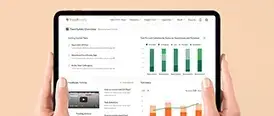
FoodReady retail management software helps grocery stores, supermarkets, and convenience stores maintain food safety, quality, and regulatory compliance across all operations.
It enables teams to manage daily tasks, inspections, inventory, and temperature logs in one centralized system, reducing manual errors and improving accountability.
With features like HACCP plan management, real-time monitoring, and customizable checklists, retailers can prevent safety issues, streamline audits, and deliver a consistently safe customer experience.
FoodReady Features:
- AI HACCP Builder: Create Hazard Analysis and Critical Control Points (HACCP) plans in seconds.
- AI SOP Generator: Generate Standard Operating Procedures (SOPs) with ease.
- Quality Management System: This system ensures that the retail store consistently meets food safety standards and customer requirements. It includes procedures for handling, storage, and preparation of food.
- Training: Employees can be trained in food safety practices, such as proper hand hygiene, temperature control, cleaning and sanitizing, and preventing cross-contamination.
- Documentation: All food safety procedures and actions can be logged and documented. This includes records of temperature logs, cleaning schedules, and any actions taken to correct food safety issues.
- Audits and Inspections: Regular audits and inspections can be conducted to ensure compliance with food safety standards and regulations using the Checklist App and Task Manager.
- Supplier Management: Retailers can ensure their suppliers also adhere to food safety standards and can provide documentation to prove it.
- User-Friendly Multi-language Interface: FoodReady platfrom is easy to use and is available in English and Spanish.
Best For:
Grocery stores, supermarkets, and convenience stores that prioritize food safety compliance and want retail management connected directly to HACCP and FSMA requirements.

2. Square for Retail
Free version: Available
Pricing: Contact Square for Retail for more information
Platforms supported: Web, iOS
Why use Square for Retail?
Square for Retail is widely used for its simplicity and accessibility, making it a popular option for small to mid-sized food retailers. It combines POS functionality with inventory and customer management in a clean, easy-to-use interface.
Square also integrates with online sales channels, which helps grocers and specialty food shops expand into e-commerce without juggling multiple platforms. With transparent pricing and hardware options, it is an approachable system for businesses transitioning from manual systems.
Square for Retail Features:
- POS with support for multiple payment methods
- Inventory and fulfillment management
- Staff and customer management tools
- Reporting and analytics
- Integration with e-commerce platforms
Best For:
Small and mid-sized food retailers that want a straightforward, cost-effective retail management system with POS and inventory at its core.

3. Lightspeed
Free version: Trial Available
Pricing: Contact Lightspeed for more information
Platforms supported: Web, iOS
Why use Lightspeed?
Lightspeed is designed for growing retailers that need more advanced features beyond basic POS. It combines sales, inventory, and customer loyalty tools into one platform. For food businesses, the loyalty and customer engagement features are especially valuable for building repeat business in competitive markets.
Lightspeed also offers robust employee management functions, making it easier for store managers to oversee staff scheduling and performance alongside sales operations.
Lightspeed Features:
- POS and inventory management
- Loyalty programs and customer engagement tools
- Employee management and scheduling
- Reporting and performance dashboards
Best For:
Food retailers and specialty shops looking for strong loyalty features and a comprehensive retail platform that grows with their business.

4. Retail Pro
Free version: Not Available
Pricing: Contact Retail Pro for more information
Platforms supported: Web
Why use Retail Pro?
Retail Pro focuses on helping retailers manage both physical and digital storefronts, particularly across multiple locations. Its strength lies in scalability, offering seamless POS and inventory management that adapts to international operations and large-scale retail chains.
For food retailers operating across different regions, Retail Pro ensures consistency while allowing customization for local regulations and practices. Its vendor and customer management tools also provide valuable oversight for complex supply chains.
Retail Pro Features:
- Multi-location POS and inventory control
- Vendor, employee, and customer management
- Operations management tools
- Configurable system for international compliance
Best For:
Supermarkets and multi-location food retailers that need a scalable, global-ready retail management solution.

5. Revel Systems
Free version: Trial Available
Pricing: Contact Revel System for more information
Platforms supported: Web
Why use Revel Systems?
Revel Systems is an iPad-based POS and retail management platform that combines mobility with deep functionality. It includes order and inventory management, employee scheduling, and advanced reporting, making it well-suited for fast-paced food retail environments.
The platform’s mobile design allows staff to process orders and manage inventory directly on the floor, improving speed and efficiency. Loyalty program tools also help retailers build stronger relationships with their customer base.
Revel Systems Features:
- iPad-based POS and order management
- Inventory tracking and employee scheduling
- Customer engagement and loyalty tools
- Analytics and reporting for operational insights
Best For:
Food retailers that want a mobile-first POS system with strong customer engagement and staff management features.
6. LS Retail (LS Central)
Free version: Not Available
Pricing: Contact LS Retail for more information
Platforms supported: Web, iOS, Android
Why use LS Retail?
LS Retail’s LS Central is a global retail platform that combines POS, inventory, loyalty, e-commerce, and financial management in a single system. For food and beverage retailers, the strength of LS Central lies in its ability to standardize operations across multiple locations while still allowing local flexibility for compliance and promotions.
It integrates natively with Microsoft Dynamics 365 Business Central and can connect with enterprise ERPs like SAP S/4HANA or Oracle, making it adaptable for both mid-sized chains and large global retailers. Its modular design means businesses can adopt only the functions they need, such as promotions, staff scheduling, or analytics, and expand later as requirements grow.
With unified visibility, retailers can balance inventory across stores, measure promotion performance in real time, and align staffing to demand while maintaining consistent customer experiences.
LS Retail Features:
- POS, pricing, promotions, and loyalty management
- E-commerce and omnichannel retail support
- Staff scheduling and payroll alignment with demand
- Real-time analytics on sales, promotions, and customer behavior
Best For:
Supermarkets, grocery chains, and large food retailers that need global consistency, deep ERP integration, and a modular retail system that can scale across multiple stores and regions.
7. Shopify POS
Free version: Not Available
Pricing: Contact vendor for more information
Platforms supported: Web, iOS, Android
Why use Shopify POS?
Shopify POS is a flexible retail management platform that seamlessly connects in-store and online sales, making it an excellent choice for food retailers with e-commerce needs.
It allows grocers, specialty food shops, and delis to manage inventory, track customer purchases, and unify loyalty programs across physical and digital storefronts.
One of Shopify POS’s biggest advantages is its native integration with Shopify’s e-commerce platform, giving retailers a single system for omnichannel operations.
Food businesses can easily launch local delivery or curbside pickup, manage perishable inventory, and maintain real-time stock levels across all locations. Its clean interface and ease of setup make it attractive for smaller food retailers expanding into digital sales.
Shopify POS Features:
- POS integrated with Shopify’s e-commerce platform
- Centralized inventory across online and physical stores
- Support for local delivery and pickup workflows
- Multi-location management with real-time updates
Best For:
Small and mid-sized food retailers, specialty stores, and grocers that want to unify physical store management with e-commerce in one easy-to-use system.

8. NCR Counterpoint
Free version: Not Available
Pricing: Contact NCR Counterpoint for more information
Platforms supported: Web, iOS
Why use NCR Counterpoint?
NCR Counterpoint is a comprehensive retail solution with strong inventory, purchasing, and customer management tools. Designed for industries with high inventory turnover, it fits well with food retailers managing perishable goods.
Its reporting capabilities help managers forecast demand and optimize purchasing, reducing waste and stockouts. NCR’s long-standing reputation in POS technology adds credibility, making it a trusted option for large-scale retailers.
NCR Counterpoint Features:
- POS and transaction management
- Inventory and purchasing tools
- Customer management and CRM integration
- Sales reporting and analytics
Best for:
Large food retailers and supermarkets that need an established, full-featured retail management system with strong purchasing and inventory tools.
How to Choose the Right Retail Management Software
Selecting retail management software requires looking beyond the basics of point-of-sale functionality. For food retailers, the right platform is one that can not only process transactions but also safeguard compliance, scale with growth, and integrate seamlessly with existing business systems.
The following comparison outlines the key factors that every grocery store, supermarket, or specialty food retailer should evaluate when making their decision.
| Factor | Why It Matters for Food Retailers | What to Look For |
| Compliance Needs | Grocery and food retailers must comply with FSMA, HACCP, and local health codes; software that ignores this creates risk. | Built-in HACCP management, supplier portals, temperature logs, audit trails, and compliance reporting features. |
| Scalability | Small stores may expand into chains or e-commerce; software must adapt without requiring a full replacement later. | Multi-location support, cloud-based setup, and omnichannel (online + offline) management. |
| Ease of Use | Retail staff turnover can be high; complex systems slow training and increase mistakes, especially in fast-paced stores. | Intuitive dashboards, mobile accessibility, multi-language support, and minimal training requirements. |
| Integration | Food retailers often use accounting tools (QuickBooks, Xero) or ERPs; disconnected systems cause errors and duplicate work. | Out-of-the-box integrations, open APIs, or native links with ERP/financial software and supplier management systems. |
| Total Cost of Ownership | Some systems have low upfront pricing but high hidden costs for add-ons or scaling. | Transparent pricing, flexible licensing (per store or per user), included updates, and clear vendor support terms. |
The comparison highlights areas such as compliance capabilities, scalability, usability, integration, and long-term cost considerations. Each factor plays a critical role in ensuring the system you choose will reduce risk, improve efficiency, and support both customer satisfaction and regulatory requirements.
By using these criteria as a framework, food and beverage businesses can make a more informed decision about which solution best fits their unique needs. Whether your priority is audit readiness, omnichannel expansion, or affordability, focusing on these factors will ensure that the software you select delivers value not just today, but as your operations evolve in the future.
Benefits of Retail Management Software for Food and Beverage Businesses
1. Reducing Manual Errors
By digitizing inventory and sales tracking, retail management software eliminates the inaccuracies that often occur with spreadsheets or paper-based systems. This ensures stock counts are accurate, reduces shrinkage, and helps managers make better decisions in real time.
2. Improving Compliance
Food retailers face strict safety standards. Software with integrated compliance tools can log temperature checks, track supplier certifications, and generate audit-ready reports. This reduces the risk of fines, recalls, or failed inspections.
3. Enhancing Customer Satisfaction
Many platforms include loyalty programs, promotions, and faster checkout options. By reducing wait times and offering personalized rewards, stores can increase repeat business and strengthen customer relationships.
4. Increasing Visibility Into Sales Trends
Advanced reporting and analytics allow managers to spot seasonal demand patterns, identify best-selling products, and optimize purchasing decisions. This not only improves margins but also helps reduce waste from unsold perishable items.
5. Supporting Multi-Location Growth
For supermarkets and chains, managing multiple stores from one centralized system is critical. Retail management software enables consistency across locations, provides consolidated reporting, and ensures promotions or compliance standards are applied uniformly.
Trends in Retail Management Software for 2025
Retail management technology is evolving quickly, and food businesses are seeing new tools that go far beyond the traditional point-of-sale. In 2025, several trends are shaping the way supermarkets, grocery chains, and specialty food retailers run their operations.
One of the most significant developments is the rise of AI-powered analytics. Retailers are using predictive models to forecast demand, reduce shrinkage, and even identify theft or unusual buying patterns. Instead of reacting to sales data after the fact, managers can anticipate problems before they happen.
Another clear shift is toward mobile-first systems. With iPad-based POS and mobile dashboards, staff can process transactions on the floor, manage inventory without leaving the stockroom, and complete audits on handheld devices. This flexibility is especially valuable in high-traffic food retail environments.
At the same time, compliance features are becoming standard. More platforms now include built-in support for food safety documentation and audits. This is a big shift from older systems where compliance was handled separately. Today’s retailers can:
- Automate temperature logging,
- Collect supplier certifications digitally,
- And prepare audit-ready reports without relying on manual recordkeeping.
Omnichannel capabilities are also growing. Unified e-commerce and in-store sales systems give customers a consistent experience whether they’re shopping online, ordering for pickup, or checking out in person. Food retailers can launch delivery services or curbside pickup without setting up an entirely separate platform.
Finally, sustainability has entered the retail software space. More businesses are using sustainability tracking tools to monitor food waste, energy use, and sourcing practices. This reflects not only regulatory pressure but also consumer demand for environmentally responsible retailers.
Frequently Asked Questions:
Retail management software offers several benefits, including improved inventory management, streamlined sales processes, enhanced customer service, better data analysis for informed decision-making, increased efficiency through automation, and improved overall profitability.
Yes, many retail management software solutions support multi-channel sales. They allow retailers to manage and track sales across various channels, such as brick-and-mortar stores, e-commerce platforms, mobile apps, and marketplaces, providing a unified view of sales data and inventory.
Absolutely. Retail management software typically includes robust inventory management features, such as real-time inventory tracking, automated stock reordering, inventory analytics, and product categorization.
Yes, many retail management software solutions incorporate the functionality of CRM software. These features enable retailers to capture and store customer data, track purchase history, and tailor marketing and loyalty programs.
Retail management software allows retailers to analyze sales performance, identify trends, track key performance indicators (KPIs), and generate reports on various aspects of the business, such as sales, inventory, and customer behavior.
Cloud-based solutions offer the advantage of remote access, automatic updates, and data backup, while on-premise solutions provide more control over data security and customization options.
Consider factors such as your specific business needs, the size and type of your retail operation, ease of use, scalability for future growth, integration capabilities with existing systems, customer support, and pricing.