A food safety audit should confirm what you already know, that your system works. Yet every year manufacturers lose points, and sometimes certification, over mistakes that have nothing to do with unsafe food and everything to do with poor preparation. The good news is that the most common audit failures repeat themselves, which means they are predictable and preventable.
This guide walks through the top 10 auditing mistakes manufacturers make across SQF, GFSI, BRCGS, and FSSC 22000 audits, why each one hurts, and how to avoid it. We also cover the latest changes to watch and show how FoodReady keeps you audit-ready for every standard, all year round.
Why Manufacturers Lose Points in Audit Findings?
Most nonconformances are not caused by dangerous practices. They are caused by gaps between what the plan says, what the records show, and what compliance requires. Auditors look for evidence, and when the evidence is missing, out of date, or inconsistent, points come off no matter how safe the actual process is. Getting this right starts with a well-maintained food safety management system that keeps documents and records aligned. Strong internal controls help keep records, monitoring, and documentation in sync.
The Top 10 Auditing Mistakes
Here are the ten mistakes that trip up manufacturers most often, and the simple fix for each as common auditing best practices breakdowns manufacturers can fix.
| # | Mistake | How to Avoid It |
|---|---|---|
| 1 | Incomplete records | Fill logs in real time and review them regularly so nothing is missing on audit day. |
| 2 | Outdated documents | Keep every procedure version controlled so the current one is always in use. |
| 3 | Weak hazard analysis | Reassess hazards whenever products, processes, or suppliers change. |
| 4 | Unverified critical limits | Back every critical limit with a scientific or regulatory reference. |
| 5 | Missed monitoring checks | Schedule checks and flag misses immediately rather than after the fact. |
| 6 | No corrective action trail | Document the deviation, the fix, and the sign-off every single time. |
| 7 | Skipped internal audits | Run internal audits on schedule so gaps surface before the external auditor arrives. |
| 8 | Untrained staff | Keep training records current and make sure staff can explain their role. |
| 9 | Poor supplier controls | Approve and monitor suppliers with documented, current evidence. |
| 10 | Last-minute preparation | Stay audit-ready year round instead of scrambling in the final week. |
Notice the pattern. Nearly every mistake is a documentation or consistency gap that points to control weaknesses rather than a food safety failure. That is why the fix is almost always better systems, not more effort. Linking each critical control point to its records helps identify control weaknesses earlier and closes most of these gaps automatically.
The Same Mistakes Across Every Standard
Whether you are audited against SQF, BRCGS, or an FSSC 22000 scheme, the root causes overlap. Here is where they tend to clash with each other:
| Standard | Where Manufacturers Slip |
|---|---|
| SQF | Food safety culture evidence and record integrity under the newer edition. |
| BRCGS | Root cause analysis on nonconformances and robust internal audits. |
| FSSC 22000 | Prerequisite program documentation and management review depth. |
| GFSI wide | Traceability, supplier approval, and consistent monitoring records. |
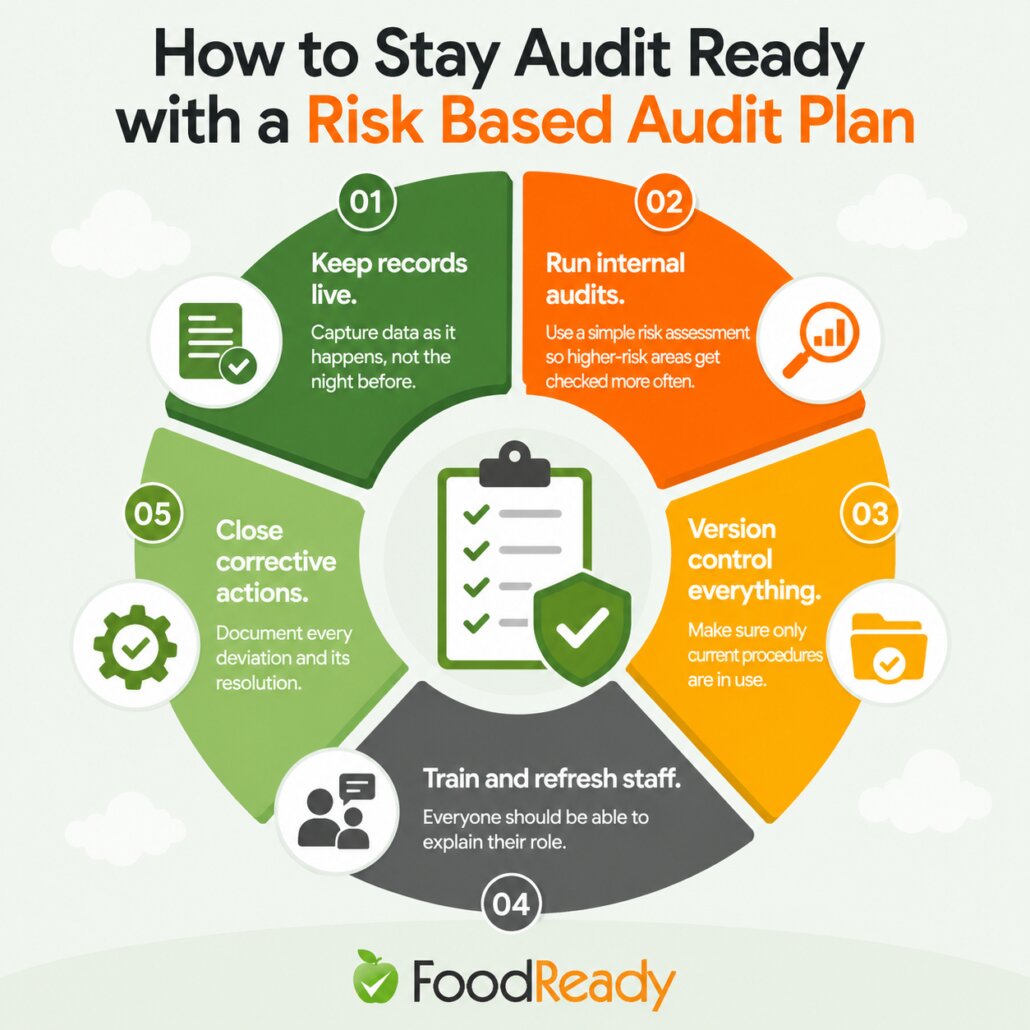
How to Stay Audit-Ready with a Risk-Based Audit Plan
Passing comes down to an audit process built on repeatable routines, with a risk-based plan that aligns audit work to business objectives and the organization’s objectives, not just routine coverage. The manufacturers who sail through audits do a handful of things consistently.
- Keep records live: Capture data as it happens, not the night before.
- Run internal audits: Use a simple risk assessment so higher-risk areas get checked more often, and set frequency and coverage by weighing both inherent and residual risks across key audit activities as reviews move from periodic checks to ongoing assessments.
- Version control everything: Make sure only current procedures are in use.
- Train and refresh staff: Everyone should be able to explain their role.
- Close corrective actions: Document every deviation and its resolution, because disciplined follow-up supports continuous improvement.
Auditing best practices also include a risk-based audit approach and automated data analytics to target high-risk areas more effectively.
New Updates: What Auditors Are Watching?
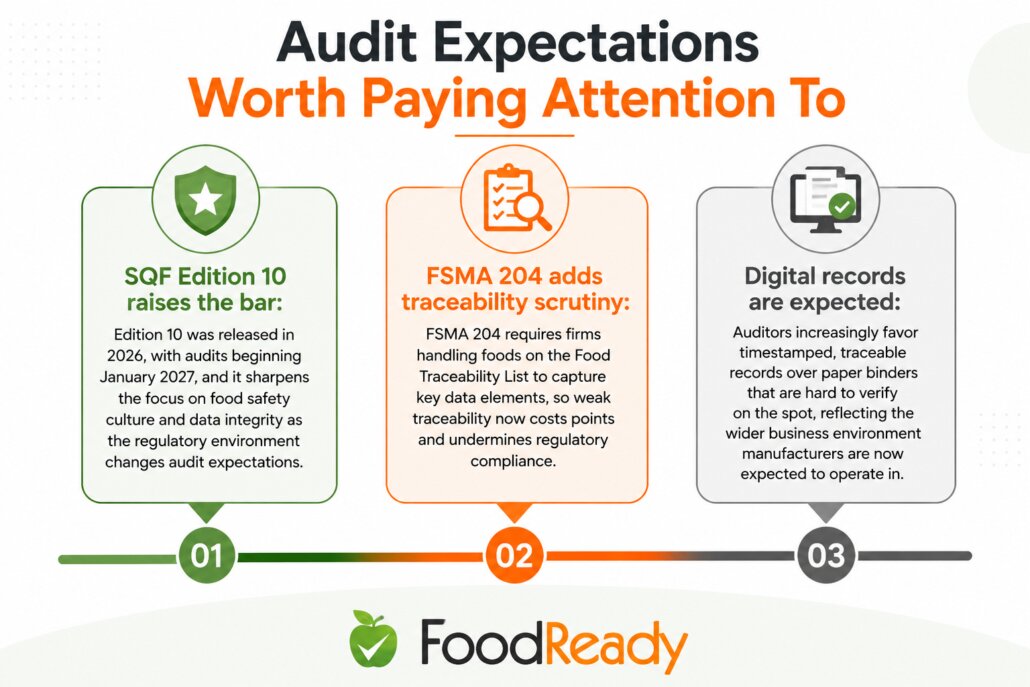
Audit expectations are shifting, and a few changes deserve attention right now.
- SQF Edition 10 raises the bar: Edition 10 was released in 2026, with audits beginning January 2027, and it sharpens the focus on food safety culture and data integrity as the regulatory environment changes audit expectations.
- FSMA 204 adds traceability scrutiny: FSMA 204 requires firms handling foods on the Food Traceability List to capture key data elements, so weak traceability now costs points and undermines regulatory compliance.
- Digital records are expected: Auditors increasingly favor timestamped, traceable records over paper binders that are hard to verify on the spot, reflecting the wider business environment manufacturers are now expected to operate in.
How FoodReady Supports Regulatory Compliance Across SQF, GFSI, BRCGS, and More
FoodReady is built to support a stronger internal audit function across every major standard at once, so a surprise audit is no longer a scramble. Every hazard, control point, record, and supplier lives in one connected platform, which means the documentation gaps behind most nonconformances simply do not open up, ensuring compliance.
Here is how the platform keeps you ready for any audit:
- Build compliant plans for SQF, BRCGS, FSSC 22000, and other GFSI schemes with the FoodReady HACCP Builder and its 80 plus industry templates.
- Digital records and monitoring support continuous monitoring and real-time monitoring, capture data in real time, and flag missed checks, which improves audit efficiency and closes the number one audit gap. Teams can leverage technology and data analytics to review 100% of transactions instead of relying only on a traditional audit sample. AI-powered tools also identify patterns that sampling misses and help auditors draw conclusions from fuller data coverage.
- Version control keeps only current procedures in use, so outdated documents never surface on audit day.
- Built in supplier management and traceability keep approvals and recall readiness documented and current.
- Cloud based version history keeps everything timestamped and ready for any GFSI, SQF, BRCGS, FSSC 22000, FDA, or USDA review.
On top of the software, FoodReady pairs you with certified food safety experts who help you focus audit efforts on high-risk areas and close gaps before an auditor finds them. The platform also automates manual audit processes so the internal audit team can spend more time on analysis and risk management. You can schedule a demo to see how continuous readiness replaces last-minute panic.
Conclusion
The top auditing mistakes manufacturers make are rarely about unsafe food. This article’s recommendations reflect practical auditing best practices for manufacturers: more than a cost center, an effective internal audit function can become a strategic partner that strengthens operational efficiency, improves risk management, and helps prevent missing records, outdated documents, weak hazard analysis, and last-minute preparation.
Across SQF, GFSI, BRCGS, and FSSC 22000, the fix is the same: keep your food safety management system live, consistent, and audit-ready all year rather than in the final week, especially as stakeholder expectations rise and majority of stakeholders expect more value from internal audits, because these habits protect both certification and day-to-day compliance. Manufacturers who build these habits pass with confidence and protect both their certification and their customers. FoodReady gives you the tools and expert support, with auditors acting as trusted advisors, to avoid every mistake on this list and walk into any audit ready.
FAQs
Incomplete or inconsistent records. Auditors work from evidence, so audit findings should rest on objective assessment and verifiable data; missing logs or entries filled in after the fact are the fastest way to lose points. Weak documentation can also expose control weaknesses in daily checks.
Because audits assess evidence, not intentions. Gaps between what the plan says and what the records show cause nonconformances even when the process itself is sound.
Yes. The root causes, weak documentation, gaps in internal controls, missed monitoring, and poor corrective actions, show up across every GFSI-recognised standard.
At least annually, and more often for high-risk operations and after major process changes. Regular internal audits surface gaps early so you can fix them before the external audit. Internal auditors should communicate with other assurance functions and the second line of defense so risk issues are addressed before the external audit.
Use a simple, repeatable audit plan year round. Auditors need strong technical skills, and they must maintain competence and impartiality throughout the process. Keep records live, version control documents, train staff, and close corrective actions as they arise rather than scrambling at the end, while the audit team acts ethically, honestly, and responsibly during preparation and review.
Food safety culture, data integrity, and traceability, driven by SQF Edition 10 and FSMA 204, remain central, but today’s auditors also face broader demands that include financial reporting and digital traceability reviews. Timestamped digital records are increasingly expected, and many leadership team discussions now center on whether audit capability is keeping pace, with many Chief Audit Executives doubting their teams’ skills as auditors respond to changing rules and other emerging risks. Investing in auditor competency and combining traditional audit skills with new technical skills helps protect the organization.
FoodReady keeps your plans, records, monitoring, and suppliers connected and audit-ready for SQF, GFSI, BRCGS, FSSC 22000, and more, supporting stronger audit reports and faster follow-up when issues appear while closing the gaps behind most nonconformances. A formal governance framework and internal audit charter define the audit function’s authority, clarify the team’s role, and support objective assurance. The charter also legitimizes the audit function, sets clear expectations for business leaders, and should align with industry-specific requirements.