In times of crisis, food operations face numerous challenges such as disrupted supply chains, power outages, and contamination risks that threaten food safety and quality.
The SQF Code element 2.6.4 mandates Crisis Management Planning for certified food businesses, highlighting the regulatory necessity of having a comprehensive plan.
Effective crisis management involves proactive strategies, including risk assessments, staff training, adaptable processes, and regular testing and updating of the plan to ensure compliance and resilience.
Preparedness measures like alternative ingredient sourcing and backup power systems help maintain quality standards during emergencies.
Clear, timely communication with internal teams, suppliers, regulatory bodies, and customers is crucial to maintaining trust and coordinating responses across the food supply chain.
A robust crisis management plan minimizes downtime, supports quicker recovery, and reduces the impact of food safety incidents on business operations.
Key Takeaways
- Crisis management planning is essential for food safety and regulatory compliance.
- Proactive risk assessments and staff training build resilience.
- Maintaining communication with all stakeholders preserves trust.
- Preparedness includes backup resources and adaptable processes.
- Regular plan testing ensures ongoing improvement and readiness.
- Effective crisis management minimizes operational disruptions and supports faster recovery.
Introduction to Crisis Management
Have you thought about what happens when your food business hits a crisis? Let’s be honest here: in the food industry, you’re dealing with people’s health and safety every single day. Whether it’s a natural disaster hitting your facility, some tech failure messing up your systems, or worse, a contamination event, these things can absolutely wreck your business if you’re not ready. We’re talking serious threats to your customers’ health, major financial hits, and damage to your reputation that might never recover. That’s why you need a solid crisis management plan in place, something that’ll help you deal with emergencies quickly and effectively.
Now, what does a really good crisis management plan look like? Well, it’s not just about scrambling to react when something goes wrong. You want something that covers all your bases, anticipating what might happen before it does, having strategies ready to minimize the damage, and making sure you learn something from every incident that occurs. This kind of approach means you’re not just prepared to respond when emergencies hit, you’re also set up to bounce back fast and prevent the same problems from happening again. Your plan needs to include things like immediate response protocols (so everyone knows what to do right away), clear communication strategies (because you need to keep everyone informed), recovery and business continuity plans (so you can get back to normal operations), and preventive measures that reduce the chances of problems recurring.
When you prioritize crisis management and food safety like this, you’re protecting your operations, keeping your customers’ trust intact, and showing you’re committed to public health, even when unexpected emergencies throw you curveballs. It’s really about being prepared so you can handle whatever comes your way.
Key Strategies for Maintaining Food Safety During and After a Crisis
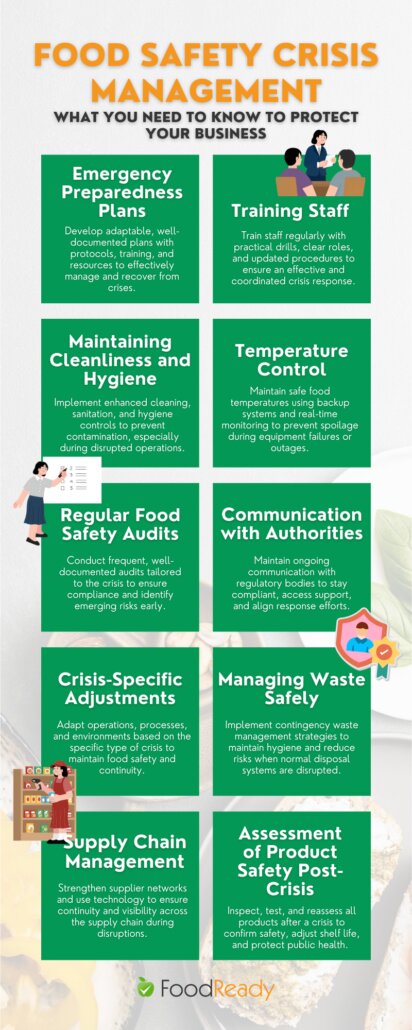
1. Emergency Preparedness Plans
Robust emergency preparedness plans are essential for anticipating and effectively managing potential crises. It is crucial to prepare an emergency food and water supply, as a disaster can disrupt the food supply, so it is important to plan to have at least a 3-day supply of food on hand. These plans should not only focus on immediate responses but also on long-term strategies to ensure food safety.
They should include detailed protocols for equipment failure, resource scarcity, and emergency response training. Regular drills and simulations based on these plans can help identify gaps and areas for improvement, ensuring that when a real crisis hits, the food operation is ready to implement these protocols efficiently.
Additionally, these plans should be dynamic and adaptable, reflecting the evolving nature of potential emergencies. For instance, plans should be regularly updated to include the latest technological advancements in food safety and preservation, as well as changing regulatory requirements. This adaptive approach ensures that food operations are not only prepared for known risks but are also flexible enough to handle unforeseen challenges.
2. Training Staff
Effective staff training is crucial for implementing emergency food safety procedures. Training programs should include practical exercises on handling emergencies, such as mock drills for power outages or supply chain disruptions. Action plans should be included as part of staff training, outlining specific strategies and steps for responding effectively during a crisis, including resource allocation, staff training, and post-incident reviews. It is also important to develop customized recall plans tailored to the company’s specific needs as part of training, ensuring regulatory compliance and readiness for potential incidents.
These exercises help staff understand the importance of their role in maintaining food safety during crises and equip them with the necessary skills and knowledge to respond effectively. When it comes to communication, using one trained spokesperson ensures consistent messaging and avoids conflicting information during a crisis. Effective communication preserves trust and prevents speculation during a food safety crisis.
In addition to routine training, continuous education and updates on the latest food safety standards and emergency protocols are important. This ensures that the staff remains informed about the best practices and are prepared to adapt to new challenges. Incorporating feedback and experiences from previous emergencies into training sessions can also enhance the effectiveness of these programs.
3. Maintaining Cleanliness and Hygiene
In crisis situations, maintaining high standards of cleanliness and hygiene is more critical than ever. Enhanced measures should be in place to prevent the spread of pathogens, especially when regular cleaning services might be disrupted. This includes setting up additional sanitation stations, increasing the frequency of cleaning and sanitizing routines, and ensuring the availability of necessary cleaning supplies.
All kitchen tools, containers, and surfaces should be washed with hot, soapy water as a crucial first step before rinsing and sanitation. After washing, it is important to rinse cans and pouches with safe water to ensure they are properly cleaned and free from contaminants. Always use safe water for rinsing to maintain safety and hygiene standards. When sanitizing cans and pouches, continue boiling the water for the recommended duration to ensure proper sterilization and safety. Additionally, you should clean and sanitize food-contact surfaces that have been flooded to prevent illness.
Furthermore, food operations should consider implementing advanced hygiene technologies, such as UV sanitization or automated cleaning systems, which can offer additional layers of safety. In times of a health crisis like a pandemic, these technologies can play a crucial role in maintaining a safe environment for both employees and customers.
4. Temperature Control
Innovative solutions are required to maintain temperature control during power outages or equipment failures. Apart from traditional methods like using ice or generator-powered coolers, food operations can explore modern alternatives like solar-powered refrigeration units or thermally insulated storage containers. These solutions not only provide immediate benefits during crises but also contribute to long-term sustainability goals by helping control key food safety hazards.
It is also vital to have a monitoring system in place to track temperature fluctuations in real-time. Automated temperature monitoring systems can alert staff to potential issues before they become critical, allowing for timely intervention and prevention of food spoilage.
5. Regular Food Safety Audits
Regular food safety audits are essential to ensure ongoing compliance with food safety standards. These audits should be more frequent during crises to promptly identify and address any emerging food safety issues. It is crucial to document audit results thoroughly and reference official guides, safety protocols, and regulatory documents to ensure all actions align with industry best practices. Understanding how to prepare for a food safety audit supports this proactive approach, which helps in maintaining consumer trust and preventing potential foodborne illnesses.
The audit process should also be adapted to the context of the crisis. For example, during a pandemic, audits might focus more on personal hygiene and social distancing measures, while in a natural disaster, the emphasis might be on the integrity of food storage and preparation areas.
6. Communication with Authorities
Effective communication with health and safety authorities ensures that food operations are up-to-date with the latest guidelines and can respond quickly to changing regulations. This collaboration can also provide access to resources and support, such as training materials, safety equipment, and even financial assistance during prolonged crises.
In addition to regulatory compliance, this communication helps in building a network of support and collaboration. Sharing experiences and best practices with authorities and other food operations can lead to more effective and unified approaches to managing food safety during emergencies.
7. Crisis-Specific Adjustments
Crisis-specific adjustments are necessary to address the unique challenges posed by different types of emergencies. For instance, in the event of a pandemic, adjustments may include redesigning workspaces to allow for social distancing, implementing contactless delivery systems, or shifting to online ordering systems to reduce person-to-person contact.
In case of natural disasters, such as floods or earthquakes, adjustments might include relocating food storage to safer areas, sourcing ingredients from unaffected regions, or temporarily altering menus to accommodate available resources. These adjustments require flexibility and innovative thinking to ensure continued operation and food safety.
8. Managing Waste Safely
Safe waste management becomes a challenge during emergencies, especially when regular waste disposal services are disrupted. Food operations should have contingency plans for waste storage and disposal, which may include partnering with local waste management services, using biodegradable packaging, or implementing on-site composting solutions.
Additionally, reducing waste through efficient inventory management and menu planning can significantly alleviate the burden on waste management systems during a crisis. This not only helps in maintaining hygiene but also supports environmental sustainability.
9. Supply Chain Management
Developing robust relationships with multiple suppliers is critical for ensuring a consistent supply of safe and quality ingredients. Diversifying the supply chain can reduce the risk of shortages and provide more flexibility in sourcing ingredients during disruptions.
Implementing technology solutions like supply chain management software can also enhance the resilience of food operations. These tools can provide real-time data on inventory levels, supplier performance, and potential risks, enabling more informed decision-making during emergencies.
10. Assessment of Product Safety Post-Crisis
In the aftermath of a crisis, assessing the safety of food products is crucial. This involves conducting thorough inspections of all inventory to identify any products that may have been compromised. Food operations should prioritize checking items that are prone to spoilage or contamination, such as dairy products, meat, and produce. Utilizing food safety checklists and guidelines can ensure a systematic and comprehensive evaluation.
It’s also important to test the safety of products that might have been exposed to contaminants, especially in the case of chemical spills, floods, or fires. In such scenarios, working with food safety experts and laboratories to conduct necessary tests is essential.
The results of these tests will determine whether the food is safe for consumption or needs to be disposed of. This step not only ensures consumer safety but also helps in regaining public trust post-crisis.
Moreover, reassessing the shelf-life of products after a crisis is important. Factors like power outages or fluctuating storage conditions can affect the longevity and safety of food products. Adjusting sell-by and use-by dates accordingly is a responsible practice to prevent any foodborne illnesses.
This reassessment should be done in consultation with food safety experts to ensure accuracy and compliance with food safety regulations.
Preparing for Power Outage Emergencies
Have you ever thought about what happens when the power goes out at your food business? Let’s face it: power outages are gonna hit you when you least expect them, and they present a real challenge when it comes to keeping your perishable food safe. You’ve gotta have a well-defined plan to maintain those safe temperatures in your refrigerators and freezers during these emergencies, right? Keeping those refrigerator and freezer doors closed as much as possible, that’s crucial stuff for retaining cold air and preventing spoilage. You might wanna utilize block ice or dry ice to help maintain those low temperatures, especially if you’re looking at an outage that’s gonna last for an extended period. For added assurance, an appliance thermometer should be used to monitor the internal temperature of your cold storage units, trust me on this one.
Now, proper handling of your food containers is also essential during these power outages. Cardboard containers, metal pouches, and canned foods, they each require specific storage considerations to ensure your food remains safe. Food that’s been frozen properly and still contains ice crystals can often be safely refrozen, but here’s the thing: any perishable food that’s been above 40°F (4°C) for more than two hours should be discarded to prevent foodborne illness. No exceptions here.
Your food business should also have procedures in place for evaluating the safety of food after power’s restored, we’re talking about checking for signs of spoilage and determining whether food can be safely refrozen or if it’s gotta be discarded. By preparing in advance and following these best practices, your company can minimize food loss and maintain those food safety standards during power outages. This stuff’s important, so make sure you get this done and don’t let power outages catch you off guard.
Conclusion
In summary, a range of strategies are crucial for upholding food safety during emergencies such as natural disasters, pandemics, recalls, and other crises. These strategies encompass the development of comprehensive emergency preparedness plans, comprehensive training of staff in emergency-specific food safety protocols, and the enhancement of cleanliness and hygiene practices, all grounded in robust food safety management principles.
It is of utmost importance to diligently maintain proper temperature control for food storage, conduct routine food safety audits, and establish open lines of communication with health and safety authorities. Furthermore, it is essential to adapt to crisis-specific circumstances, implement safe waste management procedures, ensure resilient supply chain management, and actively engage with and support the community, all of which should be integrated into an essential food safety plan.
Evaluating product safety post-crisis is also highly significant to guarantee that the food remains safe for consumption, thereby preventing foodborne illnesses and upholding public health standards, especially when combined with broader strategies for preventing foodborne illnesses in the food industry.
FAQs
A robust plan includes detailed action steps for supply chain disruptions, power outages, staff shortages, and enhanced communication protocols to ensure all team members are informed and prepared.
Flexibility helps businesses adapt to sudden changes in supply availability. It allows for the quick and efficient sourcing of ingredients from alternative suppliers, thus maintaining continuous operations.
Conduct thorough inspections and testing for potential contamination, especially for perishable items exposed to adverse conditions. Adjust use-by dates based on new assessments of product integrity to ensure the products remain safe for consumption and meet regulatory standards.
A full trace-back investigation must be initiated using lot codes, production logs, and distribution records. This allows you to pinpoint the contamination source, isolate affected batches, and prevent further spread across the supply chain.
Act quickly and decisively. Initiate a product recall, notify regulators, and communicate transparently with the public. Collaborating directly with health authorities ensures a coordinated response and supports consumer safety.
Maintaining a cooperative relationship with agencies such as the FDA or USDA helps streamline inspections, corrective actions, and reopening approvals. It also demonstrates accountability and commitment to compliance.
Any food that has come into contact with floodwater or stormwater must be discarded immediately. These waters often contain harmful pathogens, chemicals, and debris that make the food unsafe.
Yes, if the food still contains ice crystals and remains at refrigeration temperature, it can be safely refrozen or cooked. Always verify temperature conditions before making this decision.
You cannot rely on appearance or smell alone. Contaminated food may look and smell normal. When there is any uncertainty, it is safest to discard the product.
Establish a dedicated crisis management team. This team is responsible for decision-making, communication, and coordinating response efforts across the organization.
Adverse media coverage and loss of consumer confidence can have lasting effects. Maintaining transparency and accountability is critical to preserving customer trust.