Chocolate products currently fall under the regulatory rules of the U.S. FDA’s Food Safety Modernization Act (FSMA) for Preventive Controls for Human Food and local State Health Departments.
Here, you’ll find the essential steps to create a food safety plan that satisfies both state and federal regulations.
Who Needs a HACCP Plan for Chocolate?
Chocolate manufacturers
Commercial retailers
What Chocolate HACCP templates will you find?
Chocolate
Chocolate bars and blocks
Chocolate-coated products
Chocolate edibles and infused candies
Worried about your special business needs? You can customize the template with FoodReady consultants.
Building a CompleteChocolate Food Safety System with HACCP
A HACCP plan is vital to your food safety system, but is not the only part. Prerequisite programs, such as GMPs (Good Manufacturing Practices), must be in place to support your HACCP plan. USDA Section 402(a)(3) mandates safe food processing practices under sanitary conditions, including:
HACCP Consulting
Sanitary operations
Sanitary facilities & controls
Equipment & Utensils
Processes & controls
Plant & grounds
Defect action level considerations
Warehousing & distribution
Industry Leaders Who Already Use Our HACCP Plan Templates
Thanks Danks
Gabriel’s Bakery
eurobake
Process Flow
Example Chocolate Method Steps
Q
What does a chocolate HACCP plan look like?
A
The process flow of a food safety plan (HACCP) is the center of a chocolate food product’s food safety story. It tells how a company makes its products and what hazards and controls are associated with each step.
Here is an example of a process flow diagram for chocolate manufacturing:
Steps:
1.
Receiving cocoa, sugar, and milk ingredients
2.
Storage
3.
Blending
4.
Refining
5.
Conching
6.
Tempering
7.
Molding and Cooling
8.
Packaging
9.
Storage and Distribution
Suggested Logs and Records
Monitoring records and logs must include the actual values or observations that document the actual implementation of a food safety plan.
For example, it should be the exact temperature recorded, not just a checkmark that the temperature complied with the critical limit.
To comply with regulations, you must record the information when you observe it.
Recommended logs for chocolate facilities:
Customer Complaints
Corrective Action Forms
Employee Training
Food Safety Quarterly Audit
Food Safety Checklist
Raw Materials/Receiving Log
Worker Illness Log
Refrigerator Log
Assembly Log
Shipping Temperature Log
Suggested Supply Chain Documents
The safety of your product goes beyond your facility.
If an ingredient has a history of association with a specific hazard, a supply chain program may be required to control that risk within your food safety plan.
Many companies also implement broader supplier programs to monitor performance and ensure compliance beyond food safety.
Required documentation may include:
HACCP/Preventive Controls Plan
COAs and Allergen Statements
Validation data and food-grade packaging specs
SDS / MSDS
Food Defense Plan
Third-party audits and corrective actions
Country of Origin and GMO status
Potential Hazards
Biological
Chemical
Physical
Pathogenic microorganisms (e.g., Salmonella, Listeria) from cocoa, milk, and lecithin
Pesticides or herbicide residues in cocoa
Metal, glass, or plastic fragments
Contaminated packaging materials
Food additives exceeding allowable limits
Foreign objects from damaged packaging or mishandling
Microbial growth on the returned product due to poor handling
Biological – Bacillus cereus
Biological – Parasites- Anisakis
Biological – Toxin from C. botulinum bacteria
Psychotrophs – Listeria monocytogenes
Environmental chemical contaminants
Allergensv
Enterobacteriacae – Salmonella sp
Suggested Standard OperatingProcedures (SOPs)
SOPs are related to GMPs and controls of hazards in a food safety plan.
SOPs define the steps of how GMPs and Controls of Hazards mitigate food safety hazards and define a repeatable process.
Recommended SOPs include:
Cleaning and sanitizing food contact surfaces
Preventing cross-contamination
Allergen control
Receiving procedures
Thermometer calibration
Illness management
Suitable utensil use
Transporting chocolate safely
Facility sanitation
Additional Components for Compliance (Recommended)
The following associated food safety components are recommended to achieve compliance with State and Federal rules and regulations.
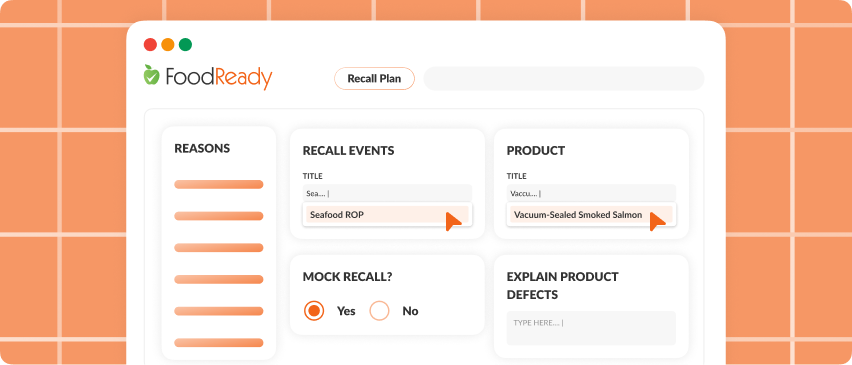
Recall Plan
According to the Food Safety Modernization Act (FSMA), Preventive Controls for Human Food regulation requires a written Recall Plan when a hazard analysis identifies a hazard requiring a preventive control.
Recalls are actions an establishment takes to remove an adulterated, misbranded, or violative product from the market.
In other words, a product for which the FDA or a state could take legal action against the company would be recalled.
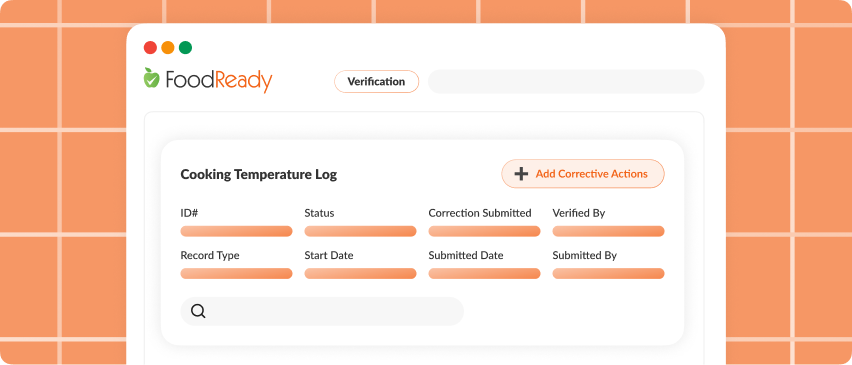
Verification
Verification is essential to the supply chain, sanitation, allergen, and critical controls. It confirms that the HACCP Plan is operating as intended.
Validation confirms the effectiveness of the HACCP Plan. The purpose of verification is to make sure that the HACCP Plan is:
Based on solid scientific principles that are adequate to control the hazards associated with the product and process,
Followed correctly every day of operation.
Take Control of Your Inventory
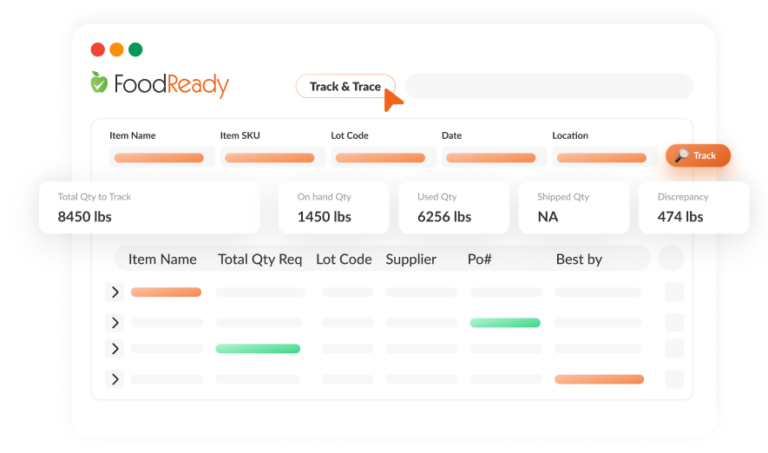
Stop relying on spreadsheets or outdated systems. Use FoodReady to automate inventory tracking, improve traceability, and reduce waste.