10 Best Supplier Quality Management Software Platforms in 2026

A practical, manufacturer-focused comparison of the best supplier quality management software for qualifying vendors, tracking SCARs, automating audits, and improving incoming quality. The comparison includes pricing context, pros and cons, scorecards, service highlights, best-fit use cases, and direct website links.

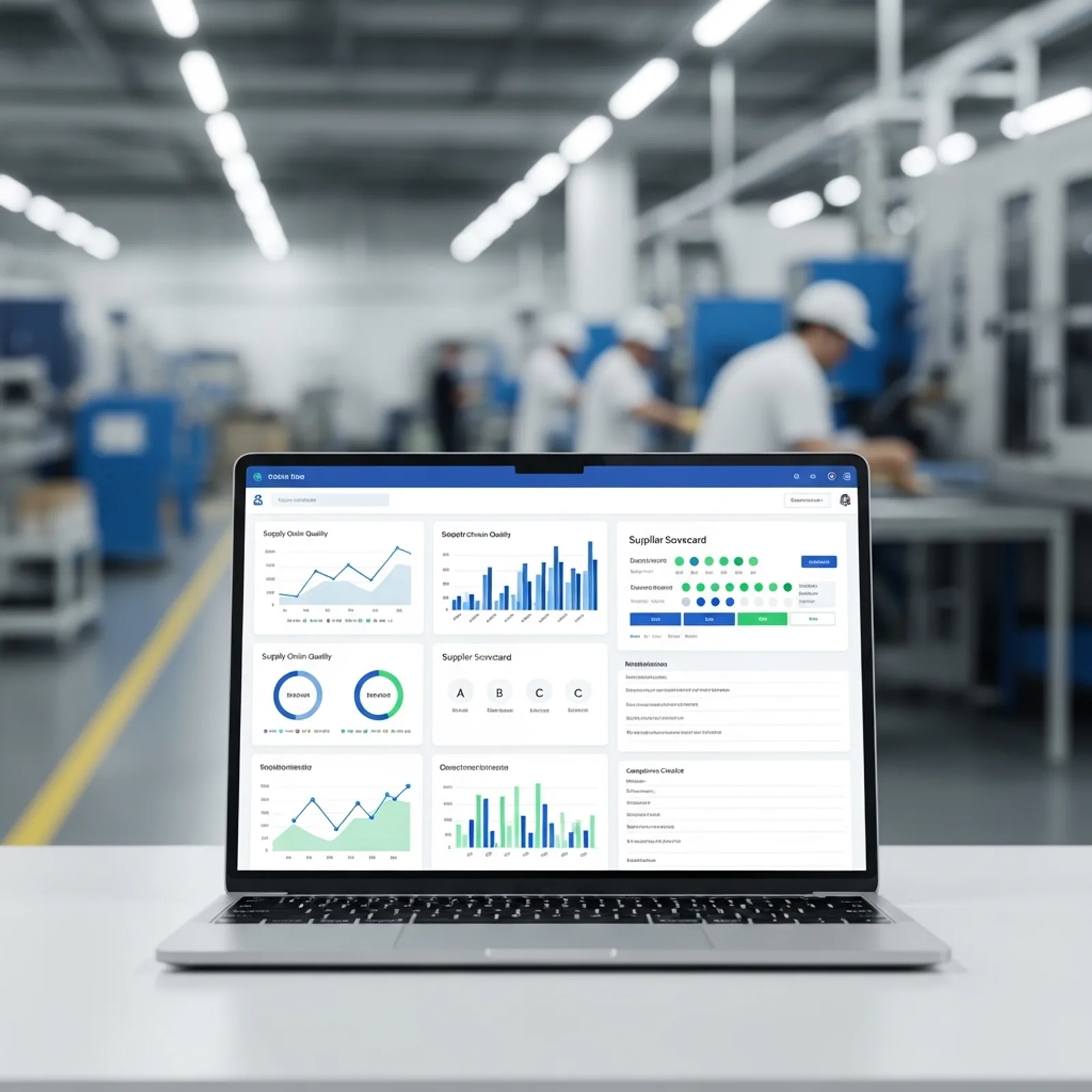
Supplier quality management software dashboard with supplier scorecards and compliance metrics

Published:Last updated:Author:Denice Beccard

Buyer’s guide

What supplier quality management software should solve

Supplier quality management software helps manufacturers control the quality of purchased materials, components, packaging, services, and outsourced processes before those inputs disrupt production or trigger customer complaints. The best platforms move supplier quality out of spreadsheets by centralizing approved supplier lists, onboarding records, risk ratings, supplier audits, incoming inspections, nonconformances, SCARs, CAPAs, certificates of analysis, and performance scorecards in one governed workflow.

For quality leaders, the buying decision is rarely about one feature. A useful system needs to connect supplier qualification with day-to-day evidence: purchase receipts, inspection results, rejected lots, late documents, audit findings, corrective action response time, and recurrence trends. That is why this list prioritizes platforms that can turn supplier data into timely decisions, not just store documents.

The comparison below ranks 10 supplier quality management software platforms for manufacturing teams. Each solution includes pricing context, a detailed description, pros and cons, scorecard ratings, service highlights, best-fit use cases, and a direct website button so readers can continue evaluation quickly.

"Quality is everyone’s responsibility."

W. Edwards Deming
Statistician, author, and quality management pioneer
Ranked shortlist

Software review

The 10 Best Supplier Quality Management Software Platforms

This comparison is written for manufacturers evaluating supplier qualification, supplier scorecards, audits, SCARs, CAPA linkage, incoming inspection, regulatory documentation, and operational integration. Pricing is directional because most enterprise QMS vendors quote by module, site, user count, validation needs, and implementation scope.

Reviewed by FoodReady Editorial Team · Manufacturing quality software research · Supplier quality, CAPA, audit, and compliance workflows

FoodReady
Best overall for manufacturers that want supplier quality connected to operations, inventory, and traceability.
9.4
Custom quote; commonly $40K–$120K+/yr
Typical mid-market annual subscription range; implementation varies by sites, modules, and integrations.
  • Web
  • iOS
  • Android
  • API
ETQ Reliance
Best for large enterprises that need highly configurable eQMS workflows and mature supplier quality controls.
8.6
Custom enterprise quote; often $75K–$250K+/yr
Subscription, modules, users, validation, and implementation are usually scoped separately.
  • Web
  • iOS
  • Android
  • API
MasterControl Quality Excellence
Best for regulated teams that prioritize document control, training, audit trails, and supplier compliance records.
8.3
Custom modular quote; often $60K–$200K+/yr
Pricing varies by modules such as document control, training, CAPA, audit, and supplier quality.
  • Web
  • iOS
  • API
TrackWise Digital
Best for complex global quality organizations that need enterprise-grade event, deviation, CAPA, and supplier workflows.
8.2
Custom enterprise quote; often $100K–$300K+/yr
Enterprise licensing and implementation are typically scoped by process complexity and global rollout needs.
  • Web
  • API
ComplianceQuest Supplier Quality Management
Best for Salesforce-centered companies that want supplier quality, collaboration, and QMS workflows on one platform.
8.4
Custom quote; often $50K–$180K+/yr
Costs depend on Salesforce environment, modules, users, supplier portal needs, and services.
  • Web
  • iOS
  • Android
  • API
Arena QMS
Best for product companies that need supplier quality connected to BOMs, engineering changes, and product records.
8.3
Custom quote; often $30K–$120K+/yr
Frequently sold with Arena PLM; costs vary by users, modules, suppliers, and implementation.
  • Web
  • API
Greenlight Guru
Best for medical device companies that need supplier quality inside an ISO 13485-focused QMS.
8.1
Custom quote; often $25K–$80K+/yr
Packages vary by medical device QMS, design control, risk, and clinical capabilities.
  • Web
  • API
SAP Quality Management
Best for SAP-centric manufacturers that need supplier quality embedded in procurement, inventory, and production.
8.2
Custom SAP quote; implementation can exceed $100K
Costs depend on S/4HANA licensing, scope, consulting, integrations, validation, and rollout size.
  • Web
  • Windows
  • API
  • On-prem
Siemens Opcenter Quality
Best for complex manufacturers that need supplier quality linked to engineering, manufacturing, and production quality.
8.1
Custom enterprise quote; often $100K–$300K+/yr
Pricing depends on modules, plants, integrations with Teamcenter/MES, and services scope.
  • Web
  • Windows
  • API
  • On-prem
Ideagen Quality Management
Best for regulated teams that want approachable supplier management, audits, documents, and CAPA workflows.
8.0
Custom quote; often $20K–$100K+/yr
Costs vary by modules, users, audit needs, supplier users, deployment region, and services.
  • Web
  • iOS
  • Android
  • API
AssurX Quality Management
Best for regulated manufacturers that want configurable supplier quality, CAPA, audit, and complaint workflows.
7.9
Custom quote; often $50K–$180K+/yr
Pricing depends on regulated-industry modules, users, validation, workflow scope, and integrations.
  • Web
  • API
  • On-prem
Editor's pick

FoodReady

Best overall for manufacturers that want supplier quality connected to operations, inventory, and traceability.

  • Editor’s pick
  • Supplier scorecards
  • Traceability-ready
9.4
Overall score
PricingCustom quote; commonly $40K–$120K+/yr· Typical mid-market annual subscription range; implementation varies by sites, modules, and integrations.
Platforms
  • Web
  • iOS
  • Android
  • API

FoodReady ranks first because it treats supplier quality as part of the manufacturing system, not a separate compliance database. Teams can manage supplier approval, document collection, receiving inspection, nonconformances, CAPAs, corrective action evidence, and traceability workflows from one cloud platform. Its differentiator is the combination of supplier quality, inventory, production, audit readiness, and lot genealogy, which is especially useful when a rejected ingredient, component, or packaging lot must be traced quickly across receipts, work orders, finished goods, and customer shipments. The platform is a strong fit for companies that want practical supplier scorecards, AI-assisted quality workflows, and faster implementation than a traditional enterprise eQMS. Pricing is quote-based, but mid-market programs should budget for an annual software subscription plus onboarding, configuration, and integration work.

Pros

  • Unifies supplier quality, QMS, inventory, production, and traceability in one workflow.
  • Strong fit for supplier scorecards, receiving inspection, CAPA, and audit evidence.
  • Useful for teams replacing spreadsheets, disconnected forms, and manual follow-up.
  • Cloud-first interface with mobile access for floor and receiving activities.

Cons

  • Pricing is not publicly posted and depends on implementation scope.
  • May be more platform than a team needs if it only wants basic supplier document storage.
  • Financial accounting typically requires integration with an ERP or accounting system.

Scorecard

  • Supplier quality depth
    9.5 / 10
  • Compliance workflows
    9.4 / 10
  • Integration fit
    9.2 / 10
  • Ease of adoption
    9.1 / 10
  • Value for SQM
    9.3 / 10

Feature highlights

  • Supplier onboarding, qualification, approval, and document control workflows.
  • Risk-based supplier scorecards using NCR, CAPA, audit, COA, and inspection data.
  • Receiving inspection, certificate review, lot genealogy, and mock recall support.
  • AI-assisted CAPA, root-cause summaries, and audit-ready evidence organization.
  • API and business-system integrations for procurement, inventory, and reporting.

Best for: Mid-market and enterprise manufacturers that need supplier quality, traceability, and operational quality in one platform.

Visit FoodReady
#2

ETQ Reliance

Best for large enterprises that need highly configurable eQMS workflows and mature supplier quality controls.

  • Enterprise eQMS
  • Configurable workflows
  • Audit management
8.6
Overall score
PricingCustom enterprise quote; often $75K–$250K+/yr· Subscription, modules, users, validation, and implementation are usually scoped separately.
Platforms
  • Web
  • iOS
  • Android
  • API

ETQ Reliance is a mature enterprise quality management system with strong supplier quality, audit, CAPA, document control, risk, and nonconformance capabilities. Its biggest differentiator is configurability: large organizations can tailor forms, workflows, approval routing, dashboards, and quality event logic to match complex global processes. For supplier quality teams, ETQ can support supplier qualification, supplier audits, SCAR workflows, risk-based oversight, and performance reporting across many plants or business units. The platform is best suited for organizations with quality systems administrators, implementation partners, and internal process owners who can manage configuration discipline over time. Pricing is custom and usually reflects enterprise QMS scope, number of modules, named users, validation expectations, and the cost of integrations with ERP, PLM, LIMS, or procurement systems.

Pros

  • Very configurable workflows for supplier audits, SCARs, CAPAs, and quality events.
  • Mature enterprise feature set for global quality programs.
  • Strong reporting and dashboard options for multi-site quality teams.
  • Good fit for regulated companies with complex approval and escalation paths.

Cons

  • Implementation can be longer and more expensive than lighter QMS tools.
  • Requires disciplined administration to avoid over-customization.
  • Operations, inventory, and production data usually depend on integrations.

Scorecard

  • Supplier quality depth
    8.8 / 10
  • Compliance workflows
    9.1 / 10
  • Integration fit
    8.2 / 10
  • Ease of adoption
    7.7 / 10
  • Value for SQM
    7.6 / 10

Feature highlights

  • Supplier qualification, supplier audit, SCAR, CAPA, and nonconformance workflows.
  • Configurable forms, fields, roles, approvals, and escalation rules.
  • Enterprise dashboards for supplier performance and quality event trends.
  • Document control, training, risk, and audit management modules.
  • Integration options for ERP, PLM, LIMS, procurement, and analytics systems.

Best for: Large enterprises with dedicated quality systems resources and complex supplier quality processes.

Visit ETQ Reliance
#3

MasterControl Quality Excellence

Best for regulated teams that prioritize document control, training, audit trails, and supplier compliance records.

  • Life sciences strength
  • Document control
  • 21 CFR Part 11
8.3
Overall score
PricingCustom modular quote; often $60K–$200K+/yr· Pricing varies by modules such as document control, training, CAPA, audit, and supplier quality.
Platforms
  • Web
  • iOS
  • API

MasterControl Quality Excellence is widely known for regulated document control, training management, CAPA, audit trails, and electronic signature workflows. For supplier quality, it is strongest when approved supplier records, specifications, supplier agreements, audit documentation, complaints, and corrective actions must be tightly controlled under formal change and training processes. Its differentiator is compliance rigor: life sciences, medical device, pharmaceutical, and other regulated manufacturers often value MasterControl because it supports validation expectations, controlled documents, and 21 CFR Part 11-style electronic records. The tradeoff is that supplier performance data may still need integration from ERP, procurement, inspection, or manufacturing systems. Pricing is not public and is usually quoted by module bundle, users, validation requirements, and implementation services.

Pros

  • Excellent document control, training, e-signature, and controlled-record workflows.
  • Strong fit for regulated industries with formal validation expectations.
  • Supplier records can connect to CAPA, audits, complaints, and change control.
  • Established vendor with deep quality and compliance experience.

Cons

  • Supplier performance analytics may require data from external systems.
  • Can be costly for teams that only need supplier scorecards and SCAR tracking.
  • Implementation and validation effort should be planned carefully.

Scorecard

  • Supplier quality depth
    8.4 / 10
  • Compliance workflows
    9.2 / 10
  • Integration fit
    7.7 / 10
  • Ease of adoption
    7.6 / 10
  • Value for SQM
    7.4 / 10

Feature highlights

  • Supplier records connected to document control, training, CAPA, and audit workflows.
  • Electronic signatures, audit trails, and controlled records for regulated environments.
  • Supplier audits, quality events, complaints, deviations, and corrective actions.
  • Formal change control for supplier specifications and controlled procedures.
  • Validation support and quality process governance for life sciences manufacturers.

Best for: Regulated manufacturers that need supplier quality tied tightly to document control, training, and compliance evidence.

Visit MasterControl
#4

TrackWise Digital

Best for complex global quality organizations that need enterprise-grade event, deviation, CAPA, and supplier workflows.

  • Enterprise quality
  • Complex workflows
  • Global programs
8.2
Overall score
PricingCustom enterprise quote; often $100K–$300K+/yr· Enterprise licensing and implementation are typically scoped by process complexity and global rollout needs.
Platforms
  • Web
  • API

TrackWise Digital, associated with Sparta Systems and Honeywell, is designed for sophisticated quality organizations that need robust handling of deviations, CAPAs, complaints, audits, supplier quality events, and global quality processes. For supplier quality, it can support supplier corrective actions, audit findings, quality notifications, risk-based routing, and cross-functional investigations that involve procurement, quality, manufacturing, and regulatory stakeholders. Its key differentiator is depth for large regulated enterprises: it is built to handle complex workflows, multi-site governance, and quality events that require strong auditability. The platform makes the most sense when supplier issues are part of a broader enterprise quality ecosystem. Pricing is custom, and buyers should expect significant configuration, integration, data migration, and change-management work during deployment.

Pros

  • Handles complex supplier quality events, deviations, investigations, and CAPAs.
  • Strong fit for global regulated enterprises with formal quality governance.
  • Configurable workflows can support detailed escalation and approval rules.
  • Good option when supplier quality is part of a broader enterprise QMS program.

Cons

  • Deployment can be expensive and resource-intensive.
  • May be too heavy for small or fast-moving manufacturers.
  • Usability depends heavily on implementation design and process simplification.

Scorecard

  • Supplier quality depth
    8.7 / 10
  • Compliance workflows
    9.2 / 10
  • Integration fit
    8.3 / 10
  • Ease of adoption
    7.2 / 10
  • Value for SQM
    7.1 / 10

Feature highlights

  • Supplier corrective action, deviation, complaint, audit, and CAPA workflows.
  • Enterprise routing, escalation, investigation, and approval logic.
  • Audit trails and controlled records for highly regulated quality processes.
  • Integration patterns for ERP, LIMS, PLM, analytics, and document systems.
  • Dashboards for global quality event and supplier performance oversight.

Best for: Large regulated enterprises with complex supplier investigations and global quality governance needs.

Visit TrackWise Digital
#5

ComplianceQuest Supplier Quality Management

Best for Salesforce-centered companies that want supplier quality, collaboration, and QMS workflows on one platform.

  • Salesforce-native
  • Supplier portal
  • Cloud QMS
8.4
Overall score
PricingCustom quote; often $50K–$180K+/yr· Costs depend on Salesforce environment, modules, users, supplier portal needs, and services.
Platforms
  • Web
  • iOS
  • Android
  • API

ComplianceQuest Supplier Quality Management is built on Salesforce, which makes it attractive for companies already standardizing on Salesforce for workflows, portals, reporting, and user administration. The supplier quality capabilities include supplier onboarding, qualification, audits, SCARs, nonconformance linkage, CAPA, scorecards, risk ratings, and collaborative supplier communication. Its differentiator is the Salesforce foundation: teams can use familiar platform security, mobile access, Experience Cloud-style supplier portals, dashboards, and cross-functional workflow automation. This is especially useful when supplier quality needs to connect with customer quality, service, complaints, and enterprise collaboration. Pricing is custom and depends on Salesforce licensing context, ComplianceQuest modules, the number of internal and supplier users, and implementation services for portal and workflow configuration.

Pros

  • Strong supplier portal and collaboration options for Salesforce-oriented organizations.
  • Good coverage across supplier qualification, SCAR, CAPA, audits, and scorecards.
  • Leverages Salesforce security, workflow, reporting, and mobile ecosystem.
  • Can connect supplier quality with broader customer and enterprise quality processes.

Cons

  • Best value usually comes when the company is comfortable with Salesforce.
  • Configuration decisions can become complex without clear governance.
  • Total cost may include Salesforce-related licensing and implementation services.

Scorecard

  • Supplier quality depth
    8.8 / 10
  • Compliance workflows
    8.7 / 10
  • Integration fit
    8.9 / 10
  • Ease of adoption
    8.0 / 10
  • Value for SQM
    7.8 / 10

Feature highlights

  • Supplier onboarding, qualification, audits, SCARs, and scorecards.
  • Supplier portal and collaborative corrective action workflows.
  • Salesforce-native dashboards, automation, access controls, and mobile support.
  • Quality events, nonconformances, complaints, risk, and CAPA modules.
  • Integration options through Salesforce APIs and ecosystem tools.

Best for: Manufacturers already invested in Salesforce that want supplier quality and QMS collaboration in the same ecosystem.

Visit ComplianceQuest
#6

Arena QMS

Best for product companies that need supplier quality connected to BOMs, engineering changes, and product records.

  • PLM + QMS
  • Product-centric
  • Supplier collaboration
8.3
Overall score
PricingCustom quote; often $30K–$120K+/yr· Frequently sold with Arena PLM; costs vary by users, modules, suppliers, and implementation.
Platforms
  • Web
  • API

Arena QMS is most compelling for product-centric manufacturers that want supplier quality connected to PLM, bills of materials, engineering change orders, approved manufacturer lists, and product documentation. Supplier issues in electronics, medical devices, industrial equipment, and high-tech manufacturing often originate from design changes, component substitutions, or supplier documentation gaps; Arena’s differentiator is that quality processes can sit close to the product record. Teams can manage CAPAs, nonconformances, training, document control, audits, and supplier collaboration alongside item, BOM, and change data. It is not a broad ERP replacement, but it can give quality, engineering, and supply chain teams a shared product context. Pricing is custom and often depends on whether the buyer uses Arena PLM, QMS, or both.

Pros

  • Excellent fit when supplier quality depends on product, BOM, and change data.
  • Helpful collaboration between quality, engineering, supply chain, and suppliers.
  • Good usability compared with many enterprise QMS platforms.
  • Strong option for high-tech, electronics, and medical device product companies.

Cons

  • Best value comes when PLM and QMS are both part of the strategy.
  • Less suitable for process manufacturers that need deep production and inventory workflows.
  • Advanced ERP, MES, or inspection integration may still be required.

Scorecard

  • Supplier quality depth
    8.1 / 10
  • Compliance workflows
    8.2 / 10
  • Integration fit
    8.6 / 10
  • Ease of adoption
    8.4 / 10
  • Value for SQM
    8.1 / 10

Feature highlights

  • Supplier quality workflows tied to items, BOMs, changes, and product documentation.
  • CAPA, nonconformance, audit, training, and document control capabilities.
  • Supplier collaboration around parts, changes, and quality records.
  • Product record visibility for quality, engineering, and supply chain teams.
  • API and integration options for ERP, CRM, and downstream operations systems.

Best for: Product-centric manufacturers that need supplier quality connected to PLM and engineering change control.

Visit Arena QMS
#7

Greenlight Guru

Best for medical device companies that need supplier quality inside an ISO 13485-focused QMS.

  • Medical devices
  • ISO 13485
  • Design controls
8.1
Overall score
PricingCustom quote; often $25K–$80K+/yr· Packages vary by medical device QMS, design control, risk, and clinical capabilities.
Platforms
  • Web
  • API

Greenlight Guru is built specifically for medical device companies, so supplier quality is considered through the lens of ISO 13485, FDA expectations, design controls, risk management, complaints, CAPA, and audit readiness. Its differentiator is industry focus: small and mid-sized medical device manufacturers often get more practical value from a purpose-built device QMS than from a highly generic enterprise platform. Supplier qualification records, supplier evaluations, purchasing controls, approved supplier management, nonconformances, and corrective actions can live alongside design history, risk files, documents, and training evidence. The platform is not intended to be an ERP or broad manufacturing operations suite, but it is strong for teams that want a medical device quality system. Pricing is quote-based by package, users, and implementation support.

Pros

  • Purpose-built for medical device quality and regulatory expectations.
  • Supplier controls can connect with design, risk, document, and CAPA workflows.
  • Generally easier for device startups and mid-market teams than enterprise suites.
  • Strong educational resources for regulated quality teams.

Cons

  • Narrower fit outside the medical device industry.
  • Not designed to replace ERP, purchasing, inventory, or MES systems.
  • Supplier analytics may be less broad than larger enterprise platforms.

Scorecard

  • Supplier quality depth
    7.8 / 10
  • Compliance workflows
    8.9 / 10
  • Integration fit
    7.4 / 10
  • Ease of adoption
    8.7 / 10
  • Value for SQM
    8.0 / 10

Feature highlights

  • Supplier qualification and purchasing-control workflows for medical device teams.
  • CAPA, nonconformance, complaint, audit, document, and training modules.
  • ISO 13485-oriented quality system structure and regulatory evidence organization.
  • Design control and risk management context for supplier-related changes.
  • Audit readiness support for startups and scaling device manufacturers.

Best for: Medical device startups and mid-market manufacturers that want supplier controls inside a purpose-built QMS.

Visit Greenlight Guru
#8

SAP Quality Management

Best for SAP-centric manufacturers that need supplier quality embedded in procurement, inventory, and production.

  • ERP-native
  • Procurement integration
  • Enterprise scale
8.2
Overall score
PricingCustom SAP quote; implementation can exceed $100K· Costs depend on S/4HANA licensing, scope, consulting, integrations, validation, and rollout size.
Platforms
  • Web
  • Windows
  • API
  • On-prem

SAP Quality Management is a natural supplier quality option for manufacturers that already run SAP S/4HANA or a mature SAP ERP landscape. Its differentiator is native connection to purchasing, materials, inventory, production, batch management, inspection lots, quality notifications, vendor evaluation, and enterprise reporting. Instead of moving supplier quality data into a standalone QMS, SAP-centered teams can manage inspections at goods receipt, source inspections, quality notifications, supplier performance, material specifications, and corrective workflows inside the same system that controls procurement and production execution. The downside is complexity: SAP QM projects often require specialized consultants, careful master data design, and significant configuration. Pricing is custom and usually tied to broader SAP licensing, implementation services, integration architecture, and the number of plants included in rollout.

Pros

  • Deep connection to procurement, inventory, production, materials, and enterprise master data.
  • Strong for receiving inspection, inspection plans, quality notifications, and vendor evaluation.
  • Works well for global manufacturers already standardized on SAP.
  • Avoids duplicating supplier quality data in a separate point solution.

Cons

  • Implementation can be complex, expensive, and consultant-dependent.
  • User experience may feel less modern than newer cloud QMS platforms.
  • Best suited to SAP organizations rather than mixed or lightweight IT environments.

Scorecard

  • Supplier quality depth
    8.9 / 10
  • Compliance workflows
    8.2 / 10
  • Integration fit
    9.7 / 10
  • Ease of adoption
    6.8 / 10
  • Value for SQM
    7.0 / 10

Feature highlights

  • Supplier quality embedded in purchasing, goods receipt, inventory, and production.
  • Inspection plans, inspection lots, source inspection, and quality notifications.
  • Vendor evaluation, batch traceability, material master data, and analytics.
  • Integration with SAP Ariba, SAP BTP, S/4HANA reporting, and enterprise processes.
  • Multi-plant standardization for global quality and supply chain programs.

Best for: Manufacturers already running SAP that want supplier quality directly connected to ERP transactions and material data.

Visit SAP QM
#9

Siemens Opcenter Quality

Best for complex manufacturers that need supplier quality linked to engineering, manufacturing, and production quality.

  • Manufacturing quality
  • Teamcenter ecosystem
  • APQP & FMEA
8.1
Overall score
PricingCustom enterprise quote; often $100K–$300K+/yr· Pricing depends on modules, plants, integrations with Teamcenter/MES, and services scope.
Platforms
  • Web
  • Windows
  • API
  • On-prem

Siemens Opcenter Quality is designed for manufacturers that need quality management closely connected to engineering, production planning, shop-floor execution, and manufacturing operations. Supplier quality can be evaluated alongside APQP, FMEA, control plans, inspections, nonconformances, corrective actions, SPC, and broader production quality data. Its differentiator is manufacturing depth, especially for companies already using Siemens Teamcenter, Opcenter, or related digital manufacturing tools. For supplier quality teams, the platform can help connect external supplier issues with internal process capability, product requirements, and plant-level quality outcomes. It is a powerful option for automotive, aerospace, industrial, and complex discrete manufacturing environments, but it usually requires enterprise implementation planning. Pricing is custom and depends heavily on modules, plant count, integrations, and services.

Pros

  • Strong connection between supplier quality, manufacturing quality, and engineering data.
  • Good fit for APQP, FMEA, control plans, SPC, and industrial quality workflows.
  • Valuable for manufacturers already invested in Siemens digital manufacturing tools.
  • Supports complex plant-level and enterprise quality governance.

Cons

  • May be too complex for smaller teams seeking a lightweight supplier quality tool.
  • Best results often require specialized implementation and ecosystem expertise.
  • Pricing and services scope can be significant for multi-site rollouts.

Scorecard

  • Supplier quality depth
    8.6 / 10
  • Compliance workflows
    8.5 / 10
  • Integration fit
    9.0 / 10
  • Ease of adoption
    7.2 / 10
  • Value for SQM
    7.2 / 10

Feature highlights

  • Supplier quality connected to APQP, FMEA, control plans, inspection, and SPC.
  • Corrective action, nonconformance, audit, and manufacturing quality workflows.
  • Integration options with Teamcenter, Opcenter, MES, ERP, and analytics systems.
  • Production-quality dashboards for plant and enterprise quality leaders.
  • Support for automotive, aerospace, industrial, and complex discrete manufacturing.

Best for: Complex manufacturers that want supplier quality connected to engineering and plant-level production quality systems.

Visit Siemens Opcenter Quality
#10

Ideagen Quality Management

Best for regulated teams that want approachable supplier management, audits, documents, and CAPA workflows.

  • Audit management
  • Supplier approval
  • Regulated industries
8.0
Overall score
PricingCustom quote; often $20K–$100K+/yr· Costs vary by modules, users, audit needs, supplier users, deployment region, and services.
Platforms
  • Web
  • iOS
  • Android
  • API

Ideagen Quality Management, including capabilities historically associated with Q-Pulse, is a practical option for regulated teams that need supplier approval, audits, document control, training, nonconformance, CAPA, and risk management without taking on the complexity of the largest enterprise suites. Its supplier quality value comes from structured approved supplier lists, audit scheduling, findings management, corrective actions, document evidence, risk scoring, and reporting. The differentiator is accessibility: quality teams in aviation, healthcare, life sciences, manufacturing, and public-sector environments often use Ideagen to standardize compliance processes while keeping administration manageable. It is not the deepest choice for ERP-native receiving inspection or production traceability, but it is strong for supplier oversight programs centered on audits, documentation, and corrective action follow-through. Pricing is quote-based and usually modular.

Pros

  • Approachable supplier approval, audit, document, training, CAPA, and risk workflows.
  • Good fit for regulated organizations that want structure without extreme complexity.
  • Useful mobile and audit-management capabilities for distributed quality teams.
  • Often easier to administer than highly customized enterprise QMS suites.

Cons

  • Less ERP-native than SAP and less operations-focused than manufacturing platforms.
  • Advanced supplier scorecards may require configuration and data discipline.
  • Pricing is not public and depends on modules and services.

Scorecard

  • Supplier quality depth
    8.0 / 10
  • Compliance workflows
    8.4 / 10
  • Integration fit
    7.6 / 10
  • Ease of adoption
    8.1 / 10
  • Value for SQM
    8.2 / 10

Feature highlights

  • Approved supplier lists, supplier audit schedules, findings, and corrective actions.
  • Document control, training, nonconformance, CAPA, and risk management modules.
  • Dashboards and reporting for supplier performance and compliance follow-up.
  • Mobile-friendly audit and quality data capture for distributed teams.
  • Support for regulated manufacturing, aviation, healthcare, and life sciences workflows.

Best for: Regulated manufacturers and quality teams that need supplier audits, document control, and CAPA in an approachable QMS.

Visit Ideagen
#11

AssurX Quality Management

Best for regulated manufacturers that want configurable supplier quality, CAPA, audit, and complaint workflows.

  • Regulated QMS
  • Configurable
  • CAPA depth
7.9
Overall score
PricingCustom quote; often $50K–$180K+/yr· Pricing depends on regulated-industry modules, users, validation, workflow scope, and integrations.
Platforms
  • Web
  • API
  • On-prem

AssurX Quality Management is a configurable QMS used by regulated manufacturers in life sciences, energy, manufacturing, and other compliance-heavy sectors. For supplier quality, it can support supplier qualification, supplier audits, SCARs, CAPA, complaints, deviations, nonconformances, and controlled quality records. Its differentiator is workflow flexibility for organizations that need structured, auditable processes but do not want every supplier issue forced into a rigid template. Teams can configure forms, lifecycle states, role-based routing, reporting, and escalations around their internal quality model. AssurX is strongest when supplier quality is part of a broader regulated QMS with complaint handling, document control, and corrective action processes. Pricing is custom and should be evaluated alongside validation, services, integrations, and internal administration needs.

Pros

  • Configurable workflows for supplier quality, CAPA, complaints, and audit processes.
  • Good fit for regulated industries that need controlled records and auditability.
  • Can support both cloud and on-premise deployment strategies.
  • Flexible enough for complex quality event and escalation models.

Cons

  • Configuration flexibility requires governance and experienced process owners.
  • May need integrations for procurement, receiving inspection, and ERP master data.
  • Not as modern-looking as newer cloud-first platforms in some deployments.

Scorecard

  • Supplier quality depth
    8.1 / 10
  • Compliance workflows
    8.6 / 10
  • Integration fit
    7.8 / 10
  • Ease of adoption
    7.5 / 10
  • Value for SQM
    7.6 / 10

Feature highlights

  • Supplier qualification, supplier audit, SCAR, CAPA, and complaint workflows.
  • Configurable forms, lifecycle states, role-based routing, and escalations.
  • Controlled records, audit trails, and regulatory reporting support.
  • Cloud and on-premise deployment options for regulated IT environments.
  • Integration options for ERP, document control, analytics, and enterprise systems.

Best for: Regulated manufacturers that need flexible supplier quality workflows inside a broader quality management system.

Visit AssurX

Pricing ranges are directional editorial estimates based on typical market positioning, public packaging signals, and implementation assumptions. Vendors may quote materially different prices by region, module, user count, validation requirements, plant count, and contract terms.

Selection framework

How to choose supplier quality management software

Start with the supplier quality outcomes that matter most. If the immediate problem is late supplier corrective action response, prioritize SCAR workflows, escalation rules, supplier portal access, due-date tracking, and evidence capture. If incoming defects are the pain point, prioritize receiving inspection, sampling plans, inspection results, lot disposition, certificate review, and links to inventory or ERP transactions. If audits are the problem, prioritize audit scheduling, questionnaires, finding management, objective evidence, and repeat-finding analytics.

Next, define the system of record. Some manufacturers want supplier quality inside a dedicated eQMS; others need it connected to ERP, PLM, MES, procurement, or inventory. This decision matters because a supplier scorecard is only as good as the data behind it. Look for a platform that can combine quality events, on-time delivery, rejected quantities, audit findings, open CAPAs, response times, expired documents, and risk ratings without requiring weeks of manual reporting.

Evaluate governance before evaluating dashboards. A beautiful scorecard will not fix unclear ownership, inconsistent supplier risk criteria, or corrective actions that never reach the supplier. The implementation plan should define supplier categories, approval levels, document requirements, audit frequency, response-time targets, escalation paths, and criteria for probation or disqualification. The software should make those rules easier to follow, measure, and improve.

Finally, compare total cost of ownership, not just subscription price. Supplier quality projects often include configuration, data migration, validation, supplier onboarding, ERP or procurement integration, report design, administrator training, and change management. A higher license price may be justified if the platform reduces manual work across quality, purchasing, receiving, production, and compliance. A lower price may be the better choice if the organization needs a focused supplier audit and CAPA tool rather than a full operational quality platform.

Practical takeaway

Build the shortlist around real supplier-quality workflows

Before scheduling demos, document three current supplier issues from the last 90 days: one rejected receipt, one late supplier corrective action, and one supplier document or audit gap. Ask each vendor to show how the platform would capture the event, notify the owner, involve the supplier, link evidence, update the supplier scorecard, and prove closure during an audit. That exercise reveals more than a generic feature checklist.

FAQ

Supplier Quality Management Software FAQ

Answers to common questions manufacturers ask when comparing supplier quality management systems.

What is supplier quality management software?

Supplier quality management software is a system for controlling supplier approval, documentation, audits, incoming quality, nonconformances, supplier corrective actions, CAPAs, risk ratings, and performance scorecards. Instead of tracking supplier issues in email and spreadsheets, teams use the software to assign owners, collect evidence, set due dates, analyze trends, and maintain audit-ready supplier records.

What features should supplier quality management software include?

Core features should include approved supplier lists, supplier onboarding, document collection, supplier audits, incoming inspection, nonconformance tracking, SCAR workflows, CAPA linkage, risk scoring, supplier scorecards, dashboards, reminders, audit trails, and reporting. Manufacturers with complex operations should also look for ERP, inventory, procurement, PLM, MES, or traceability integrations.

How much does supplier quality management software cost?

Most serious supplier quality platforms use custom pricing. Focused tools may start in the low five figures annually, while enterprise eQMS or ERP-native deployments can reach six figures or more when modules, users, validation, integrations, and implementation services are included. Buyers should ask vendors for subscription, implementation, integration, training, validation, support, and supplier-portal costs separately.

What is a supplier scorecard?

A supplier scorecard summarizes supplier performance using measurable criteria such as defect rate, lot acceptance, on-time delivery, audit results, open corrective actions, response time, document status, cost of poor quality, and risk level. The most useful scorecards update from real quality and operational data instead of relying on subjective manual scoring alone.

What is the difference between SCAR and CAPA?

A SCAR, or supplier corrective action request, is issued to a supplier when the manufacturer needs the supplier to investigate and correct a supplier-caused issue. CAPA is broader and may apply to internal or external quality problems. Strong supplier quality software connects SCARs to nonconformances, inspections, complaints, audits, and CAPA records when escalation or internal action is required.

Should supplier quality management be part of ERP or QMS?

It depends on the operating model. ERP is useful when supplier quality must be tied directly to purchasing, receiving inspection, inventory, and material transactions. QMS is useful when the priority is auditability, CAPA, document control, regulated workflows, and supplier corrective actions. Many manufacturers need integration between both rather than a strict either-or decision.

How long does implementation usually take?

A focused supplier quality rollout can take a few weeks to a few months if processes are clear and data is clean. Enterprise QMS, ERP-native, or validated deployments often take several months because they include configuration, integrations, migration, testing, SOP updates, training, supplier onboarding, and change management. The fastest projects start with a narrow pilot and expand after process proof.

How should manufacturers evaluate vendor demos?

Use real scenarios instead of generic demo scripts. Ask each vendor to walk through supplier onboarding, document expiration, a failed incoming inspection, a SCAR with supplier response, audit finding closure, scorecard updates, escalation, and management reporting. The best demo should show ownership, evidence, audit trails, analytics, and how supplier performance improves over time.

Written by

denice beccard

Denice Beccard

Denice Beccard is an SQF consultant (Safe Quality Food), BRC Consultant, GFSI consultant, HACCP certified, and former Director of Quality for multiple food manufacturing companies. Denice Beccard is experienced in food safety and quality management with a strong background in food manufacturing and inventory management. Her certifications include: HACCP, PCQI, GFSI SQF, BRCGS Practitioner/Internal Auditor, Food Defense Awareness for food professionals, ServSafe Instructor/Proctor.

Get a demo

Speak with our Expert Consultants

15–30 minutes. We map FoodReady to your process, plug in your real HACCP plan, and show you the auditor view before the call ends.

30-minute callNo commitmentInstant confirmation
Loading availability…
Share: