FoodReady
Unified sanitation, food safety, quality, inventory, and production management
- Editor’s Pick
- FSMA
- HACCP
- Unified Platform
- Web
- iOS
- Android
- API
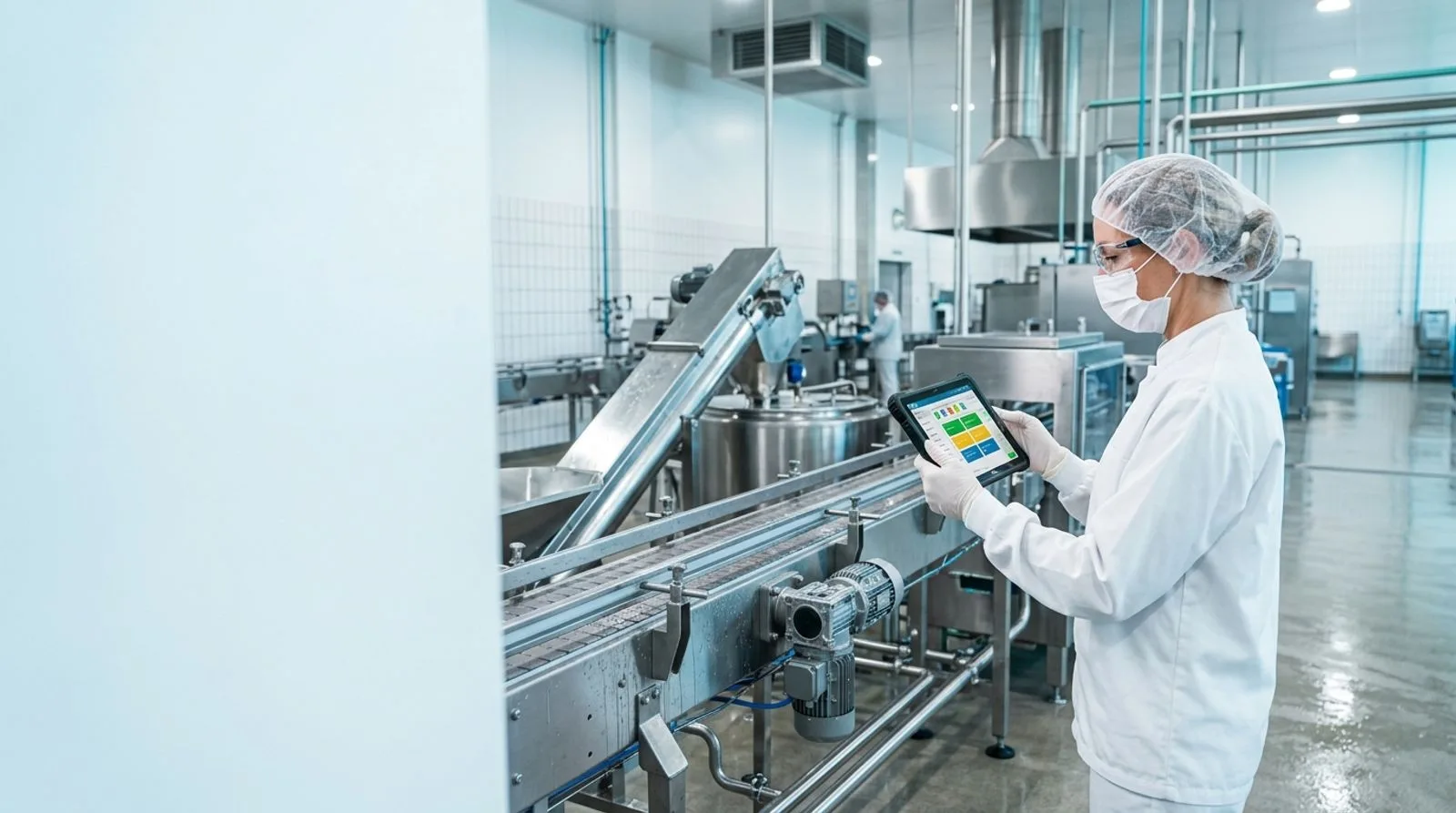
FoodReady ranks first for manufacturers that want the master sanitation schedule connected to the rest of the food-safety and plant-management system. Teams can organize recurring work by site, zone, room, line, or asset; assign frequencies and owners; attach controlled procedures; capture mobile completion records; and route exceptions for review. That structure helps replace disconnected spreadsheets, paper signoffs, and calendar reminders with one governed workflow.
Its main differentiator is operational context. Sanitation records can sit alongside inspections, preventive controls, environmental monitoring, corrective actions, supplier controls, inventory, maintenance, production, and training. A supervisor reviewing a missed cleaning event can therefore investigate whether production ran late, an asset remained locked for maintenance, an employee lacked current training, or a failed verification requires escalation. The same platform also supports lot traceability, document control, CAPA, audit management, and dashboards, reducing the need to reconcile several systems before an audit.
FoodReady is cloud software designed for web and mobile use, with APIs and integrations available for broader plant systems. Typical implementations run 8–16 weeks, depending on the number of sites, imported records, integrations, and workflow complexity. Published internal positioning places Starter subscriptions at $15,000–$30,000 annually, Professional at $40,000–$75,000, and Enterprise at $75,000–$150,000, with implementation commonly ranging from $10,000–$60,000. Its strengths are breadth, speed, and a modern operator experience. Tradeoffs include a smaller installed base than long-established enterprise QMS vendors, less extreme customization, and financial accounting handled through integrations such as QuickBooks, Sage, NetSuite, or other ERP software rather than a native general ledger.
Pros
- Connects master sanitation tasks with quality, production, inventory, maintenance, training, and CAPA records
- Supports site, zone, line, equipment, frequency, owner, procedure, evidence, and verification controls
- Mobile workflows improve floor adoption and make photo or signature evidence easier to capture
- Implementation is typically measured in weeks rather than year-long enterprise programs
- Offers broad food-manufacturing functionality without requiring separate QMS, inventory, and production databases
- APIs and established ERP, scanner, and automation integration options support a connected plant architecture
Cons
- Newer platform with a smaller installed base than several legacy enterprise vendors
- Highly unusual global workflows may require configuration tradeoffs rather than unlimited customization
- Financial accounting depends on an ERP or accounting integration
- May provide more operational breadth than a very small single-site facility needs
Scorecard
- Sanitation scheduling9.7 / 10
- Verification controls9.6 / 10
- Food-safety depth9.7 / 10
- Mobile usability9.4 / 10
- Value and scalability9.5 / 10
Feature highlights
- Recurring sanitation plans by facility, zone, asset, owner, and frequency
- Controlled SOPs, training links, electronic records, and approval history
- Deviation, CAPA, audit, environmental monitoring, and preventive-control workflows
- Production, inventory, supplier, maintenance, and traceability modules
- Real-time dashboards, overdue alerts, trend analysis, and exportable audit evidence
- Web, iOS, Android, API, scanner, ERP, and plant-system connectivity