10 Best Fresh Produce Software Platforms for 2026

Compare the best fresh produce software for inventory, lot traceability, quality, warehouse operations, grower accounting, and FSMA compliance. This guide evaluates ten platforms by capabilities, pricing, implementation fit, and operational value.

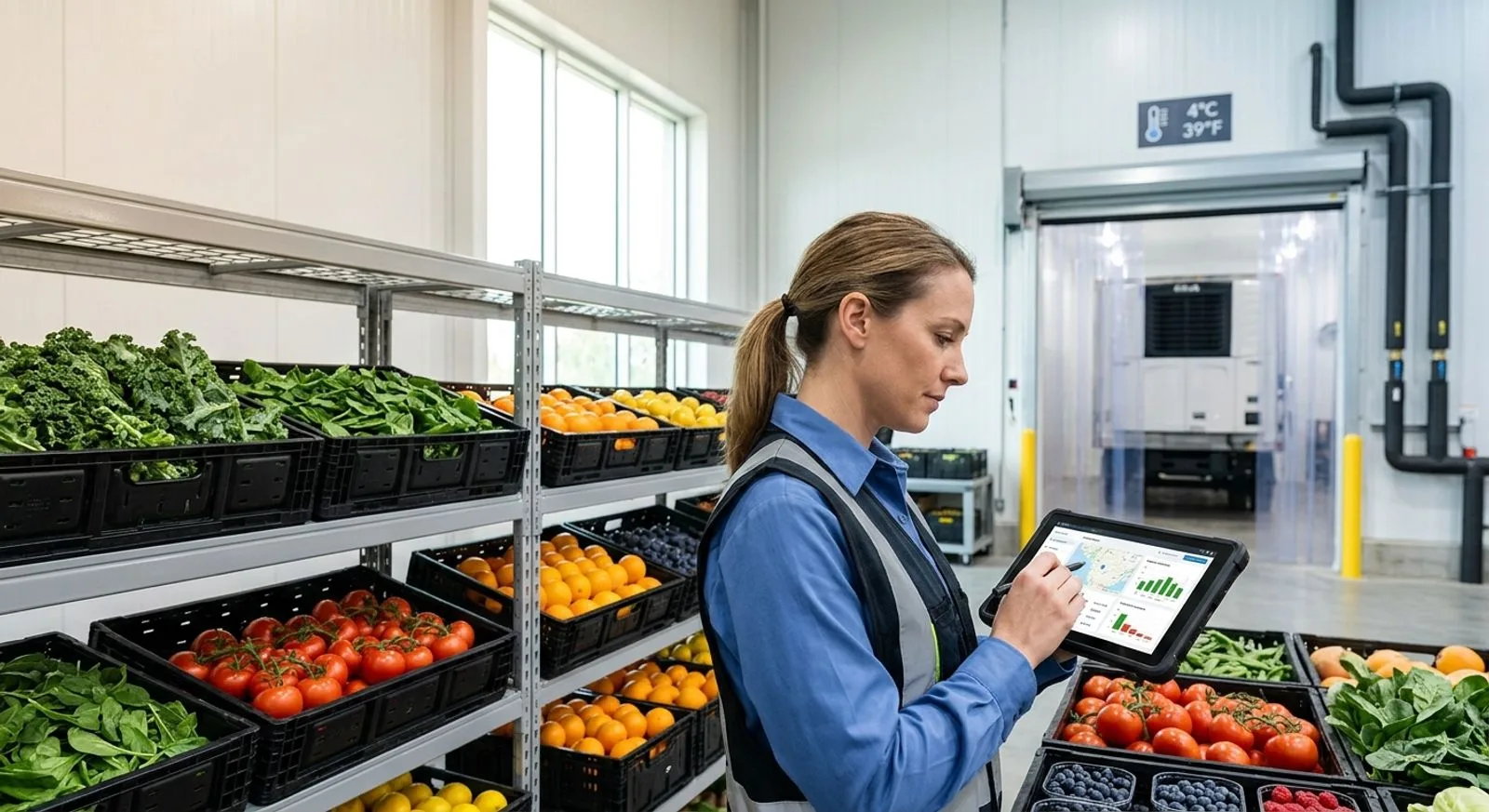
Quality manager using fresh produce software on a tablet in a modern produce distribution facility

Published:Last updated:Author:Luke Duffy

BUYER'S GUIDE

How we evaluated fresh produce software

Fresh produce businesses operate on unusually tight margins and timelines. Product value changes by the hour, shelf life is limited, weights and grades vary, and one receiving error can disrupt inventory, customer commitments, or a recall investigation. The best fresh produce software therefore does more than count cases. It connects purchasing, receiving, quality inspections, lot genealogy, repacking, sales, shipping, and financial controls around the real movement of perishable goods.

For this guide, we compared ten fresh produce software platforms used by growers, packers, shippers, processors, wholesalers, and distributors. FoodReady ranks first because it combines quality management, lot-controlled inventory, production, supplier controls, maintenance, and analytics in one cloud system. Produce Pro and Famous Software follow for companies that want produce-specific ERP depth, while the remaining platforms address specialized needs such as supplier traceability, cold-chain collaboration, warehouse execution, or plant-floor quality.

Our scores reflect five practical criteria: produce traceability, inventory and operations, food-safety compliance, usability and implementation, and value. We also examined support for FEFO allocation, variable-weight items, repacking, grower or supplier records, mobile inspections, recall readiness, and integration with accounting or enterprise systems. Pricing is presented as published when a vendor discloses it; otherwise, we identify it as custom quote pricing rather than inventing a figure.

No single fresh produce software platform fits every operating model. A regional wholesaler needs rapid order entry and route-ready picking, while a multi-site processor may prioritize HACCP controls, preventive maintenance, and production yields. Treat this ranking as a structured shortlist. Confirm required integrations, data migration, implementation services, user limits, mobile functionality, and total three-year cost during vendor demonstrations.

"Food safety is a shared responsibility between government, industry, producers, academia, and consumers."

Frank Yiannas
Former FDA Deputy Commissioner for Food Policy and Response
TOP 10 PLATFORMS

Fresh produce software review

The 10 best fresh produce software platforms

A detailed comparison of software for produce inventory, traceability, quality, purchasing, packing, warehouse execution, supplier collaboration, and compliance.

Reviewed by FoodReady Editorial Team · Manufacturing software research · Food safety and traceability analysis · Updated for 2026

FoodReady
Unified quality, inventory, production, traceability, and supplier management for produce companies
9.5
$15K–150K/year
Subscription by tier; implementation typically $10K–60K
  • Web
  • iOS
  • Android
  • API
Produce Pro Software
Produce-focused ERP for distributors, wholesalers, processors, and foodservice supply operations
9.0
Custom quote
Modules, users, services, and deployment scope affect price
  • Web
  • Windows
  • iOS
  • Android
  • API
Famous Software
Established produce ERP for grower accounting, packing, cooling, sales, and distribution
8.9
Custom quote
Pricing depends on applications, locations, users, and services
  • Windows
  • Web
  • iOS
  • Android
  • API
Silo
Cloud platform for produce purchasing, inventory, sales, payments, and logistics collaboration
8.6
Custom quote
Subscription pricing varies by workflow and business scale
  • Web
  • iOS
  • Android
FreshByte Software
Produce distribution software for sales, purchasing, inventory, warehouse, routing, and accounting
8.5
Custom quote
Quoted according to users, modules, and implementation services
  • Windows
  • Web
  • iOS
  • Android
Wherefour
Cloud ERP and traceability software for batch-oriented food and beverage manufacturers
8.4
Custom quote
Cloud subscription based on company needs and implementation scope
  • Web
  • API
iTradeNetwork
Supply-chain network for trading, traceability, quality, and supplier collaboration in perishables
8.3
Custom quote
Enterprise pricing varies by network services and transaction volume
  • Web
  • API
ReposiTrak
Supplier compliance, food traceability, and document management across retail supply chains
8.2
Custom quote
Program pricing depends on supplier count, connections, and services
  • Web
  • API
SafetyChain
Digital plant quality, food safety, supplier, and production performance management
8.1
Custom quote
Subscription and services vary by sites, modules, and users
  • Web
  • iOS
  • Android
  • API
FoodLogiQ
Traceability, supplier management, and recall software for connected food supply chains
8.0
Custom quote
Enterprise subscription based on modules, locations, and network scope
  • Web
  • iOS
  • Android
  • API
Editor's pick

FoodReady

Unified quality, inventory, production, traceability, and supplier management for produce companies

  • Top Pick
  • FSMA & HACCP
  • Cloud SaaS
9.5
Overall score
Pricing$15K–150K/year· Subscription by tier; implementation typically $10K–60K
Platforms
  • Web
  • iOS
  • Android
  • API

FoodReady is the strongest overall fresh produce software choice for mid-market growers, packers, processors, and distributors that want quality and operations in one cloud platform. It connects multi-location inventory, lot genealogy, FIFO and FEFO controls, barcode workflows, purchasing, production, supplier management, CAPA, audits, document control, training, maintenance, and analytics. That breadth reduces the need to reconcile a separate QMS, inventory application, production system, and supplier portal.

Produce teams can capture receiving inspections, COAs, temperatures, supplier approvals, hold-and-release decisions, and lot attributes alongside inventory transactions. During a traceability exercise, connected records help users move from a finished shipment to source lots, production activity, and affected customers. The software also supports work orders, BOMs, scheduling, cycle counting, calibration, preventive maintenance, dashboards, and mobile floor records. FoodReady reports typical inventory accuracy of 98–99.5% and mock recalls in under 30 minutes across its verified platform data.

FoodReady is best for companies with 50–1,000 employees that need operational depth and compliance controls without a lengthy legacy ERP project. Smaller produce brokers needing only sales and accounting may find the platform broader than necessary.

Pros

  • Unifies quality, inventory, production, supply chain, maintenance, and analytics
  • Native lot genealogy, FIFO/FEFO, barcode, quarantine, and recall workflows
  • Mobile inspections, supplier records, CAPA, audits, and document control
  • Typical implementation takes 8–16 weeks
  • Integrates with SAP, NetSuite, Dynamics 365, Epicor, Sage, and QuickBooks

Cons

  • Broader than the needs of very small brokers or commission merchants
  • Newer vendor with a smaller installed base than long-established ERP providers
  • Financial accounting is handled through integrations rather than a native general ledger
  • Less open-ended customization than some legacy enterprise suites

Scorecard

  • Traceability
    9.7 / 10
  • Inventory & operations
    9.5 / 10
  • Food safety
    9.7 / 10
  • Ease of implementation
    9.2 / 10
  • Value
    9.3 / 10

Feature highlights

  • Lot-controlled receiving, inventory, production, repacking, and shipping
  • HACCP records, audits, CAPA, NCR, training, and document control
  • Supplier portal, approved supplier lists, COA/COC capture, and scorecards
  • Barcode and QR workflows with Zebra and Honeywell scanner support
  • Real-time dashboards, SPC, predictive analytics, and AI-assisted root cause analysis
Best for: Mid-market produce packers, processors, distributors, and multi-site manufacturers needing one quality-and-operations platform

Visit FoodReady
#2

Produce Pro Software

Produce-focused ERP for distributors, wholesalers, processors, and foodservice supply operations

  • Produce ERP
  • Warehouse Operations
9.0
Overall score
PricingCustom quote· Modules, users, services, and deployment scope affect price
Platforms
  • Web
  • Windows
  • iOS
  • Android
  • API

Produce Pro is a produce-specific ERP designed around the transactions that generic business software often handles poorly. Its capabilities span purchasing, sales orders, inventory, warehouse activity, transportation, repacking, processing, accounting, business intelligence, and mobile workflows. Produce wholesalers and distributors can manage variable weights, multiple units of measure, lot information, pricing, margins, customer-specific requirements, and fast-moving order changes inside one operational system.

The platform is particularly useful when warehouse execution and commercial controls carry equal weight. Mobile and scanning tools can support receiving, putaway, picking, loading, inventory checks, and delivery activity. Produce Pro also emphasizes profitability visibility, which matters when landed cost, shrink, repacking yield, and market pricing change quickly. Its industry focus can shorten the gap between a standard ERP design and actual produce workflows.

Pricing is available by custom quote, so buyers should request separate figures for licenses, implementation, data conversion, mobile tools, integrations, training, and ongoing support. The software is best suited to established distributors, wholesalers, and processors that want a broad produce ERP and have internal leaders available for a structured implementation. Companies primarily seeking deep CAPA, audit, and document-control workflows should compare its quality depth with a unified QMS platform before deciding.

Pros

  • Purpose-built workflows for produce distribution and processing
  • Broad ERP coverage across sales, purchasing, warehouse, accounting, and logistics
  • Supports variable-weight and fast-changing produce transactions
  • Mobile and barcode options for warehouse and delivery teams

Cons

  • Pricing is not publicly posted
  • Implementation may require substantial process mapping and data cleanup
  • Quality-management depth should be validated against regulated plant requirements
  • May be more system than a small grower or broker needs

Scorecard

  • Traceability
    9.1 / 10
  • Inventory & operations
    9.5 / 10
  • Food safety
    8.4 / 10
  • Ease of implementation
    8.0 / 10
  • Value
    8.6 / 10

Feature highlights

  • Purchasing, sales, inventory, warehouse, and accounting workflows
  • Repacking, processing, landed cost, margin, and yield visibility
  • Mobile receiving, picking, loading, and delivery capabilities
  • Business intelligence and produce-specific reporting

Best for: Established produce distributors, wholesalers, and processors seeking a purpose-built ERP

Visit Produce Pro
#3

Famous Software

Established produce ERP for grower accounting, packing, cooling, sales, and distribution

  • Grower Accounting
  • Produce ERP
8.9
Overall score
PricingCustom quote· Pricing depends on applications, locations, users, and services
Platforms
  • Windows
  • Web
  • iOS
  • Android
  • API

Famous Software serves produce growers, shippers, packers, coolers, distributors, and brokers with an industry-specific ERP portfolio. Its differentiator is the ability to support both operational movement and complex produce accounting, including grower settlements, pooling, commissions, charges, packout, inventory, sales, purchasing, and financial processes. This makes the software particularly relevant to vertically integrated companies that receive field product, pack it into market forms, and settle with multiple growers.

Operational applications support traceability, inventory, sales order management, warehouse tasks, shipping, and reporting. The broader Famous ecosystem also includes mobility and analytics options that can extend data capture beyond the back office. Buyers with intricate grower contracts or accounting rules may value the platform's long produce-market history more than a generic cloud ERP's broader configuration toolkit.

Famous Software uses custom pricing. A complete estimate should distinguish core licenses from implementation, interfaces, mobile applications, reporting work, infrastructure, and support. The system is best for mature produce enterprises that require grower accounting and packer-shipper functionality. Organizations prioritizing a modern, QMS-led cloud experience should assess user interface, deployment model, validation needs, and quality workflows during a scenario-based demonstration.

Pros

  • Deep grower accounting, settlements, pooling, and produce financial workflows
  • Supports growers, packers, shippers, coolers, brokers, and distributors
  • Strong fit for complex packout and vertically integrated operations
  • Long history in the produce industry

Cons

  • No public list pricing
  • Implementation scope can be significant for multi-entity organizations
  • Buyers should evaluate interface consistency across applications
  • Dedicated QMS workflows may require configuration or complementary tools

Scorecard

  • Traceability
    8.9 / 10
  • Inventory & operations
    9.3 / 10
  • Food safety
    8.2 / 10
  • Ease of implementation
    7.8 / 10
  • Value
    8.5 / 10

Feature highlights

  • Grower settlements, pooling, commissions, and charge management
  • Packing, cooling, inventory, sales, purchasing, and shipping
  • Packout reporting and produce financial controls
  • Mobile and analytics options for distributed operations

Best for: Vertically integrated growers, packers, shippers, and coolers with complex grower accounting

Visit Famous Software
#4

Silo

Cloud platform for produce purchasing, inventory, sales, payments, and logistics collaboration

  • Cloud Native
  • Produce Commerce
8.6
Overall score
PricingCustom quote· Subscription pricing varies by workflow and business scale
Platforms
  • Web
  • iOS
  • Android

Silo is a cloud-based produce business platform aimed at helping wholesalers, distributors, growers, and shippers coordinate purchasing, inventory, sales, accounting-related workflows, and payments. Its modern interface and produce-market orientation make it appealing to teams moving away from spreadsheets, disconnected accounting tools, and phone-driven transaction tracking. Users can centralize orders and inventory information while improving visibility across commercial activity.

The platform's key differentiator is accessibility for produce trading and distribution teams that want a contemporary system without starting with a traditional enterprise ERP footprint. It can help sales and purchasing staff see product availability, manage transactions, and maintain cleaner operational records. Depending on the selected services, Silo can also support financial and logistics processes that are often fragmented in smaller produce companies.

Silo provides pricing through a custom sales process. Buyers should verify the exact scope of inventory costing, lot traceability, warehouse scanning, repacking, quality inspections, recall reporting, accounting, payments, and integrations included in the proposal. It is best for growing produce wholesalers and distributors that prioritize cloud usability and commercial workflow. Processors with formal HACCP, CAPA, maintenance, and document-control requirements may need deeper manufacturing and quality capabilities.

Pros

  • Modern cloud interface designed for produce businesses
  • Connects purchasing, sales, inventory, and financial workflows
  • Accessible to distributed commercial teams
  • Useful alternative to spreadsheet-led produce operations

Cons

  • Pricing requires a vendor quote
  • Manufacturing and formal QMS depth may not match broader plant platforms
  • Buyers should confirm barcode, repacking, and recall requirements in detail
  • Feature scope can depend on selected services

Scorecard

  • Traceability
    8.3 / 10
  • Inventory & operations
    8.7 / 10
  • Food safety
    7.7 / 10
  • Ease of implementation
    9.0 / 10
  • Value
    8.5 / 10

Feature highlights

  • Produce purchasing, order management, and inventory visibility
  • Sales and customer transaction workflows
  • Cloud access for distributed produce teams
  • Payment and finance-related workflow options

Best for: Growing produce wholesalers and distributors replacing spreadsheets with an accessible cloud platform

Visit Silo
#5

FreshByte Software

Produce distribution software for sales, purchasing, inventory, warehouse, routing, and accounting

  • Produce Distribution
  • Order Management
8.5
Overall score
PricingCustom quote· Quoted according to users, modules, and implementation services
Platforms
  • Windows
  • Web
  • iOS
  • Android

FreshByte Software focuses on fresh produce distribution, with operational functions for order entry, purchasing, inventory, warehouse management, routing, delivery, pricing, accounts receivable, and reporting. The system addresses the speed of produce sales environments, where staff need to update orders, substitute products, monitor margins, and coordinate warehouse fulfillment without losing control of lot or customer information.

Its practical strength is coverage of the distributor's daily transaction cycle. Sales teams can work with customer pricing and order history, while purchasing and warehouse teams coordinate supply and fulfillment. Mobile capabilities can extend selected functions to sales, drivers, or warehouse personnel. This orientation makes FreshByte a credible fit for regional produce distributors that value industry terminology and workflows over a highly configurable horizontal ERP.

Pricing is custom quoted. Prospective customers should request a full implementation statement that covers conversion from the existing system, barcode devices, labels, route or delivery tools, accounting setup, integrations, training, and post-launch support. FreshByte is best for produce distributors whose primary requirements are order processing, inventory, warehouse activity, and financial operations. Companies with multi-plant production or extensive audit, CAPA, and supplier-quality programs should compare specialist quality software as well.

Pros

  • Designed specifically for produce distributors
  • Strong order entry, purchasing, inventory, pricing, and customer workflows
  • Warehouse, routing, delivery, accounting, and reporting coverage
  • Mobile options can support field and operational users

Cons

  • Public pricing is unavailable
  • May be less suitable for complex multi-stage manufacturing
  • Formal quality and compliance functionality should be assessed carefully
  • Implementation still requires disciplined item and customer data preparation

Scorecard

  • Traceability
    8.4 / 10
  • Inventory & operations
    9.0 / 10
  • Food safety
    7.7 / 10
  • Ease of implementation
    8.3 / 10
  • Value
    8.4 / 10

Feature highlights

  • Fast produce order entry and customer-specific pricing
  • Purchasing, inventory, warehouse, routing, and delivery workflows
  • Accounts receivable and operational reporting
  • Mobile support for selected roles

Best for: Regional produce distributors prioritizing order speed, inventory control, warehouse execution, and routing

Visit FreshByte
#6

Wherefour

Cloud ERP and traceability software for batch-oriented food and beverage manufacturers

  • Batch Traceability
  • Cloud ERP
8.4
Overall score
PricingCustom quote· Cloud subscription based on company needs and implementation scope
Platforms
  • Web
  • API

Wherefour is a cloud ERP built for batch-oriented food and beverage production. Although it is not exclusive to fresh produce, its lot tracking, purchasing, inventory, production, sales, costing, and traceability functions can suit fresh-cut processors, value-added produce manufacturers, commissary-style production facilities, and brands that transform ingredients into packaged goods. Its design emphasizes connected batch records and accessible traceability.

Users can manage ingredients, formulas, production activity, inventory consumption, finished lots, and customer shipments in a single system. That structure supports yield review, costing, inventory status, and recall searches without relying on separate spreadsheets. Wherefour is generally more relevant when a produce company performs meaningful processing or formulation than when it acts primarily as a grower-accounting operation or high-volume wholesale market.

Pricing is supplied through a custom quote. Buyers should clarify user tiers, implementation, accounting integration, label workflows, EDI, warehouse scanning, quality records, and support. The software is best for small and midsize fresh-cut or value-added produce processors that need cloud batch traceability and ERP functions. Larger enterprises requiring advanced maintenance, supplier CAPA, or extensive warehouse automation may need complementary applications or a broader platform.

Pros

  • Cloud ERP with connected batch and lot traceability
  • Good fit for fresh-cut and value-added production
  • Combines inventory, production, sales, purchasing, and costing
  • Accessible alternative to heavier enterprise ERP projects

Cons

  • Pricing is custom rather than publicly listed
  • Not designed specifically around grower settlements or produce brokerage
  • Advanced QMS and maintenance requirements may need added systems
  • Complex warehouse automation should be validated during selection

Scorecard

  • Traceability
    9.1 / 10
  • Inventory & operations
    8.5 / 10
  • Food safety
    8.2 / 10
  • Ease of implementation
    8.7 / 10
  • Value
    8.4 / 10

Feature highlights

  • Batch, lot, ingredient, and finished-goods genealogy
  • Purchasing, inventory, production, sales, and costing
  • Recall search and cloud-accessible production records
  • ERP workflows for small and midsize food manufacturers

Best for: Fresh-cut and value-added produce processors needing approachable cloud ERP and batch traceability

Visit Wherefour
#7

iTradeNetwork

Supply-chain network for trading, traceability, quality, and supplier collaboration in perishables

  • Supply Chain Network
  • Supplier Collaboration
8.3
Overall score
PricingCustom quote· Enterprise pricing varies by network services and transaction volume
Platforms
  • Web
  • API

iTradeNetwork provides supply-chain software and network services for food and perishables companies. Its value lies in connecting trading partners across procurement, order collaboration, traceability, quality, and supply-chain transactions. Large produce buyers, distributors, and suppliers can use shared digital workflows to reduce manual communication and improve visibility across organizational boundaries.

For fresh produce operations, the platform can support the exchange of item, order, shipment, and traceability information between partners. This network orientation differs from a plant ERP that controls every internal inventory and production transaction. iTradeNetwork is strongest when supplier onboarding, buyer connectivity, transaction standardization, and external collaboration are the central problems. Companies may pair it with internal ERP, warehouse, or quality systems.

Pricing is custom and typically depends on selected applications, integrations, partner scope, and transaction requirements. Buyers should distinguish network access and supplier services from implementation, EDI or API work, internal traceability, and ongoing support. iTradeNetwork is best for larger produce supply chains that must coordinate many suppliers and customers. Smaller processors wanting a single internal operations system should compare broader ERP or manufacturing platforms before selecting a network-first solution.

Pros

  • Strong buyer-supplier collaboration across food and perishables networks
  • Supports digital supply-chain transactions and partner connectivity
  • Useful for standardizing information across many trading partners
  • Relevant to enterprise procurement and traceability programs

Cons

  • Pricing and packaging require consultation
  • Not a complete replacement for internal ERP, WMS, or QMS in every deployment
  • Integration scope can materially affect cost and timeline
  • May be excessive for small, single-site produce operations

Scorecard

  • Traceability
    8.8 / 10
  • Inventory & operations
    7.8 / 10
  • Food safety
    8.4 / 10
  • Ease of implementation
    7.8 / 10
  • Value
    8.0 / 10

Feature highlights

  • Supplier and buyer collaboration across a shared network
  • Procurement, order, shipment, and traceability data exchange
  • Quality and supply-chain visibility options
  • Enterprise integrations through digital transaction workflows

Best for: Large produce buyers, distributors, and suppliers managing complex multi-partner supply chains

Visit iTradeNetwork
#8

ReposiTrak

Supplier compliance, food traceability, and document management across retail supply chains

  • FSMA 204
  • Supplier Compliance
8.2
Overall score
PricingCustom quote· Program pricing depends on supplier count, connections, and services
Platforms
  • Web
  • API

ReposiTrak focuses on supplier compliance, food traceability, and document exchange across connected retail and supply-chain networks. It is especially relevant for fresh produce companies that must collect supplier records, maintain compliance documentation, exchange traceability data, and satisfy customer or regulatory information requirements across many trading relationships.

The platform's differentiator is network-scale compliance rather than internal production planning. Produce suppliers can use it to share required information with participating customers, while buyers can monitor documentation and traceability participation across a supplier base. This can reduce email-driven certificate collection and help structure FSMA traceability data exchange. However, it does not automatically replace the internal system used to receive, transform, hold, pick, and ship every lot.

ReposiTrak uses custom pricing based on program scope and connectivity. Buyers should clarify who pays for onboarding, which partners are already connected, how data enters and exits the network, and what internal systems remain necessary. It is best for retailers, wholesalers, and produce suppliers prioritizing supplier compliance and FSMA 204 data sharing. Companies seeking full inventory, production, maintenance, and accounting functionality will usually deploy it alongside an ERP or manufacturing platform.

Pros

  • Strong supplier compliance and documentation workflows
  • Designed for traceability data exchange across trading networks
  • Relevant to FSMA 204 readiness and retail supply chains
  • Can reduce manual certificate and supplier-record collection

Cons

  • Custom pricing makes early budget comparison difficult
  • Not a full internal ERP or production-management replacement
  • Value depends partly on partner participation and data connectivity
  • Internal lot controls and warehouse execution may require another system

Scorecard

  • Traceability
    9.0 / 10
  • Inventory & operations
    7.0 / 10
  • Food safety
    8.9 / 10
  • Ease of implementation
    8.1 / 10
  • Value
    8.0 / 10

Feature highlights

  • Supplier compliance document collection and monitoring
  • Food traceability data sharing across connected partners
  • FSMA 204-oriented network workflows
  • Retailer, wholesaler, and supplier collaboration

Best for: Produce supply chains needing supplier compliance and external traceability data exchange

Visit ReposiTrak
#9

SafetyChain

Digital plant quality, food safety, supplier, and production performance management

  • Food Safety
  • Plant Quality
8.1
Overall score
PricingCustom quote· Subscription and services vary by sites, modules, and users
Platforms
  • Web
  • iOS
  • Android
  • API

SafetyChain is a food and beverage plant operations platform centered on quality, food safety, supplier management, compliance, and production performance. Fresh-cut processors, packhouses, and produce manufacturing sites can use digital forms and workflows to replace paper checks, monitor specifications, trend quality results, manage supplier information, and improve visibility into plant-floor execution.

Its strength is operational quality rather than full produce ERP accounting. Teams can digitize inspections, sanitation records, pre-operational checks, HACCP monitoring, corrective actions, and other verification activity. Dashboards help managers identify exceptions and compare performance across lines or sites. SafetyChain can be a strong layer for organizations that already have an ERP but lack practical floor-level quality and production data.

Pricing is custom quoted according to modules, sites, users, integration, and services. Buyers should verify inventory genealogy, sales, purchasing, maintenance, financials, offline requirements, and supplier portal scope because these may differ from a unified ERP. SafetyChain is best for multi-site produce processors that prioritize digital food-safety execution and plant performance. Wholesalers primarily seeking order entry, grower accounting, and route delivery should choose a produce ERP instead.

Pros

  • Strong digital food-safety and quality workflows
  • Useful plant-floor data capture and performance dashboards
  • Supports supplier management and multi-site standardization
  • Good fit alongside an established ERP

Cons

  • Pricing is not published
  • Not intended to replace every ERP, accounting, or distribution function
  • Integration may be needed for complete lot and financial context
  • Can be broader than the needs of a small packing operation

Scorecard

  • Traceability
    7.9 / 10
  • Inventory & operations
    7.8 / 10
  • Food safety
    9.3 / 10
  • Ease of implementation
    8.2 / 10
  • Value
    7.9 / 10

Feature highlights

  • Digital HACCP, sanitation, inspection, and verification records
  • Corrective actions, specifications, and supplier controls
  • Plant performance dashboards and multi-site visibility
  • Mobile quality and production data capture

Best for: Multi-site fresh-cut and produce processors digitizing quality, food safety, and plant performance

Visit SafetyChain
#10

FoodLogiQ

Traceability, supplier management, and recall software for connected food supply chains

  • Traceability
  • Recall Management
8.0
Overall score
PricingCustom quote· Enterprise subscription based on modules, locations, and network scope
Platforms
  • Web
  • iOS
  • Android
  • API

FoodLogiQ is a food supply-chain platform focused on traceability, supplier management, food-safety records, issue management, and recalls. For fresh produce brands, buyers, distributors, and manufacturers, it can centralize supplier information and help teams investigate product movement across a connected network. Its recall and incident orientation is valuable where rapid communication and documented response matter more than broad ERP functionality.

The software can support supplier onboarding, document collection, audits, corrective actions, product information, lot tracking, and recall workflows. These capabilities help quality and supply-chain teams replace scattered spreadsheets and email chains with structured records. FoodLogiQ is generally deployed as a specialized traceability and supplier layer, not as the sole system for production scheduling, warehouse execution, grower settlements, or financial accounting.

Pricing is custom quoted based on modules and deployment scale. Buyers should evaluate integration with ERP, WMS, labeling, and partner systems, plus the completeness of internal transformation records. FoodLogiQ is best for produce brands and supply networks that prioritize supplier visibility, incident response, and traceability. Operations seeking a single transactional backbone for purchasing through accounting should consider a produce ERP or unified manufacturing platform.

Pros

  • Focused food traceability, recall, and issue-management workflows
  • Supplier onboarding, documentation, audits, and corrective actions
  • Useful for brands and networks coordinating many partners
  • Mobile and API options support distributed data collection

Cons

  • Pricing is available only by quote
  • Not a complete produce ERP, WMS, or accounting system
  • Integration quality affects end-to-end traceability completeness
  • May overlap with supplier or quality modules already present in a unified platform

Scorecard

  • Traceability
    9.1 / 10
  • Inventory & operations
    6.9 / 10
  • Food safety
    8.8 / 10
  • Ease of implementation
    8.0 / 10
  • Value
    7.7 / 10

Feature highlights

  • Traceability, recall, and incident-response workflows
  • Supplier onboarding, documents, audits, and corrective actions
  • Product and lot information across connected partners
  • APIs and mobile access for distributed supply chains

Best for: Produce brands and supply networks prioritizing supplier visibility, traceability, and recall coordination

Visit FoodLogiQ

Pricing reviewed for 2026. Most vendors use custom quotes; confirm subscriptions, implementation, integrations, training, support, and hardware separately.

SELECTION FRAMEWORK

Match the software to the way your produce moves

The best evaluation begins with a traceability map, not a feature checklist. Document how product enters the business, how lots are identified, when labels change, where commingling occurs, and how repacking or processing creates new lot relationships. Then follow one representative order from supplier commitment through receiving, quality release, storage, allocation, picking, shipping, invoicing, and a mock recall. Vendors should demonstrate that exact scenario with realistic variable weights, grades, units of measure, holds, substitutions, and customer specifications.

Fresh produce distributors should place extra weight on rapid order entry, real-time availability, customer pricing, margin visibility, warehouse scanning, route coordination, and accounting. Grower-packers should examine field or grower records, packout, pooling, settlements, charges, cooling, and label control. Fresh-cut processors need formulas or BOMs, yields, work orders, sanitation, HACCP monitoring, allergen controls where applicable, preventive maintenance, and finished-goods genealogy. Network-first platforms deserve consideration when the main challenge is exchanging supplier documents or FSMA 204 data across many external partners.

Finally, compare the total operating model rather than the subscription alone. Include discovery, configuration, migration, interfaces, labels, scanners, training, validation, internal project time, support, upgrades, and the cost of any complementary QMS or ERP. Ask each vendor to define implementation ownership, milestones, data requirements, testing, and post-launch support. A lower license fee can become expensive if teams must maintain duplicate item masters or manually reconcile quality and inventory records.

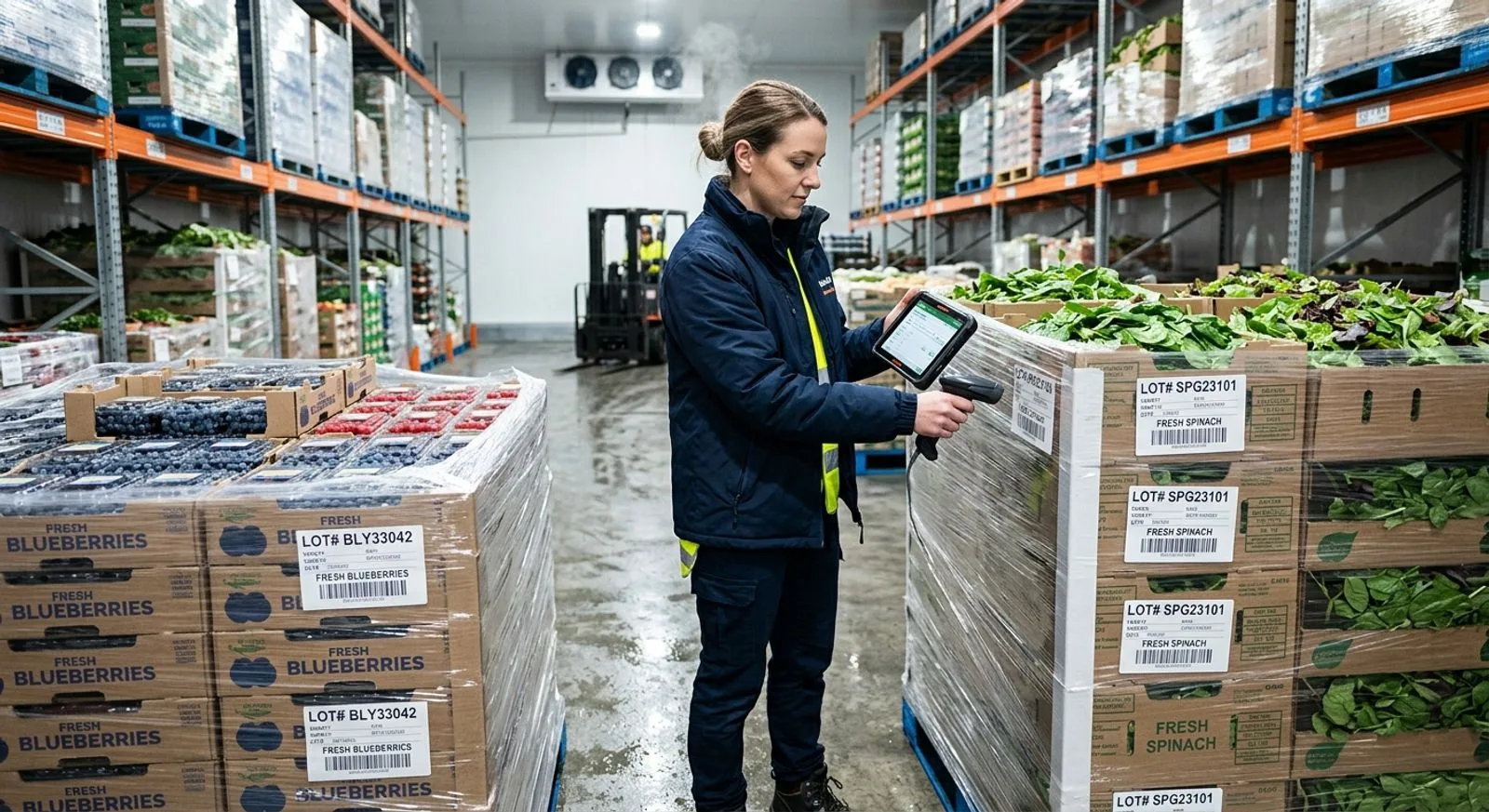
Warehouse supervisor scanning fresh produce lots in a refrigerated distribution center
BUYING ADVICE

How to choose fresh produce software

Prioritize traceability at every transformation point

A fresh produce software demonstration should prove more than a one-up, one-down supplier and customer search. Ask the vendor to receive multiple source lots, place one lot on quality hold, split another across storage locations, repack product into new cases, combine inputs during processing, and ship the resulting lots to several customers. The system should preserve quantities, dates, users, source relationships, and label identifiers throughout the exercise.

FSMA traceability requirements make data completeness and interoperability increasingly important for companies handling foods on the Food Traceability List. Confirm how the software captures relevant key data elements and critical tracking events, exchanges information with partners, corrects errors, and exports records. Regulatory readiness should complement practical mock-recall speed; it should not exist as a separate spreadsheet that operations update after the fact.

Also test exceptions. Produce operations routinely encounter short shipments, substitutions, downgraded quality, variable weights, rework, donated or destroyed goods, and inventory discovered in the wrong location. The best fresh produce software records these events without breaking lot genealogy or requiring hidden manual work.

Evaluate inventory, quality, and finance together

Inventory quantity alone does not explain produce profitability. Buyers should verify landed cost, freight, commissions, shrink, yield, repacking labor, customer claims, and price adjustments. A platform should show what is available, what is committed, what is on hold, what will expire, and what each transaction contributes to margin. FEFO allocation should use shelf-life rules while allowing authorized exceptions with a clear audit trail.

Quality information must influence operational decisions. Receiving inspections, temperatures, defects, specifications, certificates, supplier status, and release decisions should appear before sales or warehouse teams allocate affected inventory. For processors, production records should connect input lots, output lots, yields, downtime, sanitation, and verification checks. If quality lives in a separate application, inspect the integration carefully and define which system owns each record.

Financial depth varies widely across this list. Produce Pro, Famous Software, and FreshByte emphasize ERP and accounting workflows. FoodReady integrates with accounting systems while providing broader quality, inventory, production, and maintenance controls. Traceability networks such as ReposiTrak and FoodLogiQ generally complement rather than replace internal transactional systems. Select the architecture deliberately instead of assuming every platform is a complete ERP.

Demand a scenario-based implementation plan

Request a written implementation plan covering process discovery, master-data preparation, migration, configuration, integrations, label design, role permissions, testing, training, cutover, and stabilization. Assign business owners from quality, operations, warehouse, purchasing, sales, and finance. Fresh produce software projects fail when configuration decisions are delegated entirely to IT or when the business treats dirty item and customer data as a vendor problem.

Define measurable acceptance criteria before signing. Examples include completing a mock recall within a target time, reconciling opening inventory, printing compliant labels, processing a representative sales day, recording a quality hold, and closing the financial period. Run these tests with actual users and realistic transaction volume. A polished dashboard cannot compensate for slow receiving or order-entry workflows.

Choose FoodReady when unified quality and operations, mobile records, traceability, production, supplier controls, and maintenance matter most. Choose Produce Pro for a distribution-led produce ERP, or Famous Software when grower accounting and settlements are central. Consider SafetyChain when an existing ERP needs stronger plant-quality execution. Consider ReposiTrak or FoodLogiQ when external partner compliance and network traceability are the priority.

NEXT STEP

Build a shortlist around your highest-risk produce workflow

Invite two or three vendors to demonstrate the same receiving-to-recall scenario using your item structure, labels, quality checks, warehouse rules, and customer requirements. Compare three-year cost, implementation ownership, usability, and traceability completeness before selecting a platform.

COMMON QUESTIONS

Fresh produce software FAQ

Practical answers for growers, packers, processors, wholesalers, distributors, and quality teams evaluating fresh produce software.

What is fresh produce software?

Fresh produce software manages perishable inventory, lot traceability, purchasing, quality, packing, sales, warehouse activity, shipping, and related financial workflows. Unlike generic inventory software, fresh produce software may support variable weights, grades, rapid price changes, FEFO allocation, repacking, grower settlements, shelf-life controls, and recall records. The exact scope varies: some platforms are full ERP systems, while others focus on quality, supplier compliance, or network traceability.

Which fresh produce software is best overall?

FoodReady is the best overall choice in this comparison for produce companies needing quality, inventory, production, supplier management, traceability, maintenance, and analytics in one cloud system. Produce Pro is a strong option for distribution-heavy produce ERP requirements. Famous Software deserves consideration when grower accounting, packout, pooling, settlements, and complex packer-shipper workflows outweigh the need for a modern QMS-led platform.

How much does fresh produce software cost?

Fresh produce software cost depends on users, sites, modules, transaction volume, integrations, migration, and implementation services. FoodReady publishes typical annual tiers from $15,000–$150,000, with implementation commonly costing $10,000–$60,000. Most other vendors in this comparison use custom quotes. Buyers should compare three-year cost, including labels, scanners, training, support, interfaces, upgrades, and any separate accounting, QMS, WMS, or traceability software.

What traceability features should produce companies require?

Produce companies should require lot-controlled receiving, location history, splits, merges, repacking genealogy, production transformations, hold-and-release status, customer shipment history, label identifiers, and fast recall reporting. Fresh produce software should preserve quantities and timestamps through every event. Companies covered by FSMA traceability rules should also verify capture and export of applicable key data elements and critical tracking events, plus reliable exchange with suppliers and customers.

Can fresh produce software support FSMA 204 readiness?

Yes, fresh produce software can support FSMA 204 readiness by structuring traceability records, connecting critical tracking events, retaining required data, and enabling timely retrieval. Software alone does not create compliance. A company must still define responsibilities, maintain accurate labels and master data, train users, verify supplier information, test exports, and document procedures. Ask vendors to demonstrate the exact data flow for the foods and activities in your operation.

What is the difference between produce ERP and traceability software?

Produce ERP software manages internal transactions such as purchasing, inventory, sales, warehouse activity, accounting, repacking, and sometimes grower settlements. Traceability software concentrates on lot genealogy, supplier data, recall investigation, and information exchange. Platforms such as Produce Pro and Famous Software lean toward produce ERP, while ReposiTrak and FoodLogiQ emphasize network compliance and traceability. FoodReady combines traceability with quality, inventory, production, suppliers, maintenance, and analytics.

Should a produce distributor choose cloud or on-premise software?

Cloud fresh produce software usually simplifies remote access, updates, multi-site visibility, and mobile deployment. On-premise or Windows-centered systems may offer established workflows and local control but can require more internal infrastructure and upgrade planning. The better choice depends on connectivity, security requirements, integration architecture, disaster recovery, IT capacity, and device needs. Ask vendors about offline behavior, uptime commitments, backups, data export, identity management, and mobile support.

How long does fresh produce software implementation take?

Implementation can range from several weeks to many months depending on scope, data quality, integrations, locations, labels, and process complexity. FoodReady typically reports 8–16 weeks. Larger produce ERP projects may take longer because accounting, grower settlements, warehouse rules, and historical conversion require extensive testing. A credible plan should include discovery, data cleanup, configuration, interfaces, user acceptance testing, role-based training, cutover, and post-launch stabilization.

What should vendors demonstrate before selection?

Vendors should demonstrate a realistic receiving-to-recall workflow using variable weights, grades, multiple lots, quality holds, repacking, FEFO allocation, customer-specific labels, and partial shipments. They should also show inventory reconciliation, user permissions, audit history, reports, mobile tasks, and integration handling. Require the same scenario from every shortlisted vendor so stakeholders can compare transaction speed, traceability completeness, exceptions, and the amount of manual work left outside the software.

Which fresh produce software is best for a small company?

The best choice depends on whether the small company grows, packs, processes, brokers, or distributes produce. Silo may suit a growing wholesaler seeking accessible cloud purchasing, sales, and inventory workflows. Wherefour can fit a small value-added processor needing batch ERP and traceability. FreshByte can suit a regional distributor. FoodReady becomes more compelling when formal quality, production, supplier, maintenance, and multi-location controls justify a broader platform.

FINAL RECOMMENDATION

Choose for operational fit, not the longest feature list

The fresh produce software market includes several distinct categories under one label. Produce-specific ERP platforms manage high-speed commercial and warehouse transactions. Manufacturing systems connect batch production, inventory, and costing. Quality platforms digitize HACCP and plant records. Traceability networks connect suppliers, buyers, and recall data. The right choice is the one that covers your highest-risk workflows with the least duplication.

FoodReady earns the top position because it combines traceability with quality, inventory, production, supplier controls, maintenance, and analytics in one cloud platform. Produce Pro is the best alternative for distributors wanting deep produce ERP functionality, and Famous Software is particularly strong for grower accounting and complex packer-shipper operations. Specialized products remain valuable when the company already has a stable ERP and needs a focused quality or network layer.

Before committing, calculate three-year cost and run a scenario-based pilot. Include actual users from receiving, quality, warehouse, sales, purchasing, production, and finance. Verify that the fresh produce software handles exceptions as well as ideal transactions. A system that preserves lot integrity, directs perishable inventory, exposes margin, and gives teams timely quality information can reduce both operational friction and recall risk.

Written by

luke duffy

Luke Duffy

Luke Duffy is a Senior Director of Quality & Customer Success with extensive expertise in SQF, BRC, USDA, and FSQA. He specializes in developing food safety programs, leading teams, conducting audits, and guiding clients to achieve GFSI certification success. Luke Duffy led quality at companies like Boston Bakery and Do & Co.

Get a demo

Speak with our Expert Consultants

15–30 minutes. We map FoodReady to your process, plug in your real HACCP plan, and show you the auditor view before the call ends.

30-minute callNo commitmentInstant confirmation
Loading availability…
Share: