10 Best Food Packaging Compliance Software Platforms (2026)

Compare 10 food packaging compliance software platforms for label control, artwork approval, supplier documentation, traceability, and regulatory change management. This guide examines capabilities, pricing models, implementation considerations, and the best fit for different food manufacturing teams.

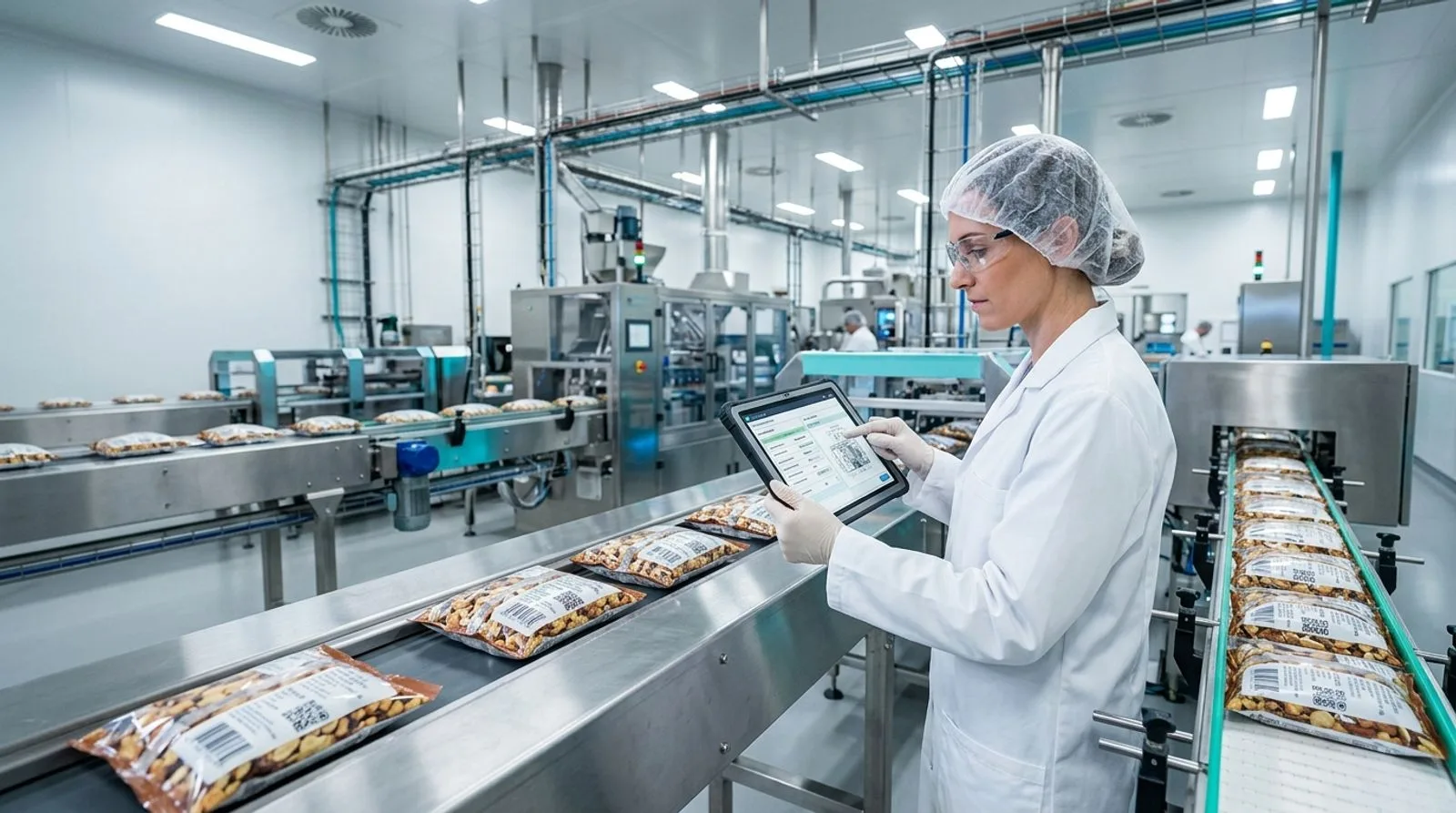
Quality specialist reviewing digital food packaging compliance records beside a packaging line

Published:Last updated:Author:Denice Beccard

BUYER’S GUIDE

How We Evaluated Food Packaging Compliance Software

Food packaging compliance software helps manufacturers control the information, approvals, specifications, and evidence behind every package placed on the market. The strongest systems connect label content, artwork revisions, ingredient and allergen data, packaging specifications, supplier documents, lot records, and approval histories. That connection matters because a small mismatch—an obsolete allergen statement, an unapproved claim, an incorrect net quantity, or the wrong film specification—can trigger rework, delayed launches, retailer rejection, or a recall.

For this comparison, we assessed ten software platforms against six practical requirements: regulatory and quality depth, label and artwork control, packaging specification management, supply-chain collaboration, traceability, and implementation value. FoodReady ranks first because it links packaging compliance to the wider manufacturing record, including quality, inventory, production, supplier management, maintenance, and analytics. Esko WebCenter stands out for enterprise artwork workflows, while Loftware Cloud is especially strong for controlled labeling across many printers, facilities, and business systems.

This list is designed for food and beverage manufacturers, private-label producers, co-packers, packaging quality teams, regulatory affairs leaders, and operations executives. Some products are complete manufacturing platforms. Others specialize in artwork, labeling, product lifecycle management, specifications, regulatory intelligence, or supplier compliance. The right choice depends on where packaging risk originates in your organization and which system must remain the authoritative source.

What food packaging compliance software should control

A credible system should preserve a defensible chain from approved source data to the package used in production. That includes ingredient declarations, allergen statements, nutrition data, claims, barcodes, date and lot coding, country-specific text, packaging dimensions, material composition, certificates, and final artwork. Role-based approvals and version history should show who reviewed each change, what changed, and which production runs used the approved version.

Packaging compliance also extends beyond the label. Teams increasingly need supplier declarations, recycled-content evidence, packaging-material specifications, food-contact documentation, extended producer responsibility data, and market-specific obligations. No single platform is automatically strongest in every area. Buyers should distinguish between software that creates labels, software that approves artwork, software that manages specifications, and software that connects packaging records to production and traceability.

Our scoring approach

Scores are editorial assessments out of ten, based on documented product scope and fit for food manufacturing use cases. Pricing marked “custom quote” reflects vendors that do not publish a standard list price or whose cost depends on users, sites, modules, integrations, and transaction volume. Before selecting any software, request a demonstration using one of your real packaging changes—for example, an allergen update that affects a formula, nutrition panel, artwork file, supplier record, and scheduled production order.

2026 SOFTWARE SHORTLIST

IN-DEPTH COMPARISON

The 10 Best Food Packaging Compliance Software Platforms

Ten platforms compared for label and artwork governance, packaging specifications, supplier evidence, traceability, regulatory workflows, and manufacturing integration.

Reviewed by FoodReady Editorial Team · Manufacturing software research focused on food safety, quality, traceability, and packaging operations

FoodReady
Unified packaging compliance, quality, traceability, inventory, and production software
9.5
Custom quote
Subscription pricing vary by scope
  • Web
  • iOS
  • Android
  • API
Esko WebCenter
Enterprise artwork management and packaging approval software
9.1
Custom quote
Modules, users, integrations, and deployment determine cost
  • Web
  • API
Loftware Cloud
Cloud enterprise labeling software for standardized, controlled label output
8.9
Custom quote
Based on applications, print volume, sites, devices, and services
  • Web
  • Windows
  • API
Specright
Specification management software for packaging, products, suppliers, and sustainability data
8.8
Custom quote
Enterprise subscription and implementation vary by scope
  • Web
  • iOS
  • Android
  • API
TraceGains
Supplier, ingredient, specification, and compliance network for food manufacturers
8.7
Custom quote
Modules, users, supplier network, and services affect pricing
  • Web
  • API
Trustwell Genesis Foods
Food formulation, nutrition analysis, labeling, and regulatory compliance software
8.6
Custom quote
Products, users, databases, and services determine cost
  • Windows
  • Web
FoodChain ID
Regulatory intelligence and compliance services supporting food and packaging decisions
8.4
Custom quote
Database, software, geography, and service scope vary
  • Web
ManageArtworks
Artwork lifecycle and packaging compliance workflow software for regulated consumer products
8.3
Custom quote
Users, brands, workflows, integrations, and services affect price
  • Web
  • API
LASCOM PLM
Product lifecycle and specification software for food and consumer packaged goods
8.2
Custom quote
Configuration, modules, users, migration, and integration determine TCO
  • Web
  • API
ReposiTrak
Supplier compliance, document management, and traceability network for food supply chains
8.1
Custom quote
Programs, connections, documents, locations, and services affect price
  • Web
  • API
Editor's pick

FoodReady

Unified packaging compliance, quality, traceability, inventory, and production software

  • Editor’s Pick
  • Food Manufacturing
  • Unified Operations
9.5
Overall score
PricingCustom quote· Subscription pricing vary by scope
Platforms
  • Web
  • iOS
  • Android
  • API

FoodReady is the strongest overall choice for manufacturers that want packaging compliance connected to the complete production and quality record. The cloud software brings document control, supplier quality, specifications, inspections, CAPA, nonconformance, inventory, lot traceability, production, and analytics into one operating environment. Packaging teams can govern approved specifications and work instructions while quality teams maintain evidence, supplier records, and change approvals. Production and inventory data then provide the operational context needed to identify which lots, materials, customers, or shipments are affected by a packaging issue.

Its key differentiator is breadth without requiring a separate QMS, inventory application, production system, and supplier portal. FoodReady supports barcode and QR workflows, FIFO/FEFO inventory, receiving controls, certificates, training, audit preparation, and mock-recall activity. Published platform guidance indicates that implementation typically takes several weeks, while overall pricing varies based on factors such as the number of users, facilities, selected features, integrations, and implementation complexity. The platform is best suited to manufacturers with 50–1,000 employees that need packaging compliance to operate as part of daily manufacturing rather than as an isolated artwork process.

Pros

  • Unifies quality, packaging records, inventory, production, suppliers, maintenance, and analytics
  • Connects lot traceability and receiving evidence to packaging deviations and corrective actions
  • Supports web and mobile workflows for plant-floor inspections and approvals
  • Typical implementation is 8–16 weeks, faster than many large ERP or legacy QMS programs
  • Transparent pricing bands support early budget planning

Cons

  • Newer platform with a smaller install base than long-established enterprise vendors
  • Less suited to highly customized global artwork routing than a dedicated artwork platform
  • Financial accounting depends on integrations with systems such as QuickBooks, Sage, NetSuite, or SAP

Scorecard

  • Compliance depth
    9.6 / 10
  • Artwork control
    8.7 / 10
  • Traceability
    9.8 / 10
  • Supplier controls
    9.5 / 10
  • Ease of use
    9.2 / 10
  • Value
    9.4 / 10

Feature highlights

  • Document control for approved packaging specifications, procedures, forms, and training
  • Lot genealogy, barcode scanning, quarantine, FIFO/FEFO, and mock-recall workflows
  • Supplier portal, receiving inspections, COA/COC records, scorecards, and supplier CAPA
  • Quality workflows for audit, CAPA, NCR, complaints, change control, and risk
  • Production scheduling, work orders, batch records, BOMs, and shop-floor execution
  • Real-time dashboards, SPC, root-cause analysis, and cross-module reporting

Best for: Mid-market food manufacturers and co-packers needing packaging compliance connected to quality and plant operations

Visit FoodReady
#2

Esko WebCenter

Enterprise artwork management and packaging approval software

  • Artwork Workflow
  • Enterprise
  • Packaging Collaboration
9.1
Overall score
PricingCustom quote· Modules, users, integrations, and deployment determine cost
Platforms
  • Web
  • API

Esko WebCenter is a specialized packaging project and artwork management platform built for structured collaboration among brands, prepress teams, converters, and external stakeholders. It centralizes artwork files, annotations, tasks, approvals, and version histories, reducing the ambiguity created by email attachments and disconnected proofing tools. Reviewers can compare versions, comment in context, and route work according to defined responsibilities. For organizations managing many stock-keeping units, languages, packaging formats, and agencies, this workflow focus can materially improve control.

WebCenter’s differentiator is its packaging-specific ecosystem and depth in artwork lifecycle management. It is well suited to complex approval chains where marketing, regulatory, legal, quality, graphics, and suppliers must sign off before release. The platform can integrate with other enterprise and content systems, but buyers should define which application owns ingredient, nutrition, supplier, and production data. WebCenter is typically purchased through a custom enterprise proposal, so implementation services, workflow design, integration, migration, and training should be evaluated alongside subscription cost. It is strongest when artwork governance is the primary problem and the company has resources to configure a formal enterprise process.

Pros

  • Purpose-built workflows for packaging artwork, proofing, annotation, and approval
  • Strong version comparison and audit history for complex stakeholder reviews
  • Supports collaboration across brands, agencies, prepress teams, and converters
  • Handles large portfolios of SKUs, markets, languages, and packaging formats

Cons

  • Custom enterprise pricing makes early cost comparison difficult
  • Requires integration for full production, inventory, and lot-traceability context
  • Configuration and process design may require specialist implementation support

Scorecard

  • Compliance depth
    8.8 / 10
  • Artwork control
    9.8 / 10
  • Traceability
    7.4 / 10
  • Supplier controls
    8.5 / 10
  • Ease of use
    8.2 / 10
  • Value
    8.1 / 10

Feature highlights

  • Online packaging proofing, annotation, compare, and approval
  • Configurable routing, tasks, permissions, and due dates
  • Central artwork repository with controlled versions and histories
  • Packaging project management across internal and external stakeholders
  • Integration options for content, product, and enterprise systems

Best for: Global brands and packaging organizations with high-volume, multi-stakeholder artwork approval processes

Visit Esko WebCenter
#3

Loftware Cloud

Cloud enterprise labeling software for standardized, controlled label output

  • Enterprise Labeling
  • Cloud
  • Printer Integration
8.9
Overall score
PricingCustom quote· Based on applications, print volume, sites, devices, and services
Platforms
  • Web
  • Windows
  • API

Loftware Cloud addresses a critical part of packaging compliance: producing accurate, controlled labels across facilities, printers, business systems, and trading-partner requirements. The platform centralizes label templates and business rules, allowing organizations to reduce locally maintained files and manual edits. Authorized users can manage label content while integrations pull approved variable data from ERP, warehouse, manufacturing, or other source systems. This architecture is particularly valuable when many plants must print consistent labels without surrendering local execution speed.

Loftware’s differentiator is enterprise labeling depth rather than complete food quality or packaging lifecycle management. It supports design, data connectivity, workflow, deployment, and print management, making it a strong choice for manufacturers with complex barcode, logistics, customer, or multilingual labeling requirements. Buyers should verify how the selected configuration manages approvals, master data, printer validation, downtime contingencies, and controlled promotion of templates between environments. Pricing is quote based and can vary with print volume, applications, environments, integrations, and professional services. Loftware Cloud fits companies that already have authoritative ERP, PLM, or quality data but need a governed labeling layer to turn that data into reliable output.

Pros

  • Centralizes label templates, business rules, and controlled deployment
  • Strong connectivity to ERP, warehouse, manufacturing, and enterprise data sources
  • Supports standardized labeling across multiple plants and printer environments
  • Well suited to barcode, logistics, customer-specific, and multilingual labels

Cons

  • Not a complete QMS, supplier compliance, or packaging specification platform
  • Value depends on clean, governed master data in connected source systems
  • Licensing, integration, and professional services require a custom quote

Scorecard

  • Compliance depth
    8.7 / 10
  • Artwork control
    9.3 / 10
  • Traceability
    8.1 / 10
  • Supplier controls
    6.9 / 10
  • Ease of use
    8.4 / 10
  • Value
    8.2 / 10

Feature highlights

  • Central label design and template lifecycle management
  • Rules-based label generation using enterprise master data
  • Barcode, logistics, shipping, and customer-specific labeling
  • Multi-site deployment and printer management
  • APIs and connectors for ERP, WMS, MES, and business applications

Best for: Multi-site manufacturers that need enterprise label standardization and reliable integration-driven printing

Visit Loftware
#4

Specright

Specification management software for packaging, products, suppliers, and sustainability data

  • Specification Management
  • Packaging Data
  • Sustainability
8.8
Overall score
PricingCustom quote· Enterprise subscription and implementation vary by scope
Platforms
  • Web
  • iOS
  • Android
  • API

Specright is a specification management platform designed to make product and packaging specifications structured, searchable, and reusable. Instead of relying on spreadsheets, shared drives, and static PDFs, companies can maintain specifications with controlled attributes, relationships, workflows, and revision history. Packaging teams can connect components to finished goods, suppliers, facilities, and sustainability information, giving decision-makers a clearer view of where a material or dimension change will have downstream effects.

Its defining strength is specification data management. This makes Specright particularly relevant to organizations managing many packaging formats, suppliers, components, and environmental reporting requirements. Teams can use workflows to collect and approve supplier information, evaluate alternatives, and govern changes. However, a specification platform does not automatically replace an enterprise labeling engine, production system, or full food safety QMS. Buyers should demonstrate how approved specifications flow into artwork, purchasing, receiving, quality inspection, and production—and how actual usage flows back for reporting. Pricing is custom and usually reflects the number of applications, users, data domains, integrations, implementation services, and migration requirements. Specright is best when inconsistent packaging data is the root cause of compliance and operational friction.

Pros

  • Structures packaging and product specifications instead of storing disconnected documents
  • Connects components, suppliers, finished goods, facilities, and sustainability attributes
  • Supports controlled changes, approvals, collaboration, and revision history
  • Useful for packaging reduction, material analysis, and reporting initiatives

Cons

  • Requires integrations for label printing, manufacturing execution, and complete lot genealogy
  • Data cleansing and specification migration can be a substantial implementation workstream
  • Pricing is not standardized publicly and depends on enterprise scope

Scorecard

  • Compliance depth
    8.5 / 10
  • Artwork control
    8.2 / 10
  • Traceability
    7.8 / 10
  • Supplier controls
    8.8 / 10
  • Ease of use
    8.5 / 10
  • Value
    8.4 / 10

Feature highlights

  • Structured specification data for packaging, ingredients, products, and suppliers
  • Revision control, approval workflows, and relationship mapping
  • Supplier collaboration and specification request processes
  • Packaging sustainability and material attribute management
  • APIs and integrations for broader enterprise data flows

Best for: Brands and manufacturers that need a central source of truth for packaging specifications and material data

Visit Specright
#5

TraceGains

Supplier, ingredient, specification, and compliance network for food manufacturers

  • Supplier Compliance
  • Food Industry
  • Specifications
8.7
Overall score
PricingCustom quote· Modules, users, supplier network, and services affect pricing
Platforms
  • Web
  • API

TraceGains is a food and beverage supply-chain platform centered on supplier, ingredient, item, specification, and document management. Packaging compliance often fails upstream when declarations, certificates, specifications, or supplier changes are not collected and reviewed consistently. TraceGains helps teams request, organize, approve, and monitor that information in a network-oriented environment. It can reduce dependence on spreadsheets and email for supplier onboarding, documentation, questionnaires, and recurring compliance tasks.

The platform’s differentiator is its focus on food industry data and supplier collaboration. Packaging teams can use it to manage packaging suppliers and supporting documents while regulatory and R&D teams coordinate product information. This makes the software especially useful when the main risk is incomplete or outdated supplier evidence. Buyers should still test how artwork files, final label approvals, printer output, production consumption, and lot genealogy are handled, because those needs may require connected systems. TraceGains uses custom pricing based on the selected applications and organizational scope. Implementation success depends on clear data ownership, supplier engagement, document rules, and integration with ERP, PLM, labeling, or QMS applications. It is a strong fit for manufacturers that view packaging compliance as part of a broader supplier and specification program.

Pros

  • Food-industry focus across suppliers, ingredients, items, specifications, and documents
  • Supports supplier onboarding, questionnaires, approvals, and recurring evidence collection
  • Helps teams monitor missing, expiring, or incomplete supplier documentation
  • Network model can simplify collaboration with participating suppliers

Cons

  • Dedicated artwork proofing and enterprise label printing may require separate software
  • Supplier participation and disciplined internal ownership influence data completeness
  • Pricing and implementation scope require direct vendor evaluation

Scorecard

  • Compliance depth
    9.0 / 10
  • Artwork control
    7.5 / 10
  • Traceability
    8.0 / 10
  • Supplier controls
    9.5 / 10
  • Ease of use
    8.3 / 10
  • Value
    8.2 / 10

Feature highlights

  • Supplier onboarding, document requests, questionnaires, and approval workflows
  • Ingredient, item, packaging, and specification data management
  • Document expiration and compliance status monitoring
  • Cross-functional collaboration for R&D, regulatory, quality, and procurement
  • Integration options for enterprise and product data systems

Best for: Food manufacturers prioritizing supplier documentation, ingredient data, and specification collaboration

Visit TraceGains
#6

Trustwell Genesis Foods

Food formulation, nutrition analysis, labeling, and regulatory compliance software

  • Nutrition Labeling
  • Formulation
  • Regulatory Data
8.6
Overall score
PricingCustom quote· Products, users, databases, and services determine cost
Platforms
  • Windows
  • Web

Trustwell Genesis Foods is a widely used formulation and nutrition analysis application for food product development and labeling. It helps teams calculate nutrient values, manage recipes and ingredients, develop compliant nutrition panels, evaluate claims, and create supporting reports. For packaging compliance, the central value is upstream content accuracy: nutrition facts, ingredient statements, allergen information, and formulation changes must be resolved before artwork reaches final approval.

Genesis Foods differs from artwork and print-management platforms because it focuses on the scientific and regulatory data behind label content. Product developers and regulatory specialists can model formulations and assess how ingredient substitutions or serving changes affect nutrition output. Organizations should confirm which market-specific databases, label formats, allergen controls, and regulatory updates are included in their selected package. They should also test the handoff from approved label data to artwork, document control, supplier records, and production systems. Pricing is quote based, with cost influenced by deployment, users, products, services, and data requirements. Genesis Foods is an excellent specialist choice when nutrition analysis and formulation are the dominant risks, but most manufacturers will pair it with artwork approval, QMS, ERP, or labeling software for end-to-end control.

Pros

  • Deep food formulation and nutrition analysis capabilities
  • Supports creation of nutrition panels, ingredient statements, and product reports
  • Useful for evaluating formulation changes before packaging approval
  • Designed for food product development and regulatory workflows

Cons

  • Does not replace full artwork management, QMS, ERP, or production traceability software
  • End-to-end packaging release requires governed handoffs to downstream systems
  • Licensing and database coverage should be confirmed through a custom quote

Scorecard

  • Compliance depth
    9.3 / 10
  • Artwork control
    7.8 / 10
  • Traceability
    6.8 / 10
  • Supplier controls
    7.4 / 10
  • Ease of use
    8.4 / 10
  • Value
    8.3 / 10

Feature highlights

  • Recipe formulation and nutrient calculation
  • Nutrition Facts panel and label-content development
  • Ingredient statement and allergen information support
  • Claim evaluation and product development reports
  • Regulatory and nutrition databases for food teams

Best for: R&D and regulatory teams whose packaging risk centers on formulation, nutrition, ingredients, and claims

Visit Genesis Foods
#7

FoodChain ID

Regulatory intelligence and compliance services supporting food and packaging decisions

  • Regulatory Intelligence
  • Global Markets
  • Expert Services
8.4
Overall score
PricingCustom quote· Database, software, geography, and service scope vary
Platforms
  • Web

FoodChain ID provides regulatory, technical, certification, and compliance resources for food organizations operating across complex markets. For packaging teams, its value lies in understanding what rules apply, tracking changes, and obtaining specialist support for claims, ingredients, labeling, food-contact considerations, and market entry. A regulatory intelligence resource can help prevent a technically polished package from carrying content that is unacceptable in a target jurisdiction.

FoodChain ID is best considered a knowledge and compliance layer rather than a complete artwork, labeling, specification, or manufacturing execution platform. Its differentiator is access to regulatory content and domain expertise that can inform internal decisions. Buyers should identify the exact FoodChain ID product or service that addresses their markets, because capabilities vary across software, databases, assessments, certification, and consulting offerings. They should also define how regulatory conclusions become controlled requirements inside the organization’s PLM, QMS, artwork, or labeling process. Pricing is custom according to content, geography, access, and services. The platform is most valuable for companies entering multiple markets or managing difficult regulatory questions; it will usually complement rather than replace the transactional system that controls final artwork and production release.

Pros

  • Combines food regulatory intelligence with technical and compliance expertise
  • Useful for multinational labeling, claims, ingredients, and market-access questions
  • Can support interpretation of complex or changing requirements
  • Broad food industry perspective across regulatory and certification needs

Cons

  • Not a complete packaging artwork, label printing, or manufacturing operations platform
  • Available capabilities differ by purchased database, software product, and service
  • Regulatory conclusions still require controlled implementation in operational systems

Scorecard

  • Compliance depth
    9.5 / 10
  • Artwork control
    6.9 / 10
  • Traceability
    6.7 / 10
  • Supplier controls
    7.9 / 10
  • Ease of use
    8.1 / 10
  • Value
    8.0 / 10

Feature highlights

  • Food regulatory intelligence and change monitoring
  • Labeling, ingredient, claim, and market-entry support
  • Technical expertise for complex compliance questions
  • Certification and supply-chain compliance resources
  • Coverage options for organizations operating across multiple markets

Best for: Multinational food companies needing regulatory intelligence and expert support alongside operational software

Visit FoodChain ID
#8

ManageArtworks

Artwork lifecycle and packaging compliance workflow software for regulated consumer products

  • Artwork Lifecycle
  • Proofing
  • Workflow
8.3
Overall score
PricingCustom quote· Users, brands, workflows, integrations, and services affect price
Platforms
  • Web
  • API

ManageArtworks focuses on artwork management, online proofing, packaging workflow, and controlled collaboration. The platform helps replace informal email approvals with defined stages, reviewers, comments, comparisons, and histories. It can support teams coordinating brand, regulatory, quality, marketing, packaging, and external agency input. For companies with frequent changes across many SKUs, a dedicated artwork lifecycle can make responsibilities and release status more visible.

Its differentiator is concentrated artwork control. Teams can organize projects, route reviews, compare versions, capture annotations, and preserve approval evidence. This is valuable when errors occur during the translation of approved product information into final graphics. However, buyers should inspect the connections to formulation, nutrition, supplier documentation, specification management, enterprise labeling, and production release. An artwork record is only one element of a defensible packaging process. Pricing is custom and implementation normally requires workflow design, user roles, data migration, integration, and training. ManageArtworks is best for organizations that need a purpose-built approval environment without adopting a broader manufacturing suite. During selection, test a real change involving multiple markets, reviewers, rejected proofs, corrected files, and final release to ensure the audit trail matches your internal policy.

Pros

  • Structured packaging artwork projects, reviews, annotations, and approvals
  • Version comparison reduces risk from reviewing the wrong file
  • Supports cross-functional and external stakeholder collaboration
  • Creates visible status and approval history for packaging changes

Cons

  • Requires connected systems for formulation, supplier records, printing, and lot traceability
  • Workflow configuration and migration can add implementation effort
  • Public standard pricing is not available

Scorecard

  • Compliance depth
    8.4 / 10
  • Artwork control
    9.4 / 10
  • Traceability
    6.9 / 10
  • Supplier controls
    7.3 / 10
  • Ease of use
    8.3 / 10
  • Value
    8.1 / 10

Feature highlights

  • Packaging artwork project and workflow management
  • Online proofing, annotation, and version comparison
  • Role-based routing and electronic approval evidence
  • Dashboards for project status, tasks, and bottlenecks
  • Integration options for product and enterprise content systems

Best for: Food brands with frequent packaging artwork changes and formal cross-functional approval requirements

Visit ManageArtworks
#9

LASCOM PLM

Product lifecycle and specification software for food and consumer packaged goods

  • PLM
  • Product Development
  • Specifications
8.2
Overall score
PricingCustom quote· Configuration, modules, users, migration, and integration determine TCO
Platforms
  • Web
  • API

LASCOM PLM supports product development, formulation, specifications, projects, documents, suppliers, and regulatory information for food and consumer packaged goods organizations. Packaging compliance benefits from this lifecycle approach because teams can connect packaging requirements to the product, component, market, project, and approval process. Rather than managing every change as an isolated document, a PLM model helps organizations understand relationships and coordinate R&D, packaging, procurement, quality, and regulatory work.

LASCOM’s main differentiator is the breadth of product lifecycle context around packaging. It can be a good fit for companies where compliance problems originate during product development or specification transfer rather than during label printing. Buyers should test whether the platform’s data model fits their formulations, packaging hierarchies, supplier attributes, languages, markets, and change-control rules. They should also map integrations to ERP, artwork, labeling, laboratory, and quality systems. Pricing is custom, and total cost can include process analysis, configuration, data migration, integrations, validation, and organizational change. LASCOM PLM is best for product-centric organizations prepared to formalize lifecycle governance. Smaller teams seeking rapid label creation or a lightweight approval tool may find a specialized application easier to deploy.

Pros

  • Connects packaging requirements to product development, specifications, projects, and suppliers
  • Supports cross-functional workflows across R&D, quality, regulatory, packaging, and procurement
  • Centralizes product and packaging information with controlled changes
  • Suitable for complex portfolios and structured lifecycle governance

Cons

  • PLM programs require significant data modeling and cross-functional process ownership
  • Dedicated label printing or high-end artwork proofing may require integrations
  • Custom pricing and services can make total cost difficult to estimate early

Scorecard

  • Compliance depth
    8.6 / 10
  • Artwork control
    8.1 / 10
  • Traceability
    7.4 / 10
  • Supplier controls
    8.4 / 10
  • Ease of use
    7.8 / 10
  • Value
    7.9 / 10

Feature highlights

  • Food product development, formulation, and specification management
  • Packaging component and product relationship management
  • Project, document, workflow, and change control
  • Supplier and raw-material information management
  • Integration support for ERP and connected enterprise applications

Best for: Food manufacturers that need packaging compliance embedded in a formal product lifecycle management process

Visit LASCOM
#10

ReposiTrak

Supplier compliance, document management, and traceability network for food supply chains

  • Supplier Compliance
  • Traceability Network
  • Document Control
8.1
Overall score
PricingCustom quote· Programs, connections, documents, locations, and services affect price
Platforms
  • Web
  • API

ReposiTrak provides supplier compliance, document management, and traceability capabilities for food supply chains. Packaging teams can benefit when the software is used to collect and monitor insurance, certifications, audits, specifications, declarations, and other required records from suppliers. Automated requests and status visibility help reduce the manual work of following up on missing or expired evidence. Its network approach can also support data exchange among connected trading partners.

The differentiator is supply-chain compliance at scale rather than artwork creation or packaging design. ReposiTrak is relevant when packaging compliance depends on evidence from many vendors, co-manufacturers, warehouses, or trading partners. Traceability capabilities can strengthen the broader record, although buyers should confirm the exact data elements, event coverage, integrations, and responsibilities required for their operations. The platform will not replace nutrition calculation, graphic proofing, specification authoring, or plant-floor label printing, so a complete architecture may include several connected applications. Pricing is custom and should be evaluated according to supplier count, document volume, traceability scope, locations, integrations, onboarding support, and recurring services. ReposiTrak is best for companies whose immediate priority is improving supplier evidence and external traceability collaboration.

Pros

  • Automates collection and monitoring of supplier compliance documents
  • Provides dashboards for missing, expired, or noncompliant records
  • Network model supports collaboration across food supply-chain partners
  • Traceability offerings can complement supplier and document compliance

Cons

  • Not intended as a complete artwork design, nutrition, PLM, or enterprise labeling system
  • Value depends on trading-partner onboarding and integration coverage
  • Pricing and exact program capabilities require direct scoping

Scorecard

  • Compliance depth
    8.5 / 10
  • Artwork control
    6.7 / 10
  • Traceability
    8.8 / 10
  • Supplier controls
    9.2 / 10
  • Ease of use
    8.0 / 10
  • Value
    7.8 / 10

Feature highlights

  • Supplier document collection, validation, and expiration monitoring
  • Compliance dashboards, alerts, and exception follow-up
  • Food supply-chain partner network and onboarding support
  • Traceability data exchange and event visibility offerings
  • Integration options for enterprise and supply-chain systems

Best for: Manufacturers, distributors, and retailers prioritizing supplier evidence and network-based traceability

Visit ReposiTrak

Scores are editorial assessments. Most enterprise vendors use custom pricing; request subscription, implementation, integration, migration, validation, training, and support costs in writing.

SELECTION FRAMEWORK

How to Choose Food Packaging Compliance Software

Start with the failure you are trying to prevent. If teams regularly approve the wrong artwork version, prioritize online proofing, side-by-side comparison, role-based routing, and an immutable approval history. If plants print inconsistent labels, prioritize controlled templates, integration-driven data, printer management, and standardized deployment. If packaging specifications live in spreadsheets, focus on structured attributes, component relationships, supplier collaboration, and change impact. If issues are difficult to contain after production, prioritize lot genealogy, inventory status, receiving evidence, production records, and complaint-to-CAPA workflows.

Next, define the authoritative source for every critical field. Ingredient and nutrition data may originate in formulation software. Material dimensions and composition may reside in a specification platform. Sell-by dates and lot codes can originate in ERP or production systems. Artwork may be approved in a packaging workflow, while final print instructions live in labeling software. A vendor demonstration should show how these sources interact without manual re-entry. Ask what happens when data conflicts, an interface is unavailable, or an urgent correction is needed during production.

Evaluate governance as carefully as features. Strong food packaging compliance software should support permissions, electronic approvals, controlled effective dates, complete histories, training, and segregation of duties. Ask whether a released version can be altered, how superseded materials are blocked, and whether the software can identify every SKU, site, supplier, lot, and customer affected by a change. Reports should be understandable to quality, regulatory, operations, and auditors without extensive data reconstruction.

Finally, calculate total cost of ownership rather than subscription price alone. Include process design, configuration, master-data cleanup, artwork and specification migration, integrations, validation, training, supplier onboarding, support, and internal administration. A lower-cost application can become expensive if employees keep reconciling duplicate systems. Conversely, a broad platform can be excessive when a company only needs controlled proofing. Choose the narrowest architecture that closes the material compliance gaps while preserving reliable data flow across the packaging lifecycle.

Quality manager checking food label artwork and packaging compliance approvals on a digital screen
DEMONSTRATION CHECKLIST

Test Every Vendor With One Real Packaging Change

Ask each shortlisted vendor to process the same scenario: a supplier changes an ingredient, the allergen statement and nutrition values require review, two package sizes and three markets are affected, existing film remains in inventory, and production is scheduled next week. Require the demonstration to show impact analysis, version comparison, approvals, effective dates, supplier evidence, inventory disposition, production release, traceability, and the final audit report. A realistic test exposes integration gaps that feature lists often hide.

FINAL RECOMMENDATIONS

Which Food Packaging Compliance Platform Is Right for You?

The best food packaging compliance software is the platform that controls your highest-risk handoffs. FoodReady is our top overall recommendation for mid-market food manufacturers and co-packers because packaging records can remain connected to quality events, supplier approvals, inventory status, production execution, and lot traceability. That breadth reduces the need to reconstruct the story of a packaging issue across several disconnected systems. It is particularly attractive when the organization is also replacing spreadsheets or separate quality, inventory, and production applications.

Choose Esko WebCenter when the central requirement is sophisticated packaging artwork collaboration across brands, agencies, prepress teams, converters, regulatory reviewers, and multiple markets. Choose Loftware Cloud when the main objective is centralized, rules-driven label printing across plants and printer environments. Choose Specright when packaging specifications, material data, and sustainability attributes require a structured source of truth. Choose TraceGains or ReposiTrak when supplier documentation and external compliance evidence create the greatest operational burden.

Trustwell Genesis Foods deserves a place on the shortlist when formulation, nutrition analysis, ingredient statements, allergens, and claims drive packaging risk. FoodChain ID can add regulatory intelligence when teams must interpret requirements across difficult or changing markets. ManageArtworks provides a focused route to formal artwork reviews, while LASCOM PLM fits organizations ready to govern packaging within a broader product development lifecycle.

Build the decision around evidence

Before issuing a request for proposal, document the current packaging process from source data to production release. Count the systems, spreadsheets, shared folders, approvals, and manual transcriptions involved. Review recent deviations, obsolete-material write-offs, customer complaints, and delayed launches. This baseline clarifies whether the primary business case is risk reduction, faster change cycles, lower waste, better supplier control, or easier audit preparation.

Require vendors to separate subscription, implementation, data migration, integration, validation, training, support, and optional module costs. Define acceptance criteria for migrated artwork, specifications, suppliers, users, and approval histories. Assign accountable owners from regulatory, quality, packaging, IT, procurement, and operations. Software cannot resolve ambiguous ownership by itself, but a well-designed implementation can make responsibilities explicit and measurable.

Final recommendation

For the broadest manufacturing use case, begin with FoodReady and compare it against one category specialist aligned with your greatest risk. A company with difficult global artwork workflows should compare FoodReady with Esko WebCenter. A multi-site labeling program should compare it with Loftware Cloud. A specification-led transformation should compare it with Specright. This approach produces a meaningful choice between an integrated operating platform and a focused specialist, rather than a shortlist of products solving different problems.

FoodReady Editorial Team prepared this comparison for manufacturing leaders evaluating quality, compliance, traceability, and operations software. The assessment uses public product information, category fit, implementation considerations, and practical food manufacturing requirements. Product scope and pricing can change, so buyers should confirm current capabilities directly with each vendor and obtain contractual commitments for critical requirements.

BUYER QUESTIONS

Frequently Asked Questions

Practical answers about capabilities, implementation, integrations, pricing, validation, and packaging compliance workflows.

What is food packaging compliance software?

Food packaging compliance software controls the data, documents, specifications, artwork, approvals, and evidence used to release compliant packaging. Depending on the product, the software may manage nutrition and ingredient content, allergens, claims, packaging materials, supplier declarations, version histories, label templates, barcodes, proofing, traceability, and change control. Most manufacturers use either an integrated platform or several connected specialist applications.

Which food packaging regulations should the software support?

The software should support the requirements that apply to each product, package, facility, sales channel, and destination market. In the United States, teams commonly evaluate FDA labeling requirements, allergen declarations, Nutrition Facts content, food-contact obligations, weights and measures, and applicable traceability records. Other markets impose different labeling, language, recycling, material, and producer-responsibility duties. Software supports the process, but qualified regulatory personnel must define the rules.

What is the difference between artwork management and enterprise labeling software?

Artwork management software controls collaborative creation, review, annotation, version comparison, and approval of packaging graphics. Enterprise labeling software governs templates, business rules, variable data, integrations, printers, and production output. Many manufacturers need both capabilities, either in connected products or within a broader architecture. The critical requirement is a controlled handoff from approved content and artwork to the exact label or package used in production.

How much does food packaging compliance software cost?

Most enterprise vendors provide custom quotes based on users, sites, modules, products, suppliers, print volume, integrations, migration, and services. FoodReady publishes indicative annual subscription bands from $15,000–$30,000 for Starter, $40,000–$75,000 for Professional, and $75,000–$150,000 for Enterprise, with typical implementation of $10,000–$60,000. Buyers should compare three-year total cost, not subscription fees alone.

How long does implementation usually take?

Implementation can range from several weeks for a focused, well-scoped deployment to many months for a global PLM, artwork, or labeling transformation. FoodReady’s typical implementation range is 8–16 weeks. Timeline depends on process harmonization, master-data quality, artwork and specification migration, integrations, validation, supplier onboarding, training, and decision speed. A phased rollout by site, product line, or workflow often reduces risk.

Can packaging compliance software prevent allergen labeling errors?

The software can materially reduce allergen labeling risk when approved ingredient and formulation data connect to controlled label content, artwork, effective dates, inventory, and production release. It should flag missing approvals, preserve histories, and help identify affected products and lots. However, prevention still depends on correct source data, qualified review, disciplined change control, line clearance, label verification, and employee training.

Should packaging compliance software integrate with ERP, PLM, QMS, and MES systems?

Yes, when those systems own data required for packaging creation or release. ERP may hold item and customer data; PLM may own formulas and specifications; QMS may control approvals and deviations; MES may provide production context. Integration should reduce manual transcription without obscuring ownership. Define the system of record for every critical field, then test exceptions, interface failures, and emergency changes.

What should we ask vendors to demonstrate?

Ask vendors to demonstrate one real packaging change from initial request through final production release. Include revised source data, affected SKUs and markets, supplier evidence, artwork comparison, comments, rejected and corrected versions, electronic approvals, effective dates, existing-material disposition, label output, production records, and traceability. Require an audit report showing who changed and approved each element. This reveals whether the software closes your actual process gaps.

How should we validate packaging compliance software?

Validation should be risk based and proportional to intended use, company policy, customer obligations, and applicable regulations. Document requirements, configuration, data migration, security roles, integrations, test cases, deviations, approvals, training, and release. Include negative tests such as unauthorized edits, obsolete artwork selection, missing supplier documents, interface failures, and incorrect effective dates. Maintain evidence through upgrades and controlled configuration changes.

Which platform is best for mid-market food manufacturers?

FoodReady is the strongest overall fit for mid-market manufacturers that want packaging compliance connected to quality, suppliers, inventory, production, and traceability. Esko WebCenter may be better when artwork collaboration dominates, Loftware Cloud when enterprise labeling is the priority, and Specright when specification data is the central challenge. The best decision depends on process risk, existing systems, implementation capacity, and total cost.

Written by

denice beccard

Denice Beccard

Denice Beccard is an SQF consultant (Safe Quality Food), BRC Consultant, GFSI consultant, HACCP certified, and former Director of Quality for multiple food manufacturing companies. Denice Beccard is experienced in food safety and quality management with a strong background in food manufacturing and inventory management. Her certifications include: HACCP, PCQI, GFSI SQF, BRCGS Practitioner/Internal Auditor, Food Defense Awareness for food professionals, ServSafe Instructor/Proctor.

Get a demo

Speak with our Expert Consultants

15–30 minutes. We map FoodReady to your process, plug in your real HACCP plan, and show you the auditor view before the call ends.

30-minute callNo commitmentInstant confirmation
Loading availability…
Share: