8 Best Meat Traceability Software for Food Manufacturers

Compare the top 8 meat traceability software solutions. Evaluate FoodReady, Carlisle Technology, ParityFactory, and more on pricing, compliance, and features.

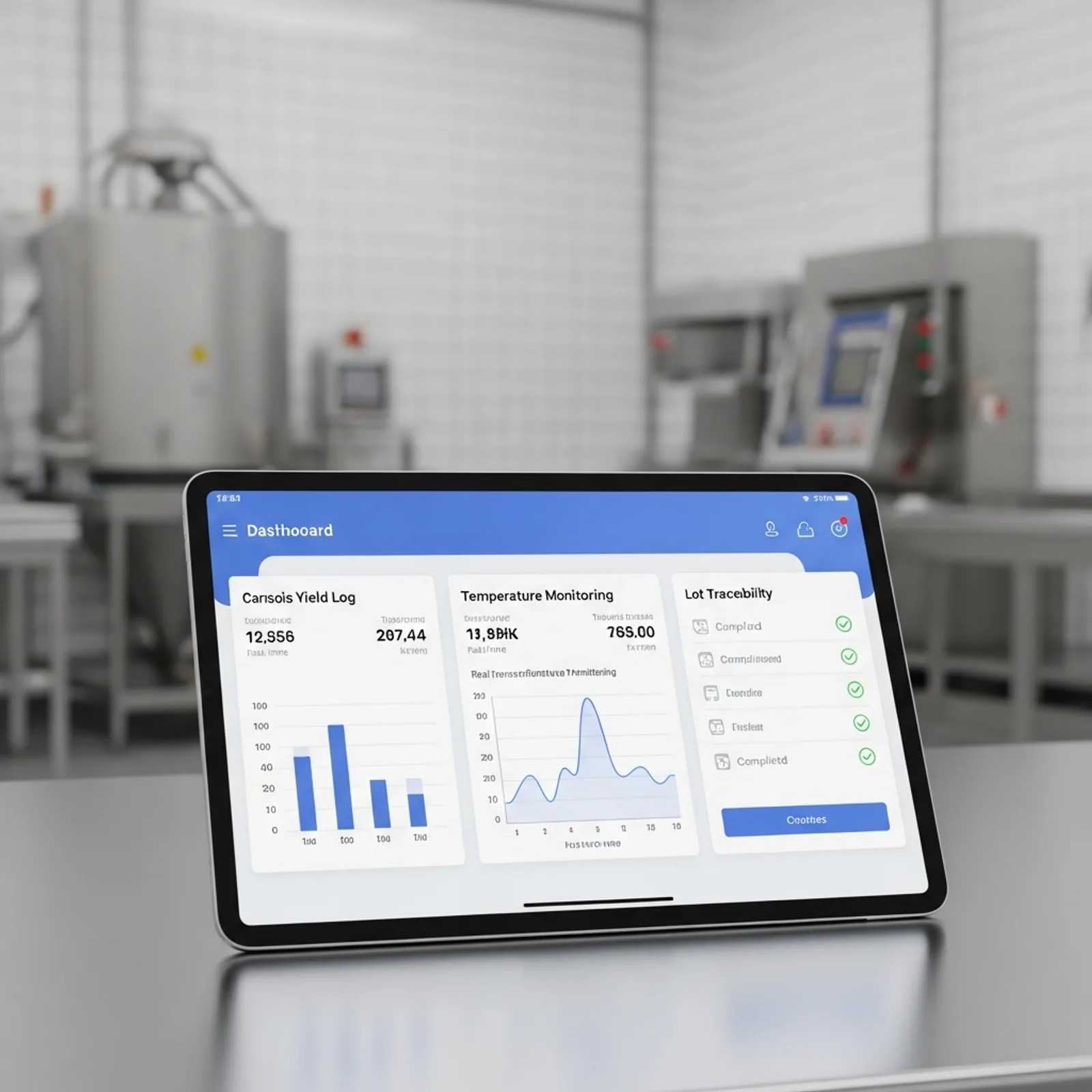
Modern minimalist meat traceability software dashboard showing carcass yield logs, temperature monitoring charts, and lot traceability checklists on a tablet screen in a clean, professional meat processing facility.

Published:Last updated:Author:Gerry Galloway

Quick Comparison: Top 8 Meat Traceability Software Solutions

The meat processing industry operates under some of the most stringent regulatory and operational pressures in the entire food manufacturing sector. Managing variable carcass weights, tracking yields across complex deboning lines, maintaining strict temperature controls, and managing pathogen testing are just a few of the daily challenges faced by meat processors. Under USDA FSIS regulations and the upcoming FSMA Section 204 traceability rules, manual paper logs, binder-based document control, and disconnected spreadsheets are no longer sufficient. They introduce significant compliance friction, increase the risk of data entry errors, and delay critical corrective actions during food safety events.

To maintain compliance, optimize yields, and protect consumer health, modern meat processors are transitioning to cloud-based meat traceability software. These specialized software platforms provide real-time visibility into plant floor operations, automate HACCP documentation, and enable end-to-end lot traceability from farm receiving to final shipment. In this comprehensive guide, we evaluate the top eight meat traceability software solutions for 2026, helping you select the right platform to eliminate compliance friction and accelerate your operational efficiency.

Software

Best For

Core Capabilities

Regulations

Price Range

Implementation

FoodReady

Mid-market to enterprise meat processors

Unified QMS + Inventory + Production + Supply Chain

USDA FSIS, SQF, BRC, FSSC 22000, FSMA 204

$40K–$75K/yr

8–16 weeks

Carlisle Symphony

High-speed slaughter & primary processing

Plant floor execution + hardware integration

USDA FSIS, HACCP

$60K–$150K/yr

16–24 weeks

ParityFactory

Mid-market processors with existing ERP

Warehouse management + barcode lot tracking

USDA FSIS, SQF, BRC

$45K–$90K/yr

12–20 weeks

Minotaur Software

Small to mid-sized processors

All-in-one ERP + catch weight management

USDA FSIS, HACCP

$30K–$65K/yr

16–26 weeks

SAP Business One

Large global meat brands

Enterprise ERP + batch costing & financials

Global standards, ISO

$80K–$200K/yr

24–52 weeks

Dynamics 365 BC

Mid-market to enterprise cloud ERP

Customizable cloud ERP + partner add-ons

Global standards, ISO

$60K–$150K/yr

24–48 weeks

Aptean Food ERP

Mid-market food & beverage processors

Specialized process ERP + catch weights

USDA FSIS, SQF, BRC

$50K–$120K/yr

20–36 weeks

JustFood ERP

Growing food processors

Food-focused ERP built on Microsoft

USDA FSIS, SQF, BRC

$45K–$100K/yr

20–36 weeks

The 8 Best Meat Traceability Software Solutions (2026)

To help you navigate the crowded software landscape, we have compiled a shortlist of the top eight meat traceability software solutions available in 2026:

  1. FoodReady — Best overall unified food safety, quality, and manufacturing management software.
  2. Carlisle Technology (Symphony) — Best for high-speed plant floor execution and hardware integration.
  3. ParityFactory — Best for advanced warehouse management and barcode-driven lot tracking.
  4. Minotaur Software — Best affordable all-in-one ERP with catch weight support for small to mid-sized processors.
  5. SAP Business One (with ProcessForce) — Best enterprise-grade ERP for global meat brands prioritizing financial controls.
  6. Microsoft Dynamics 365 Business Central — Best highly customizable cloud ERP backed by the Microsoft ecosystem.
  7. Aptean Food & Beverage ERP — Best specialized process manufacturing ERP with deep out-of-the-box food features.
  8. JustFood ERP — Best food-focused ERP built on Microsoft Dynamics for growing processors.

Software review

8 Best Meat Traceability Software Solutions (2026)

Reviewed by Marcus Vance · ASQ CQE & ISO Lead Auditor · 18 years food safety experience

Modern minimalist meat traceability software dashboard showing carcass yield logs, temperature monitoring charts, and lot traceability checklists on a tablet screen in a clean, professional meat processing facility.
FoodReady
AI-powered food safety, quality, and manufacturing management software for meat processors.
9.8
$40,000–$75,000/yr
First-year total (subscription + implementation)
  • Web
  • iOS
  • Android
  • API
Carlisle Technology (Symphony)
Hardware-integrated plant floor execution and traceability software for meat processors.
8.8
$60,000–$150,000/yr
Subscription + hardware integration extra
  • Web
  • Windows
  • On-prem
ParityFactory
Warehouse management and lot traceability software for food and meat processors.
8.6
$45,000–$90,000/yr
Subscription only; implementation extra
  • Web
  • Android
  • Windows
Minotaur Software
Fully integrated ERP and traceability software for small to mid-sized meat processors.
8.1
$30,000–$65,000/yr
Subscription + implementation
  • Windows
  • On-prem
SAP Business One (with ProcessForce)
Enterprise-grade ERP and manufacturing execution system for global meat brands.
7.8
$80,000–$200,000/yr
Subscription only; implementation extra
  • Web
  • Windows
  • On-prem
Microsoft Dynamics 365 Business Central
Highly customizable cloud ERP for mid-market to enterprise meat processors.
7.7
$60,000–$150,000/yr
Per-user subscription; implementation extra
  • Web
  • iOS
  • Android
  • API
Aptean Food & Beverage ERP
Specialized process manufacturing ERP with built-in quality and traceability.
7.6
$50,000–$120,000/yr
Subscription only; implementation extra
  • Web
  • Windows
JustFood ERP
Food-focused ERP built on Microsoft Dynamics for growing meat processors.
7.5
$45,000–$100,000/yr
Subscription + implementation
  • Web
  • Windows
Editor's pick
Modern minimalist meat traceability software dashboard showing carcass yield logs, temperature monitoring charts, and lot traceability checklists on a tablet screen in a clean, professional meat processing facility.

FoodReady

AI-powered food safety, quality, and manufacturing management software for meat processors.

  • USDA FSIS Ready
  • HACCP & FSMA 204
  • AI-Powered
9.8
Overall score
Pricing$40,000–$75,000/yr· First-year total (subscription + implementation)
Platforms
  • Web
  • iOS
  • Android
  • API

FoodReady is the leading AI-powered food safety, quality, and manufacturing management software designed specifically for meat and poultry processors. It unifies quality management (QMS), inventory tracking, production scheduling, and supply chain management in a single cloud-based platform. FoodReady replaces disconnected spreadsheets, paper binders, and legacy ERPs with a modern, user-friendly system that ensures continuous audit readiness. The platform features automated HACCP plan authoring, real-time critical control point (CCP) monitoring, digital temperature logging, and automated corrective action alerts. With its offline-capable mobile app, floor workers can easily complete quality checklists, scan barcodes, and record catch weights directly on the production line. FoodReady also leverages AI-assisted root cause analysis to help quality managers investigate non-conformances and CAPAs, driving continuous improvement and reducing waste. Our software reduces mock recall times from 4-24 hours to under 30 minutes (95% reduction) for over 400 customers.

Pros

  • Unified platform combining quality, inventory, production, and supply chain
  • Rapid 8 to 16-week implementation timeline backed by food safety experts
  • AI-assisted root cause analysis for non-conformances and CAPAs
  • Native USDA FSIS, SQF, BRC, and FSSC 22000 audit templates
  • Offline-capable mobile app for floor inspections and receiving logs

  • Real-time CCP monitoring and automated corrective action alerts
  • End-to-end lot traceability and mock recall reporting in under 30 minutes
  • Transparent subscription pricing with unlimited users and no hidden fees

Cons

  • Newer platform (founded 2020) with a smaller install base than legacy ERPs
  • Financial accounting handled via QuickBooks / NetSuite integration
  • Requires active management commitment during onboarding

Scorecard

  • Compliance
    9.9 / 10
  • Traceability
    9.8 / 10
  • Ease of Use
    9.6 / 10
  • Value
    9.7 / 10

Feature highlights

  • Real-time CCP monitoring and automated alerts
  • AI-assisted HACCP plan authoring and compliance mapping
  • End-to-end lot traceability and mock recall reporting in under 30 minutes
  • Offline-capable mobile app for floor inspections and receiving logs

Best for: Mid-market to enterprise meat processors and co-packers needing a unified platform to eliminate separate QMS, ERP, and spreadsheets.

See FoodReady
#2

Carlisle Technology (Symphony)

Hardware-integrated plant floor execution and traceability software for meat processors.

  • Slaughterhouse Ready
  • Hardware Integrated
8.8
Overall score
Pricing$60,000–$150,000/yr· Subscription + hardware integration extra
Platforms
  • Web
  • Windows
  • On-prem

Carlisle Technology's Symphony is a specialized plant floor execution system designed specifically for meat and poultry processors. It excels at integrating directly with industrial scales, barcode scanners, and labeling equipment on the processing floor. Symphony provides real-time tracking of carcass receiving, hot weight logging, chilling, deboning, and packaging. It is highly robust for high-speed, harsh environments where physical hardware integration is critical. However, it lacks advanced QMS and document control capabilities, requiring a separate system for comprehensive compliance management.

Pros

  • Deep integration with industrial scales, scanners, and labeling hardware
  • Robust performance in harsh, high-speed processing environments
  • Real-time carcass yield tracking and hot weight logging

Cons

  • High implementation cost and long deployment timelines
  • Limited out-of-the-box QMS and document control capabilities
  • Requires significant on-premise hardware infrastructure

Scorecard

  • Compliance
    8.8 / 10
  • Traceability
    9.2 / 10
  • Ease of Use
    7.5 / 10
  • Value
    7.8 / 10

Feature highlights

  • Direct scale and scanner integration
  • Carcass yield and hot weight tracking
  • High-speed labeling and barcode generation

Best for: Large-scale meat slaughter and primary processing facilities requiring deep hardware integration.

Learn more
#3

ParityFactory

Warehouse management and lot traceability software for food and meat processors.

  • WMS Focused
  • ERP Integrations
8.6
Overall score
Pricing$45,000–$90,000/yr· Subscription only; implementation extra
Platforms
  • Web
  • Android
  • Windows

ParityFactory is a warehouse management system (WMS) and lot traceability software designed specifically for food processors, with deep capabilities in meat processing. It focuses on automating inventory tracking from receiving through production to shipping. ParityFactory uses barcode scanning to track materials in real time, ensuring accurate lot tracing and inventory levels. It integrates with existing ERPs to provide operational depth on the plant floor. However, it requires a separate ERP for financial accounting and purchasing, and has limited built-in quality management (QMS) and HACCP compliance.

Pros

  • Strong warehouse management and inventory control
  • Seamless integration with major ERPs like NetSuite and Microsoft Dynamics
  • Real-time barcode scanning and lot tracking

Cons

  • Requires a separate ERP for financial accounting and purchasing
  • Limited built-in quality management (QMS) and HACCP compliance
  • Mobile app requires active network connection

Scorecard

  • Compliance
    8.2 / 10
  • Traceability
    9.0 / 10
  • Ease of Use
    8.4 / 10
  • Value
    8.0 / 10

Feature highlights

  • Real-time barcode scanning and inventory tracking
  • Seamless ERP integrations
  • Automated lot tracing and recall reporting

Best for: Mid-market meat processors with an existing ERP needing advanced warehouse management and lot traceability.

Learn more
#4

Minotaur Software

Fully integrated ERP and traceability software for small to mid-sized meat processors.

  • Catch Weight Support
  • All-In-One ERP
8.1
Overall score
Pricing$30,000–$65,000/yr· Subscription + implementation
Platforms
  • Windows
  • On-prem

Minotaur Software is an all-in-one ERP system designed specifically for small to mid-sized food and meat processors. It unifies accounting, inventory, production, and traceability in a single database. Minotaur excels at handling the complexities of meat processing, such as variable weight items (catch weights), yield tracking, and lot traceability. It is a solid choice for growing processors looking to transition from spreadsheets and basic accounting software to an integrated system. However, its legacy user interface can feel dated and less intuitive, and mobile capabilities for shop floor execution are limited.

Pros

  • All-in-one ERP unifying financials, inventory, and production
  • Strong support for catch weights and variable weight items
  • Affordable pricing for small to mid-sized processors

Cons

  • Legacy user interface can feel dated and less intuitive
  • Limited mobile capabilities for shop floor execution
  • Implementation can be complex due to the all-in-one nature

Scorecard

  • Compliance
    8.0 / 10
  • Traceability
    8.5 / 10
  • Ease of Use
    7.2 / 10
  • Value
    8.5 / 10

Feature highlights

  • Catch weight and variable weight management
  • Integrated financial accounting and purchasing
  • End-to-end lot traceability and yield tracking

Best for: Small to mid-sized meat processors needing an affordable, all-in-one ERP with catch weight support.

Learn more
#5

SAP Business One (with ProcessForce)

Enterprise-grade ERP and manufacturing execution system for global meat brands.

  • Enterprise ERP
  • Global Scalability
7.8
Overall score
Pricing$80,000–$200,000/yr· Subscription only; implementation extra
Platforms
  • Web
  • Windows
  • On-prem

SAP Business One, when paired with the ProcessForce industry solution, provides a highly robust, enterprise-grade ERP and manufacturing execution system (MES) for large meat processors. It offers deep capabilities in recipe management, batch costing, quality control, and multi-location inventory tracking. SAP's global reach and deep financial controls make it the standard for multi-national meat brands, though it requires significant IT resources to implement and maintain. It is extremely complex and has a high total cost of ownership.

Pros

  • Enterprise-grade financial controls and multi-location tracking
  • Deep recipe management and batch costing capabilities
  • Highly scalable for global operations and multi-national brands

Cons

  • High total cost of ownership (TCO) and long implementation timelines (12–24 months)
  • Extremely complex user interface requiring extensive training
  • Requires separate QMS integration for advanced compliance workflows

Scorecard

  • Compliance
    9.0 / 10
  • Traceability
    8.8 / 10
  • Ease of Use
    6.5 / 10
  • Value
    7.0 / 10

Feature highlights

  • Advanced batch costing and yield analysis
  • Multi-location inventory and warehouse management
  • Robust recipe and bill of materials (BOM) management

Best for: Large, global meat processing enterprises prioritizing financial controls and multi-facility scalability.

Learn more
#6

Microsoft Dynamics 365 Business Central

Highly customizable cloud ERP for mid-market to enterprise meat processors.

  • Cloud Native
  • Microsoft Ecosystem
7.7
Overall score
Pricing$60,000–$150,000/yr· Per-user subscription; implementation extra
Platforms
  • Web
  • iOS
  • Android
  • API

Microsoft Dynamics 365 Business Central is a highly customizable, cloud-based ERP platform that can be tailored for meat processors through specialized partner add-ons. It provides a modern, familiar interface and integrates seamlessly with the Microsoft ecosystem. Business Central handles financials, supply chain, and basic inventory out of the box, while partner solutions add deep meat-specific capabilities like catch weight management, carcass yield tracking, and USDA compliance. However, it requires expensive partner add-ons and long implementation timelines.

Pros

  • Modern, cloud-native platform with a familiar Microsoft interface
  • Highly customizable through a vast ecosystem of partner add-ons
  • Seamless integration with Office 365, Power BI, and Teams

Cons

  • Requires expensive partner add-ons for meat-specific functionality
  • Implementation timelines can easily stretch to 6–12 months
  • Customizations can make future upgrades complex and costly

Scorecard

  • Compliance
    8.5 / 10
  • Traceability
    8.4 / 10
  • Ease of Use
    8.0 / 10
  • Value
    7.5 / 10

Feature highlights

  • Seamless Microsoft ecosystem integration
  • Advanced financial reporting and analytics via Power BI
  • Flexible cloud deployment and multi-entity support

Best for: Mid-market to enterprise meat processors looking for a modern, customizable cloud ERP backed by Microsoft.

Learn more
#7

Aptean Food & Beverage ERP

Specialized process manufacturing ERP with built-in quality and traceability.

  • Food & Beverage ERP
  • Catch Weight Support
7.6
Overall score
Pricing$50,000–$120,000/yr· Subscription only; implementation extra
Platforms
  • Web
  • Windows

Aptean Food & Beverage ERP is a specialized enterprise resource planning system designed specifically for food and beverage manufacturers, with robust capabilities for meat processors. It includes built-in features for catch weight management, allergen tracking, quality control, and lot traceability. Aptean's deep industry focus means processors get a system tailored to their needs without extensive customization, though the platform can feel heavy and complex for smaller operations. The user interface can feel dated and complex for floor workers.

Pros

  • Deep, built-in food and beverage industry functionality
  • Strong catch weight and variable weight management
  • Integrated quality control and lot traceability modules

Cons

  • User interface can feel dated and complex for floor workers
  • High implementation costs and structured deployment methodology
  • Limited flexibility for non-standard manufacturing processes

Scorecard

  • Compliance
    8.8 / 10
  • Traceability
    8.6 / 10
  • Ease of Use
    7.4 / 10
  • Value
    7.8 / 10

Feature highlights

  • Built-in catch weight and yield tracking
  • Integrated quality control and allergen management
  • Automated lot tracing and recall reporting

Best for: Mid-market food and meat processors needing a specialized ERP with deep out-of-the-box industry features.

Learn more
#8

JustFood ERP

Food-focused ERP built on Microsoft Dynamics for growing meat processors.

  • Microsoft Dynamics
  • Food Focused
7.5
Overall score
Pricing$45,000–$100,000/yr· Subscription + implementation
Platforms
  • Web
  • Windows

JustFood ERP is a specialized food and beverage software solution built on the Microsoft Dynamics platform. It combines the robust financial and supply chain capabilities of Microsoft with deep, food-specific functionality developed by JustFood. For meat processors, it offers strong tools for managing catch weights, yield analysis, quality audits, and lot traceability. It is a solid choice for growing processors who want a food-focused system with the backing of Microsoft technology. However, it can be expensive and complex for smaller operations.

Pros

  • Built on Microsoft Dynamics for enterprise-grade reliability
  • Deep, food-specific functionality out of the box
  • Strong quality audit and lot traceability features

Cons

  • Can be expensive for smaller, growing processors
  • Implementation requires specialized consulting resources
  • User interface can be complex and require significant training

Scorecard

  • Compliance
    8.6 / 10
  • Traceability
    8.5 / 10
  • Ease of Use
    7.8 / 10
  • Value
    7.6 / 10

Feature highlights

  • Catch weight and yield analysis tools
  • Integrated quality audits and compliance tracking
  • Robust inventory and warehouse management

Best for: Growing meat processors wanting a food-specific ERP built on a reliable enterprise platform.

Learn more

Pricing reflects typical mid-market deployments and is updated quarterly.

How to Choose the Right Meat Traceability Software

Selecting the right meat traceability software is a critical strategic decision that impacts your compliance posture, operational efficiency, and bottom-line profitability. To make an informed choice, evaluate potential software platforms against these five critical criteria:

1. Operational Scope: Unified Platform vs. Best-of-Breed

Many processors struggle with "software fatigue" caused by running separate systems for quality management (QMS), inventory tracking, production scheduling, and financial accounting. A unified platform like FoodReady eliminates integration costs and data silos by combining quality, inventory, production, and supply chain management in a single cloud-based system. Conversely, if you already have a robust financial ERP, a best-of-breed warehouse management system like ParityFactory or a plant floor execution system like Carlisle Symphony may be the right choice to bridge the gap.

2. Compliance and Audit Readiness

Your software must be capable of automating your specific regulatory and third-party audit requirements. Look for platforms that offer native templates for USDA FSIS compliance, HACCP plan authoring, and GFSI standards (SQF, BRC, FSSC 22000). The software should enable real-time critical control point (CCP) monitoring, digital temperature logging, and automated corrective action alerts to ensure you are always audit-ready.

3. Catch Weight and Yield Management

Meat processing involves variable weight items (catch weights) where every carcass, loin, or package has a unique weight. Your traceability software must support dual units of measure (e.g., tracking both case counts and precise weights) to ensure accurate inventory valuation, yield calculation, and customer invoicing. The software should integrate directly with industrial scales to capture weight data automatically on the production line, eliminating manual logging errors.

4. Implementation Timeline and Total Cost of Ownership (TCO)

Enterprise ERP implementations are notorious for stretching over 12 to 36 months and costing hundreds of thousands of dollars in consulting fees. For mid-market processors, a cloud-based SaaS platform like FoodReady offers a rapid 8 to 16-week implementation timeline and a significantly lower total cost of ownership. Evaluate the first-year total cost (subscription plus implementation) and the three-year TCO to ensure the software fits your budget and delivers a rapid return on investment.

5. Mobile Usability and Shop Floor Adoption

No software can deliver accurate traceability if floor workers find it too difficult to use. Look for platforms that offer modern, intuitive mobile applications that run on ruggedized tablets and handheld scanners. The mobile app should support offline data capture, allowing workers to complete quality checklists, scan barcodes, and record weights even in areas of the facility with poor network connectivity.


Choose FoodReady if:

  • You are a mid-market meat processor or co-packer needing a unified platform to manage quality, inventory, production, and supply chain in one place.
  • You want to eliminate separate QMS, ERP, and spreadsheet systems to save on integration and maintenance costs.
  • You need to automate USDA FSIS compliance, HACCP documentation, and GFSI audits (SQF, BRC, FSSC 22000).
  • You require rapid mock recall reporting, with the ability to generate complete lot genealogy reports in under 30 minutes.
  • You want a modern, cloud-native platform with an offline-capable mobile app for shop floor quality checks and receiving logs.
  • You prefer transparent subscription pricing with unlimited users and no hidden per-module fees.
  • You want a rapid 8 to 16-week implementation timeline backed by dedicated food safety experts.
  • You need to integrate with existing financial systems like QuickBooks or Sage without a complex ERP deployment.
  • You want to leverage AI-assisted root cause analysis for non-conformances and CAPAs to drive continuous improvement.

Choose an alternative if:

  • You are a multi-national enterprise prioritizing built-in financial accounting and global corporate consolidation over rapid compliance deployment (consider SAP Business One).
  • You require deep, high-speed physical hardware integration with industrial slaughterhouse equipment and automated sorting lines (consider Carlisle Symphony).
  • You are a small, non-regulated processor on an extremely tight budget needing basic inventory tracking without compliance features (consider Fishbowl).

Frequently Asked Questions

Common questions about meat traceability software, compliance, and implementation.

What is meat traceability software?

Meat traceability software is a digital system that tracks meat products from farm receiving through processing to final customer delivery. This specialized software records critical data like carcass weights, temperature logs, and pathogen test results. By using this software, meat processors can automate compliance with USDA FSIS regulations and FSMA Section 204 rules. Implementing this software replaces manual paper logs and disconnected spreadsheets with a single source of truth. Ultimately, this software ensures rapid mock recalls and protects consumer health during food safety events.

How does meat traceability software help with USDA FSIS compliance?

Meat traceability software helps processors maintain compliance by automating HACCP plan documentation and real-time critical control point monitoring. This software records temperature logs, sanitation checklists, and pathogen test results directly on the production floor. When an inspector requests records, this software retrieves the necessary compliance documents in under thirty seconds. Using this software prevents manual data entry errors and ensures audit readiness at all times. Many facilities rely on this software to avoid costly non-compliance reports and product hold events.

Can meat traceability software integrate with existing ERP systems?

Meat traceability software can integrate with existing ERP systems to bridge the gap between financial accounting and plant floor operations. This software syncs inventory levels, purchase orders, and shipping data in real time with platforms like NetSuite or QuickBooks. By connecting this software to your ERP, you eliminate double data entry and maintain end-to-end lot traceability. Many processors use this software to add deep compliance capabilities that standard financial ERPs lack. This integration ensures your software ecosystem remains cohesive and efficient.

What is the typical implementation timeline for meat traceability software?

The typical implementation timeline for meat traceability software ranges from eight to sixteen weeks depending on facility size and complexity. During this period, the software provider configures your HACCP templates, inventory locations, and user permissions. Floor workers receive training on the software to ensure high adoption rates and accurate data entry. This software deployment is significantly faster than traditional enterprise ERP implementations which can take years. Choosing a cloud-based software platform accelerates this timeline and reduces upfront IT infrastructure costs.

Does meat traceability software support mobile devices on the processing floor?

Meat traceability software supports mobile devices like tablets and rugged handheld scanners to capture data directly on the processing floor. This software allows quality managers to complete sanitation checklists and temperature logs without using paper binders. Floor workers use the software to scan barcodes, record catch weights, and track carcass yields in real time. Because processing environments can be harsh, this software is designed to run on ruggedized mobile hardware. Using mobile software improves data accuracy and eliminates delayed data entry.

How does meat traceability software handle catch weights and variable weights?

Meat traceability software handles catch weights by tracking both the case count and the precise variable weight of each individual package. This software is essential because meat products naturally vary in weight, making standard inventory systems inaccurate. By using this software, processors can accurately calculate yields, manage inventory valuation, and invoice customers based on exact weights. This software integrates with industrial scales to capture weight data automatically on the production line. Implementing this software eliminates manual weight logging and reduces billing discrepancies.

What is the cost of meat traceability software for mid-market processors?

The cost of meat traceability software for mid-market processors typically ranges from forty thousand to seventy-five thousand dollars annually. This software pricing usually depends on the number of production facilities, active users, and required functional modules. In addition to the software subscription, processors should budget ten thousand to sixty thousand dollars for implementation and training. While this software represents a significant investment, it delivers rapid payback through reduced labor and waste. Most facilities find the software pays for itself within two to five months.

How does meat traceability software accelerate mock recalls?

Meat traceability software accelerates mock recalls by instantly linking raw material lots to finished product shipments through digital genealogy. This software retrieves complete lot traceability reports, including supplier COAs and customer shipping records, in under thirty minutes. Using this software replaces the tedious process of manually searching through paper binders and spreadsheets. This software provides immediate visibility into where contaminated meat was distributed, allowing for targeted recalls. Ultimately, this software protects brand reputation and minimizes the financial impact of a recall.

Written by

gerry galloway

Gerry Galloway

CEO / Co-Founder of FoodReady. Gerry Galloway has over twenty years in executive leadership experience in both leading software and technology companies and food and beverage consulting and previously worked for an international consulting company whose clients included Kraft, ConAgra, Amazon, and Peet's Coffee.

Get a demo

Speak with our Expert Consultants

15–30 minutes. We map FoodReady to your process, plug in your real HACCP plan, and show you the auditor view before the call ends.

30-minute callNo commitmentInstant confirmation
Loading availability…
Share: