Selecting the right frozen food ERP software is a critical decision that impacts your facility's compliance, efficiency, and profitability. To make an informed choice, operations directors and quality managers must evaluate several key factors.
Key Selection Criteria for Frozen Food ERP Software
First, prioritize bidirectional lot traceability. The software must be capable of tracing any ingredient or packaging material from receiving, through production, to the final shipped product. In the event of a mock recall or actual safety event, your software should generate a complete lot genealogy report in under 30 minutes.
Second, evaluate compliance integration. Look for software that includes native templates for SQF, BRC, FSSC 22000, and HACCP. The system should automatically link quality checks, temperature logs, and sanitation records to specific production runs, ensuring you are always audit-ready.
Third, consider implementation speed and total cost of ownership. Traditional ERP implementations can take 12 to 36 months and cost hundreds of thousands of dollars in consulting fees. Modern cloud SaaS platforms can be deployed in 8 to 16 weeks at a fraction of the cost, delivering a much faster return on investment.
The Importance of Real-Time Temperature Monitoring
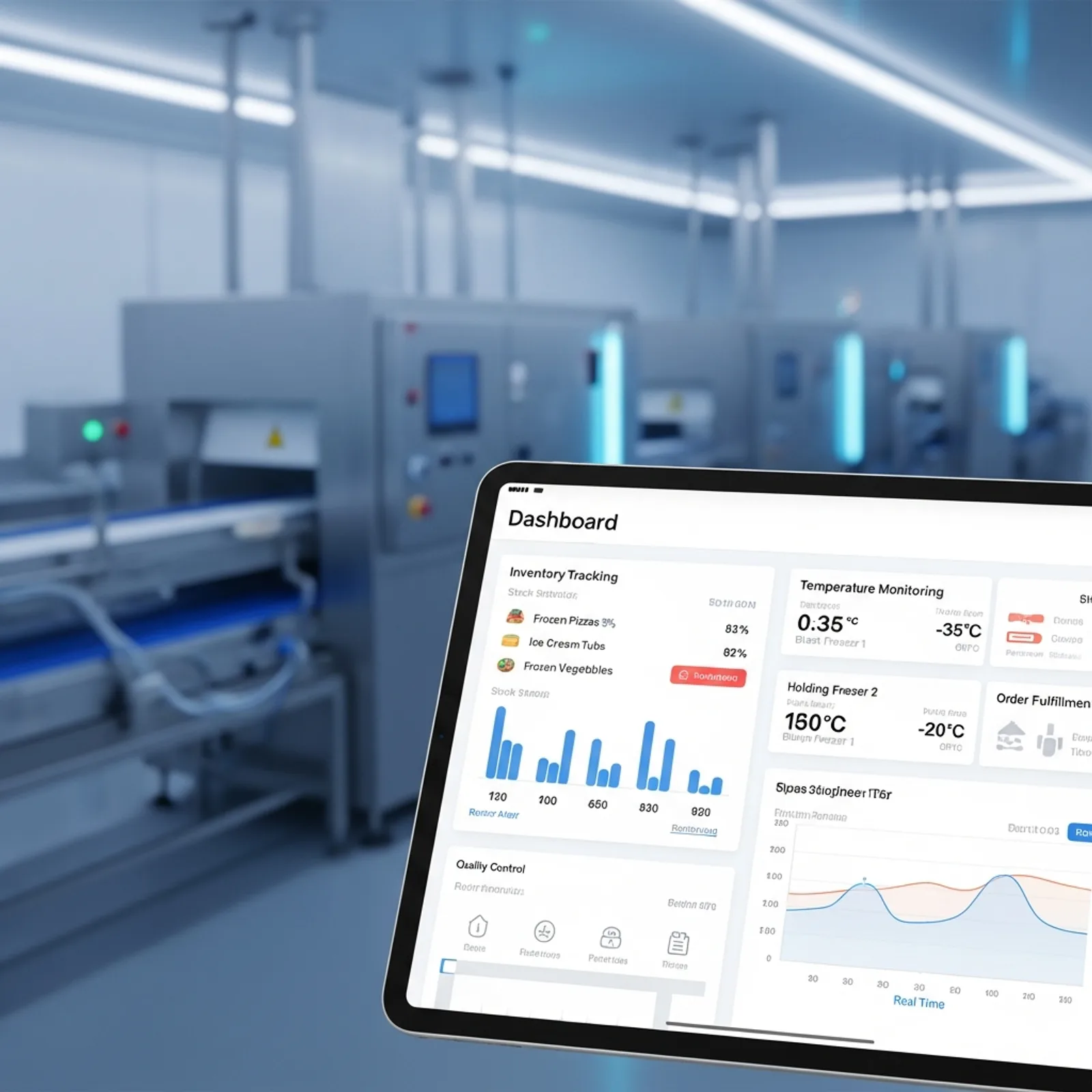
In frozen food manufacturing, temperature control is the foundation of food safety. A single temperature excursion in a storage freezer or during processing can ruin an entire batch of product, leading to significant financial losses and potential health hazards. Modern frozen food ERP software solutions integrate directly with IoT temperature sensors to provide continuous, real-time monitoring of storage freezers, blast freezers, and production areas. If temperatures exceed pre-set thresholds, the system automatically sends alerts to quality managers, allowing them to take immediate corrective action before product quality is compromised.
Why Mid-Market Manufacturers Choose FoodReady
FoodReady is ideal for mid-market frozen food manufacturers with 50 to 1,000 employees who need a unified platform that combines ERP, QMS, and inventory control. It is also a great fit for companies wanting to replace separate, disconnected systems to save on integration and licensing costs.
Manufacturers choose FoodReady to achieve rapid compliance and audit readiness, reducing audit preparation time by up to 90%. The platform's fast deployment, with a target implementation timeline of 8 to 16 weeks, ensures a quick return on investment. Additionally, the AI-assisted root cause analysis helps reduce scrap and prevent repeat quality events, while mobile-friendly shop floor interfaces enable real-time data collection and temperature monitoring.
When to Consider Alternative ERP Software
While FoodReady offers a comprehensive solution, certain scenarios may warrant alternative platforms. For instance, you should consider SAP Business One if you are a large enterprise prioritizing deep financial accounting and global multi-currency support over rapid operational deployment.
Similarly, you should consider NetSuite ERP if your primary focus is corporate financial consolidation across multiple international entities and you have a dedicated IT team to manage custom integrations. Finally, consider Aptean Food & Beverage ERP if you require highly specialized, out-of-the-box catch weight management and are comfortable with a longer, traditional implementation timeline.
How to Prepare for an SQF or BRC Audit
Preparing for a food safety audit under SQF or BRC standards can be a stressful and time-consuming process for quality managers. Traditionally, this involved spending days or weeks gathering paper records, sanitation logs, and training certificates from various departments.
With a unified frozen food ERP software system, all compliance documentation is centralized in a single, secure database. Quality managers can retrieve any required record, from lot traceability reports to employee training logs, in under 30 seconds. This level of organization not only reduces audit preparation time by up to 90% but also instills confidence in the auditor, leading to higher compliance scores.