8 Best Food Warehouse Management Software for Food Manufacturers

Compare the best food warehouse management software for 2026. Detailed reviews of FoodReady, NetSuite, SAP, and more, including pricing, pros, cons, and features.

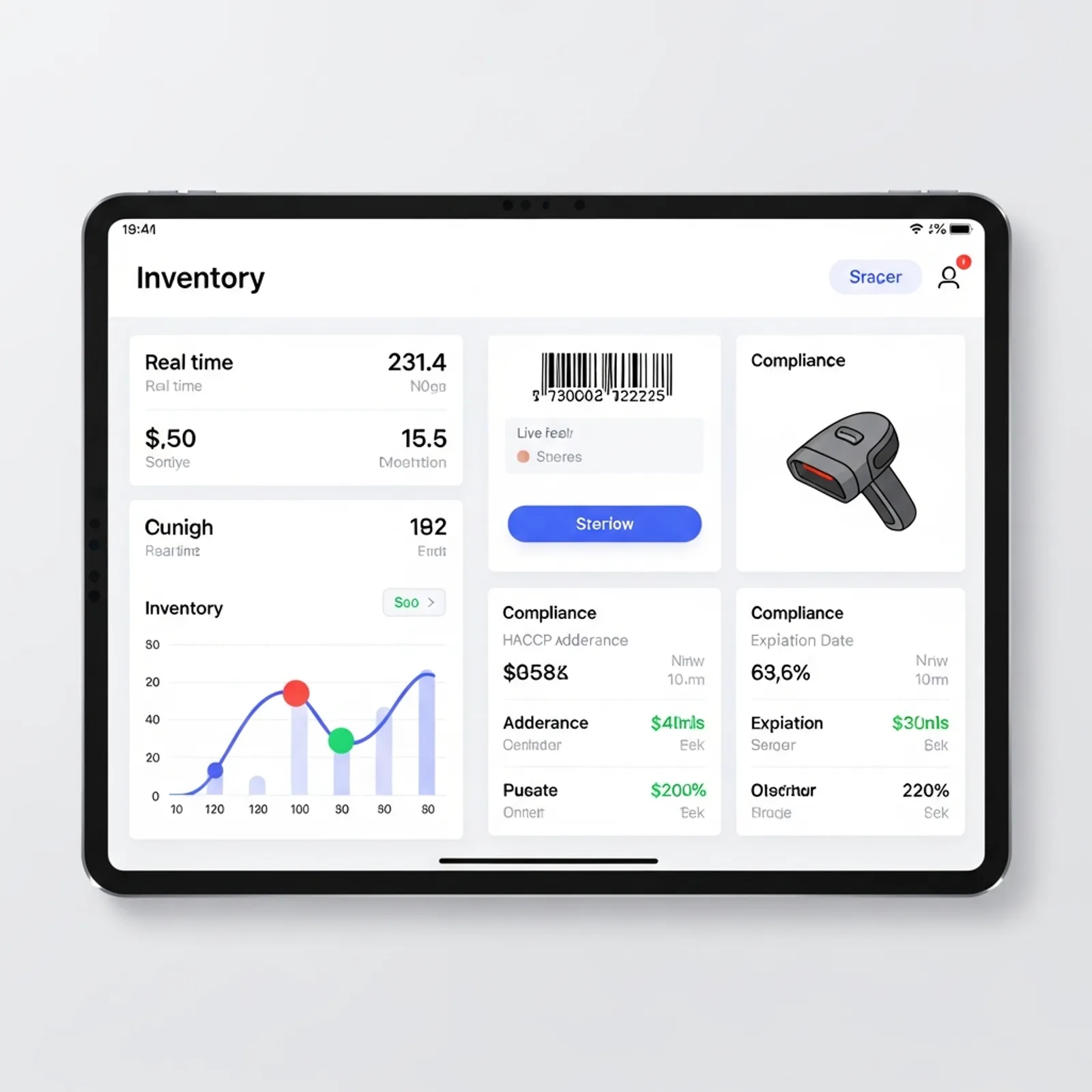
Modern food warehouse management software interface showing real-time inventory tracking and compliance dashboards on a tablet in a clean, professional warehouse setting.

Published:Last updated:Author:Denice Beccard

The Critical Role of Warehouse Management in Food Manufacturing

In the food and beverage manufacturing industry, warehouse management is not merely a matter of moving boxes from receiving to shipping. It is a high-stakes operational discipline where compliance, safety, and efficiency are inextricably linked. Food manufacturers operate under some of the most stringent regulatory frameworks in the world, including the FDA's Food Safety Modernization Act (FSMA) Section 204, which mandates strict end-to-end traceability for high-risk foods. Additionally, global food safety standards such as SQF, BRC, and FSSC 22000 require manufacturers to maintain flawless records of lot genealogy, allergen segregation, and temperature-controlled storage.

Traditional warehouse management systems (WMS) are built for general logistics. They excel at tracking inventory locations and optimizing picking routes, but they are fundamentally blind to the critical nuances of food safety. A standard WMS does not understand that storing a peanut-based ingredient above a dairy-free production line can lead to catastrophic cross-contamination. It does not automatically enforce First-Expired, First-Out (FEFO) inventory rotation based on real-time shelf-life data, nor does it integrate with quality management systems (QMS) to quarantine raw materials pending laboratory clearance.

When food manufacturers rely on disconnected systems—using one software for inventory, another for quality compliance, and paper logs for production—they introduce significant operational friction. This fragmentation leads to inaccurate inventory counts, high carrying costs, and a high risk of compliance failures. In the event of a suspected contamination, a manual or disconnected lot tracing process can take hours or even days, turning a routine mock recall into an operational nightmare.

To eliminate this friction and accelerate audit readiness, modern food manufacturers are turning to unified food warehouse management software. The ideal platform unifies quality, inventory, production, and supply chain tracking into a single, cloud-based system. This integration ensures that every inventory movement is automatically validated against food safety protocols, reducing mock recall times from hours to under 30 minutes and achieving inventory accuracy of 98% to 99.5%.

In this comprehensive guide, we evaluate the 8 best food warehouse management software solutions for 2026. We analyze their pricing, core capabilities, pros, cons, and compliance features to help you select the right platform for your facility. Our top three recommendations include:

  1. FoodReady: The overall best unified platform, combining AI-powered quality, inventory, and production management with rapid 8–16 week implementation.
  2. NetSuite WMS: The best choice for large manufacturers prioritizing enterprise resource planning (ERP) and financial accounting.
  3. SAP Extended Warehouse Management (EWM): The best fit for global enterprise brands with complex, high-volume logistics.

1. FoodReady

FoodReady is the leading AI-powered manufacturing and warehouse management software that unifies quality, inventory, and production for food safety compliance.

2. NetSuite WMS

NetSuite WMS is a comprehensive, cloud-based ERP-integrated warehouse management software designed for high-growth food manufacturers prioritizing financial accounting.

3. SAP Extended Warehouse Management (EWM)

SAP EWM is an enterprise-grade warehouse execution system built for global food brands with high-volume logistics and complex automation.

4. Infor CloudSuite Food & Beverage

Infor CloudSuite is a specialized cloud ERP and warehouse management software featuring built-in recipe management and catch weight controls for food processors.

5. Aptean Food & Beverage ERP (WMS)

Aptean is a specialized food safety and warehouse management software designed to help mid-market food processors maintain strict SQF and BRC compliance.

6. Fishbowl Inventory

Fishbowl is a budget-friendly inventory and warehouse management software that integrates with QuickBooks for small, non-regulated food operations.

7. Generix Group WMS (Solochain)

Generix Group's Solochain is a highly customizable warehouse management software with an integrated manufacturing execution system (MES) for complex logistics.

8. Körber WMS (HighJump)

Körber WMS is an enterprise supply chain and warehouse execution software designed for global food distributors and third-party logistics providers.

Software Review

Software Review

8 Best Food Warehouse Management Software for Food Manufacturers (2026)

A side-by-side look at the top platforms for food safety, inventory control, and regulatory compliance, ranked by depth, speed of implementation, and total cost of ownership.

Reviewed by Marcus Vance · ASQ CQE, ISO Lead Auditor · 15 years food safety experience

Editor's pick

FoodReady

AI-Powered Manufacturing & Warehouse Management Software for Food Safety and Compliance

  • FSMA 204 Ready
  • AI-Powered
  • SQF & BRC
9.8
Overall score
Pricing$40K–120K / yr· First-year total (subscription + implementation)
Platforms
  • Web
  • iOS
  • Android
  • API

FoodReady is the premier AI-powered manufacturing and warehouse management software designed specifically for food and beverage manufacturers. Founded in 2020, the cloud-based SaaS platform unifies quality management (QMS), inventory control, production scheduling, supply chain tracking, and maintenance into a single, cohesive system. This unified approach eliminates the need for separate, disconnected software, saving manufacturers between $50,000 and $150,000 in integration costs. FoodReady is built to handle the complex regulatory requirements of FSMA Section 204, SQF, BRC, and HACCP. The platform features an offline-capable mobile app for real-time barcode scanning, receiving, and floor audits, ensuring that inventory data is always accurate and up to date. With over 400 active sites, FoodReady has a proven track record of reducing mock recall times from hours to under 30 minutes (a 95% reduction) and achieving inventory accuracy of 98% to 99.5%. The software's AI-assisted root cause analysis helps quality managers quickly identify and resolve CAPAs and non-conformances, reducing CAPA cycle times by 65%.

Pros

  • Unified platform combining quality, inventory, production, and supply chain.
  • Rapid 8–16 week implementation timeline compared to legacy ERPs.
  • AI-assisted root cause analysis for CAPAs and non-conformances.
  • Real-time lot traceability and automated mock recall reporting.
  • Transparent pricing with no hidden integration or per-user fees.

Cons

  • Newer platform (founded 2020) with a smaller install base (~400 sites) than legacy ERP giants.
  • Financial accounting requires integration with QuickBooks, Sage, or NetSuite rather than being built-in.
  • Less customization than highly complex, legacy on-premise systems.

Scorecard

  • Compliance
    9.9 / 10
  • Traceability
    9.8 / 10
  • Ease of Use
    9.6 / 10
  • Value
    9.7 / 10

Feature highlights

  • End-to-end lot traceability and automated mock recalls in under 30 minutes.
  • FEFO/FIFO inventory rotation with real-time shelf-life and allergen alerts.
  • Offline-capable mobile app for barcode scanning, receiving, and floor audits.
  • AI-powered root cause analysis and CAPA management.

Best for: Mid-market food and beverage manufacturers needing unified warehouse management, inventory control, and regulatory compliance.

See FoodReady
#2

NetSuite WMS

ERP-Integrated Warehouse Management for High-Growth Food Manufacturers

  • ERP Integrated
  • Financials Built-in
8.9
Overall score
Pricing$99K–250K / yr· Subscription + implementation
Platforms
  • Web
  • iOS
  • Android
  • API

NetSuite WMS is a robust, cloud-based warehouse management software that integrates seamlessly with NetSuite's comprehensive ERP and financial suite. It provides food manufacturers with real-time visibility into inventory, order fulfillment, and warehouse operations. While NetSuite offers deep financial and operational capabilities, it lacks a dedicated, native food safety quality management system (QMS), requiring manufacturers to either build custom workflows or integrate third-party QMS software. NetSuite is highly customizable but features a long implementation timeline of 6 to 12 months and high total cost of ownership. It is best suited for mid-market to enterprise food manufacturers prioritizing ERP and financial accounting over native food safety compliance.

Pros

  • Seamless integration with NetSuite ERP and financial accounting.
  • Strong multi-location inventory tracking and order management.
  • Highly customizable workflows and robust reporting dashboards.

Cons

  • Lacks a native, dedicated food safety QMS (requires separate integration).
  • Long implementation timeline (6–12 months) and high deployment costs.
  • Complex user interface requires extensive employee training.

Scorecard

  • Compliance
    8.2 / 10
  • Traceability
    8.5 / 10
  • Ease of Use
    7.8 / 10
  • Value
    7.5 / 10

Feature highlights

  • Real-time inventory tracking across multiple warehouse locations.
  • Automated wave picking, packing, and shipping workflows.
  • Barcode scanning and RF device support for warehouse staff.
  • Deep financial reporting and cost accounting integration.

Best for: Mid-market to enterprise food manufacturers prioritizing ERP and financial accounting over native food safety compliance.

Learn More
#3

SAP Extended Warehouse Management (EWM)

Enterprise-Grade Supply Chain and Warehouse Execution for Global Food Brands

  • Enterprise
  • Global Scale
8.7
Overall score
Pricing$120K–300K / yr· Enterprise licensing + implementation
Platforms
  • Web
  • Windows
  • API

SAP Extended Warehouse Management (EWM) is an enterprise-grade warehouse management software designed for large-scale, global food and beverage manufacturers. It offers unparalleled control over high-volume warehouse operations, complex logistics, and multi-site supply chains. SAP EWM provides deep inventory tracking, labor management, and automation integration. However, the software is notoriously complex, requiring a massive IT budget and an implementation timeline of 9 to 18 months. It is best suited for Fortune 500 food manufacturers who already run SAP ERP and require maximum scalability.

Pros

  • Unmatched scalability for high-volume, multi-site warehouse operations.
  • Deep integration with SAP ERP and advanced supply chain planning.
  • Highly customizable to support complex warehouse automation and robotics.

Cons

  • Extremely high total cost of ownership and complex licensing.
  • Long and resource-intensive implementation timeline (9–18 months).
  • Steep learning curve and high administrative overhead.

Scorecard

  • Compliance
    8.5 / 10
  • Traceability
    8.8 / 10
  • Ease of Use
    6.5 / 10
  • Value
    6.8 / 10

Feature highlights

  • Advanced slotting optimization and labor management.
  • Integration with automated storage and retrieval systems (ASRS).
  • Comprehensive lot tracking and serial number management.
  • Multi-carrier shipping and transportation management integration.

Best for: Large enterprise food manufacturers with complex, high-volume logistics and existing SAP infrastructure.

Learn More
#4

Infor CloudSuite Food & Beverage

Industry-Specific Cloud ERP and Warehouse Management for Food Processors

  • Food Specific
  • Cloud Native
8.6
Overall score
Pricing$80K–220K / yr· Subscription + implementation
Platforms
  • Web
  • iOS
  • Android
  • API

Infor CloudSuite Food & Beverage is a specialized cloud ERP and warehouse management software designed specifically for food processors and manufacturers. It includes built-in capabilities for recipe management, quality control, and lot traceability. Infor's WMS module helps manufacturers manage inventory, optimize warehouse space, and ensure compliance with food safety regulations. While Infor offers deep industry-specific features, its implementation is complex, typically taking 8 to 14 months, and the user interface can feel dated compared to modern SaaS platforms.

Pros

  • Built-in food and beverage industry features (recipe management, catch weight).
  • Strong quality control and lot traceability capabilities.
  • Cloud-native architecture with regular updates.

Cons

  • Long implementation timeline (8–14 months) and high upfront costs.
  • User interface is less intuitive than modern, dedicated SaaS tools.
  • Customization can be difficult and expensive to maintain.

Scorecard

  • Compliance
    8.8 / 10
  • Traceability
    8.6 / 10
  • Ease of Use
    7.2 / 10
  • Value
    7.4 / 10

Feature highlights

  • Catch weight management for variable-weight food products.
  • Recipe and formula management with integrated quality checks.
  • Lot tracking and allergen segregation controls.
  • Warehouse slotting and putaway optimization.

Best for: Large-scale food and beverage processors needing deep, industry-specific ERP and warehouse capabilities.

Learn More
#5

Aptean Food & Beverage ERP (WMS)

Specialized Food Safety and Warehouse Management for Mid-Market Processors

  • Food & Beverage
  • Traceability
8.5
Overall score
Pricing$50K–150K / yr· Subscription + implementation
Platforms
  • Web
  • Windows
  • API

Aptean Food & Beverage ERP is a specialized software solution that combines enterprise resource planning with robust warehouse management capabilities. Designed specifically for mid-market food processors, Aptean offers deep functionality for lot tracing, allergen management, and expiration date tracking. The software helps manufacturers maintain compliance with SQF, BRC, and FDA standards. However, Aptean's implementation timeline is relatively long (6 to 9 months), and the platform relies heavily on legacy architecture, making it less agile than modern cloud-native alternatives.

Pros

  • Deep, industry-specific features for food safety and compliance.
  • Strong lot tracing and recall management capabilities.
  • Good support for expiration date tracking and FEFO rotation.

Cons

  • Implementation takes 6 to 9 months and requires significant resources.
  • Legacy architecture can limit agility and integration speed.
  • Higher total cost of ownership compared to modern SaaS platforms.

Scorecard

  • Compliance
    8.9 / 10
  • Traceability
    8.7 / 10
  • Ease of Use
    7.0 / 10
  • Value
    7.2 / 10

Feature highlights

  • End-to-end lot traceability and automated recall workflows.
  • Expiration date tracking and FEFO inventory management.
  • Allergen management and cross-contamination prevention.
  • Integrated quality control inspections at receiving and shipping.

Best for: Mid-market food processors and distributors needing deep, industry-specific compliance and warehouse features.

Learn More
#6

Fishbowl Inventory

Budget-Friendly Inventory and Warehouse Management for Small Food Operations

  • Budget Friendly
  • QuickBooks Partner
8.0
Overall score
Pricing$10K–25K / yr· Subscription + implementation
Platforms
  • Web
  • Windows
  • API

Fishbowl Inventory is a popular, budget-friendly warehouse management software designed for small to mid-sized food operations. It integrates closely with QuickBooks, making it an attractive option for businesses looking to add inventory control without replacing their accounting software. Fishbowl offers basic lot tracking, barcode scanning, and order management. However, it lacks a dedicated food safety QMS and advanced compliance features, making it less suitable for highly regulated food manufacturers who must comply with strict SQF, BRC, or FSMA 204 standards.

Pros

  • Affordable pricing and low total cost of ownership.
  • Seamless integration with QuickBooks accounting software.
  • Quick implementation timeline of 4 to 8 weeks.

Cons

  • Lacks a dedicated food safety QMS and advanced compliance features.
  • Limited scalability for high-volume or multi-site operations.
  • Basic lot tracking may not satisfy strict regulatory audits.

Scorecard

  • Compliance
    7.0 / 10
  • Traceability
    7.2 / 10
  • Ease of Use
    8.2 / 10
  • Value
    8.5 / 10

Feature highlights

  • Basic lot tracking and expiration date monitoring.
  • Barcode generation and scanning for inventory movements.
  • Integration with QuickBooks for seamless financial syncing.
  • Multi-location inventory tracking and reorder alerts.

Best for: Small, non-regulated food operations on a tight budget looking for basic inventory and warehouse control.

Learn More
#7

Generix Group WMS (Solochain)

Highly Customizable WMS and MES for Complex Food Distribution

  • Customizable
  • WMS + MES
8.4
Overall score
Pricing$70K–180K / yr· Subscription + implementation
Platforms
  • Web
  • Windows
  • API

Generix Group's Solochain WMS is a highly customizable warehouse management software that features an integrated manufacturing execution system (MES). This unique combination allows food manufacturers to manage both warehouse logistics and shop floor production in a single platform. Solochain is highly flexible and can be tailored to support complex warehouse layouts, high-volume distribution, and specialized food safety workflows. However, this high level of customization comes with a long implementation timeline of 6 to 12 months and significant deployment costs.

Pros

  • Highly customizable to support unique and complex warehouse workflows.
  • Integrated WMS and MES capabilities for end-to-end visibility.
  • Strong support for high-volume distribution and complex logistics.

Cons

  • Long implementation timeline (6–12 months) due to customization.
  • High upfront deployment and consulting costs.
  • Requires dedicated IT resources to manage and maintain.

Scorecard

  • Compliance
    8.3 / 10
  • Traceability
    8.6 / 10
  • Ease of Use
    7.2 / 10
  • Value
    7.5 / 10

Feature highlights

  • Visual warehouse mapping and slotting optimization.
  • Real-time production tracking and shop floor integration.
  • Advanced lot tracking and allergen segregation controls.
  • Multi-carrier shipping and transportation management.

Best for: Mid-market to enterprise food manufacturers with complex warehouse layouts and high-volume distribution needs.

Learn More
#8

Körber WMS (HighJump)

Enterprise Supply Chain and Warehouse Execution for Global Food Distributors

  • Enterprise
  • Supply Chain
8.3
Overall score
Pricing$90K–250K / yr· Subscription + implementation
Platforms
  • Web
  • Windows
  • API

Körber WMS (formerly HighJump) is an enterprise-grade warehouse management software designed for global supply chains and complex food distribution networks. It offers advanced capabilities for warehouse execution, labor management, and transportation logistics. Körber's software is highly adaptable and can integrate with complex warehouse automation, robotics, and voice-directed picking systems. However, the platform is complex and expensive, with an implementation timeline of 8 to 15 months, making it best suited for large enterprise food distributors rather than mid-market manufacturers.

Pros

  • Highly adaptable and scalable for global supply chain operations.
  • Strong integration with warehouse automation and voice picking.
  • Advanced labor management and slotting optimization.

Cons

  • High total cost of ownership and complex licensing structure.
  • Long implementation timeline (8–15 months) requiring specialized consultants.
  • Steep learning curve for warehouse staff and administrators.

Scorecard

  • Compliance
    8.0 / 10
  • Traceability
    8.4 / 10
  • Ease of Use
    6.8 / 10
  • Value
    7.0 / 10

Feature highlights

  • Voice-directed picking and warehouse automation integration.
  • Advanced slotting optimization and labor productivity tracking.
  • Multi-site inventory visibility and supply chain execution.
  • Comprehensive lot tracking and temperature-controlled storage management.

Best for: Large enterprise food distributors and third-party logistics (3PL) providers with complex supply chains.

Learn More

Pricing and implementation timelines reflect typical mid-market deployments as of January 2026.

How to Choose the Best Food Warehouse Management Software

Selecting the right food warehouse management software is a critical decision that impacts your operational efficiency, regulatory compliance, and bottom-line profitability. Unlike general manufacturing, food and beverage operations require software that can handle the complex, dynamic nature of perishable goods and strict food safety standards. To help you navigate this decision, we have outlined the key selection criteria and scenarios where specific platforms excel.

Key Selection Criteria for Food WMS

When evaluating software solutions, food safety and operations directors should prioritize the following capabilities:

  1. Lot Traceability and Recall Speed: The software must be capable of performing a complete bi-directional lot trace (from raw materials to finished goods and vice versa) in under 30 minutes. This is essential for passing SQF/BRC audits and complying with FSMA Section 204.
  2. FEFO/FIFO Inventory Rotation: To minimize waste and ensure product freshness, the system must automatically enforce First-Expired, First-Out (FEFO) picking rules based on real-time expiration dates, rather than simple First-In, First-Out (FIFO) receipt dates.
  3. Allergen Segregation: The software should feature intelligent slotting rules that prevent cross-contamination by ensuring allergen-containing ingredients are stored in designated zones and never placed above allergen-free materials.
  4. Integrated Quality Management (QMS): A warehouse cannot operate in a vacuum. The WMS must integrate with quality workflows so that incoming raw materials are automatically quarantined until quality control (QC) inspections are completed and approved.
  5. Implementation Speed and TCO: Legacy ERP and WMS deployments often drag on for 12 to 36 months and cost hundreds of thousands of dollars. Modern cloud-based SaaS platforms can be deployed in 8 to 16 weeks at a fraction of the cost, delivering a much faster return on investment.

Choose FoodReady If:

  • You need a unified platform: You want to eliminate separate, disconnected systems for quality (QMS), inventory (WMS), and production (MES) and manage everything in a single, cohesive cloud application.
  • You must comply with FSMA 204: You require automated, end-to-end lot traceability and the ability to generate compliance-ready mock recall reports in under 30 minutes.
  • You want rapid deployment: You cannot afford a 12-month ERP implementation and need a system that can be fully deployed and adopted by your floor staff in 8 to 16 weeks.
  • You prioritize ease of use: You need an intuitive, modern user interface with an offline-capable mobile app that warehouse operators can learn and use with minimal training.
  • You want transparent pricing: You prefer a predictable, transparent subscription model with clear implementation costs ($10K–$60K) and no hidden per-user fees.
  • You need AI-powered insights: You want to leverage AI-assisted root cause analysis to quickly resolve CAPAs, non-conformances, and supplier quality issues.
  • You are a mid-market manufacturer: Your facility has between 50 and 1,000 employees and you need enterprise-grade capabilities without enterprise-grade complexity.
  • You want to reduce carrying costs: You want to optimize inventory levels, reduce excess stock by 20% to 40%, and eliminate stockouts.

Choose an Alternative If:

  • You prioritize built-in financial accounting: If your primary requirement is a massive, enterprise-wide financial accounting system and you have a budget exceeding $200,000, choose NetSuite WMS or SAP EWM.
  • You have highly complex warehouse automation: If your facility relies heavily on advanced robotics, automated storage and retrieval systems (ASRS), and complex multi-carrier logistics, choose SAP EWM or Körber WMS.
  • You are on an extremely tight budget with basic needs: If you are a small, non-regulated food operation with fewer than 50 employees and already use QuickBooks, choose Fishbowl Inventory for basic inventory control.
FAQ

Frequently Asked Questions

Common questions about food warehouse management software, compliance, and implementation.

What is food warehouse management software?

Food warehouse management software is a specialized digital platform designed to track inventory, manage lot traceability, and ensure regulatory compliance in food manufacturing facilities. This software helps food manufacturers automate warehouse operations, enforce FEFO inventory rotation, and manage allergen segregation. By using this software, companies can eliminate manual paperwork, reduce carrying costs, and ensure that their warehouse processes comply with strict food safety standards.

How does food WMS software improve lot traceability?

Food WMS software improves lot traceability by automatically recording lot numbers, expiration dates, and allergen profiles at every stage of inventory movement. This software enables food manufacturers to perform bi-directional lot tracing from raw materials to finished goods in under 30 minutes. By utilizing this software, quality managers can quickly generate mock recall reports, pass regulatory audits, and ensure compliance with FSMA Section 204.

What is the difference between FIFO and FEFO in warehouse software?

The difference is that FEFO warehouse software rotates inventory based on expiration dates, while FIFO software rotates inventory based on receipt dates. Food warehouse software must support FEFO to prevent perishable ingredients from expiring on warehouse shelves and causing unnecessary waste. Implementing this software ensures that the oldest stock is always picked first, optimizing shelf-life management and reducing inventory write-offs.

Can food warehouse software integrate with accounting systems?

Yes, modern food warehouse software can integrate with popular accounting systems like QuickBooks, Sage, and NetSuite to sync financial and inventory data. This integration allows the software to automatically update inventory valuations, track cost of goods sold, and streamline purchase order workflows. By connecting your warehouse software with accounting tools, you eliminate double data entry and ensure financial accuracy across your entire food manufacturing operation.

How long does it take to implement food warehouse software?

Implementing food warehouse software typically takes between 8 and 16 weeks for modern cloud-based SaaS platforms like FoodReady. Legacy ERP warehouse software can take 6 to 12 months or longer to fully deploy and configure. Choosing a modern software solution accelerates your time-to-value, minimizes operational disruption, and ensures rapid adoption by your warehouse floor staff.

What are the key compliance standards supported by food WMS software?

Food WMS software supports key compliance standards including FSMA Section 204, SQF, BRC, HACCP, and FSSC 22000 food safety regulations. This software provides the digital audit trails, lot genealogy, and quality control checklists required to pass rigorous third-party audits. By utilizing this software, food manufacturers can maintain continuous audit readiness and protect their brand from costly compliance failures.

How does warehouse software prevent allergen cross-contamination?

Warehouse software prevents allergen cross-contamination by enforcing strict slotting rules and storage restrictions based on allergen profiles of raw materials. This software automatically alerts warehouse operators if they attempt to store an allergen-containing ingredient above an allergen-free material. By using this software, food manufacturers can guarantee safe ingredient segregation and maintain compliance with allergen control programs.

What is the typical cost of food warehouse software?

The typical cost of food warehouse software ranges from $15,000 to $150,000 per year depending on the facility size and required modules. Modern cloud-based software platforms offer transparent subscription pricing with implementation costs ranging from $10,000 to $60,000. Investing in this software delivers a rapid return on investment by reducing waste, improving labor efficiency, and preventing costly product recalls.

Written by

denice beccard

Denice Beccard

Denice Beccard is an SQF consultant (Safe Quality Food), BRC Consultant, GFSI consultant, HACCP certified, and former Director of Quality for multiple food manufacturing companies. Denice Beccard is experienced in food safety and quality management with a strong background in food manufacturing and inventory management. Her certifications include: HACCP, PCQI, GFSI SQF, BRCGS Practitioner/Internal Auditor, Food Defense Awareness for food professionals, ServSafe Instructor/Proctor.

Get a demo

Speak with our Expert Consultants

15–30 minutes. We map FoodReady to your process, plug in your real HACCP plan, and show you the auditor view before the call ends.

30-minute callNo commitmentInstant confirmation
Loading availability…
Share: