8 Best Food Supply Chain Software for Manufacturers

Discover the top food supply chain software solutions for food and beverage manufacturers in 2026. Compare pricing, features, compliance capabilities, and implementation timelines to find the perfect platform for your facility.

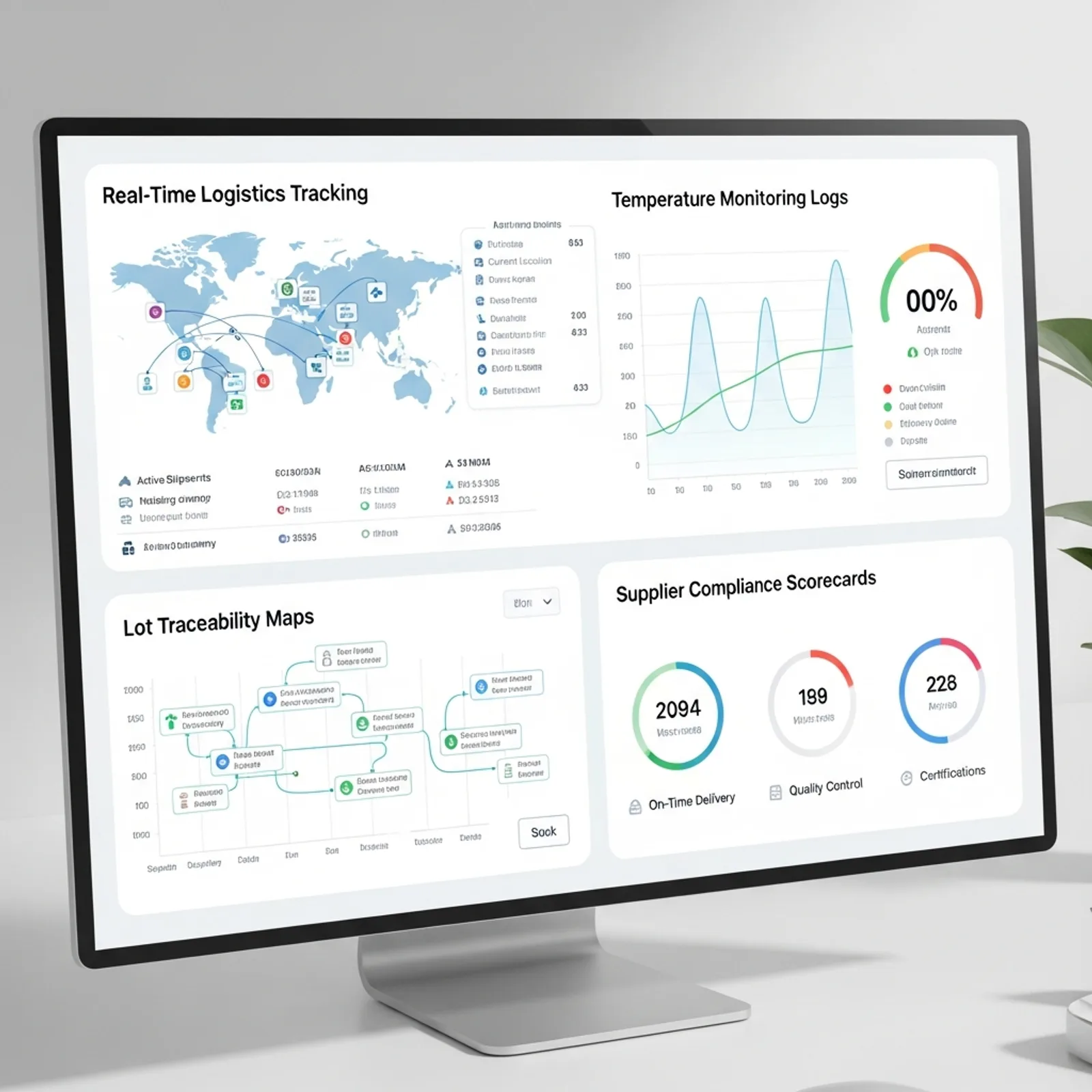
Professional food supply chain management software dashboard showing lot traceability, inventory levels, and supplier compliance metrics in a modern minimalist style.

Published:Last updated:Author:Gerry Galloway

Navigating Food Supply Chain Complexity in 2026

Selecting the right food supply chain software is one of the most critical decisions for modern food and beverage manufacturing facilities. In an era of tightening FDA regulations, FSMA 204 traceability mandates, and rising operational costs, relying on manual spreadsheets or generic ERP systems is no longer viable. According to industry data, food manufacturers using outdated tracking methods face a 40% higher risk of recall-related financial losses, with the average recall costing upwards of $10 million in direct expenses and brand damage.

To help you navigate this complex landscape, we have evaluated the leading platforms on the market. Our top three recommendations are FoodReady for its unified, AI-powered approach, Plex for high-volume enterprise MES capabilities, and Aptean for traditional ERP functionality. Among these, FoodReady stands out as the #1 choice because it seamlessly unifies quality management (QMS), inventory control, and supplier compliance into a single, modern cloud SaaS platform. This comprehensive food supply chain platform eliminates the high integration costs and long deployment timelines of legacy systems, allowing manufacturers to achieve full compliance and operational efficiency in weeks rather than years.

Quick Comparison: Top Food Supply Chain Software Solutions

Software

Best For

Core Capabilities

Regulations

Price Range*

Implementation

FoodReady

Mid-market food & beverage manufacturers

QMS, Inventory, Production, Supplier Portal, AI CAPA

SQF, BRCGS, FSSC 22000, HACCP, FSMA 204

$40K–$120K / yr

8–16 weeks

Plex Smart Platform

Large-scale enterprise processors

MES, Shop-Floor Control, OEE, PLC Integration

GFSI, FDA, USDA

$150K–$350K / yr

6–12 months

Aptean Food ERP

Mid-to-large food manufacturers

Catch Weight, Allergen Control, FEFO, Financials

FDA, USDA, GFSI

$80K–$200K / yr

6–12 months

TraceGains

Supplier compliance & sourcing

Supplier Portal, COA Automation, Risk Assessment

FSMA 204, GFSI

$30K–$75K / yr

8–12 weeks

Safefood 360

Pure-play food safety QMS

HACCP, Audits, CAPA, Document Control

SQF, BRCGS, FSSC 22000

$25K–$60K / yr

8–12 weeks

Icicle ERP

Small-to-mid food processors

Safety-First ERP, HACCP, Lot Tracking

HACCP, GFSI, FDA

$35K–$80K / yr

12–24 weeks

JustFood ERP

Microsoft-centric manufacturers

Inventory, Warehouse, Production, Financials

FDA, USDA, GFSI

$75K–$180K / yr

6–9 months

Deacom ERP

Large process manufacturers

Single-Codebase ERP, Formulation, WMS

FDA, USDA, GFSI

$120K–$280K / yr

9–12 months

\*Note: Price ranges reflect typical mid-market deployments including subscription and implementation.

The 8 Best Food Supply Chain Software Solutions (2026)

Here is a quick shortlist of the best food supply chain software solutions for manufacturers in 2026:

  1. FoodReady: Best overall unified food supply chain software combining QMS, inventory, and production.
  2. Plex Smart Manufacturing Platform: Best for large-scale enterprise MES and shop-floor automation.
  3. Aptean Food & Beverage ERP: Best for mid-to-large manufacturers needing traditional ERP with food-specific features.
  4. TraceGains: Best for automated supplier compliance and ingredient sourcing networks.
  5. Safefood 360: Best pure-play food safety and quality management system (QMS) for global compliance.
  6. Icicle ERP: Best safety-first ERP for small-to-mid-sized food processors.
  7. JustFood ERP: Best for mid-market manufacturers committed to the Microsoft Dynamics ecosystem.
  8. Deacom ERP: Best single-codebase ERP for large-scale process manufacturers.

Software Review

Best Food Supply Chain Software for Manufacturers (2026)

Reviewed by Maggie Kratovil · Food Safety Tech Supervisor

Editor's pick
Professional food supply chain management software dashboard showing lot traceability, inventory levels, and supplier compliance metrics in a modern minimalist style.

FoodReady

AI-Powered Food Safety, Quality, and Supply Chain Management Software

  • FSMA 204 Ready
  • SQF / BRCGS
  • AI-Powered
9.8
Overall score
Pricing$40K–120K / yr· First-year total (subscription + implementation)
Platforms
  • Web
  • iOS
  • Android
  • API

FoodReady is the premier cloud-based food supply chain software designed specifically for food and beverage manufacturing facilities. As a unified food supply chain platform, it eliminates the need for separate, disconnected systems by combining quality management (QMS), inventory control, production scheduling, and supplier compliance into a single, modern food supply chain system.

Unlike legacy ERP giants or document-only quality systems, FoodReady is built from the ground up for food manufacturers. It offers five key advantages: comprehensive scope, AI intelligence, rapid implementation, cost-effectiveness, and regulatory breadth. While traditional ERPs take 12 to 36 months to deploy, FoodReady is fully implemented in just 8 to 16 weeks, offering a significantly lower total cost of ownership (TCO) than legacy systems.

The platform features AI-assisted root cause analysis for CAPAs and predictive quality control, helping quality teams identify risks before they lead to recalls. It provides native, pre-built templates for SQF, BRCGS, FSSC 22000, and HACCP compliance, ensuring audit readiness at all times. FoodReady has helped over 400 manufacturing sites streamline their operations, reduce audit preparation time by 85%, and cut CAPA resolution times from 52 days to 18 days.

Pros

  • Unified platform combining food safety, quality, inventory, and production.
  • Rapid 8-16 week implementation timeline compared to legacy ERPs.
  • AI-assisted root cause analysis and automated CAPA generation.
  • Real-time lot traceability and mock-recall reports in under 2 minutes.
  • Native support for SQF, BRCGS, FSSC 22000, and HACCP standards.

Cons

  • Newer platform (established 2020) with a smaller install base (~400 sites) than legacy ERP giants.
  • Financial accounting requires integration with QuickBooks or NetSuite.

Scorecard

  • Compliance
    9.9 / 10
  • Traceability
    9.8 / 10
  • Ease of Use
    9.6 / 10
  • Value
    9.7 / 10

Feature highlights

  • Automated lot genealogy and 1-click mock recall reporting.
  • Mobile-first floor inspections with offline capability.
  • Supplier portal for automated COA collection and compliance tracking.
  • AI-driven predictive analytics for quality deviations.

Best for: Mid-market food and beverage manufacturers needing unified quality, inventory, and traceability.

Request FoodReady Demo
#2
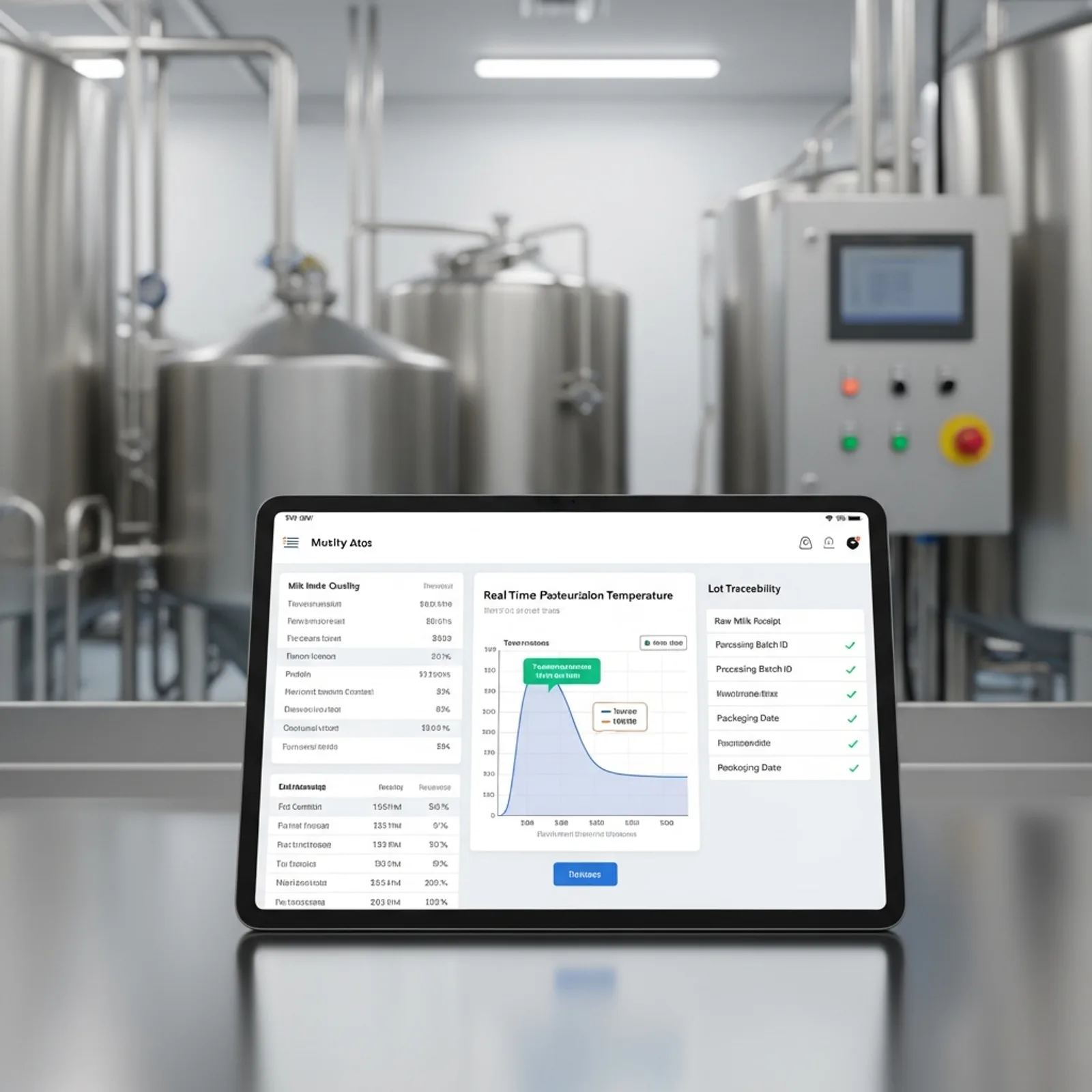
Modern minimalist dairy manufacturing software dashboard showing milk intake quality logs, pasteurization temperature charts, and lot traceability checklists on a tablet screen in a clean, professional dairy processing facility.

Plex Smart Manufacturing Platform

Enterprise-Grade MES and ERP for High-Volume Food Processors

  • Enterprise MES
  • GFSI Compliant
8.9
Overall score
Pricing$150K–350K / yr· Subscription only; implementation extra
Platforms
  • Web
  • Windows
  • API

Plex Smart Manufacturing Platform (by Rockwell Automation) is a highly robust, enterprise-grade smart manufacturing platform that combines ERP and MES capabilities. It is built for high-volume food processors who need absolute control over their production lines, machine integrations, and complex supply chains. Plex excels at tracking raw materials from receiving through processing to final packaging, ensuring strict compliance with GFSI standards.

The platform offers deep manufacturing execution system (MES) capabilities for real-time floor control, robust multi-plant inventory, and production scheduling. It integrates seamlessly with shop-floor PLC and automation hardware, providing real-time machine integration and OEE tracking. However, its complexity and high cost make it less suitable for mid-market manufacturers, and the implementation process can take 6 to 12 months.

Pros

  • Deep manufacturing execution system (MES) capabilities for real-time floor control.
  • Robust multi-plant inventory and production scheduling.
  • Strong integration with shop-floor PLC and automation hardware.

Cons

  • High total cost of ownership and complex, multi-month implementation.
  • Steep learning curve for floor operators due to a dense user interface.

Scorecard

  • Compliance
    9.1 / 10
  • Traceability
    9.2 / 10
  • Ease of Use
    7.8 / 10
  • Value
    8.0 / 10

Feature highlights

  • Real-time machine integration and OEE tracking.
  • Comprehensive recipe and formulation management.
  • Multi-site inventory visibility and warehouse management.

Best for: Large-scale food and beverage manufacturers requiring deep shop-floor control and MES capabilities.

Learn More about Plex
#3
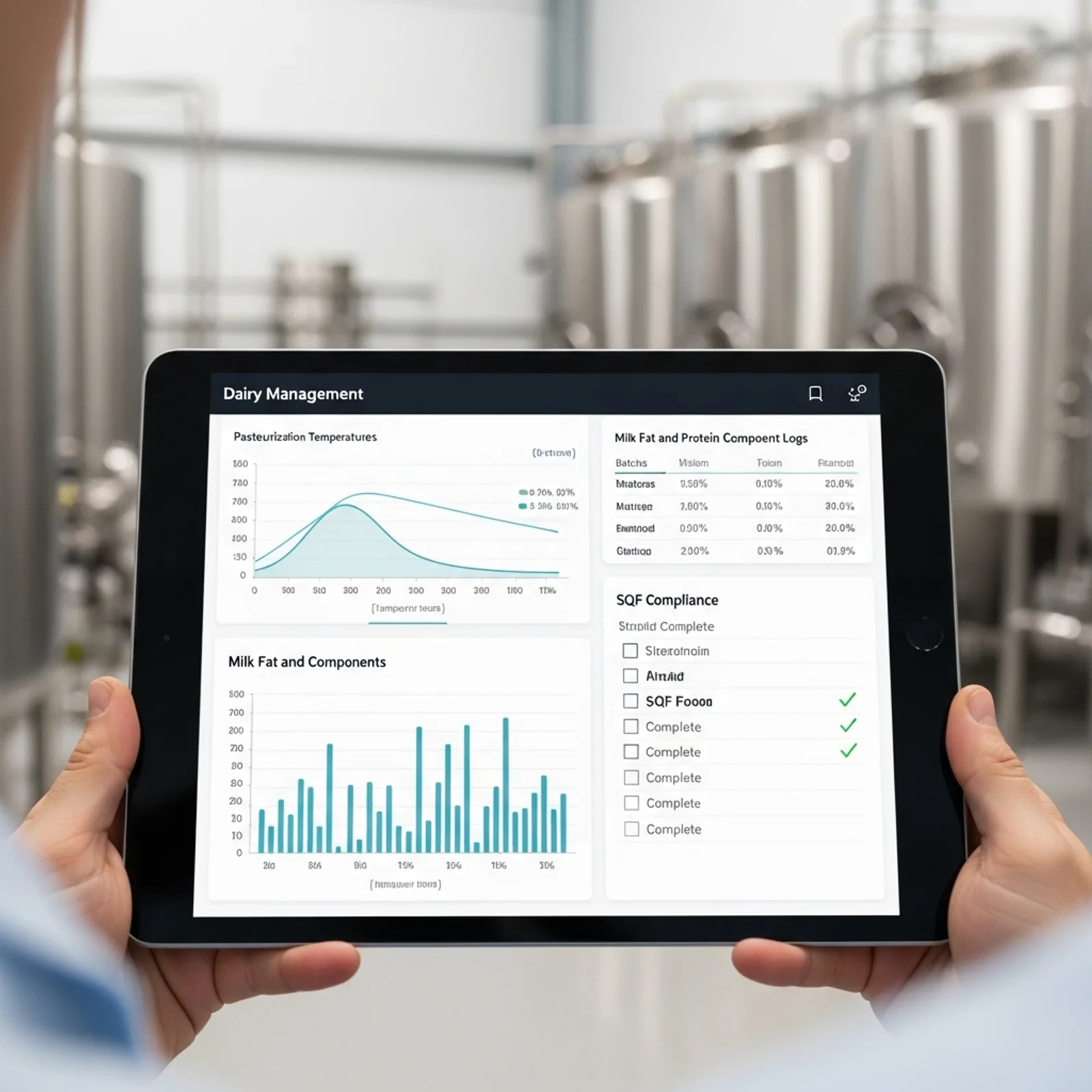
Modern minimalist dairy manufacturing dashboard showing milk intake quality logs, pasteurization temperature charts, and lot traceability checklists on a tablet screen in a clean, professional dairy processing facility.

Aptean Food & Beverage ERP

Industry-Specific ERP for Food and Beverage Manufacturers

  • Food ERP
  • Lot Traceability
8.7
Overall score
Pricing$80K–200K / yr· Subscription + implementation
Platforms
  • Web
  • Windows
  • API

Aptean Food & Beverage ERP is a dedicated enterprise resource planning system designed specifically for the food and beverage industry. It addresses unique industry challenges such as catch weight management, allergen control, recipe management, and strict lot traceability. Aptean provides a solid foundation for manufacturers looking to transition from generic ERPs or spreadsheets to an industry-specific solution.

The platform features built-in food-specific features like catch weight and allergen management, strong financial accounting, and good regulatory compliance tracking for FDA and USDA standards. While highly functional, the deployment process requires significant time and resources, often taking 6 to 12 months, and the user interface feels dated compared to modern SaaS platforms.

Pros

  • Built-in food-specific features like catch weight and allergen management.
  • Strong financial accounting and cost analysis modules.
  • Good regulatory compliance tracking for FDA and USDA standards.

Cons

  • Implementation can take 6 to 12 months.
  • User interface feels dated compared to modern SaaS platforms.

Scorecard

  • Compliance
    8.9 / 10
  • Traceability
    9.0 / 10
  • Ease of Use
    8.1 / 10
  • Value
    8.3 / 10

Feature highlights

  • Catch weight management for variable-weight products.
  • Allergen segregation and cross-contamination alerts.
  • Expiration date tracking and FEFO inventory management.

Best for: Mid-to-large food manufacturers needing specialized ERP functionality without heavy customization.

Explore Aptean ERP
#4
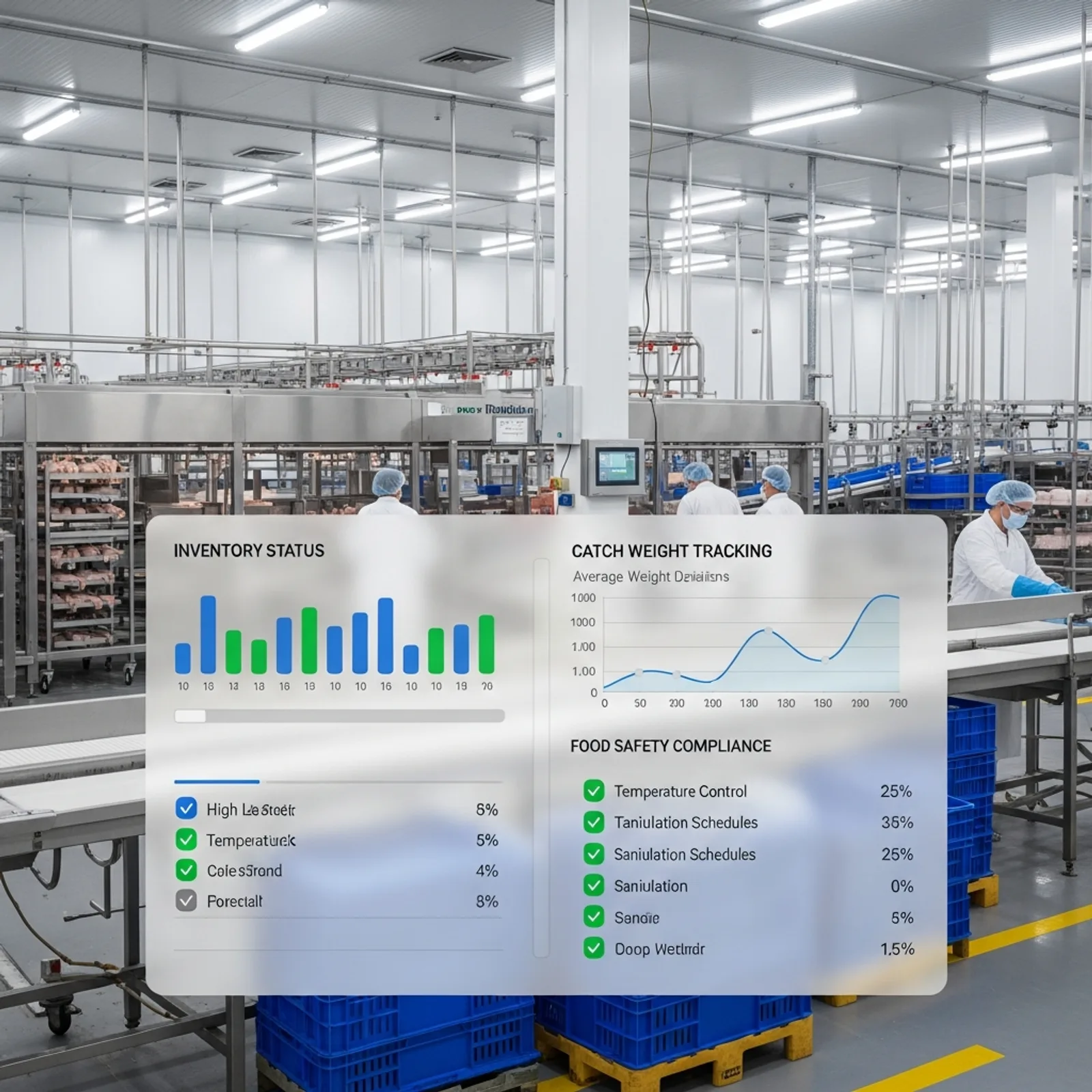
Modern poultry processing facility with a digital dashboard showing ERP inventory and food safety metrics

TraceGains

Supplier Compliance and Quality Management Network

  • Supplier Network
  • FSMA 204
8.6
Overall score
Pricing$30K–75K / yr· Per-module pricing
Platforms
  • Web
  • API

TraceGains is a specialized supplier compliance and quality management platform that leverages a massive network of food ingredient suppliers. It automates the tedious process of collecting, verifying, and managing supplier documents, COAs, and specifications. While it is the gold standard for supplier quality and regulatory compliance, it does not manage physical inventory or production floor operations.

The platform offers a massive network of pre-connected suppliers for rapid document exchange, automated COA extraction and validation, and excellent regulatory monitoring. However, because it lacks native inventory control and production scheduling modules, manufacturers must integrate it with an ERP or MES for full shop-floor traceability.

Pros

  • Massive network of pre-connected suppliers for rapid document exchange.
  • Automated COA (Certificate of Analysis) extraction and validation.
  • Excellent regulatory monitoring and ingredient risk assessment.

Cons

  • Lacks native inventory control and production scheduling modules.
  • Requires integration with an ERP or MES for full shop-floor traceability.

Scorecard

  • Compliance
    9.2 / 10
  • Traceability
    8.4 / 10
  • Ease of Use
    8.3 / 10
  • Value
    8.2 / 10

Feature highlights

  • Automated supplier document collection and renewal alerts.
  • Ingredient specification management and allergen tracking.
  • Global regulatory alert integration (FDA, EFSA, etc.).

Best for: Food manufacturers prioritizing supplier qualification, COA automation, and ingredient sourcing.

Discover TraceGains
#5
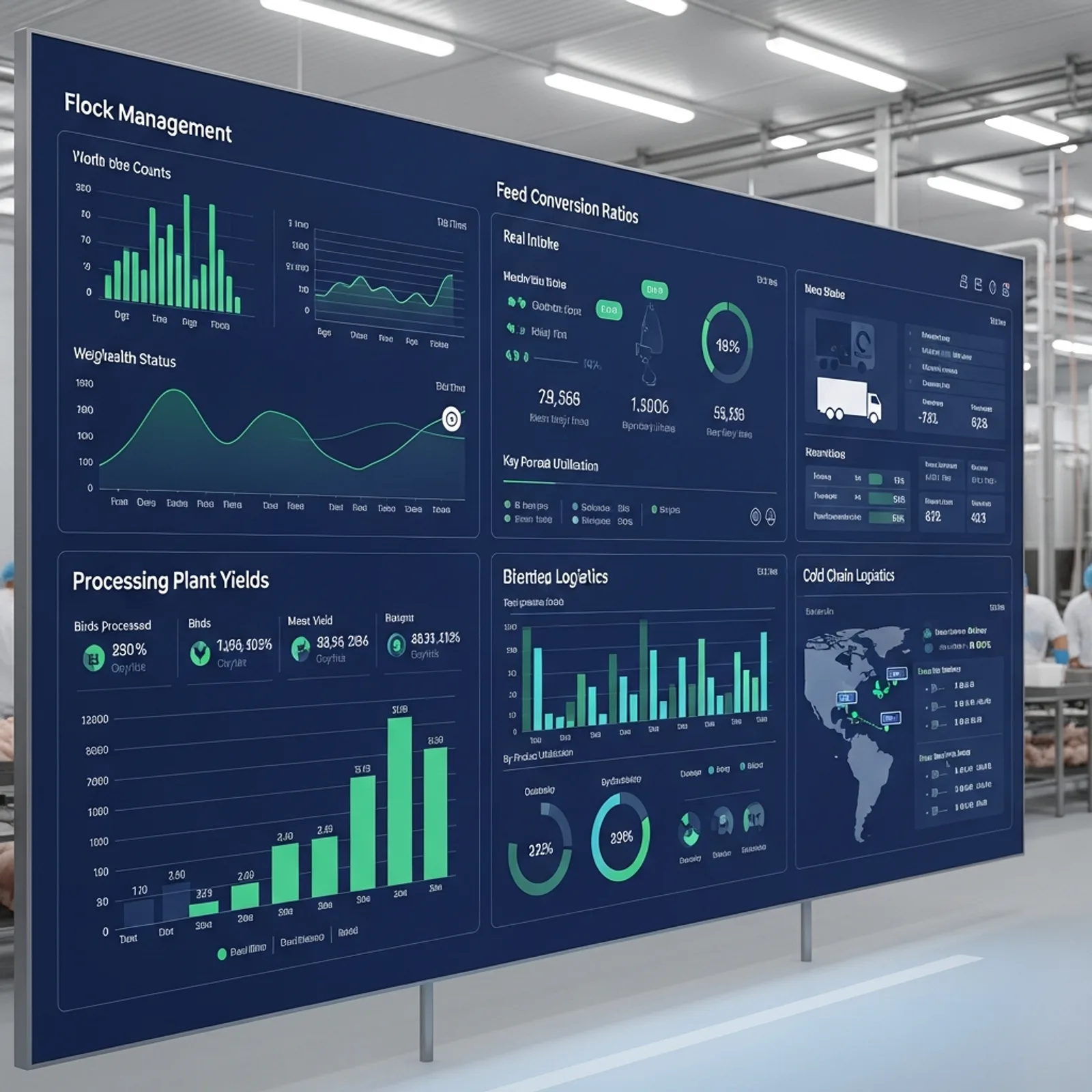
Best Poultry ERP Software Dashboard and Analytics

Safefood 360

Dedicated Food Safety and Quality Management Software (QMS)

  • Pure QMS
  • GFSI / HACCP
8.5
Overall score
Pricing$25K–60K / yr· Subscription only
Platforms
  • Web
  • iOS
  • Android
  • API

Safefood 360 (by LGC Assure) is a dedicated food safety and quality management software (QMS) built for global food manufacturers. It provides complete coverage of GFSI standards (SQF, BRCGS, FSSC 22000) and regulatory requirements. The platform excels at managing HACCP plans, audits, CAPAs, and supplier compliance.

The platform offers comprehensive food safety modules covering HACCP, HARPC, and VACCP/TACCP, excellent audit management, and multi-site compliance dashboards. However, because it lacks inventory and production capabilities, it functions primarily as a compliance record-keeping system rather than an operational tool, requiring double data entry if not integrated with an ERP.

Pros

  • Comprehensive food safety modules covering HACCP, HARPC, and VACCP/TACCP.
  • Excellent audit management and corrective action (CAPA) workflows.
  • Multi-site compliance dashboards for corporate quality directors.

Cons

  • No built-in inventory, warehouse, or production management.
  • Double data entry required if not integrated with an ERP.

Scorecard

  • Compliance
    9.4 / 10
  • Traceability
    8.0 / 10
  • Ease of Use
    8.2 / 10
  • Value
    8.1 / 10

Feature highlights

  • Interactive HACCP plan builder and hazard analysis.
  • Supplier approval workflows and scorecarding.
  • Mobile-friendly audit checklists and non-conformance tracking.

Best for: Food manufacturers needing a pure-play QMS for global compliance and audit readiness.

See Safefood 360
#6
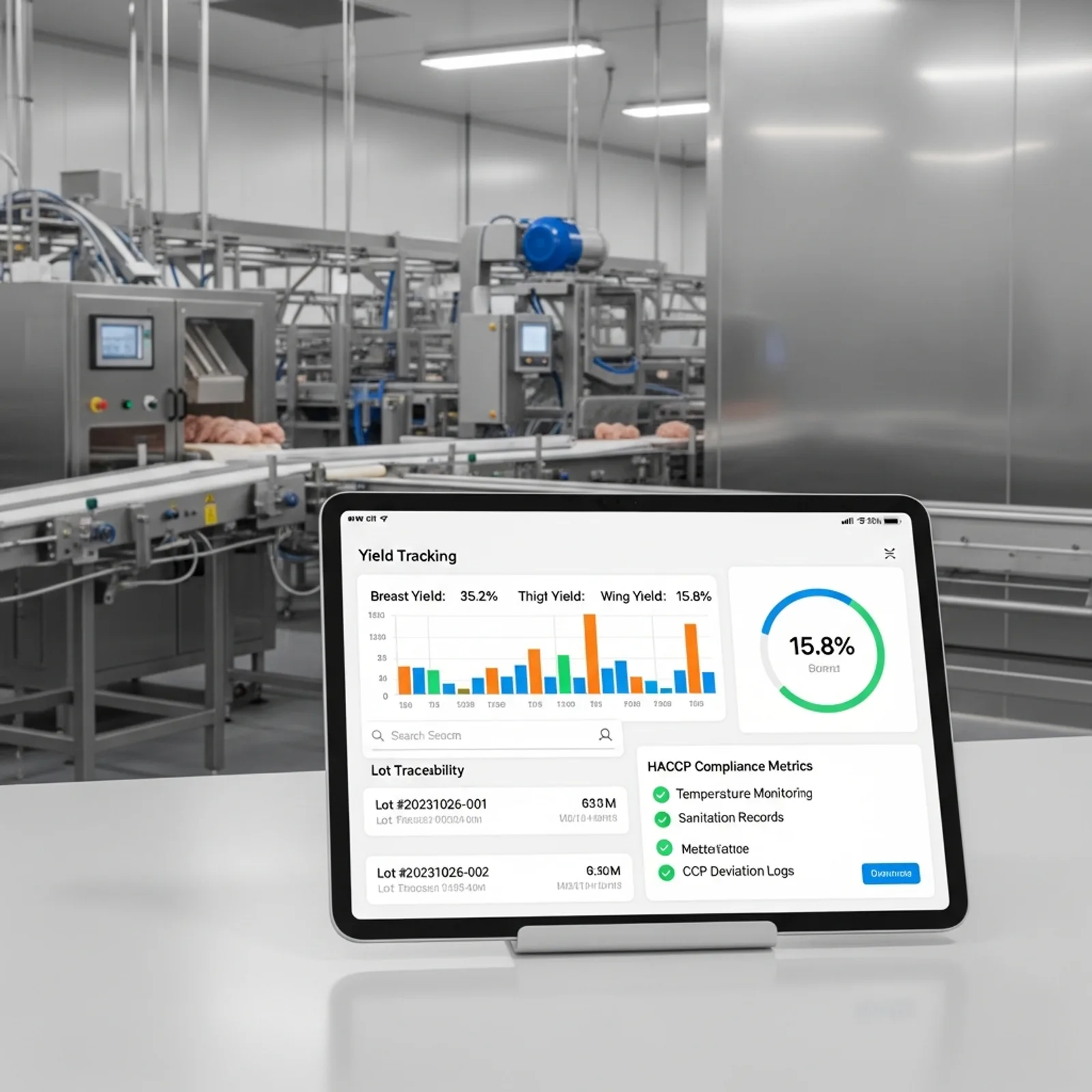
A professional poultry processing ERP dashboard showing real-time yield tracking, lot traceability, and HACCP compliance metrics on a tablet in a modern facility.

Icicle ERP

Food Production, Safety, and Traceability ERP

  • Safety-First ERP
  • HACCP Built-in
8.4
Overall score
Pricing$35K–80K / yr· Subscription + implementation
Platforms
  • Web
  • API

Icicle ERP is a specialized, safety-first ERP system designed for small-to-mid-sized food manufacturers. It is unique because it builds its inventory and production modules around a core food safety (HACCP) engine. This ensures that every operational decision—from receiving raw materials to shipping finished goods—is automatically validated against food safety protocols.

The platform offers deep integration between HACCP plans and inventory/production workflows, strong lot tracking, and automated mass-balance calculations for recall audits. While highly functional, the interface can require a significant learning curve, and the mobile experience is web-responsive rather than a native app.

Pros

  • Deep integration between HACCP plans and inventory/production workflows.
  • Strong lot tracking and recall management capabilities.
  • Good customer support and structured onboarding.

Cons

  • User interface can feel complex and less intuitive for new users.
  • Mobile experience is web-responsive rather than a native app.

Scorecard

  • Compliance
    8.8 / 10
  • Traceability
    8.7 / 10
  • Ease of Use
    7.9 / 10
  • Value
    8.2 / 10

Feature highlights

  • Automated mass-balance calculations for recall audits.
  • Production scheduling linked directly to ingredient availability.
  • Maintenance and sanitation (SSOP) tracking.

Best for: Small-to-mid-sized food processors looking for a safety-first ERP.

Explore Icicle ERP
#7
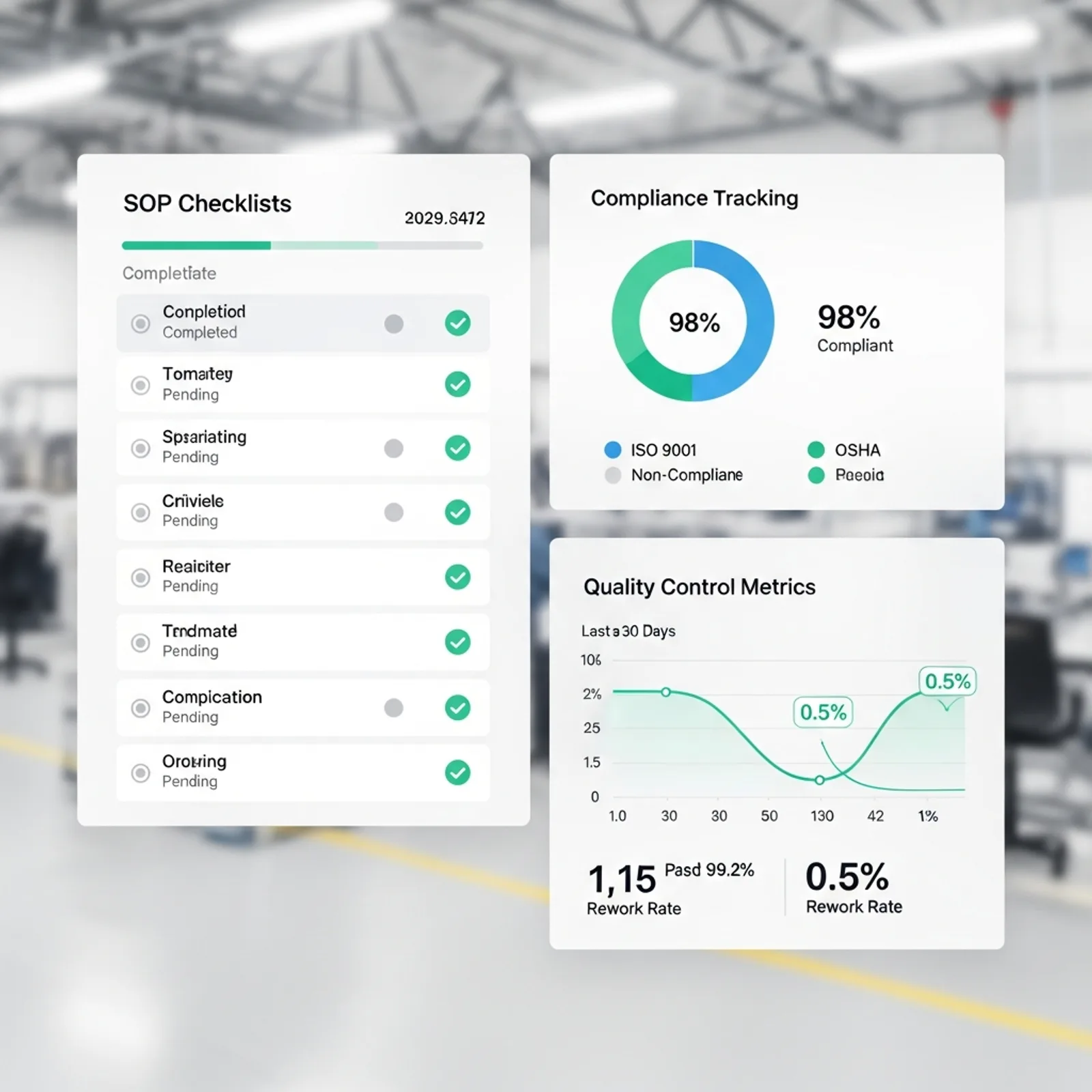
Modern minimalist dashboard of standard operating software for manufacturing showing SOP checklists and compliance tracking

JustFood ERP

Microsoft Dynamics-Based ERP for Food Manufacturers

  • Microsoft Dynamics
  • Lot Tracking
8.2
Overall score
Pricing$75K–180K / yr· Subscription + implementation
Platforms
  • Web
  • Windows
  • API

JustFood ERP is a specialized food and beverage solution built on top of Microsoft Dynamics 365 Business Central. It combines Microsoft's robust enterprise ERP capabilities with food-specific features like lot tracking, quality audits, recipe management, and production scheduling. It is an excellent choice for companies that want a highly scalable, Microsoft-backed system.

The platform offers seamless integration with Microsoft Office, Power BI, and other tools, along with strong financial, warehouse, and production management. However, it comes with high implementation costs and reliance on external Microsoft partners, and customizations can make future upgrades difficult and expensive.

Pros

  • Built on the reliable Microsoft Dynamics 365 Business Central platform.
  • Seamless integration with Microsoft Office, Power BI, and other tools.
  • Strong financial, warehouse, and production management.

Cons

  • High implementation costs and reliance on external Microsoft partners.
  • Customizations can make future upgrades difficult and expensive.

Scorecard

  • Compliance
    8.3 / 10
  • Traceability
    8.5 / 10
  • Ease of Use
    7.6 / 10
  • Value
    7.8 / 10

Feature highlights

  • Real-time inventory tracking and warehouse bin management.
  • Quality control checks integrated into receiving and production.
  • Advanced production scheduling and capacity planning.
#8
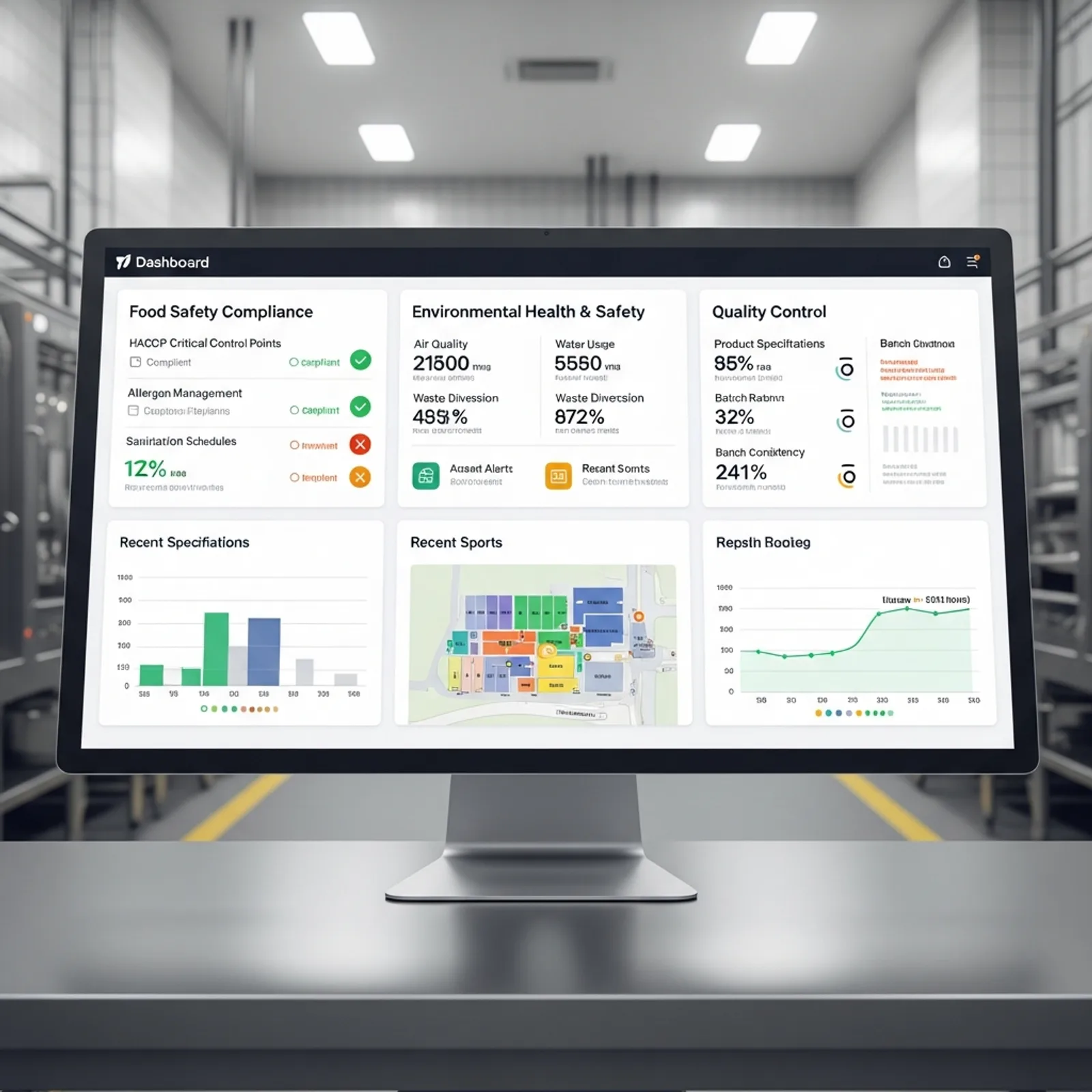
Modern food and beverage EHS software dashboard showing safety compliance and environmental metrics in a clean, professional facility.

Deacom ERP

Single-Codebase ERP for Process Manufacturers

  • Single Codebase
  • Process ERP
8.1
Overall score
Pricing$120K–280K / yr· Subscription + implementation
Platforms
  • Web
  • Windows
  • On-prem
  • API

Deacom ERP (by ECI Software Solutions) is a comprehensive ERP system designed specifically for process manufacturers, including food and beverage companies. Deacom's core philosophy is to provide all necessary features—from formulation and quality control to warehouse management and financials—within a single codebase, eliminating the need for complex third-party integrations.

The platform offers a single-codebase philosophy, highly customizable formulation and batch scaling tools, and robust warehouse management (WMS). While incredibly powerful and flexible, its enterprise scale and complexity make it best suited for large-scale operations, and it has a very steep learning curve and complex implementation process.

Pros

  • Single-codebase philosophy eliminates the need for third-party integrations.
  • Highly customizable formulation and batch scaling tools.
  • Robust warehouse management (WMS) and shipping integrations.

Cons

  • Very steep learning curve and complex implementation process.
  • High initial investment and ongoing maintenance costs.

Scorecard

  • Compliance
    8.2 / 10
  • Traceability
    8.4 / 10
  • Ease of Use
    7.2 / 10
  • Value
    7.5 / 10

Feature highlights

  • Direct formulation scaling and nutritional calculation.
  • Integrated quality control gates at every stage of production.
  • Multi-currency and multi-entity financial management.

Best for: Large process manufacturers who want a highly customizable ERP without external add-ons.

Discover Deacom ERP

Pricing reflects typical mid-market deployments and is updated quarterly.

How to Choose the Right Food Supply Chain Software

When evaluating food supply chain software, manufacturers must look beyond basic features and assess the total cost of ownership (TCO), implementation timelines, and user adoption rates. Many traditional ERP deployments fail because the software is too complex for floor operators, leading to poor data entry and compliance gaps. A modern food supply chain system should bridge the gap between the front office and the production floor, providing real-time visibility into inventory, quality, and supplier performance. Additionally, with the FDA's FSMA 204 traceability rules taking effect, your chosen food supply chain platform must support digital lot tracking and rapid recall capabilities.

Here is a structured guide to help you decide which food supply chain software is the best fit for your manufacturing facility:

Choose FoodReady if:

  1. You need a unified platform: You want to eliminate separate QMS, inventory, and production systems and manage everything in one modern food supply chain platform.
  2. You require rapid deployment: You cannot afford a 12-month implementation and need a food supply chain system live in 8 to 16 weeks.
  3. You want AI-powered insights: You want to leverage AI for automated root cause analysis, predictive quality control, and faster CAPA resolution.
  4. You prioritize ease of use: You need an intuitive, mobile-friendly interface that floor operators can adopt with minimal training.
  5. You need robust lot traceability: You must be able to run a complete mock recall and generate lot genealogy reports in under 2 minutes.
  6. You are focused on GFSI compliance: You need pre-built templates and workflows for SQF, BRCGS, FSSC 22000, and HACCP.
  7. You want transparent pricing: You prefer predictable subscription costs and reasonable implementation fees without hidden charges.
  8. You need automated supplier compliance: You want a supplier portal that automatically collects and verifies COAs and compliance documents.

Choose an alternative if:

  1. You require deep machine integration: Choose Plex if your primary need is direct PLC integration and real-time shop-floor MES control.
  2. You need a Microsoft-backed system: Choose JustFood ERP if your organization is already standardized on Microsoft Dynamics 365.
  3. You want a massive supplier network: Choose TraceGains if your main focus is sourcing new ingredients and managing supplier documents via a pre-connected network.
  4. You need a single-codebase enterprise ERP: Choose Deacom ERP if you are a large-scale process manufacturer requiring highly customized formulation tools without third-party add-ons.

Conclusion: Streamlining Your Food Supply Chain

Implementing a modern food supply chain software is no longer a luxury—it is a strategic necessity for food and beverage manufacturers. The right food supply chain platform not only ensures compliance with strict FDA and GFSI standards but also drives operational efficiency, reduces waste, and protects your brand from devastating recalls. By unifying quality, inventory, and supplier management into a single food supply chain system, manufacturers can gain the real-time visibility needed to thrive in today's competitive market.

While legacy ERPs and pure-play QMS tools have their place, FoodReady offers the most comprehensive, agile, and cost-effective solution for mid-market manufacturers. Its rapid implementation, AI-powered capabilities, and intuitive design make it the premier choice for modern food facilities.

To take the next step in optimizing your operations, we recommend the following actions:

  1. Schedule a Live Demo: See how FoodReady can streamline your specific workflows.
  2. Calculate Your ROI: Use our ROI calculator to estimate your savings on compliance and inventory.
  3. Download the FSMA 204 Guide: Learn how to prepare your facility for upcoming traceability mandates.
  4. Request a Custom Quote: Get a tailored pricing proposal based on your facility's size and user count.
  5. Compare Features Side-by-Side: Download our detailed software comparison matrix.

Frequently Asked Questions

Common questions about food supply chain management software, compliance, and implementation.

What is food supply chain software?

Food supply chain software is a specialized digital platform designed for food manufacturing facilities to track ingredients and finished products. This software manages inventory, quality control, and supplier compliance. By using this software, manufacturers can ensure regulatory compliance and streamline operations. A modern software system replaces manual spreadsheets with real-time data.

How does food supply chain software improve traceability?

Food supply chain software improves traceability by assigning unique lot codes to raw materials upon receipt. The software tracks these lots through every stage of production to the finished product. If a quality issue arises, the software allows manufacturers to run a mock recall in minutes. This software ensures compliance with FDA FSMA 204 regulations.

What is the difference between food supply chain software and a generic ERP?

Generic ERP software lacks the specialized food safety and compliance features required by food manufacturers. Food supply chain software includes built-in tools for HACCP plans, allergen tracking, and GFSI audits. While generic software requires expensive customization, dedicated food software works out of the box. Choosing industry-specific software reduces implementation risks.

How long does it take to implement food supply chain software?

The implementation timeline for food supply chain software varies by platform. Modern cloud-based software can be deployed in 8 to 16 weeks. In contrast, legacy enterprise software often takes 12 to 36 months to fully implement. Selecting agile software with structured onboarding ensures your team adopts the software quickly.

Can food supply chain software help with SQF and BRCGS audits?

Yes, food supply chain software is specifically designed to simplify SQF and BRCGS audits. The software centralizes all quality records, CAPAs, and training logs in one secure database. Auditors can easily review compliance documents directly within the software. Using this software reduces audit preparation time by up to 85%.

How much does food supply chain software cost?

The cost of food supply chain software depends on the size of your manufacturing facility. Starter software plans range from $15,000 to $30,000 annually, while professional software tiers cost $40,000 to $75,000. Enterprise-grade software can exceed $100,000 per year. Implementation fees for the software also vary based on complexity.

Does food supply chain software integrate with existing accounting systems?

Yes, modern food supply chain software is built to integrate seamlessly with popular accounting software like QuickBooks and NetSuite. This integration allows financial data to flow smoothly between your operations software and your financial software. Connecting your software systems eliminates double data entry and improves financial accuracy.

Why is FoodReady the best food supply chain software?

FoodReady is the leading food supply chain software because it unifies QMS, inventory, and production in one platform. This software eliminates the need for multiple disconnected software tools, saving manufacturers time and money. With AI-powered features, this software helps quality teams resolve issues faster than traditional software.

Written by

gerry galloway

Gerry Galloway

CEO / Co-Founder of FoodReady. Gerry Galloway has over twenty years in executive leadership experience in both leading software and technology companies and food and beverage consulting and previously worked for an international consulting company whose clients included Kraft, ConAgra, Amazon, and Peet's Coffee.

Get a demo

Speak with our Expert Consultants

15–30 minutes. We map FoodReady to your process, plug in your real HACCP plan, and show you the auditor view before the call ends.

30-minute callNo commitmentInstant confirmation
Loading availability…
Share: