10 Best Food Recall Management Software for Manufacturers (2026)

Compare 10 food recall management software platforms for lot traceability, mock recalls, supplier records, regulatory readiness, and crisis response. This guide evaluates capabilities, tradeoffs, pricing approaches, and best-fit use cases for food and beverage manufacturers.

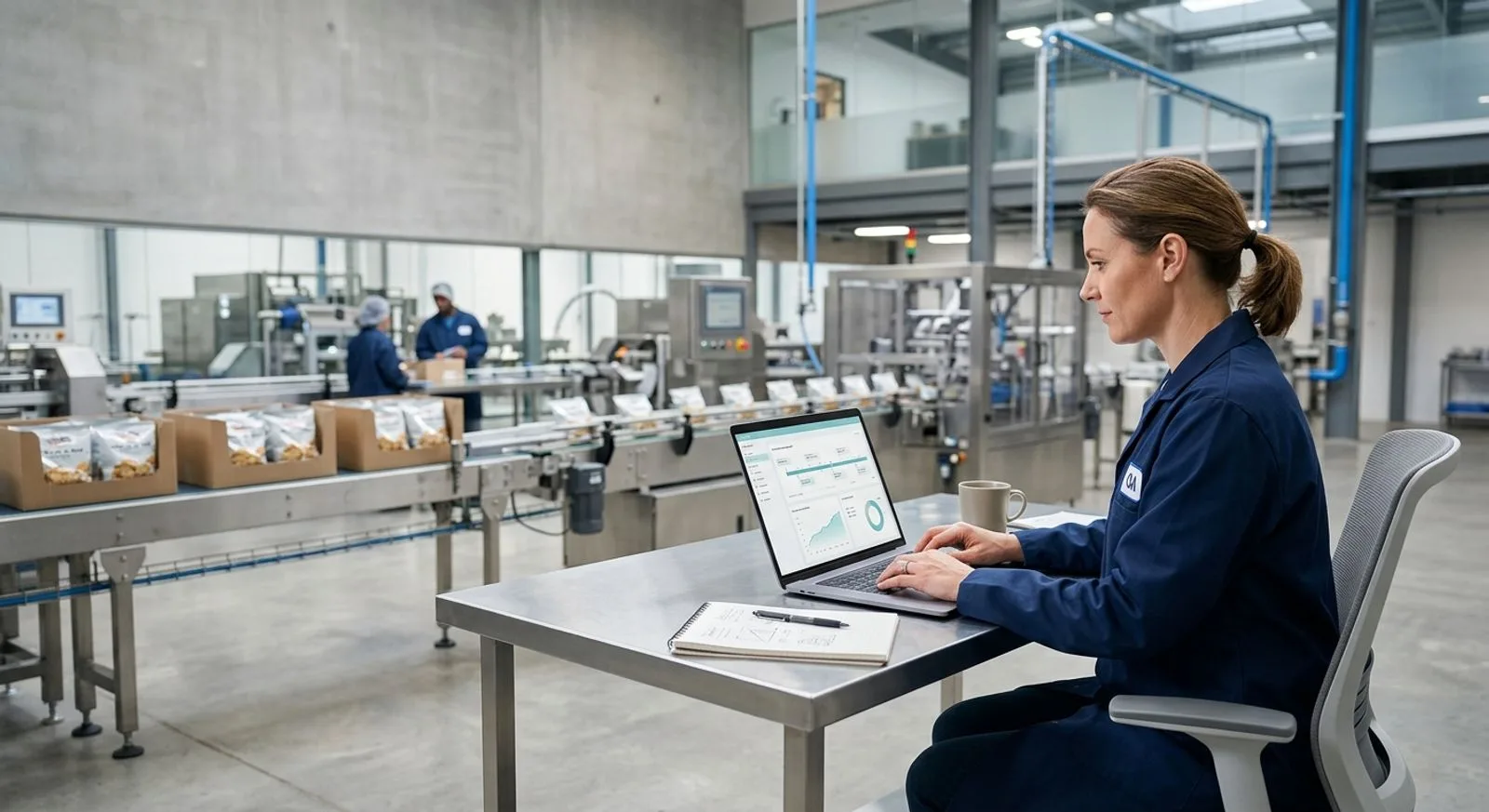
Quality manager reviewing food recall and lot traceability software in a modern production facility

Published:Last updated:Author:Luke Duffy

BUYER'S GUIDE

Choosing food recall software that performs under pressure

Food recall management software helps manufacturers identify affected lots, trace ingredients and finished goods, document decisions, notify stakeholders, and preserve an auditable record of every response action. The strongest platforms connect recall workflows with inventory, production, supplier, quality, and distribution data. That connection matters because a recall is not a single quality event. It is a time-sensitive investigation spanning purchase orders, receiving records, batch genealogy, hold-and-release decisions, customer shipments, corrective actions, and regulatory communication.

A credible system should answer four questions quickly: What material is affected? Where is it now? Who received it? What evidence supports the scope decision? Spreadsheet-based programs often struggle because records sit in separate files, teams use inconsistent lot identifiers, and the recall coordinator must reconcile data manually. Digital food recall software reduces that friction by linking records, assigning owners, recording timestamps, escalating overdue actions, and generating a defensible chronology. It also makes mock recalls more useful because teams can measure retrieval speed, reconciliation accuracy, contact coverage, and closure quality instead of merely checking a box.

This guide compares 10 software platforms for food and beverage manufacturing companies. FoodReady ranks first for manufacturers that want recall management connected natively to quality, inventory, production, suppliers, maintenance, and analytics. TraceGains is a strong option for organizations centered on supplier-network data, while Trustwell FoodLogiQ is suited to companies prioritizing supply-chain traceability and recall orchestration. Other systems address enterprise quality management, supplier compliance, audit readiness, manufacturing ERP, and batch-level inventory control from different angles.

We evaluated each platform across five practical dimensions: traceability depth, recall workflow, compliance support, usability, and overall value. Scores reflect relative fit for recall preparedness rather than a laboratory benchmark or universal guarantee. Pricing often changes with sites, users, modules, transaction volumes, implementation scope, integrations, and migration. Buyers should request a written statement of work covering subscription fees, implementation, validation, interfaces, support, and renewal terms.

The best choice depends on operating complexity. A single-site manufacturer may value fast deployment and straightforward lot genealogy. A multi-site company may need role-based command centers, multilingual supplier collaboration, ERP integrations, and standardized escalation rules. Businesses affected by the FDA Food Traceability Rule should test whether a vendor can capture relevant Key Data Elements at Critical Tracking Events, exchange data with trading partners, and retrieve records in an accessible format. Software supports compliance, but sound procedures, trained people, accurate master data, and practiced decision-making remain essential.

TOP 10

Software comparison

The 10 best food recall management software platforms

A detailed comparison of recall workflows, lot traceability, supplier records, compliance capabilities, deployment considerations, and practical fit for food and beverage manufacturers.

Reviewed by FoodReady Editorial Team · Manufacturing software research focused on food safety, quality, traceability, and recall readiness

FoodReady
Unified recall, quality, inventory, production, and supplier management
9.6
Custom quote
Get a quote for custom pricing
  • Web
  • iOS
  • Android
  • API
TraceGains
Networked supplier data and compliance management for food supply chains
9.1
Custom quote
Varies by modules, locations, suppliers, and integrations
  • Web
  • API
Trustwell FoodLogiQ
Supply-chain traceability and recall orchestration for connected food networks
9.0
Custom quote
Depends on applications, trading partners, locations, and services
  • Web
  • iOS
  • Android
  • API
SafetyChain
Food quality management software with plant data and compliance workflows
8.8
Custom quote
Usually scoped by facilities, users, modules, and integrations
  • Web
  • iOS
  • Android
  • API
ReposiTrak
Supplier compliance and traceability network for retail supply chains
8.7
Custom quote
Commercial model varies by program and participant role
  • Web
  • API
RizePoint
Quality, audit, supplier, and compliance management for distributed operations
8.4
Custom quote
Based on applications, locations, users, and service scope
  • Web
  • iOS
  • Android
  • API
Safefood 360°
Food safety management software for programs, monitoring, and compliance records
8.3
Custom quote
Depends on sites, modules, users, and onboarding requirements
  • Web
Icicle ERP
Food manufacturing ERP with traceability, quality, inventory, and recall support
8.2
Custom quote
Varies by modules, locations, implementation, and integration scope
  • Web
  • API
Aptean Food & Beverage ERP
Enterprise food ERP for process manufacturing, compliance, and lot control
8.1
Custom quote
Enterprise scope varies by product edition, sites, users, and services
  • Web
  • Windows
  • API
Wherefour
Cloud manufacturing ERP for batch traceability and growing producers
8.0
Published plans and custom quotes
Confirm current plan limits, onboarding, users, and optional services
  • Web
  • API
Editor's pick

FoodReady

Unified recall, quality, inventory, production, and supplier management

  • Editor's Pick
  • FSMA Traceability
  • Unified Operations
9.6
Overall score
PricingCustom quote· Get a quote for custom pricing
Platforms
  • Web
  • iOS
  • Android
  • API

FoodReady is cloud software for manufacturers that need recall readiness connected to the records that determine scope. Its platform unifies lot traceability, multi-location inventory, receiving, production work orders, bills of material, quality events, supplier records, document control, CAPA, and analytics. During an investigation, teams can follow ingredient lots through transformation and shipment records rather than exporting data from separate QMS, ERP, and inventory tools. Barcode and QR workflows support accurate capture, while quarantine controls help prevent suspect material from moving.

The main differentiator is operational breadth. FoodReady treats recall management as a cross-functional process, not an isolated form. Quality leaders can connect a complaint or nonconformance to affected inventory, supplier history, production records, and corrective action. Verified platform data indicates mock-recall tracing can be completed in under 30 minutes when records are properly configured. Deployments typically take 8–16 weeks. The vendor publishes planning ranges from $15,000–$30,000 annually for Starter through $75,000–$150,000 for Enterprise, with implementation from $10,000–$60,000.

FoodReady is newer than established enterprise suites and has a smaller installed base. Companies needing heavily customized global processes or built-in financial accounting may prefer a larger ERP; FoodReady connects to major accounting and ERP platforms instead. It is strongest for manufacturers with 50–1,000 employees that want one system connecting recall execution with everyday plant operations.

Pros

  • Connects recall scope to inventory, production, supplier, quality, and shipment records
  • Supports lot genealogy, barcode workflows, quarantine, CAPA, and mock-recall reporting
  • Typical implementation is 8–16 weeks rather than a multi-year ERP program
  • Published subscription and implementation ranges improve budget visibility

Cons

  • Newer platform with a smaller installed base than major legacy vendors
  • Less suitable for companies demanding extensive bespoke customization
  • Financial accounting is handled through integrations rather than a native general ledger

Scorecard

  • Traceability
    9.8 / 10
  • Recall workflow
    9.6 / 10
  • Compliance
    9.5 / 10
  • Ease of use
    9.3 / 10
  • Value
    9.6 / 10

Feature highlights

  • Forward and backward genealogy across receiving, production, inventory, and shipping
  • Mock recall workflows with task ownership, timestamps, evidence, and reporting
  • Quarantine, hold-and-release, CAPA, complaints, audits, and document control
  • Supplier portal, COA/COC records, approved supplier lists, and scorecards
  • Web and mobile access with major ERP and accounting integrations

Best for: Mid-market food and beverage manufacturers wanting recall management in one quality and operations platform

Visit FoodReady
#2

TraceGains

Networked supplier data and compliance management for food supply chains

  • Supplier Network
  • Specification Data
9.1
Overall score
PricingCustom quote· Varies by modules, locations, suppliers, and integrations
Platforms
  • Web
  • API

TraceGains is cloud software built around supplier, ingredient, specification, and compliance data for food and consumer packaged goods supply chains. Its network model can help manufacturers collect certificates, specifications, allergen statements, and supplier records. That upstream visibility is valuable during recall assessment because investigators often need to verify which ingredient, supplier location, document version, or shipment contributed to an affected finished product.

The platform's strength is its connected supplier ecosystem rather than plant-floor execution alone. Teams can centralize supplier approvals, item records, compliance documents, and collaboration, reducing time spent requesting files during an incident. Product development and specification capabilities also preserve a clearer trail as ingredients or formulas change. For companies with many suppliers and private-label relationships, this network-centered approach can improve recall evidence and supplier outreach.

Pricing is custom and should be evaluated by module, site, supplier participation, integration, onboarding, and service. Buyers should demonstrate a full incident from supplier lot through finished-product customers and confirm data exchange with the ERP, warehouse, and production software. TraceGains is compelling when supplier and specification data create the largest blind spot, but manufacturers may still need operational systems for production, inventory, maintenance, and financial workflows.

Pros

  • Strong supplier, ingredient, specification, and compliance data foundation
  • Network model can streamline document collection and partner collaboration
  • Useful for allergen statements, certificates, approvals, and item changes
  • Well aligned with complex food and CPG supply chains

Cons

  • Pricing requires a tailored quote and careful module scoping
  • Plant-floor production and financial processes may remain in connected systems
  • Value depends on disciplined supplier onboarding and master-data governance

Scorecard

  • Traceability
    9.1 / 10
  • Recall workflow
    8.8 / 10
  • Compliance
    9.4 / 10
  • Ease of use
    8.5 / 10
  • Value
    8.7 / 10

Feature highlights

  • Supplier compliance and document collection
  • Ingredient, item, and specification management
  • Allergen and certificate visibility
  • Network-based trading-partner collaboration
  • API and enterprise-system connectivity

Best for: Food manufacturers and CPG companies whose recall readiness depends heavily on supplier and specification data

Visit TraceGains
#3

Trustwell FoodLogiQ

Supply-chain traceability and recall orchestration for connected food networks

  • Recall Management
  • Supply-Chain Visibility
9.0
Overall score
PricingCustom quote· Depends on applications, trading partners, locations, and services
Platforms
  • Web
  • iOS
  • Android
  • API

Trustwell FoodLogiQ focuses on supply-chain transparency, traceability, supplier management, food safety, and recall management. The software connects information across trading partners and locations, helping teams trace products, manage quality incidents, and coordinate communication. Its value lies in bringing event data, supplier relationships, distribution details, and workflow status into a shared environment rather than managing phone trees and spreadsheets independently.

Recall execution requires more than identifying a lot. Teams must assign responsibilities, document affected products, reach the correct contacts, reconcile quantities, record disposition, and preserve a timeline. FoodLogiQ's emphasis on network connectivity and orchestration supports that broader response. Mobile access can help distributed teams participate without waiting for desktop access.

Trustwell sells through custom proposals, so buyers should request a scenario-based demonstration using their own product hierarchy, facilities, co-manufacturers, distributors, and sources. Ask the vendor to show backward tracing, forward tracing, quantity reconciliation, contact escalation, evidence export, and integration failure handling. The platform fits brands and manufacturers prioritizing external collaboration. Organizations seeking deep production scheduling, maintenance, or cost accounting should verify which needs remain in separate systems.

Pros

  • Purpose-built capabilities for food traceability, supplier management, and recalls
  • Supports collaboration across brands, facilities, suppliers, and distributors
  • Combines traceability data with workflow and communication needs
  • Mobile and API options support distributed response teams

Cons

  • Custom pricing makes early total-cost comparison difficult
  • Implementation can depend on trading-partner participation
  • Broader plant operations may require ERP or manufacturing integrations

Scorecard

  • Traceability
    9.4 / 10
  • Recall workflow
    9.3 / 10
  • Compliance
    9.0 / 10
  • Ease of use
    8.3 / 10
  • Value
    8.5 / 10

Feature highlights

  • Forward and backward supply-chain tracing
  • Recall task coordination and stakeholder communication
  • Supplier and location management
  • Food safety and quality incident workflows
  • Mobile access and enterprise integrations

Best for: Brands and multi-party food supply chains needing collaborative traceability and coordinated recall response

Visit Trustwell
#4

SafetyChain

Food quality management software with plant data and compliance workflows

  • Food QMS
  • Plant Operations
8.8
Overall score
PricingCustom quote· Usually scoped by facilities, users, modules, and integrations
Platforms
  • Web
  • iOS
  • Android
  • API

SafetyChain provides digital quality and plant management software for food and beverage manufacturing. It helps teams replace paper checks, centralize food safety records, monitor quality data, manage corrective actions, and improve visibility across facilities. Those capabilities support recall preparedness because accurate production and quality records make it easier to establish what happened, when it happened, and which product belongs in an investigation.

The software is relevant when manual collection creates gaps in prerequisite programs, HACCP verification, sanitation, receiving, process checks, or finished-product review. Configurable forms and dashboards standardize records across sites, while alerts and corrective-action workflows help teams address exceptions before they become systemic risks. During a mock recall, users can retrieve records and demonstrate that authorized personnel completed required controls.

SafetyChain pricing is quote-based. Buyers should ask which traceability, supplier, production, and recall functions are native and which rely on ERP or warehouse integrations. A proof of concept should include an affected raw-material lot, transformations, rework, split inventory, and outbound shipments. SafetyChain best fits manufacturers prioritizing digital plant quality and compliance management. Companies needing one system for financial accounting or detailed enterprise planning will retain other core applications.

Pros

  • Strong focus on food and beverage quality and compliance workflows
  • Digitizes plant checks, corrective actions, verification, and retrieval
  • Supports multi-site standardization and operational dashboards
  • Mobile workflows can replace paper collection on the production floor

Cons

  • Subscription and implementation costs require a custom proposal
  • Complete genealogy may depend on ERP, WMS, or other connections
  • Not intended to replace every financial and planning function

Scorecard

  • Traceability
    8.6 / 10
  • Recall workflow
    8.7 / 10
  • Compliance
    9.2 / 10
  • Ease of use
    8.5 / 10
  • Value
    8.4 / 10

Feature highlights

  • Digital food safety and quality checks
  • Corrective actions, alerts, and verification workflows
  • Plant performance dashboards and trend reporting
  • Multi-site form and program standardization
  • Mobile capture and integration support

Best for: Multi-site food manufacturers digitizing quality checks and recall-supporting production records

Visit SafetyChain
#5

ReposiTrak

Supplier compliance and traceability network for retail supply chains

  • FSMA 204
  • Network Traceability
8.7
Overall score
PricingCustom quote· Commercial model varies by program and participant role
Platforms
  • Web
  • API

ReposiTrak operates a connected network for supplier compliance, food traceability, and trading-partner data exchange. Its traceability offering is relevant to companies preparing for record-sharing obligations across complex retail and distribution chains. Rather than relying solely on one organization's internal database, the network helps participants exchange information across suppliers, manufacturers, distributors, and retailers.

For recall management, ReposiTrak can strengthen chain-of-custody visibility beyond the plant gate. That matters when internal records are accurate but customer or supplier data arrives in inconsistent formats. Compliance management capabilities also support document collection and supplier oversight, giving teams more context for risk assessment. The platform's value increases when key partners participate and data mappings remain current.

Pricing is not presented as a simple public per-user schedule. Manufacturers should request a detailed commercial model covering onboarding, connections, transaction volumes, locations, suppliers, support, and retention. During evaluation, test how quickly the software isolates affected shipments, handles missing partner data, and exports an investigation package. ReposiTrak is best for businesses that need network-level traceability and supplier compliance. It may not replace an internal QMS, MES, ERP, or maintenance platform.

Pros

  • Network model supports traceability across multiple trading partners
  • Strong alignment with supplier compliance and FSMA traceability programs
  • Can improve continuity between manufacturers, distributors, and retailers
  • Reduces reliance on manual partner-by-partner record requests

Cons

  • Effectiveness depends on data quality and network participation
  • Commercial terms require a tailored discussion
  • Internal plant quality and operations may remain in separate applications

Scorecard

  • Traceability
    9.3 / 10
  • Recall workflow
    8.5 / 10
  • Compliance
    9.0 / 10
  • Ease of use
    8.0 / 10
  • Value
    8.5 / 10

Feature highlights

  • Trading-partner traceability exchange
  • Supplier compliance document management
  • FSMA traceability program support
  • Retail and distribution network connectivity
  • Visibility into missing or incomplete records

Best for: Manufacturers, distributors, and retailers needing traceability across a broad partner network

Visit ReposiTrak
#6

RizePoint

Quality, audit, supplier, and compliance management for distributed operations

  • Quality Management
  • Supplier Compliance
8.4
Overall score
PricingCustom quote· Based on applications, locations, users, and service scope
Platforms
  • Web
  • iOS
  • Android
  • API

RizePoint is quality and compliance management software for organizations with distributed locations, supplier programs, audits, and corrective actions. Its core value for recall readiness comes from standardizing inspections, centralizing findings, tracking corrective action, and maintaining supplier and location records. A recall investigation often exposes weaknesses visible in earlier audits or recurring deviations; connecting those records can help teams understand causes and prevent recurrence.

The platform is not solely a recall engine. It supports the governance surrounding prevention and response: consistent standards, mobile inspections, supplier monitoring, analytics, and accountable issue resolution. Multi-location organizations can compare performance and escalate unresolved risks. This can help manufacturers managing co-packers, warehouses, distribution points, or extensive supplier networks.

RizePoint uses custom pricing. Evaluators should verify lot genealogy depth, customer-shipment tracing, reconciliation, notification workflows, and production transformations. If those functions reside in an ERP or traceability application, integration architecture becomes critical. RizePoint is best for companies needing broad audit, location, and supplier compliance oversight alongside recall preparedness. It is less suitable as a standalone replacement for detailed manufacturing, inventory, or financial systems.

Pros

  • Strong audit, inspection, corrective-action, and compliance workflows
  • Designed for distributed locations and supplier oversight
  • Mobile capabilities support field and facility collection
  • Analytics can surface recurring risks before an incident

Cons

  • Not primarily an end-to-end manufacturing ERP or MES
  • Detailed lot tracing may require operational-system integration
  • Pricing and deployment scope are quote-based

Scorecard

  • Traceability
    7.9 / 10
  • Recall workflow
    8.2 / 10
  • Compliance
    9.0 / 10
  • Ease of use
    8.4 / 10
  • Value
    8.3 / 10

Feature highlights

  • Mobile audits and inspections
  • Corrective-action assignment and escalation
  • Supplier and location compliance programs
  • Centralized standards and document evidence
  • Cross-location analytics and dashboards

Best for: Distributed manufacturers and brands emphasizing audits, supplier oversight, and corrective-action governance

Visit RizePoint
#7

Safefood 360°

Food safety management software for programs, monitoring, and compliance records

  • Food Safety Management
  • HACCP Programs
8.3
Overall score
PricingCustom quote· Depends on sites, modules, users, and onboarding requirements
Platforms
  • Web

Safefood 360° provides food safety management software covering HACCP, supplier management, monitoring, audits, document control, corrective action, and reporting. The platform helps businesses organize preventive controls and evidence surrounding recall readiness. When an incident occurs, investigators need more than transaction history; they also need approved procedures, monitoring results, supplier status, corrective actions, verification records, and proof that assigned tasks were completed.

Its broad food safety program structure is the main differentiator. Teams can replace paper binders and spreadsheets while creating a consistent framework across facilities. The software supports audit preparation and helps leaders identify overdue actions or recurring failures. This improves prevention and supplies context for root-cause analysis after a mock or actual event.

Pricing is custom, and buyers should separate food safety program management from transactional lot genealogy. Ask the vendor to demonstrate the exact path from a supplier lot to finished goods and customer shipments, including rework and commingling. If an external ERP contains that detail, test integration and reconciliation. Safefood 360° fits organizations seeking a digital food safety management system. Manufacturers needing deep production planning or native financials will require complementary software.

Pros

  • Broad coverage of HACCP, audits, documents, suppliers, and corrective actions
  • Purpose-built for food safety program management
  • Centralizes verification evidence needed during recall reviews
  • Supports multi-site consistency and reporting

Cons

  • Transactional genealogy should be validated carefully during selection
  • Pricing is available through a custom sales process
  • ERP, warehouse, and financial capabilities may require separate systems

Scorecard

  • Traceability
    7.9 / 10
  • Recall workflow
    8.1 / 10
  • Compliance
    9.1 / 10
  • Ease of use
    8.2 / 10
  • Value
    8.2 / 10

Feature highlights

  • HACCP and food safety program administration
  • Supplier approval and compliance records
  • Audits, monitoring, corrective action, and verification
  • Document control and reporting
  • Multi-site food safety governance

Best for: Food manufacturers prioritizing digital HACCP, supplier, audit, and food safety program management

Visit Safefood 360°
#8

Icicle ERP

Food manufacturing ERP with traceability, quality, inventory, and recall support

  • Food ERP
  • Lot Traceability
8.2
Overall score
PricingCustom quote· Varies by modules, locations, implementation, and integration scope
Platforms
  • Web
  • API

Icicle ERP is food manufacturing software connecting traceability with production, inventory, quality, costing, sales, and compliance processes. Because the system records operational transactions, it can provide a foundation for backward and forward tracing. Users can investigate raw materials, processing steps, finished goods, inventory locations, and distribution records without reconstructing the chain from unrelated databases.

The advantage of an ERP-centered approach is transactional context. Recall teams can relate genealogy to inventory status, formulas, purchasing, production, and sales. That can reduce duplicate entry and make quantity reconciliation more reliable. It also supports everyday manufacturing management, allowing recall readiness to benefit from routine transaction discipline rather than an emergency-only database.

ERP implementation requires careful planning. Master data, label structures, units, yields, rework, and integrations must reflect plant operations. Pricing is custom, so buyers should obtain a detailed scope for software, migration, configuration, training, reporting, interfaces, and support. Icicle ERP is best for food manufacturers seeking an operational system with traceability at its core. Companies satisfied with their current ERP but needing a lightweight quality layer may find a specialized application easier to deploy.

Pros

  • Connects traceability with production, inventory, purchasing, and sales
  • Food-manufacturing orientation supports industry-specific workflows
  • ERP transactions can strengthen mass-balance reconciliation
  • One operational database can reduce fragmented recall records

Cons

  • ERP deployment demands significant data and process preparation
  • Custom pricing complicates quick budget comparison
  • May be broader than needed for a company retaining an established ERP

Scorecard

  • Traceability
    8.8 / 10
  • Recall workflow
    8.1 / 10
  • Compliance
    8.4 / 10
  • Ease of use
    7.5 / 10
  • Value
    8.0 / 10

Feature highlights

  • Lot tracking across purchasing, production, inventory, and sales
  • Food manufacturing formulas and production records
  • Quality and compliance management capabilities
  • Inventory status and distribution visibility
  • Operational reporting and integration support

Best for: Food manufacturers replacing or consolidating ERP while making traceability a core requirement

Visit Icicle ERP
#9

Aptean Food & Beverage ERP

Enterprise food ERP for process manufacturing, compliance, and lot control

  • Enterprise ERP
  • Process Manufacturing
8.1
Overall score
PricingCustom quote· Enterprise scope varies by product edition, sites, users, and services
Platforms
  • Web
  • Windows
  • API

Aptean offers food and beverage ERP software for process manufacturers managing formulas, production, quality, inventory, supply chain, sales, and financial operations. Recall readiness benefits from having lot-controlled transactions in the same environment as purchasing, manufacturing, warehousing, and customer orders. Larger organizations can use that breadth to standardize data and reporting across plants, product lines, and business units.

The platform suits companies that view recall capability as one requirement within a broader ERP transformation. Process-manufacturing functionality can model yields, variable-weight items, shelf life, allergens, and production relationships. An integrated financial and operational platform also provides context for disposition costs, credits, and inventory write-offs after an event.

The tradeoff is implementation complexity. Enterprise ERP programs require process design, data cleansing, configuration, testing, training, and change management. Pricing is quote-based and may include different editions or product lines, so buyers should confirm the architecture proposed. Demand a working recall demonstration using realistic transformation and distribution scenarios. Aptean best fits established manufacturers seeking broad ERP modernization. Smaller teams or companies retaining a capable ERP may prefer focused recall and quality software.

Pros

  • Broad food and beverage ERP scope including operations and financials
  • Lot-controlled transactions support forward and backward investigation
  • Process functionality fits formulas, yields, and shelf-life needs
  • Suitable for complex, multi-site enterprise programs

Cons

  • Implementation can be lengthy and resource intensive
  • Product and edition choices require architectural clarification
  • Total cost is difficult to estimate without a detailed proposal

Scorecard

  • Traceability
    8.7 / 10
  • Recall workflow
    8.0 / 10
  • Compliance
    8.4 / 10
  • Ease of use
    7.2 / 10
  • Value
    7.8 / 10

Feature highlights

  • Food and beverage process-manufacturing ERP
  • Lot, inventory, purchasing, production, and sales records
  • Formula, shelf-life, yield, and quality capabilities
  • Financial and operational reporting
  • Multi-site deployment and integration options

Best for: Larger food and beverage manufacturers combining recall readiness with enterprise ERP modernization

Visit Aptean
#10

Wherefour

Cloud manufacturing ERP for batch traceability and growing producers

  • Cloud ERP
  • Batch Tracking
8.0
Overall score
PricingPublished plans and custom quotes· Confirm current plan limits, onboarding, users, and optional services
Platforms
  • Web
  • API

Wherefour is cloud manufacturing ERP software for batch-oriented producers needing inventory, purchasing, production, traceability, costing, and sales records in one system. Its operational focus is relevant to growing food and beverage manufacturers moving beyond spreadsheets or basic accounting software. Capturing lot transactions during normal receiving, production, and shipping creates the data needed for backward and forward tracing.

The platform can help smaller teams understand ingredient consumption, finished-batch output, inventory locations, and customer shipments without adopting a large enterprise suite. Barcode support, production records, and attachments can strengthen accuracy. Because the software also covers costing and planning, it may consolidate several small-business tools while improving recall preparation.

Wherefour offers more visible plan information than many enterprise vendors, although buyers should confirm current pricing, limits, onboarding, integrations, and support. A demonstration should include substitutions, rework, co-products, partial shipments, and transfers, since these reveal genealogy depth. Wherefour best fits small and midsize batch manufacturers seeking practical cloud ERP and traceability. Organizations needing extensive global supplier networks, highly customized workflows, or complex multi-entity financials may outgrow its scope.

Pros

  • Practical batch traceability tied to routine manufacturing transactions
  • Cloud ERP scope fits growing producers replacing spreadsheets
  • Combines inventory, production, purchasing, costing, and sales records
  • More approachable than many large enterprise implementations

Cons

  • May not fit highly complex global or customized enterprises
  • Advanced recall orchestration should be tested against requirements
  • Current plan limits and implementation services require confirmation

Scorecard

  • Traceability
    8.5 / 10
  • Recall workflow
    7.7 / 10
  • Compliance
    7.8 / 10
  • Ease of use
    8.4 / 10
  • Value
    8.3 / 10

Feature highlights

  • Batch and lot tracking from receiving through shipping
  • Inventory, purchasing, production, and sales management
  • Barcode and operational data capture
  • Costing and reporting for growing manufacturers
  • Cloud access and API connectivity

Best for: Small and midsize batch food manufacturers replacing spreadsheets with cloud ERP and traceability

Visit Wherefour

Scores are editorial assessments of relative recall-management fit. Prices and capabilities can change; verify current subscriptions, implementation fees, integrations, support, and requirements directly with each vendor.

"Better food safety begins and ends with better data."

Frank Yiannas
Former Deputy Commissioner for Food Policy and Response, U.S. Food and Drug Administration
EVALUATION METHOD

Run a realistic mock recall before selecting software

A polished demonstration can hide weak genealogy, incomplete integrations, and manual reconciliation. Replace the standard sales presentation with a scripted mock recall based on one of your hardest products. Choose a finished good containing ingredients from multiple suppliers, produced across more than one batch, transferred between locations, partially reworked, and shipped through several customers or distribution points. Provide anonymized sample data in advance and require the vendor to configure the scenario.

Start the test from three different triggers: a supplier ingredient notice, an internal positive test or quality deviation, and a customer complaint linked to a finished lot. The software should move backward to receiving and supplier records, then forward through consumption, transformation, inventory, and shipment events. Observe whether the platform distinguishes affected from unaffected material without broad assumptions. Require quantity reconciliation showing received, used, scrapped, retained, on-hand, and shipped amounts. Any unexplained variance should remain visible rather than disappearing behind a completed status.

Next, test workflow controls. Assign tasks to quality, operations, warehousing, procurement, legal, communications, and executive approvers. Confirm that the system records acknowledgments, due times, escalation, evidence, decisions, and disposition. Disable an integration or omit a trading-partner record to see how the software exposes missing data. Export the full event package and verify that a reviewer can understand the timeline, product scope, contact activity, and supporting records without opening several applications.

Finally, score implementation realism. Ask who cleans and maps historical data, how lot identifiers are normalized, which interfaces are included, how mobile users work during network interruptions, and how the vendor supports periodic mock recalls. A capable platform cannot compensate for inaccurate transactions or untrained teams. The winning proposal should include process design, data governance, user training, validation where applicable, response exercises, and measurable acceptance criteria—not just software licenses.

Food safety team conducting a product recall traceability drill using digital tools
DEMO SCORECARD

Require these five outcomes in every vendor demonstration

Complete genealogy: Identify every relevant supplier lot, transformation, location, and outbound shipment.

Defensible reconciliation: Account for quantities received, consumed, scrapped, retained, held, on hand, and shipped.

Controlled response: Show owners, deadlines, approvals, escalation, communications, and final disposition in one timeline.

Visible exceptions: Surface missing transactions, failed interfaces, duplicate identifiers, and unresponsive partners without masking uncertainty.

Portable evidence: Export an understandable event file containing scope decisions, supporting records, contacts, timestamps, and corrective actions.

BUYING FRAMEWORK

How to choose food recall management software

Choosing food recall management software starts with process mapping. Document how lot codes enter the business, how ingredients are relabeled or split, how batches consume materials, how rework returns to production, how inventory moves between facilities, and how shipments reach customers. Include co-manufacturers, cold-storage partners, distributors, and direct shipments. The software must represent these relationships at the level needed to narrow recall scope without excluding affected product.

Prioritize data capture before dashboards

Recall speed depends on transaction quality. A visually impressive dashboard cannot repair missing consumption records, inconsistent units of measure, uncontrolled label changes, or delayed shipping data. Evaluate barcode and QR workflows, mobile usability, required fields, validation rules, offline behavior, and exception handling. Operators should record accurate information as work occurs without creating unnecessary delays. Supervisors need queues for incomplete transactions and clear accountability for corrections.

Traceability should cover backward, internal, and forward movement. Backward tracing identifies suppliers and source lots. Internal tracing follows transformation, commingling, repacking, rework, storage, and transfers. Forward tracing identifies customers, shipments, quantities, and destinations. Ask how the data model treats continuous processes, bulk tanks, variable-weight products, co-products, and returned material. Generic one-up, one-down claims are insufficient unless the demonstrated workflow matches actual production.

Examine recall execution, not only traceability

Finding a lot is the beginning of a response. The software should support event initiation, risk classification, team activation, task assignment, escalation, contact management, quantity checks, effectiveness checks, product disposition, closure approval, and post-event CAPA. Role-based access should protect sensitive information while allowing operations teams to complete assigned actions. Every critical change should carry a user, date, time, and reason.

Notification capabilities require careful scrutiny. Determine whether the system maintains current customer, supplier, carrier, regulator, and internal contact lists. Test acknowledgments, delivery status, escalation, alternate channels, templates, and multilingual needs. Software should support communication governance without encouraging premature or inconsistent statements. Legal, regulatory, and communications approvals should remain visible in the workflow.

Map the system to regulatory and certification obligations

For U.S. operations, assess requirements associated with the Food Safety Modernization Act, the FDA Food Traceability Rule, reportable food obligations where applicable, record access, and industry-specific rules. Certification schemes such as SQF, BRCGS, and FSSC 22000 also expect documented traceability and tested withdrawal or recall procedures. The system should make relevant records retrievable, but buyers must configure workflows according to products, jurisdictions, customer contracts, and written food safety plans.

Do not accept a blanket statement that software is compliant. Regulations apply to the business and its activities, not to a software logo. Ask for a requirement matrix showing how capabilities support obligations, which controls depend on configuration, what remains procedural, and how updates are communicated. In validated environments, define testing, approval, electronic-record, access-control, retention, and change-management expectations before contracting.

Calculate full cost and implementation effort

Compare three-year cost rather than subscription alone. Include implementation, project management, data cleansing, migration, integration, devices, labels, validation, training, travel, support tiers, storage, sandbox environments, custom reports, and renewal increases. Quote-based vendors should state assumptions for users, facilities, suppliers, customers, transactions, and interfaces. Clarify who owns configuration and whether routine changes require professional services.

Implementation plans should identify an executive sponsor, recall-process owner, data owner, site champions, technical lead, and acceptance authority. A phased rollout can begin with master data and one product family, then expand after a successful mock recall. Define acceptance criteria such as genealogy completeness, reconciliation tolerance, contact coverage, task completion, export quality, and retrieval time. Schedule exercises after launch and whenever major products, facilities, suppliers, or systems change.

Make the final decision by operating model

Choose a unified quality and operations platform when fragmented QMS, inventory, production, and supplier records create the greatest risk. Choose a network platform when external trading-partner connectivity is the central challenge. Choose a food ERP when the organization is replacing its operational backbone and can support a broader transformation. Choose a food safety management system when preventive controls, audits, documents, and corrective actions need standardization, but confirm how detailed lot transactions will be supplied.

The final contract should preserve accountability. Require documented scope, data ownership, export rights, service levels, security responsibilities, disaster recovery, support response, implementation deliverables, and termination assistance. No ranking replaces a scenario-based assessment using your own process. The right food recall software is the system your team can operate accurately every day and confidently under pressure.

COMMON QUESTIONS

Food recall management software FAQ

Practical answers for quality leaders, operations teams, IT stakeholders, and procurement groups evaluating recall and traceability systems.

What is food recall management software?

Food recall management software coordinates product tracing, scope decisions, response tasks, communications, reconciliation, disposition, evidence, and corrective action. It connects supplier, lot, production, inventory, quality, and shipment records so authorized teams can investigate incidents consistently. Some products are specialized recall applications, while others provide recall capabilities within QMS, traceability, supplier-network, or ERP software.

What is the difference between traceability and recall management software?

Traceability software maps the origin, transformation, location, and destination of materials, while recall management software governs the response. A complete program needs both. Traceability identifies potentially affected product; recall workflows assign tasks, control approvals, contact stakeholders, reconcile quantities, record disposition, and preserve an auditable event history. Vendors differ considerably in how deeply they cover each area.

How much does food recall management software cost?

Food recall software ranges from modest cloud subscriptions to six-figure enterprise programs, depending on facilities, users, suppliers, modules, transactions, integrations, migration, validation, support, and training. Request a three-year total-cost model covering subscription, implementation, interfaces, devices, configuration, renewals, and exit assistance. Most enterprise vendors provide custom quotes after requirements discovery.

How quickly should software complete a mock recall?

Software should retrieve an accurate, reconciled scope within the deadline defined by risk, regulation, certification, and customer obligations. Speed alone is not enough. A five-minute result built on missing transactions can be dangerous. Measure completeness, quantity reconciliation, unexplained variance, contact coverage, evidence quality, and approval status alongside elapsed time.

Does recall software make a manufacturer compliant with FSMA 204?

No software product makes a manufacturer compliant by itself, but suitable software can support required records and retrieval. The business remains responsible for determining applicability, identifying Critical Tracking Events, maintaining Key Data Elements, managing its traceability plan, training personnel, and responding appropriately. Ask vendors to map capabilities to obligations and demonstrate data exchange with trading partners.

Can recall software integrate with an existing ERP or warehouse system?

Most enterprise recall platforms offer APIs, file exchange, connectors, or services for ERP, WMS, MES, laboratory, and supplier systems. Integration quality varies. Test transaction timing, identifier mapping, error queues, retries, reconciliation, security, and ownership. The system should flag failed or incomplete feeds because hidden integration problems can produce a falsely narrow scope.

Which records should a recall system preserve?

A recall system should preserve initiation details, risk assessments, affected lots, genealogy, quantities, inventory status, shipments, contacts, acknowledgments, tasks, approvals, communications, effectiveness checks, disposition, closure, and CAPA. Supplier, laboratory, production, sanitation, complaint, and document records may also matter. Retention and access controls should follow laws, certifications, contracts, and policy.

How often should manufacturers run mock recalls?

Manufacturers should follow applicable regulatory, certification, customer, and internal requirements, then add exercises when risk justifies them. Run scenarios covering different triggers, facilities, shifts, suppliers, products, and distribution paths. Repeat tests after major software, process, product, or partner changes. Track retrieval time, reconciliation, contact success, task completion, evidence quality, and corrective-action closure.

What data should be migrated into new recall software?

Migrate the master and historical data needed for tracing, investigations, trends, and retention. This may include items, formulas, lots, suppliers, customers, locations, users, contacts, open quality events, documents, and required transaction history. Clean duplicates and normalize identifiers before loading. Reconcile migrated totals and retain accessible archives when full migration is impractical.

Who should participate in selection and implementation?

Include quality, food safety, operations, warehousing, supply chain, procurement, customer service, legal, communications, IT, finance, and executive sponsorship. Frontline users should test capture, while recall leaders test workflow and evidence. IT should assess security, integrations, recovery, and data ownership. Procurement should ensure the contract covers deliverables, support, renewals, exports, and termination assistance.

FINAL RECOMMENDATION

Select the system that proves your recall process end to end

Shortlist two or three platforms that match your operating model, then run the same difficult mock-recall scenario in each. Score genealogy completeness, quantity reconciliation, workflow control, exception visibility, evidence quality, implementation effort, and three-year cost. Ask for customer references with comparable products and supply chains. The best food recall management software is not the platform with the longest feature list; it is the one that produces a fast, accurate, explainable result using the way your facilities actually work.

Written by

luke duffy

Luke Duffy

Luke Duffy is a Senior Director of Quality & Customer Success with extensive expertise in SQF, BRC, USDA, and FSQA. He specializes in developing food safety programs, leading teams, conducting audits, and guiding clients to achieve GFSI certification success. Luke Duffy led quality at companies like Boston Bakery and Do & Co.

Get a demo

Speak with our Expert Consultants

15–30 minutes. We map FoodReady to your process, plug in your real HACCP plan, and show you the auditor view before the call ends.

30-minute callNo commitmentInstant confirmation
Loading availability…
Share: