10 Best Food Distribution Software for Food Manufacturers (2026)

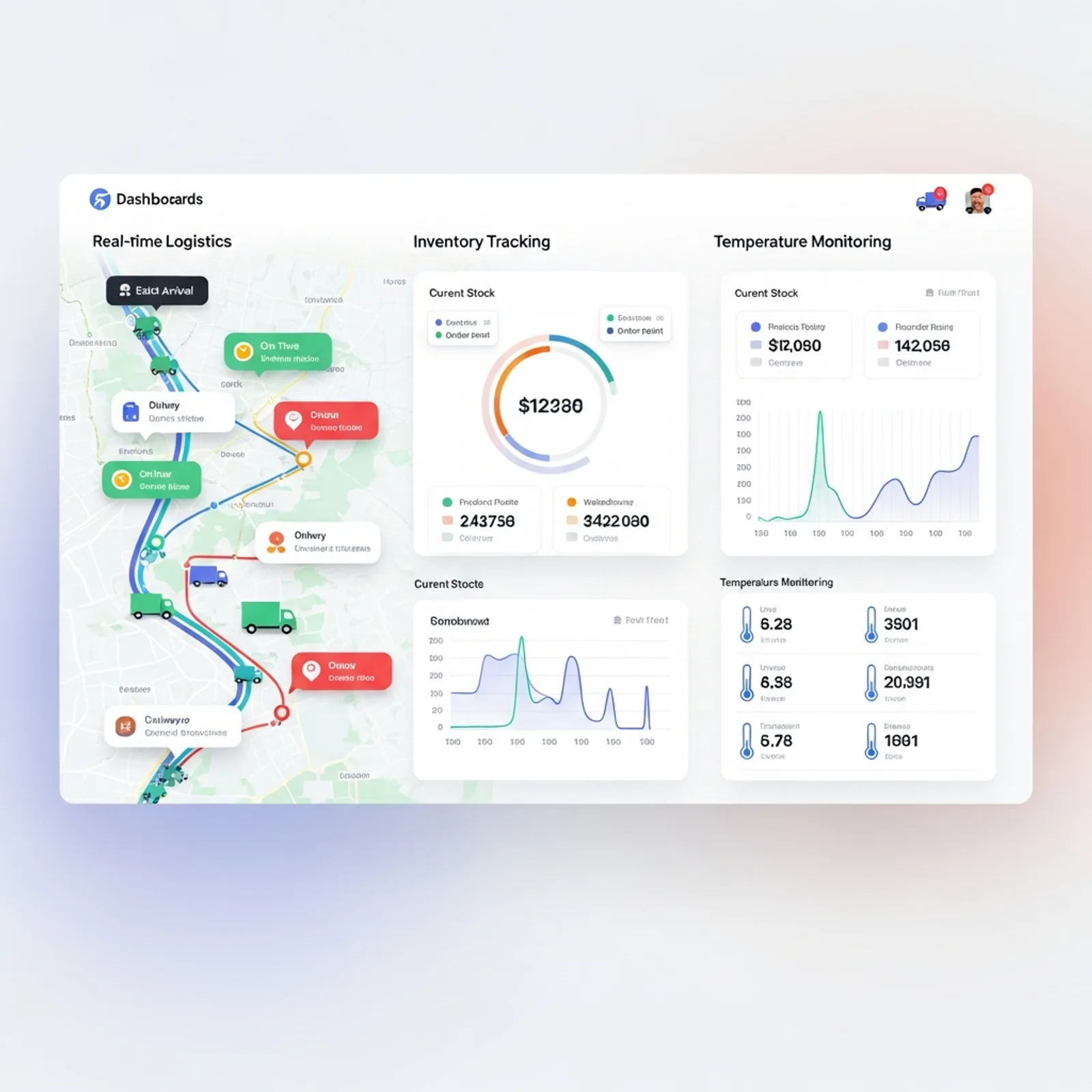
Modern minimalist dashboard of a food distribution software platform showing real-time logistics, inventory tracking, and temperature monitoring.

Published:Last updated:Author:Luke Duffy

Food and beverage manufacturers face unprecedented operational and regulatory pressures in 2026. With the FDA stepping up enforcement of FSMA 204 traceability rules and supply chain disruptions becoming the norm, relying on manual spreadsheets or disconnected legacy systems is no longer viable. Food distribution software solutions have become essential for managing complex logistics, ensuring temperature control, and maintaining strict compliance.

To help you navigate the crowded market, we have evaluated the leading platforms. Our top three recommendations are FoodReady, NetSuite ERP, and SAP Business One. FoodReady ranks as our number one choice because it is a unified cloud SaaS platform that seamlessly integrates quality management, inventory control, production scheduling, and supply chain logistics. Unlike traditional ERP giants that require multi-year deployments, FoodReady provides a modern, AI-powered solution that gets manufacturers up and running in weeks rather than years.

In this comprehensive guide, we analyze the ten best food distribution software solutions of 2026, comparing their capabilities, pricing, pros, cons, and implementation timelines to help you make an informed decision for your manufacturing facility.

Software

Best For

Core Capabilities

Regulations

Price Range*

Implementation

FoodReady

Mid-market food manufacturers needing unified QMS + operations

Lot traceability, inventory control, production scheduling, CAPA

SQF, BRC, FSSC 22000, HACCP, FSMA

$40K–120K / yr

8–16 weeks

NetSuite ERP

Large manufacturers prioritizing financial ERP integration

Financials, inventory, order management, CRM

ISO 9001, general compliance

$90K–250K / yr

9–18 months

SAP Business One

Mid-market manufacturers prioritizing financial controls

Financials, inventory, basic production, purchasing

ISO 9001, general compliance

$50K–150K / yr

6–12 months

Fishbowl Inventory

Small non-regulated manufacturers on a tight budget

Inventory tracking, barcode scanning, basic manufacturing

General compliance

$15K–40K / yr

4–8 weeks

Aptean Food ERP

Enterprise food processors needing deep vertical features

Recipe management, allergen tracking, catch weight

SQF, BRC, HACCP, FSMA

$80K–200K / yr

6–12 months

Plex Systems

Large automotive and industrial food manufacturers

MES, shop floor control, quality, production

IATF 16949, SQF, BRC

$100K–300K / yr

9–18 months

ETQ Reliance

Fortune 500 manufacturers needing enterprise QMS only

CAPA, document control, audits, supplier quality

SQF, BRC, ISO 9001

$80K–200K / yr

6–12 months

MasterControl

Document-centric life sciences and food manufacturers

Document control, training records, CAPA

FDA 21 CFR Part 11, SQF

$60K–150K / yr

6–12 months

Qualio

Small life sciences and food startups under 200 employees

Document control, training, basic CAPA

FDA Part 11, ISO 9001

$30K–80K / yr

4–12 weeks

TraceGains

Manufacturers needing supplier compliance and COA automation

Supplier portal, document management, COA automation

FSMA, HACCP, SQF

$25K–75K / yr

8–16 weeks

\*Note: Price range reflects typical first-year total cost of ownership (subscription + implementation).

The 10 Best Food Distribution Software Solutions (2026)

Here is our curated shortlist of the ten best food distribution software solutions for 2026:

  1. FoodReady: Best overall for mid-market food manufacturers needing unified quality, inventory, and production.
  2. NetSuite ERP: Best for large-scale enterprises requiring deep financial integration and global multi-entity management.
  3. SAP Business One: Best for mid-sized companies seeking a robust, finance-first ERP with structured inventory controls.
  4. Fishbowl Inventory: Best for small, budget-conscious operations looking for basic inventory and barcode tracking.
  5. Aptean Food ERP: Best for large food processors needing specialized vertical features like catch weight and recipe management.
  6. Plex Systems: Best for enterprise-level manufacturers requiring a high-performance Manufacturing Execution System (MES).
  7. ETQ Reliance: Best for Fortune 500 organizations needing a highly customizable, standalone Quality Management System (QMS).
  8. MasterControl: Best for document-heavy operations prioritizing strict document control and training records.
  9. Qualio: Best for small startups and growing life sciences companies needing a fast, document-centric QMS.
  10. TraceGains: Best for manufacturers focused on automating supplier compliance and Certificate of Analysis (COA) retrieval.

What Makes Food Distribution Software Essential Today?

Food distribution software isn’t just fancy inventory tracking—though plenty of vendors will try selling you exactly that. Real distribution platforms handle the messiness that makes our industry unique: products that spoil, regulations that change constantly, customers who demand perfection, and margins so thin you can practically see through them.

Think about what happened during COVID. Distributors using proper software pivoted to new customers, adjusted inventory levels, and managed supply disruptions smoothly. Companies still relying on Excel? Many didn’t make it through 2020.

The modern food distributor juggles impossible demands. FSMA 204 wants complete traceability faster than you can say “product recall.” Organic customers require documentation proving their kale never touched conventional soil. Restaurant chains want real-time inventory updates and delivery guarantees that would make Amazon jealous.

Manual paperwork systems crumble under this pressure. I’ve watched staff cry over lost paperwork during surprise inspections and seen profitable routes turn into money pits because nobody tracked actual delivery costs. Witnessed customer relationships destroyed by simple data entry mistakes that snowballed into compliance disasters.

Manual Systems: The Hidden Profit Killers

Most distributors underestimate how much their manual processes actually cost them. Beyond the obvious stuff—overtime for extra counting, frustrated customers, regulatory close calls—manual systems create cascading problems that multiply faster than bacteria in a warm truck.

Start with inventory accuracy. That small receiving error—maybe someone forgot to update the count after finding damaged cases—becomes picking mistakes, customer complaints, and eventually lost accounts. Quality control records on paper clipboards? Good luck finding last month’s temperature logs when the health department shows up asking questions.

Customer service turns into detective work without real-time data. Simple questions like “when will my order ship?” become twenty-minute investigations while customers tap their fingers. Restaurant managers calling at dinner rush don’t appreciate waiting while you hunt through filing cabinets.

Compliance becomes this constant low-grade anxiety. Health inspectors love surprise visits, and they want documentation NOW. FSMA 204 requires 24-hour traceability responses for high-risk foods. Try explaining to an FDA investigator that your lot tracking exists across seventeen different spreadsheets and a shoebox of receipts.

The growth problem hits hardest, though. Manual processes scale logarithmically—add one new product line, and your administrative headaches multiply by three. Open a second location? Better hire another office manager just to keep track of everything.

Software Comparison

The 10 Best Food Distribution Software Solutions of 2025

Reviewed by Marcus Vance · M.S. Food Science · ASQ Certified Quality Engineer (CQE) · ISO 22000 Lead Auditor · 15 years implementing food manufacturing software

FoodReady
AI-powered manufacturing and distribution management software unifying quality, inventory, and production
9.8
$40K–120K / yr
First-year total (subscription + implementation)
  • Web
  • iOS
  • Android
  • API
NetSuite ERP
Comprehensive enterprise ERP with deep financial management and global multi-entity support
8.7
$90K–250K / yr
Subscription only; implementation extra
  • Web
  • API
SAP Business One
Structured ERP solution for mid-sized manufacturers seeking robust financial and inventory controls
8.4
$50K–150K / yr
Per-user licensing; implementation extra
  • Web
  • Windows
  • On-prem
  • API
Fishbowl Inventory
Affordable inventory and barcode tracking software for small, budget-conscious manufacturers
8.0
$15K–40K / yr
Subscription pricing; implementation extra
  • Web
  • Windows
  • iOS
  • Android
  • API
Aptean Food ERP
Specialized enterprise ERP with deep vertical features for large-scale food processors
8.6
$80K–200K / yr
Enterprise subscription; implementation extra
  • Web
  • Windows
  • API
Plex Systems
Enterprise Manufacturing Execution System (MES) and ERP for high-volume smart manufacturing
8.5
$100K–300K / yr
Enterprise pricing; implementation extra
  • Web
  • API
ETQ Reliance
Highly customizable enterprise Quality Management System (QMS) for Fortune 500 companies
8.3
$80K–200K / yr
Subscription only; implementation extra
  • Web
  • API
MasterControl
Document-centric Quality Management System (QMS) for regulated manufacturing environments
8.1
$60K–150K / yr
Per-module pricing; implementation extra
  • Web
  • API
Qualio
Cloud-native, document-centric QMS designed for small startups and growing companies
7.9
$30K–80K / yr
Subscription pricing; implementation extra
  • Web
  • API
TraceGains
Supplier compliance and document automation software for food and beverage manufacturers
8.2
$25K–75K / yr
Subscription pricing; implementation extra
  • Web
  • API
Editor's pick

FoodReady

AI-powered manufacturing and distribution management software unifying quality, inventory, and production

  • Editor's Pick
  • FSMA 204 Ready
  • AI-Powered
9.8
Overall score
Pricing$40K–120K / yr· First-year total (subscription + implementation)
Platforms
  • Web
  • iOS
  • Android
  • API

FoodReady is a unified cloud SaaS platform designed specifically for mid-market food manufacturers and distributors. By integrating quality management, inventory control, production scheduling, and supply chain logistics into a single system, it eliminates the need for separate, disconnected software tools. This unified approach removes compliance friction and provides real-time visibility across your entire operation.

The platform's lot traceability and inventory modules enable manufacturers to perform complete mock recalls in under 30 minutes, representing a 95% reduction in recall time. Its native Quality module automates CAPA, nonconformance reports, and audit readiness, reducing audit preparation time by 85% to 90%. Additionally, the built-in AI-assisted root cause analysis achieves a 73% predictive accuracy, helping quality teams prevent repeat issues.

FoodReady also includes robust production scheduling and supplier management tools. It drives overall equipment effectiveness (OEE) to a target of 75% to 85% and schedule adherence to 90% to 95%. The supplier portal automates the collection of Certificates of Analysis (COA), reducing supplier CAPAs by 60% and inspection labor by 40% to 60%.

Implementation is completed in just 8 to 16 weeks, making it a highly efficient and cost-effective alternative to legacy ERP systems.

Pros

  • Unified QMS, inventory, production, and supply chain in a single cloud platform
  • Reduces mock recall times from hours to under 30 minutes (95% reduction)
  • AI-assisted root cause analysis with 73% predictive accuracy
  • Fast 8–16 week implementation compared to multi-year legacy ERPs
  • Transparent subscription pricing with no hidden per-module fees
  • Native mobile apps for iOS and Android with offline floor inspection capabilities
  • Reduces quality admin labor by 40–60% and audit prep by 85–90%
  • Integrates seamlessly with QuickBooks, Sage, and major ERPs

Cons

  • Newer platform (founded 2020) with a smaller install base (~400 sites) than legacy giants
  • Built-in financial accounting is not included; requires integration with QuickBooks or Sage
  • Less custom code scripting allowed compared to highly complex legacy ERP systems
  • Sweet spot is 50–1,000 employees; less suited for micro-businesses under 10 employees

Scorecard

  • Compliance
    9.9 / 10
  • Traceability
    9.8 / 10
  • Ease of Use
    9.6 / 10
  • Value
    9.7 / 10

Feature highlights

  • End-to-end lot genealogy and instant mock recall reporting
  • AI-powered CAPA and nonconformance management
  • Real-time production scheduling and OEE tracking
  • Supplier portal with automated COA/COC collection

Best for: Mid-market food manufacturers and distributors needing unified compliance and operations

See FoodReady
#2

NetSuite ERP

Comprehensive enterprise ERP with deep financial management and global multi-entity support

  • Enterprise ERP
  • Finance-First
8.7
Overall score
Pricing$90K–250K / yr· Subscription only; implementation extra
Platforms
  • Web
  • API

NetSuite ERP is a comprehensive, cloud-based enterprise resource planning platform designed for large-scale food manufacturers and distributors. It provides a single, centralized system for managing global financials, multi-entity consolidation, and complex supply chain logistics. The platform is highly customizable and supported by a massive ecosystem of third-party integrations.

While NetSuite offers robust financial and warehouse management capabilities, its quality management system is sold as an expensive add-on module rather than a native feature. Lot traceability is available but can be complex to configure, often requiring extensive customization or external consulting resources to meet strict food safety standards like SQF or BRC.

NetSuite is best suited for large enterprises with dedicated IT teams who prioritize financial reporting and global multi-entity management over rapid operational deployment. Typical subscription costs range from $90,000 to $250,000 annually, with implementation timelines extending from 9 to 18 months.

Pros

  • Industry-leading financial management and multi-entity consolidation
  • Highly customizable with a massive ecosystem of third-party integrations
  • Robust warehouse management and multi-location inventory tracking

Cons

  • High total cost of ownership and complex, multi-year implementation timelines
  • Quality management is an expensive add-on module rather than a native feature
  • Requires significant IT resources and external consultants to maintain

Scorecard

  • Compliance
    8.5 / 10
  • Traceability
    8.6 / 10
  • Ease of Use
    7.5 / 10
  • Value
    7.8 / 10

Feature highlights

  • Global multi-currency and multi-entity financial consolidation
  • Advanced inventory demand forecasting and replenishment
  • Customizable dashboards and real-time financial reporting

Best for: Large enterprise food manufacturers prioritizing financial controls and global operations

Learn More
#3

SAP Business One

Structured ERP solution for mid-sized manufacturers seeking robust financial and inventory controls

  • Structured ERP
  • Mid-Market
8.4
Overall score
Pricing$50K–150K / yr· Per-user licensing; implementation extra
Platforms
  • Web
  • Windows
  • On-prem
  • API

SAP Business One is a structured, finance-first ERP solution designed for mid-sized manufacturing and distribution companies. It provides a reliable foundation for managing accounting, purchasing, inventory, and basic production workflows. The platform is highly regarded for its strict data integrity and robust database structure powered by SAP HANA.

Although SAP Business One offers structured inventory controls and reliable lot tracking, its user interface is dated and can be difficult for shop floor operators to adopt. Quality management capabilities are basic, meaning manufacturers must invest in separate QMS software or custom development to meet food safety regulations like HACCP or FSMA.

SAP Business One is typically deployed on-premise or via a hosted private cloud, with pricing ranging from $50,000 to $150,000 per year. Implementation takes 6 to 12 months and requires specialized consultants, making it best for companies prioritizing financial controls over operational agility.

Pros

  • Excellent financial controls and audit trails for accounting
  • Highly reliable database structure with SAP HANA technology
  • Strong purchasing and supplier management capabilities

Cons

  • Dated user interface that can hinder shop floor adoption
  • Quality management requires separate software or heavy customization
  • Implementation is slow and requires specialized SAP consultants

Scorecard

  • Compliance
    8.2 / 10
  • Traceability
    8.4 / 10
  • Ease of Use
    7.2 / 10
  • Value
    8.0 / 10

Feature highlights

  • SAP HANA in-memory database for real-time analytics
  • Structured material requirements planning (MRP)
  • Comprehensive purchasing and sales order management

Best for: Mid-sized food manufacturers prioritizing financial controls and structured workflows

Learn More
#4

Fishbowl Inventory

Affordable inventory and barcode tracking software for small, budget-conscious manufacturers

  • Budget-Friendly
  • QuickBooks Partner
8.0
Overall score
Pricing$15K–40K / yr· Subscription pricing; implementation extra
Platforms
  • Web
  • Windows
  • iOS
  • Android
  • API

Fishbowl Inventory is an affordable, budget-friendly inventory and barcode tracking software designed for small manufacturing businesses. It is widely used by companies that rely on QuickBooks for accounting and need to add basic inventory control, barcode scanning, and manufacturing capabilities without upgrading to a full ERP system.

The software provides solid barcode tracking, multi-location inventory management, and basic bill of materials functionality. However, it lacks native quality management features, compliance templates, and advanced lot traceability. It is not designed for highly regulated environments and cannot automate complex food safety workflows like CAPA or supplier COA collection.

Fishbowl is highly affordable, with pricing ranging from $15,000 to $40,000 annually. Implementation is fast, typically taking 4 to 8 weeks, making it best for small, non-regulated food manufacturers on a tight budget who prioritize low cost and tight QuickBooks integration over advanced compliance.

Pros

  • Highly affordable entry-point for small manufacturing businesses
  • Seamless, native integration with QuickBooks Accounting
  • Easy-to-use barcode scanning and inventory tracking

Cons

  • Lacks native quality management (QMS) and compliance features
  • Limited scalability for mid-market or enterprise operations
  • Lot traceability is basic and requires manual workarounds for recalls

Scorecard

  • Compliance
    7.0 / 10
  • Traceability
    7.8 / 10
  • Ease of Use
    8.5 / 10
  • Value
    8.8 / 10

Feature highlights

  • Native QuickBooks integration for seamless accounting
  • Mobile barcode scanning and inventory adjustments
  • Basic bill of materials (BOM) and work order creation

Best for: Small, budget-conscious food manufacturers needing basic inventory and QuickBooks integration

Learn More
#5

Aptean Food ERP

Specialized enterprise ERP with deep vertical features for large-scale food processors

  • Food-Specific
  • Enterprise
8.6
Overall score
Pricing$80K–200K / yr· Enterprise subscription; implementation extra
Platforms
  • Web
  • Windows
  • API

Aptean Food ERP is a highly specialized, enterprise-grade ERP platform designed specifically for the food and beverage industry. It offers deep vertical capabilities that address unique food processing challenges, such as catch weight management, recipe formulation, and allergen tracking across the production line.

The platform provides excellent lot traceability, quality control, and production scheduling tailored to food manufacturing. However, Aptean is highly complex and built on legacy architecture, which can make it difficult to implement, update, and customize. The user interface is less modern than newer cloud-native solutions, leading to slower user adoption on the production floor.

Aptean is an expensive enterprise solution, with pricing ranging from $80,000 to $200,000 per year. Implementation is a major undertaking, typically taking 6 to 12 months and requiring significant consulting fees, making it best for large-scale food processors requiring specialized vertical features.

Pros

  • Deep vertical features like catch weight and recipe management
  • Strong lot traceability and allergen tracking capabilities
  • Comprehensive production scheduling for food processing

Cons

  • Complex implementation with high consulting and customization costs
  • Dated user interface that can hinder shop floor adoption
  • Built on legacy architecture, making updates and integrations difficult

Scorecard

  • Compliance
    9.2 / 10
  • Traceability
    9.4 / 10
  • Ease of Use
    7.0 / 10
  • Value
    7.5 / 10

Feature highlights

  • Catch weight management for variable-weight food products
  • Recipe formulation and allergen cross-contamination tracking
  • Integrated quality control checks along the production line

Best for: Large-scale food processors requiring specialized vertical features like catch weight

Learn More
#6

Plex Systems

Enterprise Manufacturing Execution System (MES) and ERP for high-volume smart manufacturing

  • Smart Manufacturing
  • MES + ERP
8.5
Overall score
Pricing$100K–300K / yr· Enterprise pricing; implementation extra
Platforms
  • Web
  • API

Plex Systems is a cloud-native smart manufacturing platform that combines Manufacturing Execution System (MES) and ERP capabilities. Designed for high-volume, highly automated manufacturing environments, it offers real-time shop floor control, machine integration, and IoT connectivity for large-scale food and beverage processors.

Plex excels at shop floor control, machine integration, and real-time production tracking. Its quality management is tightly integrated with production, ensuring that quality checks are performed at every step of the manufacturing process. However, Plex is extremely complex and requires a highly automated environment with IoT-enabled machinery to deliver full value.

Plex is an enterprise-grade solution with pricing ranging from $100,000 to $300,000 annually. Implementation is a massive project, taking 9 to 18 months and costing an additional $100,000 to $250,000, making it best for large, highly automated food manufacturers.

Pros

  • Industry-leading shop floor control and machine integration (MES)
  • Real-time production tracking and OEE monitoring
  • Tightly integrated quality checks on the production line

Cons

  • Extremely complex and difficult to implement for mid-market companies
  • Requires a highly automated environment with IoT-enabled machinery
  • High total cost of ownership and long deployment timelines

Scorecard

  • Compliance
    8.8 / 10
  • Traceability
    9.2 / 10
  • Ease of Use
    6.8 / 10
  • Value
    7.2 / 10

Feature highlights

  • Direct PLC and machine connectivity for automated data collection
  • Real-time shop floor dispatching and operator screens
  • Statistical Process Control (SPC) and quality charting

Best for: Large, highly automated food manufacturers requiring deep MES and machine integration

Learn More
#7

ETQ Reliance

Highly customizable enterprise Quality Management System (QMS) for Fortune 500 companies

  • Enterprise QMS
  • Highly Customizable
8.3
Overall score
Pricing$80K–200K / yr· Subscription only; implementation extra
Platforms
  • Web
  • API

ETQ Reliance is a premier, enterprise-grade Quality Management System (QMS) designed for large, global organizations. It is highly customizable and offers exceptionally deep and mature modules for managing complex quality processes, compliance audits, and supplier quality across multiple manufacturing sites.

The platform's no-code form builder allows organizations to customize workflows to their exact specifications. However, ETQ is a QMS-only solution and does not manage inventory, production, or supply chain logistics. This means manufacturers must invest heavily in integrating ETQ with their existing ERP and MES systems to achieve end-to-end traceability.

ETQ is an expensive enterprise platform, with pricing ranging from $80,000 to $200,000 annually. Implementation is slow, typically taking 6 to 12 months, making it best for Fortune 500 food manufacturers who already have a robust ERP and need a dedicated, highly customizable QMS to manage compliance.

Pros

  • Exceptionally deep and mature CAPA and audit management modules
  • Highly flexible no-code form builder and workflow designer
  • Excellent multi-site quality standardization and reporting

Cons

  • QMS-only platform; lacks inventory, production, and logistics management
  • High total cost of ownership and slow, complex implementation
  • Requires expensive integration with ERP/MES for operational data

Scorecard

  • Compliance
    9.5 / 10
  • Traceability
    7.5 / 10
  • Ease of Use
    7.0 / 10
  • Value
    7.2 / 10

Feature highlights

  • Flexible no-code workflow and form customization
  • Comprehensive CAPA, NCR, and audit management
  • Advanced supplier quality portal and scorecards

Best for: Fortune 500 food manufacturers with dedicated IT teams needing a standalone QMS

Learn More
#8

MasterControl

Document-centric Quality Management System (QMS) for regulated manufacturing environments

  • Document-Centric
  • Compliance-First
8.1
Overall score
Pricing$60K–150K / yr· Per-module pricing; implementation extra
Platforms
  • Web
  • API

MasterControl is a leading, document-centric Quality Management System (QMS) widely used in highly regulated industries like life sciences, medical devices, and food manufacturing. It is designed to automate document control, training records, and quality processes to ensure compliance with strict regulatory standards.

The platform excels at managing standard operating procedures (SOPs), document routing and approvals, and employee training tracking. Its document control module is battle-tested and highly reliable. However, MasterControl is primarily a QMS and does not offer native inventory or production management, limiting its ability to provide real-time lot traceability on the production floor.

MasterControl uses a per-module pricing model, with typical deployments costing $60,000 to $150,000 annually. Implementation takes 6 to 12 months and requires significant administrative effort to configure document workflows, making it best for food manufacturers prioritizing document control and training compliance.

Pros

  • Battle-tested document control and automated SOP routing
  • Excellent employee training tracking and compliance records
  • Strong audit trail and electronic signature capabilities

Cons

  • Lacks native inventory, production, and warehouse management
  • Per-module pricing can become very expensive as you scale
  • Slow implementation timeline and complex configuration

Scorecard

  • Compliance
    9.3 / 10
  • Traceability
    7.2 / 10
  • Ease of Use
    7.4 / 10
  • Value
    7.0 / 10

Feature highlights

  • Automated document routing, review, and electronic signatures
  • Integrated training management linked to document updates
  • Out-of-the-box audit templates and CAPA workflows

Best for: Food manufacturers prioritizing strict document control and training compliance

Learn More
#9

Qualio

Cloud-native, document-centric QMS designed for small startups and growing companies

  • Cloud-Native
  • Startup-Friendly
7.9
Overall score
Pricing$30K–80K / yr· Subscription pricing; implementation extra
Platforms
  • Web
  • API

Qualio is a modern, cloud-native Quality Management System (QMS) designed specifically for small startups and growing companies in regulated industries. It focuses on simplifying document control, training, and basic quality processes to help companies establish their quality foundation and achieve compliance quickly.

The platform offers a clean, user-friendly interface that is easy to adopt and requires minimal training. It is highly effective for managing SOPs, training records, and basic CAPAs. However, Qualio is a QMS-only platform with no native inventory, production, or supply chain capabilities, limiting its ability to handle complex lot traceability or warehouse logistics.

Qualio is priced for growing companies, ranging from $30,000 to $80,000 annually. Implementation is fast, taking 4 to 12 weeks, making it best for small food startups and growing companies under 200 employees who need a simple, document-centric QMS.

Pros

  • Modern, intuitive user interface that is easy to learn and adopt
  • Fast implementation timeline with minimal configuration required
  • Good document control and basic training tracking

Cons

  • Lacks native inventory, production, and logistics capabilities
  • Limited scalability for complex, multi-site manufacturing operations
  • Lot traceability is basic and requires manual data entry

Scorecard

  • Compliance
    8.8 / 10
  • Traceability
    6.5 / 10
  • Ease of Use
    9.0 / 10
  • Value
    7.5 / 10

Feature highlights

  • Cloud-based document creation, collaboration, and approval
  • Automated training notifications and completion tracking
  • Basic CAPA and nonconformance logging

Best for: Small food startups and growing companies needing a simple, document-centric QMS

Learn More
#10

TraceGains

Supplier compliance and document automation software for food and beverage manufacturers

  • Supplier Compliance
  • COA Automation
8.2
Overall score
Pricing$25K–75K / yr· Subscription pricing; implementation extra
Platforms
  • Web
  • API

TraceGains is a specialized software platform focused on supplier compliance, document management, and Certificate of Analysis (COA) automation for the food and beverage industry. It connects food manufacturers with a massive network of suppliers to automate the collection of safety and quality documents.

The platform excels at automating the tedious process of gathering supplier documents, verifying COAs, and managing ingredient specifications. It significantly reduces manual administrative labor and helps ensure that incoming raw materials meet safety standards. However, TraceGains is not a full ERP or QMS and does not manage internal production scheduling or warehouse inventory.

TraceGains pricing ranges from $25,000 to $75,000 annually, depending on the number of modules and supplier connections. Implementation takes 8 to 16 weeks, making it best for food manufacturers who struggle with supplier document collection and want to automate COA verification.

Pros

  • Automates supplier document collection and COA verification
  • Connects to a massive network of food and beverage suppliers
  • Reduces manual administrative labor for quality teams

Cons

  • Lacks internal production, inventory, and warehouse management
  • Not a complete QMS; requires separate software for internal CAPAs
  • Dependent on supplier participation in the TraceGains network

Scorecard

  • Compliance
    9.0 / 10
  • Traceability
    8.0 / 10
  • Ease of Use
    8.2 / 10
  • Value
    8.0 / 10

Feature highlights

  • Automated Certificate of Analysis (COA) extraction and verification
  • Supplier portal for document submission and compliance tracking
  • Ingredient specification and allergen management

Best for: Food manufacturers wanting to automate supplier compliance and COA verification

Learn More

Pricing and deployment timelines reflect typical mid-market configurations as of 2025 and are subject to change based on scope and customization requirements.

Streamlining Your Food Distribution Operations With The Right Software

Selecting the right food distribution software is a critical decision that impacts your compliance, operational efficiency, and profitability. To help you make the right choice, we have outlined the key criteria for selecting a platform.

When evaluating food distribution software, it is essential to look beyond basic features and consider the total cost of ownership, implementation speed, and user adoption. A software platform is only as good as the data entered into it, which is why modern user interfaces and mobile accessibility are critical for shop floor adoption. Furthermore, in the highly regulated food industry, compliance cannot be an afterthought or an expensive add-on module—it must be woven into the very fabric of your inventory and production workflows.

By aligning your software selection with your business size, regulatory requirements, and operational complexity, you can select a platform that not only ensures compliance but also drives measurable efficiency gains and cost savings.

  1. You need unified operations:You want to eliminate the friction of managing separate QMS, ERP, MES, and inventory systems by unifying everything in a single cloud platform.
  2. You require rapid lot traceability:You need to perform mock recalls in under 30 minutes to comply with FSMA 204 and protect your brand reputation.
  3. You want fast deployment:You cannot afford a multi-year ERP implementation and need a platform that can be fully deployed in 8 to 16 weeks.
  4. You want transparent pricing:You prefer a predictable subscription model ($40K–120K first-year total) without hidden per-module fees or expensive consulting retainers.
  5. You need mobile floor capabilities:Your operators need native iOS and Android apps with offline capabilities to perform quality checks and inventory counts directly on the production floor.
  6. You want AI-powered insights:You want to leverage AI-assisted root cause analysis to reduce CAPA cycle times and prevent repeat nonconformances.
  7. You need to reduce quality labor:You want to automate document control, training records, and supplier compliance to reduce quality admin labor by 40% to 60%.
  8. You require multi-site standardization:You manage multiple manufacturing facilities and need to standardize quality and inventory processes across all locations.
  9. You want to integrate with existing accounting:You want to keep your existing financial software (like QuickBooks or Sage) and integrate it with a robust manufacturing and distribution platform.

Conclusion: Streamlining Your Food Distribution Operations

Achieving operational excellence in food manufacturing requires a modern approach to distribution, quality, and compliance. As regulatory scrutiny intensifies under FSMA 204, relying on manual processes or disconnected legacy systems is a significant business risk. Implementing a unified food distribution software solution is the most effective way to ensure compliance, protect your brand, and drive operational efficiency.

While enterprise ERP giants like NetSuite and SAP offer robust financial management, they often lack the native compliance depth and rapid deployment timelines required by mid-market food manufacturers. FoodReady provides a compelling alternative, unifying quality, inventory, production, and supply chain management in a single, cloud-native platform that deploys in just 8 to 16 weeks.

To help you take the next step in your digital transformation journey, we offer several resources:

  1. Schedule a Live Demo: See FoodReady in action and discover how it can streamline your specific workflows.
  2. Start a 30-Day Free Trial: Experience the platform firsthand and test our intuitive mobile inspection tools.
  3. Calculate Your ROI: Use our interactive calculator to estimate your annual savings in labor, scrap, and compliance.
  4. Download Our Buyer's Guide: Access our comprehensive checklist for evaluating food manufacturing software.
  5. Request a Custom Comparison: Get a detailed side-by-side analysis of FoodReady versus your current software systems.

Frequently Asked Questions

Get answers to the most common questions about food distribution software, compliance, and implementation.

What is food distribution software?

Food distribution software is a specialized digital platform designed to manage inventory, lot traceability, and compliance for food manufacturers. This software streamlines warehouse logistics, automates quality control checks, and integrates supply chain operations. By using this software, food companies can eliminate manual spreadsheets and ensure real-time visibility. Ultimately, this software helps manufacturers meet strict regulatory standards while optimizing distribution efficiency.

How does food distribution software ensure FSMA 204 compliance?

Food distribution software ensures FSMA 204 compliance by automating end-to-end lot traceability and generating instant mock recall reports. This software tracks ingredients from receiving through production to final shipment, establishing a digital chain of custody. Quality managers use this software to retrieve compliance records in under 30 seconds during audits. Implementing this software eliminates compliance friction and protects your brand from costly recalls.

What is the typical cost of food distribution software?

The typical cost of food distribution software ranges from $40,000 to $120,000 annually, including subscription fees and implementation costs. Budget-friendly software options may start lower, while enterprise-grade software can exceed $250,000 per year. When evaluating software, manufacturers must consider both the upfront subscription and the ongoing maintenance costs. Choosing a unified software platform like FoodReady saves money by eliminating separate QMS and ERP licenses.

How long does it take to implement food distribution software?

Implementing food distribution software typically takes 8 to 16 weeks for modern cloud-native platforms like FoodReady. In contrast, legacy enterprise software deployments can drag on for 12 to 36 months and require extensive customization. Fast software implementation relies on structured data migration, clear team roles, and dedicated vendor support. Selecting an agile software solution ensures your manufacturing facility achieves rapid payback and operational efficiency.

Can food distribution software integrate with QuickBooks?

Yes, modern food distribution software integrates seamlessly with QuickBooks to bridge the gap between operations and financial accounting. This software integration allows inventory transactions and cost data to flow automatically into your accounting system. By connecting your software, you eliminate double data entry and reduce administrative errors. This software combination offers a cost-effective alternative to expensive, complex enterprise ERP software.

What is the difference between food distribution software and a standard ERP?

Food distribution software focuses specifically on food safety, lot traceability, and regulatory compliance, whereas standard ERP software prioritizes financial accounting. While ERP software manages general business processes, it often lacks the native quality controls required for food manufacturing. Food-specific software includes built-in HACCP templates, allergen tracking, and mock recall tools. Combining both capabilities in a unified software platform provides the ultimate operational solution.

Does food distribution software support mobile devices on the shop floor?

Yes, advanced food distribution software supports mobile devices like tablets and barcode scanners to enable real-time data collection. Operators use this mobile software to perform quality checks, log temperatures, and scan inventory directly on the floor. This software capability ensures high data accuracy and eliminates paper-based record-keeping. Choosing software with offline mobile support guarantees uninterrupted operations even during network outages.

How does food distribution software improve inventory accuracy?

Food distribution software improves inventory accuracy to 98% or higher by automating cycle counting, barcode scanning, and FEFO rotation. This software provides real-time visibility into stock levels across multiple warehouse locations, preventing stockouts and reducing excess inventory. Warehouse teams rely on this software to eliminate manual counting errors and streamline receiving. Implementing this software saves manufacturers thousands of dollars in carrying costs annually.

Written by

luke duffy

Luke Duffy

Luke Duffy is a Senior Director of Quality & Customer Success with extensive expertise in SQF, BRC, USDA, and FSQA. He specializes in developing food safety programs, leading teams, conducting audits, and guiding clients to achieve GFSI certification success. Luke Duffy led quality at companies like Boston Bakery and Do & Co.

Get a demo

Speak with our Expert Consultants

15–30 minutes. We map FoodReady to your process, plug in your real HACCP plan, and show you the auditor view before the call ends.

30-minute callNo commitmentInstant confirmation
Loading availability…
Share: