

What is Farm to Fork?
Published:Last updated:Author:Suhina Fitzpatrick
Defining Farm to Fork
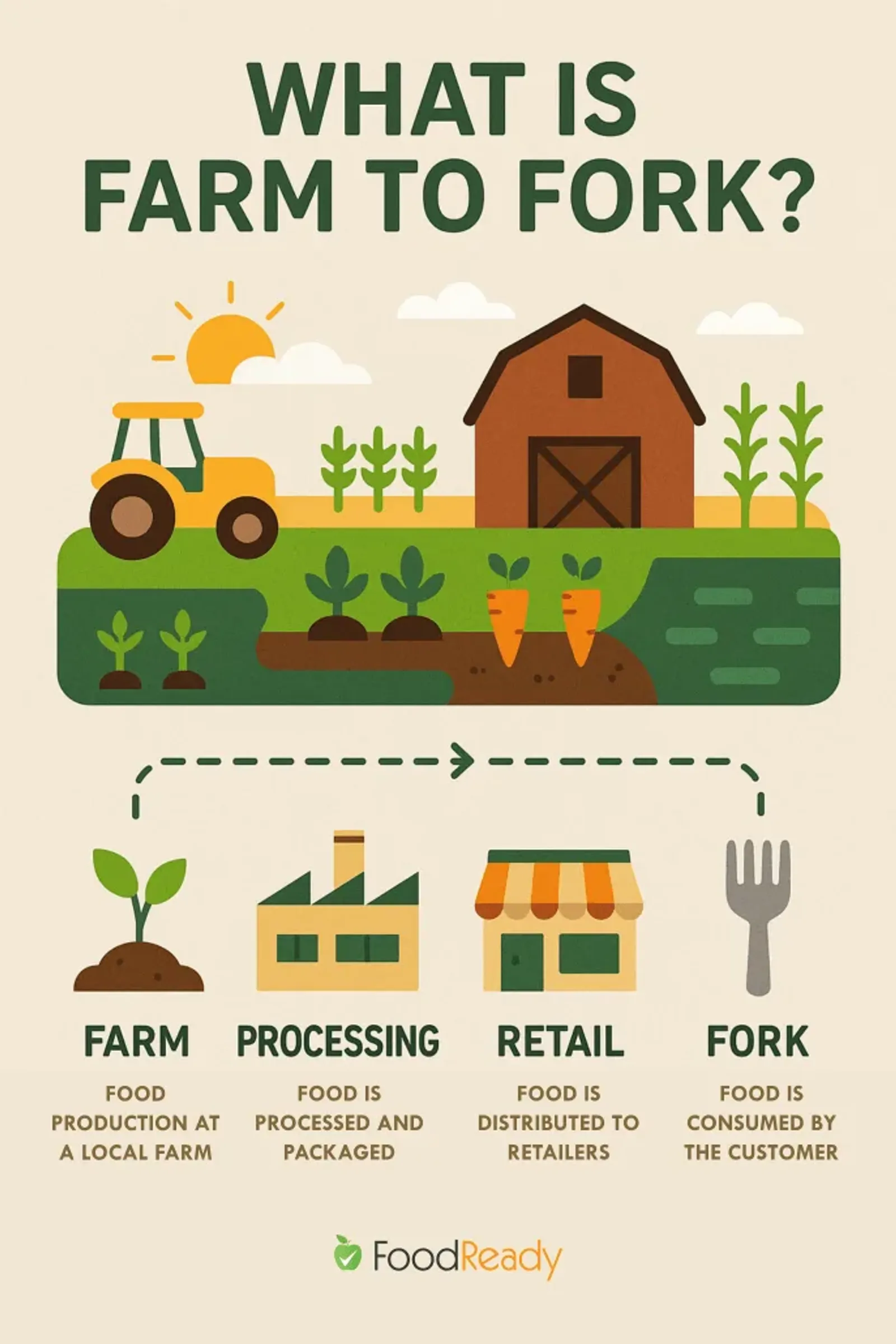
The term “Farm to Fork” refers to the entire food production process—from the initial cultivation of raw materials on a farm, through processing and distribution, and finally to the consumer’s plate. This concept stresses transparency and accountability at every stage of the food chain.
While traditionally associated with fresh, local produce delivered directly to consumers or restaurants, the broader Farm to Fork philosophy encompasses:
Sustainable agriculture
Reduced food miles
Ethical sourcing
Food safety and traceability
Community-supported agriculture (CSA)
Minimally processed foods
It’s not merely a supply chain structure—it’s a mindset shift that prioritizes the health of people, animals, and the planet.
Defining Farm to Fork
The term “Farm to Fork” refers to the entire food production process—from the initial cultivation of raw materials on a farm, through processing and distribution, and finally to the consumer’s plate. This concept stresses transparency and accountability at every stage of the food chain.
While traditionally associated with fresh, local produce delivered directly to consumers or restaurants, the broader Farm to Fork philosophy encompasses:
- Sustainable agriculture
- Reduced food miles
- Ethical sourcing
- Food safety and traceability
- Community-supported agriculture (CSA)
- Minimally processed foods
It’s not merely a supply chain structure—it’s a mindset shift that prioritizes the health of people, animals, and the planet.
The Evolution of the Movement
While eating local food isn't a new idea, the "Farm to Fork" movement really picked up steam in recent decades. People started getting worried about how big agriculture was affecting the environment, all those pesticides, food poisoning outbreaks, and how food traveled all over the world. This made both shoppers and food producers think differently about where their food came from.
There are several key points that helped this change happen: the growth of organic food due to worries about chemicals and GMOs, food safety scares that showed us why knowing where our food comes from is important, and the increasing focus on sustainability, where food choices became part of the conversation about climate change and reducing waste. Then there was the EU Farm to Fork Strategy in 2020 – a big plan as part of their Green Deal – that set clear goals for making farming and food systems more sustainable.
Check out the link from the European Commission for Food Safety for more detailed information on the Farm to Fork Strategy.
Core Pillars of the Farm to Fork Approach
1. Sustainability
The Farm to Fork philosophy emphasizes environmental stewardship. Practices such as regenerative agriculture, organic farming, reduced pesticide use, and improved water management are central to the movement.
The EU’s Farm to Fork Strategy aims to reduce chemical pesticide use by 50% and slash nutrient losses by 50% by the year 2030. These goals are a response to global climate challenges such as soil degradation, biodiversity loss, and greenhouse gas emissions which we need to get under control sooner rather than later.
2. Local Sourcing
By promoting regional food systems, Farm to Fork reduces the distance food travels, cutting emissions from transportation and refrigeration. Locally sourced fresh produce always has a better chance of being fresher, and buying local supports regional economies and farmers.
3. Food Safety and Traceability
One of the most critical aspects of Farm to Fork is ensuring food safety at every link in the chain. This includes:
- Sanitation standards in harvesting and processing
- Temperature control during storage and transport
- Transparent labeling of ingredients and origins
- Digital traceability systems that allow quick tracking during recalls
FoodReady, for example, helps food producers implement safety and compliance software to ensure robust monitoring of food handling practices in line with Farm to Fork principles.
4. Nutrition and Health
A shorter food chain often means access to fresher, nutrient-rich food. The movement encourages consumption of whole foods and discourages over-reliance on processed or ultra-processed items. It aligns closely with public health goals to reduce rates of obesity, diabetes, hypertension and other food and diet related diseases.
Impacts on Stakeholders
Farmers and Producers
For farmers, Farm to Fork presents both opportunities and challenges. On one hand, it enables direct-to-consumer sales channels like farmers markets, CSAs, and online platforms. On the other, it demands greater transparency, record-keeping, and compliance with safety and sustainability standards.
Distributors and Retailers
Wholesale distributors and grocery chains are adapting to source more locally and transparently. Some are partnering directly with farms or building regional supply hubs to facilitate fresher, faster logistics.
Restaurants and Chefs
Many chefs have embraced Farm to Fork as a culinary philosophy—celebrating seasonal ingredients, local artisans, and a closer connection to the land. Menus increasingly name the farms where ingredients originate, and some establishments cultivate their own gardens.
Consumers
For consumers, Farm to Fork offers healthier, fresher food with clearer provenance. It also empowers more ethical choices—supporting animal welfare, local economies, and sustainable practices.
The Role of Technology
Digital tools are accelerating the reach and efficiency of the Farm to Fork model. Examples include:
- Blockchain and QR Codes for traceability
- IoT Devices for monitoring cold storage and transportation conditions
- Food Safety Software like FoodReady to ensure real-time compliance tracking
- E-commerce Platforms for direct-to-consumer farm food sales
These user-friendly technologies improve confidence and transparency across the chain while reducing operational risk.
Farmers and Producers
For farmers, Farm to Fork presents both opportunities and challenges. On one hand, it enables direct-to-consumer sales channels like farmers markets, CSAs, and online platforms. On the other, it demands greater transparency, record-keeping, and compliance with safety and sustainability standards.
Conclusion
The Farm to Fork movement is much more than a food trend—it’s a paradigm shift in how we grow, move, and eat food. By closing the gap between food manufacturers and consumers, it builds a more sustainable, transparent, and resilient food system.
Whether you’re a farmer, a restaurant, a food safety manager, or simply a conscious consumer, embracing Farm to Fork principles benefits not just your health or business—but the planet as a whole.
As food systems continue to evolve, initiatives like FoodReady will be a leading force in supporting businesses to align with Farm to Fork values while staying compliant, efficient, and future-ready.
FAQs
How does the Farm to Fork strategy impact biodiversity?
Farm to Fork promotes biodiversity through diversified cropping and reduced chemical use. Practices like crop rotation, cover cropping, and the use of heirloom varieties support healthier ecosystems. Reducing reliance on synthetic fertilizers and pesticides further benefits plant and animal life.
What is the role of minimizing waste in the Farm to Fork approach?
Reducing food waste is a crucial element. This includes minimizing losses during harvesting and processing, improving storage and transport, and encouraging better management of surplus food by consumers and retailers. Initiatives include composting, donating surplus food, and utilizing “imperfect” produce.
Can Farm to Fork principles be implemented in cities?
Urban agriculture models, such as rooftop gardens, hydroponics, vertical farms, and community gardens, are consistent with the Farm to Fork strategy. These approaches reduce food supply chain lengths, engage local communities, and offer locally sourced food. Urban food system policies can further improve local sustainability and resilience.
How does Farm to Fork contribute to reducing climate change?
The Farm to Fork strategy combats climate change through several key actions: supporting low-emission agricultural practices, minimizing food transportation distances, and encouraging the consumption of plant-based foods. This approach reduces the food system’s carbon footprint by implementing practices like soil carbon sequestration, reforestation, decreasing food waste, and managing livestock sustainably.
What obstacles hinder the widespread implementation of Farm to Fork practices?
Varied infrastructure, regulations, and economic resources present challenges. Small farmers may face compliance costs, while large industrial operations might resist changes. Political and trade barriers, insufficient consumer awareness, and diverse cultural food practices can also impede global adoption. Luckily, steps are being taken by worldwide governments to overcome these challenges so that the Farm to Fork strategy can be adopted in more countries around the world.
Speak with our Expert Consultants
15–30 minutes. We map FoodReady to your process, plug in your real HACCP plan, and show you the auditor view before the call ends.
About the author

Suhina Fitzpatrick
Senior Food Technologist
Suhina is a Subject-Matter Expert at FoodReady with 15 years in the industry as a Senior Food Technologist. Specializing in Food Safety, Quality and Food Manufacturing, Suhina is passionate about everything Food and has headed many successful Food Safety Audits according to global standards over the years. When away from the workstation, the gym and an active lifestyle is her happy place.