
The Most Common Foodborne Pathogens (And How to Outsmart Them)
Published:Last updated:Author:Anzelle Romani
Let’s clear up a common misconception. A spotless facility does not guarantee safety. Microbes don’t care how polished your floors are. They care about your slip-ups: missed handwashing, improper cooling, lax training, or just one sick employee on the line.
Whether Salmonella or a newer face like Vibrio, foodborne pathogens exploit the most minor mistakes. And when they do, they spread quickly and quietly.
I’ve worked in sterile labs where everything was clockwork. Still, one forgotten sterilized tool introduced contamination that set us back weeks. That lesson stuck: “Almost clean” is still dirty enough.
Foodborne Illness: A Global Crisis, Not Just a Compliance Box
Each year, 600 million people get sick from contaminated food. 420,000 die. According to the World Health Organization, children under five account for nearly a third of those deaths.
This isn’t a statistical problem. It’s a people problem. And if you run a food operation, big or small, it’s your problem too.
The Usual Suspects: The Big Six (And Beyond)
Initially, the FDA and USDA zeroed in on six primary pathogens due to their high risk and frequent appearance in outbreaks. These include:
- Salmonella
- Shiga toxin-producing E. coli (STEC)
- Norovirus
- Hepatitis A
- Shigella
- Salmonella Typhi
But that list has grown, and fast. Based on CDC surveillance data and recent outbreaks, here’s a broader roster of pathogens food operations must watch closely:
- Campylobacter
- Clostridium perfringens
- Listeria monocytogenes
- Toxoplasma gondii
- Vibrio species
- Staphylococcus aureus
Yersinia enterocolitica - Cyclospora cayetanensis
Each pathogen has unique transmission routes, symptoms, and survival tactics. Some cling to raw produce. Others survive in your walk-in freezer, a few love damp prep tables and human hands.
What Foods Carry the Highest Risk?
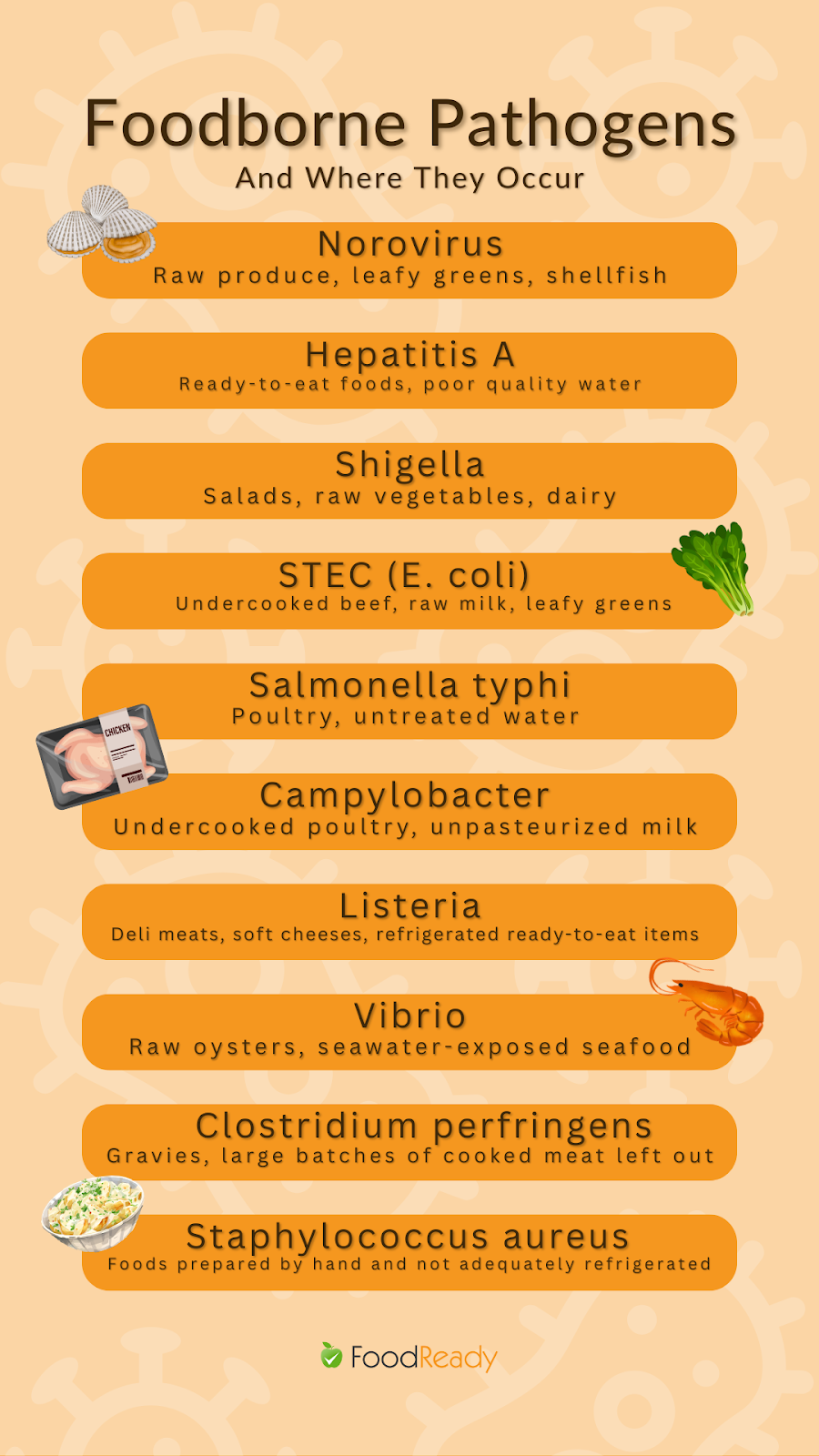
Knowing which foods create a breeding ground for pathogens gives you a strategic edge. Here’s a breakdown of high-risk pairings:
- Norovirus → raw produce, leafy greens, shellfish
- Hepatitis A → ready-to-eat foods, poor water quality
- Shigella → salads, raw vegetables, dairy
- STEC (E. coli) → undercooked beef, raw milk, leafy greens
- Salmonella typhi → poultry, untreated water
- Campylobacter → undercooked poultry, unpasteurized milk
- Listeria → deli meats, soft cheeses, refrigerated ready-to-eat items
- Vibrio → raw oysters, seawater-exposed seafood
- Clostridium perfringens → gravies, large batches of cooked meat left out
- Staphylococcus aureus → foods prepared by hand and not adequately refrigerated (think potato salads)
Invisible and Ruthless: Norovirus & Hepatitis A
These two viruses don’t need a warm environment or raw meat to wreak havoc.
- Norovirus spreads quickly and silently, especially in crowded spaces. One sick employee can contaminate hundreds of meals.
- Hepatitis A incubates longer, making it harder to trace. It lingers in the environment and carriers for weeks.
Both are preventable with early action: strict handwashing protocols, surface sanitizing, and vaccination where applicable.
E. coli and Listeria: Killers in Cold Storage
Shiga toxin-producing E. coli strains can cause hemolytic uremic syndrome, a life-threatening condition. And unlike many bacteria, Listeria doesn’t mind the cold. It thrives in chilled foods like deli meats and ready-to-eat salads.
Read more in detail about E. coli prevention measures.
In my tissue culture lab days, I learned quickly that refrigeration alone doesn’t equal safety. A pathogen that survives cold storage demands SOPs beyond a thermometer reading.
How Do These Pathogens Spread?
- Contaminated hands and gloves
- Infected water sources
- Unsanitized tools
- Cross-contamination between raw and ready-to-eat items
- Improper cooling or hot-holding
Once inside, pathogens don’t politely stay put. They spread under your fingernails on your prep counters and dish tubs.
Many outbreaks begin not with a dramatic failure but with tiny oversights.
When Employees Become a Risk
Most safety plans focus on equipment and environment. But people can pose the highest risk.
- A sick food handler can silently transmit pathogens for days.
The FDA mandates that food workers report symptoms tied to foodborne illness. - Supervisors must take action, no exceptions. If a worker reports vomiting, diarrhea, or a diagnosis of a high-risk illness, they must be removed from food handling duties.
Yes, it disrupts the shift. But it could prevent an outbreak from reaching the public.
Core Food Safety Procedures
Every food business must implement and enforce these basics to meet industry standards.
- Wash your hands before and after food contact
- Cook to FDA-recommended internal temperatures
- Use separate tools for raw and cooked items
- Keep cold foods below 40°F and hot foods above 140°F
- Sanitize prep areas after every use
- Provide food safety training and refreshers regularly
Improvisation is not a strategy. Predictable, consistent action is.
Fighting the Pathogens Before They Arrive
A modern food safety system should include:
- Hazard Analysis and Critical Control Points (HACCP)
- Supplier and ingredient verification
- Temperature logs and monitoring
- Internal audits and traceability systems
- Corrective action plans for every significant risk
Redundancy is not overkill. It’s the reason minor issues don’t become significant events.
Emerging Pathogens and What’s Ahead
Climate change, shifting diets, and global trade are changing the food safety landscape.
- Cyclospora outbreaks are rising, especially in imported fresh produce.
- Toxoplasma gondii, long ignored, is being reclassified as a leading cause of severe illness in vulnerable populations.
- Yersinia enterocolitica is more common in pork and often underdiagnosed.
As environments change, so do microbes. To stay ahead, treat food safety as a living, adapting system.
Notable Emerging Foodborne Pathogens
- Salmonella Enteritidis: While Salmonella itself is not new, a specific serotype, Enteritidis, has been on the rise globally. It is often associated with poultry and eggs, highlighting the importance of proper cooking and handling of these products.
- Listeria monocytogenes: Listeria is not a newcomer, but its prevalence in certain food products has grown. It can be found in deli meats, soft cheeses, and ready-to-eat foods. Pregnant women and those with weakened immune systems are particularly vulnerable.
- Vibrio vulnificus: This marine bacterium has gained attention due to its ability to cause severe infections in individuals who consume contaminated seafood or have open wounds exposed to seawater.
- Clostridium difficile (C. difficile): Known for causing hospital-acquired infections, C. difficile has extended its reach to food sources, posing a risk to consumers.
- Factors Contributing to Emergence
Several factors contribute to the emergence of foodborne pathogens:
- Globalization: The interconnectedness of the world's food supply chain means that contaminated products can quickly spread across borders.
- Changes in Food Production: Modern food production practices can inadvertently promote the growth of pathogens. For instance, antimicrobial resistance in livestock can lead to contamination in meat products.
- Consumer Habits: An increase in the consumption of raw or minimally processed foods and a rise in eating out can expose individuals to greater food safety risks.
- Climate Change: Altered weather patterns and rising temperatures can impact the survival and distribution of foodborne pathogens.
Mitigating the Risks
So, what can we do to safeguard ourselves against emerging foodborne pathogens? Here are some key strategies:
- Education: Stay informed about food safety practices. This includes proper food handling, cooking, and storage techniques.
- Regulations: Support and advocate for robust food safety regulations and enforcement at both the national and international levels.
- Technology: Embrace the use of technology for food tracking and traceability, which can help identify and respond to outbreaks more rapidly.
- Research: Invest in research to better understand emerging pathogens and their behavior in different food products.
- Consumer Responsibility: As consumers, we play a vital role in food safety. Be discerning about the sources of your food, and don't hesitate to ask questions about food handling practices when dining out.
Want to Build a Food Safety System That Thinks Ahead?
Our software maps your hazard points, verifies compliance, and strengthens your frontline defense against pathogens.

Dashboard
Why Food Safety Regulations Still Matter
Some operators see regulations as a box to tick. They’re wrong.
Food safety laws set the floor, not the ceiling. Understanding nontyphoidal vs. typhoidal Salmonella, knowing the difference between GMP and HACCP, and complying with the FDA Produce Safety Rule builds the credibility and resilience your business needs.
And if you’re not sure where to start, FoodReady can help. Our tools simplify planning, logging, and audits so your system doesn’t rely on memory or luck.
Conclusion
The pathogens aren’t going away, but don’t have to win. Food safety is about culture; one built on daily habits, clear roles, and constant review.
If there’s one thing my lab experience taught me, it’s this: The day you stop improving, risk slips in. So, stay sharp. Teach it. Practice it. Enforce it.
And do you want help setting up that system? FoodReady is here for that, too.
Frequently Asked Questions
Which foods are most likely to carry the Big Six pathogens?
High-risk foods include undercooked ground beef, raw leafy greens, unpasteurized dairy, shellfish, and ready-to-eat products handled without proper hygiene. If not handled with strict controls, these items often create the perfect environment for pathogens to grow and spread.
What are the first steps to take if a contamination event is suspected?
Immediately isolate the affected product, stop production in the impacted area, and begin an internal traceability check. Notify your food safety team and follow your recall or incident response plan. Early action limits damage and protects both consumers and your brand.
How does FoodReady help manage pathogen risks?
FoodReady provides structured tools like customizable food safety plans, temperature logs, traceability tracking, and audit-ready checklists. These help teams prevent issues, spot risks early, and stay compliant with current regulations, without guessing.
How can food industry technology better detect and fight emerging pathogens?
Implementing advanced technologies like whole-genome sequencing and blockchain for traceability can help identify pathogens swiftly, track their origin, and manage outbreaks efficiently, reducing risk to consumers and costs for producers.
How do plant-based diet trends affect foodborne pathogen emergence and management?
Plant-based diets can shift the focus of food safety practices as new or different pathogens may emerge from plant-based food sources. The industry must adapt by researching pathogen behavior in these foods and developing specific safety protocols.
How can global collaboration improve the detection and prevention of new foodborne pathogens?
Global data sharing and cooperation in surveillance, research, and response strategies can enhance early detection of outbreaks, facilitate rapid responses, and improve overall food safety standards, helping to manage the risk of emerging pathogens crossing borders.
How can the food industry adjust to combat climate change's impact on foodborne pathogens?
Adapting practices to address climate change includes investing in sustainable farming practices, enhancing water use and waste management, and modifying food storage and transportation methods to combat the changing distribution and virulence of pathogens.
What food packaging innovations could reduce risks from emerging foodborne pathogens?
Innovative packaging solutions, such as antimicrobial packaging materials and smart packaging that monitors food freshness and pathogen presence, could significantly reduce the risk of contamination and extend the shelf life of food products, offering a proactive approach to food safety.
Speak with our Expert Consultants
15–30 minutes. We map FoodReady to your process, plug in your real HACCP plan, and show you the auditor view before the call ends.
About the author

Anzelle Romani
Food Safety Specialist
Holds a bachelor’s degree in molecular biology and biotechnology, with concentrations in Genetics and Microbiology. Academic background includes microbial science, contamination control, and molecular processes relevant to food safety. Practical experience includes managing plant tissue culture operations in a laboratory setting, with emphasis on sterile technique, quality control, and reducing biological risks.