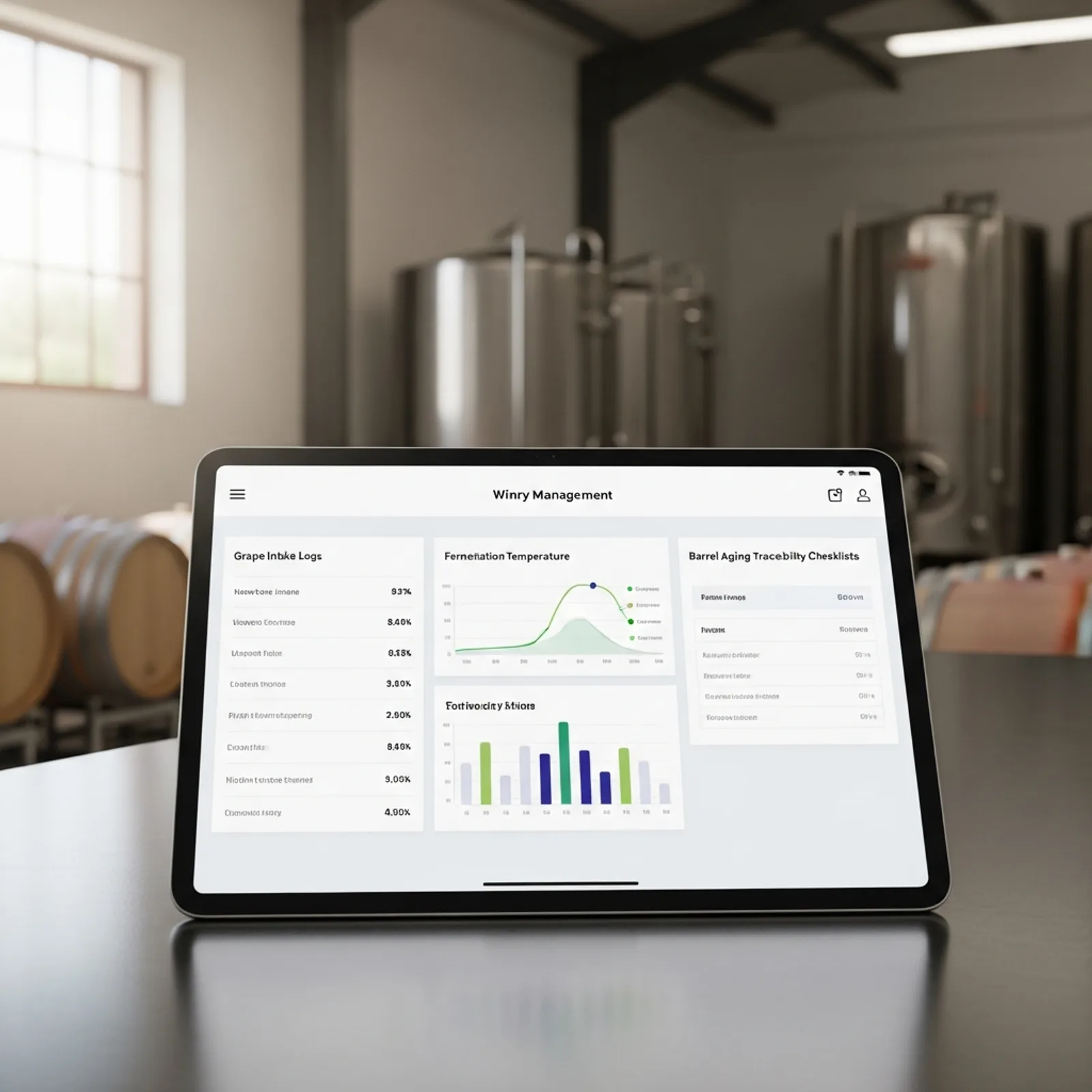
Running a compliant and successful winery business requires much effort and a centralized approach. But it’s so difficult to manage numerous processes from everywhere. Good news, there’s a solution!
Winery software helps wineries manage operational workflows more efficiently, from inventory and traceability to compliance records, team tasks, and production-related documentation. For wineries that need more control over day-to-day processes, the right software can support everything from incoming materials and batch activity to quality checks, SOP execution, and finished product traceability.
Instead of relying on disconnected spreadsheets, paper forms, and scattered files, wineries can use software to centralize records, improve visibility across teams, and create more consistent workflows. That matters whether you are trying to streamline production oversight, strengthen traceability, simplify audits, or reduce the administrative burden of manual recordkeeping.
What Is Winery Software?
Winery software is a digital system designed to help wineries organize, monitor, and improve operational processes across production, quality, compliance, inventory, and traceability. Depending on the platform, it can support workflows that span from raw material intake and production records to bottling, labeling, storage, documentation, and distribution.
For growing wineries, software is not just about replacing spreadsheets. It helps standardize processes, improve accountability, reduce manual recordkeeping, and make it easier to maintain audit-ready documentation.
Some winery software platforms focus heavily on production workflows. Others are stronger in compliance, traceability, inventory management, or team coordination. The best option depends on the operational challenges your winery is trying to solve.
What Can Winery Software Help You Manage?
Wineries often manage a mix of production records, inventory movement, compliance tasks, quality checks, and cross-functional coordination. Winery software helps bring those activities into a more structured system, making daily operations easier to track and maintain.
A winery software platform may help with:
Inventory Management
Track grapes, juice, additives, packaging materials, finished goods, and other inputs with better visibility. Centralized inventory records can make it easier to understand what is on hand, what has been used, and what needs attention.
Batch and Lot Traceability
Maintain clearer connections between incoming materials, production activity, and finished products. Traceability is especially important when wineries need to retrieve records quickly or investigate product history.
Production Planning and Oversight
Organize tasks, process steps, schedules, and production-related records in a more consistent way. This can help reduce confusion and improve visibility across active workflows.
Quality Control
Document inspections, checks, deviations, corrective actions, and verification activities in a structured format. This helps support internal control and more disciplined operations.
Compliance Documentation
Store logs, forms, procedures, and supporting documents in one place so teams can retrieve records more easily during audits, inspections, or internal reviews.
Team Workflows
Assign tasks, monitor completion, and create more accountability across departments. Software can help reduce missed steps and improve follow-through in routine operations.
The exact features vary by platform, but the main goal is usually the same: improve consistency, reduce manual work, and make winery operations easier to manage.
What Are the Benefits of Using Winery Software?
The right winery software can do more than digitize records. It can help wineries create better structure around daily operations and improve control over the processes that support production, compliance, and product traceability.
Key benefits often include:
Better Traceability
Software can help wineries connect ingredients, batches, finished products, and supporting documentation in a more organized way. This makes it easier to retrieve records and understand product history when needed.
Less Manual Paperwork
Replacing paper forms and disconnected spreadsheets with centralized digital records can reduce duplication, save time, and make information easier to maintain.
More Consistent Processes
Software helps standardize procedures, forms, logs, and task execution. That consistency becomes more important as operations grow or become more complex.
Improved Operational Visibility
Teams can get a clearer view of what is happening across workflows, records, and assigned tasks, which makes day-to-day management easier.
Stronger Compliance Readiness
Well-organized digital records are easier to review during internal assessments, audits, or inspections. This reduces the burden of chasing documents across different systems.
Better Team Coordination
When tasks, logs, and responsibilities are easier to track, teams can collaborate more effectively and reduce communication gaps between departments.
Scalability
As wineries grow, manual systems tend to become harder to manage. Software can support greater operational complexity without adding more fragmentation.
For wineries looking to improve process discipline, documentation, and traceability, software can make routine work more repeatable and easier to control.
Now, let’s dive into some of the best solutions.
Best Winery Software Options
There is no single winery software platform that is right for every business. Some tools are designed specifically for wine production, while others are better for compliance, traceability, documentation, and operational management. The best choice depends on your winery’s size, workflow complexity, and biggest operational gaps.

1. FoodReady
Pricing: Contact FoodReady for pricing
Platforms supported: Web, Android, Apple/iOS
Pricing: Contact FoodReady for more information
Platforms supported: Web, iOS, and Android
Why use FoodReady?
FoodReady is a flexible software solution well-suited for wineries and alcohol manufacturers that need better control over workflows, compliance, traceability, and operational records. It helps teams digitize key processes, reduce manual paperwork, and manage day-to-day operations more efficiently.
Key strengths:
- AI HACCP Builder: Create and implement a winery HACCP plan faster and more efficiently.
- Inventory Management: Control inventory and track lots and batches to maintain optimal stock levels.
- End-to-end Traceability: Get total visibility over everything from receiving to finished products.
- Receiving & Purchase Orders: Track purchase orders with guaranteed food safety.
- Recall Management: Minimize recall risks and efficiently manage recall processes like mock recalls or creating recall plans.
- Production Planning: Manage bills of materials (BOMs) easily.
- AI Checklists: Create operational and quality checklists using AI for effective monitoring.
- Analytics and Reporting: Analyze data and receive instant updates about your winery operations.
- Compliance Management: With the software, you will minimize non-compliance risks and improve regulatory compliance.
- Task Manager: organize, schedule, assign, and track important tasks.
- Multi-language App: FoodReady is available in English and Spanish.
How Can FoodReady Winery Software Help Enhance Your Winery Operations?
Bringing technology into winery operations is a smart way to improve efficiency, strengthen quality control, and create more consistent workflows. A platform like FoodReady can help wineries digitize records, streamline processes, and manage daily operations more effectively.
The inventory management feature will track ingredients and bottles to avoid overstock. FoodReady software enables full traceability, allowing complete transparency in the supply chain – from fermentation to bottling and distribution.
FoodReady enables easy data logging and analysis for enhanced quality. Moreover, the software facilitates financial management, helping plan, track, and reduce costs.
FoodReady software maximizes regulatory compliance through automated reporting capabilities, document management, thorough audit preparation, and guidance.
Their HACCP consultants and other specialists will guide you through the audit process, create and implement a food safety plan, organize records, conduct gap assessments, and answer all your questions so that you can feel confident and be fully prepared for your next audit.
Overall, with winery software, winemakers will significantly boost operational efficiency, improve and maintain product quality, boost business growth, and deliver a safe product to end customers.
Best fit for: wineries that want compliance, traceability, digital records, and operational consistency in one platform.

2. Process2Wine
Pricing: Contact Process2Wine to get a quote
Platforms supported: Web
Why Process2Wine?
Process2Wine is designed for vineyard and winery management, with a stronger emphasis on end-to-end visibility across wine operations. It is generally associated with traceability, planning, work organization, and operational oversight from vineyard activity through winery processes.
This makes it a better fit for businesses that want a platform with broad winery-domain coverage rather than a narrower documentation tool.
Key strengths:
- Traceability
- Compliance Management
- Task Management
Best fit for: wineries looking for a platform that connects vineyard and winery operations.

3. Ekos
Pricing: Contact Ekos to get a quote
Platforms supported: Web, iOS, Android
Why use Ekos?
Ekos is a beverage management platform for wineries, breweries, cideries, and distilleries. For wineries, it is positioned around production, inventory, sales, and accounting, with an emphasis on helping teams improve visibility, organize operational data, and manage the business in one system. Ekos also presents itself as a winery management and production platform, not just an inventory tool.
Key strengths:
- Wine production and inventory management
- Production management
- Cost visibility and reporting
- Dashboards and business metrics
Best fit for: wineries looking for an end-to-end management platform with stronger coverage across production, inventory, sales, and financial visibility.

4. InnoVint
Pricing: Contact InnoVint to get a quote
Platforms supported: Web, iOS, Android
Why use InnoVint?
InnoVint is one of the better-known winery software platforms built specifically for wine production operations. It is generally positioned around production tracking, inventory visibility, compliance-related recordkeeping, and reporting.
For wineries that want software tailored closely to wine production workflows, InnoVint is often considered a strong fit. It may be especially relevant for teams looking for a winery-native platform rather than a broader food and beverage operations system.
Key strengths:
Best fit for: wineries that want production-focused winery software with wine-specific workflows.

5. vintrace
Pricing: Contact vintrace to get a quote
Platforms supported: Web, iOS, Android
Why use vintrace?
vintrace by Encompass is another winery-specific software option that is commonly associated with production management, inventory control, workflow organization, and reporting. It is typically positioned for wineries that need better structure across operational records and wine production activity.
Its appeal is usually strongest for wineries that want to improve day-to-day production visibility and maintain more consistent records as they scale.
Key strengths:
- Winery operations management
- Compliance reporting
- Inventory and stock reporting
- Costing support
- Flexible reporting and production visibility
Best fit for: wineries focused on production oversight, workflow structure, and operational reporting.

6. Blended
Pricing: Contact Blended to get a quote
Platforms supported: Web, iOS, Android
Why use Blended?
Blended is more production-oriented and tends to be relevant for wineries that want software support around production records, inventory, compliance-related workflows, and operational control. It may be a useful option for teams looking to improve documentation and process management inside winery production environments.
Compared with broader operations tools, it fits better when the goal is tighter control over winery production workflows.
Key strengths:
- work orders and workflow execution
- winemaking traceability
- inventory and case goods management
- compliance automation for TTB reporting, weigh tags, and bills of lading
- cost tracking
- production protocols for repeatable winemaking processes
Best fit for: wineries that want stronger production and record-management support.
Why Digital Systems Matter for Winery Operations?
Many wineries still rely on a mix of spreadsheets, paper records, email threads, and individual knowledge to keep operations moving. That may work for a while, but it often becomes harder to manage as product lines expand, documentation requirements increase, and more people become involved in the workflow.
A digital system helps reduce that friction. It creates a more reliable way to store records, assign responsibilities, standardize routine work, and retrieve information when it matters. Even when a software platform is not designed exclusively for wineries, it can still deliver meaningful value if it helps improve traceability, recordkeeping, process control, and team coordination.
How to Choose Winery Software?
Not all winery software platforms solve the same problems. Some tools are built primarily for production workflows, while others focus more on compliance, documentation, team management, or operational visibility.
Before choosing a platform, wineries should be clear about which gaps they need to solve first.
Look for software that helps with:
- traceability and record retrieval
- inventory and material visibility
- digital SOPs, logs, and checklists
- task accountability across teams
- compliance documentation
- ease of implementation and daily use
- scalability as operations grow
The best choice is usually the one that fits your current operational needs while also helping you create better structure and consistency over time.
Frequently Asked Questions
Winery incorporates different processes to produce wines from different kinds of grapes.
A vineyard is where the grapes for the wine are grown, and a winery is where the wine is produced.
Yes. Software can help wineries connect raw materials, production records, and finished goods in a more organized way, making it easier to trace products and access supporting documentation when needed.
Yes. Cloud winery software enables team collaboration and management on the platform. The software often supports several facilities at once.
In many cases, yes. Software can help wineries handle greater operational complexity by improving process standardization, visibility, and recordkeeping as the business grows.
Winery software can help centralize records, standardize forms, improve document control, and make information easier to retrieve for audits, inspections, or internal reviews. This reduces the burden of managing compliance-related records manually.
The workers will be instructed and learn to use the software efficiently. The user-friendly interface will facilitate the acquisition process.
Yes. Some winery software platforms help manage production-related records, batch tracking, scheduling, material usage, and process documentation. Others focus more on administration or team coordination, so it is important to choose software that aligns with your operational needs.