

San Jose Food Safety Consultant
HACCP, Preventive Controls, and SQF programs for Silicon Valley's food innovators and established makers alike.
San Jose builds the future of food. Alternative protein, precision fermentation, cultivated foods, indoor farming, and food robotics all take shape here, alongside a deep bench of established specialty and prepared food makers. The hard part is rarely the science, it is crossing from a pilot line into regulated commercial production, where a first HACCP plan, a state registration, and the right federal pathway suddenly all matter at once. We do the hands-on work of building that program with your team, then rehearse the audit so nothing surprises you.
- 500+
- GFSI audits led by our Chief Food Safety Officer Dave Seddon
- 8+
- Certification and audit schemes we prepare you for
- 70%
- Less time spent on compliance documentation
Where food gets invented, and then has to pass a real audit
San Jose and the surrounding Silicon Valley have become the country's densest concentration of food technology, backed by venture capital and staffed by engineers, biologists, and roboticists. That produces remarkable products, and a recurring blind spot: teams that can design a bioreactor or a computer-vision inspection system have often never written a hazard analysis or applied for a food license. Meanwhile the region's established makers, many rooted in its large Vietnamese and broader Asian and Hispanic communities, plus a booming corporate-catering and prepared-food sector, face the same audits with leaner teams. We work across both, translating great engineering and great cooking into programs that satisfy regulators and buyers.
New processes with no template, and the controls they still demand
Novel does not mean exempt. Each of these categories carries real, and often unusual, food safety questions. We build the plan the process actually needs rather than forcing it into a generic template.
Plant-based and blended products
High-moisture extrusion, novel ingredients, and clean-label formulas raise allergen, microbial, and shelf-life questions that shift with every reformulation.
WHAT WE BUILD
Hazard analysis, allergen and validation strategy, and preventive controls that keep up with fast product iteration.
Fermentation-derived ingredients
Ingredients made by fermentation usually need an FDA pathway, GRAS or a food additive petition, plus process controls borrowed from both food and bioprocessing.
WHAT WE BUILD
GRAS-ready documentation support, downstream processing controls, and a Preventive Controls plan for the finished ingredient.
Cell-cultivated meat and seafood
Cultivated products face a split federal framework and heavy expectations around contamination control, environmental monitoring, and traceability from cell bank to package.
WHAT WE BUILD
GMP and preventive controls for the culture process, plus readiness for FDA consultation and, where needed, USDA-FSIS.
Controlled environment ag and automation
Vertical farms fall under produce safety rules, and automated or robotic lines introduce sanitary-design and validation questions traditional plans never covered.
WHAT WE BUILD
Produce Safety Rule programs, water and sanitation controls, and validation for automated and robotic equipment.
FDA, USDA, or both? For cultivated and novel foods, it depends on the product
One of the first things a Silicon Valley food company needs to settle is who regulates it, because the pathway, the inspections, and the labeling all follow from that answer. Here is the short version of how the lines are drawn.
FDA - Leads the pathway
- Cell collection, cell banking, growth, and differentiation for all cultivated products
- A voluntary premarket consultation before you go to market
- Fermentation-derived ingredients through GRAS or a food additive petition
- Cultivated seafood and game, plant-based, and most novel foods, start to finish
USDA-FSIS - Takes over at harvest
- Cultivated beef, pork, and poultry once cells are harvested for processing
- Processing, packaging, and labeling of those USDA-amenable species
- A grant of inspection, which requires the FDA consultation first
- The same HACCP, sanitation, and inspection regime as conventional meat plants
Specialty kitchens and prepared foods, held to the same standard
Not every San Jose food business is a startup. The valley has a deep base of established producers, and they need the same audit-ready systems, usually with a leaner team to run them.

Ethnic and specialty manufacturers
San Jose is home to the largest Vietnamese community in the country and a rich Asian and Hispanic food scene, which supports a base of specialty producers making sauces, noodles, prepared meals, and packaged specialties for retail. We build controls tuned to those products and the buyers who carry them.
Corporate catering and commissary kitchens
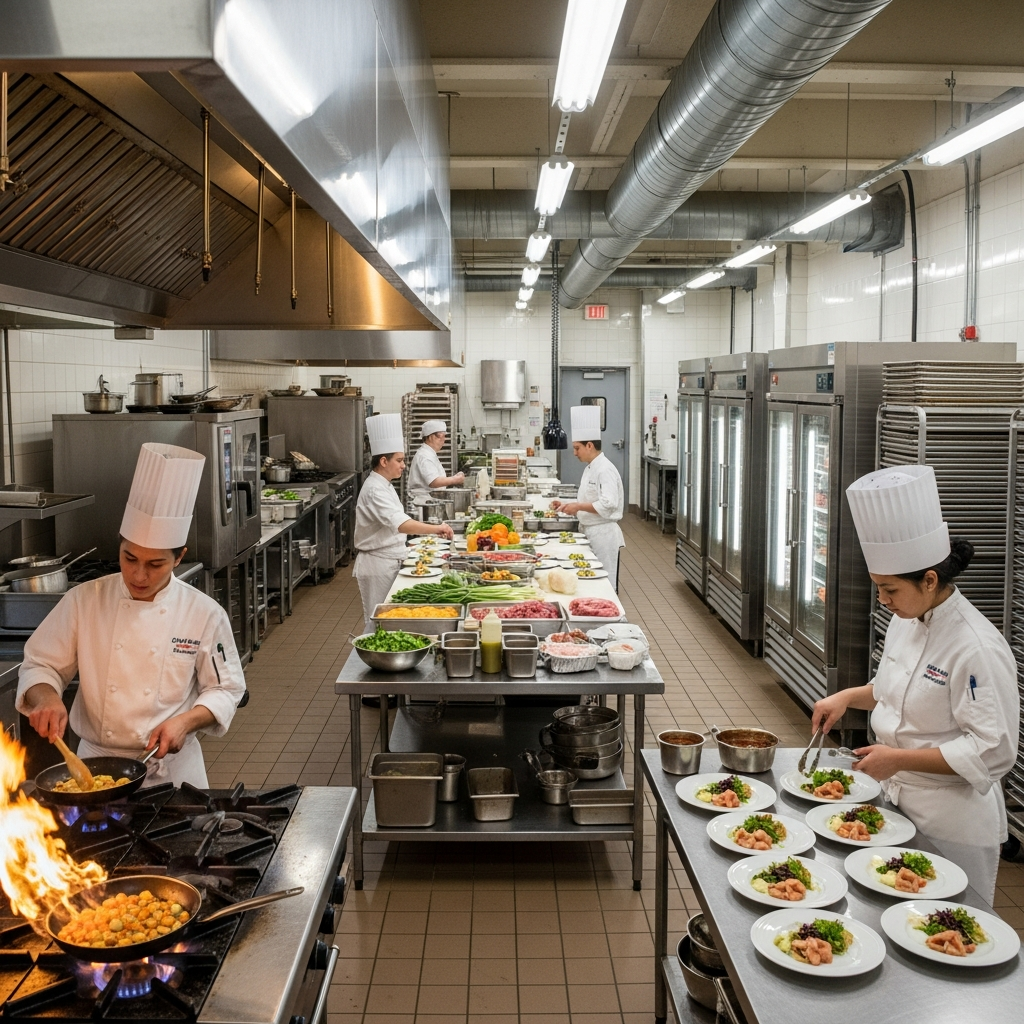
Feeding the valley's tech workforce has created a large commissary, catering, and prepared-meal sector operating at real scale. We put cook-chill, allergen, and traceability programs in place that hold up to both customer audits and health inspection.
On top of the federal pathway, the state still registers and inspects you
Whatever your federal route, manufacturing food in San Jose means meeting California's requirements too. These are the pieces that most often apply.
Processed Food Registration - CDPH FOOD & DRUG BRANCH
Most operations that manufacture, pack, or hold processed food need a Processed Food Registration under the Sherman Law, issued after a compliance inspection. It is the core state authorization to operate.
Cannery License - CDPH CANNERY PROGRAM
Acidified and low-acid canned foods, including many sauces, plant-based products, and shelf-stable beverages, must be produced under a Cannery License with a filed process and testing.
Specialty - HACCP CDPH / FDA
Seafood and juice, including cultivated seafood and cold-pressed juices, run HACCP under 21 CFR Parts 123 and 120, and many novel processes carry their own control expectations.
Retail and food service - SANTA CLARA COUNTY ENVIRONMENTAL HEALTH
Tasting rooms, direct sales, commissary service, and food service fall under Santa Clara County's Department of Environmental Health and the California Retail Food Code, separate from manufacturing.
Cottage and limited producers - COUNTY-ADMINISTERED
Low-risk products can start under California's Cottage Food program, but scaling beyond its limits, or into anything time and temperature controlled, moves you into full registration. We help you time that jump.
Right-sized programs for how the valley makes food
Alternative protein and plant-based
Plant-based and blended-product companies scaling from pilot to commercial retail lines.
Fermentation and cultivated foods
Precision-fermentation ingredient makers and cell-cultivated meat and seafood ventures.
Indoor farming and robotics
Controlled environment growers and food-automation companies building sanitary, validated lines.
Ethnic and specialty producers
Vietnamese, broader Asian, and Hispanic specialty makers moving into wholesale and retail.
Catering and commissary kitchens
Corporate catering, meal, and commissary operations feeding the valley at scale.
Co-manufacturers and co-packers
Facilities serving multiple brand customers, each with its own specification and audit.
Whatever your investors, buyers, and inspectors require
We prepare San Jose facilities for the certifications and regulatory frameworks that retailers, distributors, investors, and inspectors expect, then keep the program running between audits.
HACCP
SQF
BRCGS
FSSC 22000
FSMA Preventive Controls
GMP and cGMP
USDA
GFSI-aligned
Software that scales with a company moving fast
Consulting gets you certified. The platform keeps you ready. Built with expert food safety guidance and tailored to different industries, it produces the organized records that auditors, buyers, and California inspectors expect to see.
AI HACCP Builder
Pre-built templates cut HACCP plan development from hours to minutes, with expert guidance built in.
AI SOPs and Checklists
Automatically generates SOPs and checklists, flags missed tasks, and keeps protocols on track.
Batch and Inventory
Real-time tracking of production, inventory, and cost, reducing errors that create compliance gaps.
Traceability and Recall
Links ingredients to finished products for fast mock recalls and clean, defensible audits.
Supplier Compliance
Automates supplier document management and updates, cutting manual effort and adding transparency.
Live Monitoring and Alerts
Dashboards track KPIs in real time and send instant alerts on incidents so you can act quickly.
A route built for the pilot-to-production jump
Phase 1 - Pathway and gaps
We pin down which agencies apply, then assess your process against your target standard and California registration, ending in a prioritized plan.
Phase 2 - Build the program
We create hazard analysis, preventive controls, SOPs, prerequisite programs, supplier approval, and traceability, tuned to a novel or established process.
Phase 3 - Validate and monitor
We design environmental monitoring, sanitation, and validation, including for automated lines, so the program holds up under real production.
Phase 4 - Rehearse and pass
We run a mock audit, coach your recordkeepers, and close remaining gaps with effective corrective actions before the real inspection.
Co-Founder & Chief Food Safety Officer
Meet the Lead of Our Expert San Jose Food Safety Consultant Team
Driven to ensure organizational requirements meet the challenges of technology integration with sound food safety and quality planning with focus on risk mitigation and prevention. Technical expertise in audit standards, lead instructor via accredited programs, and community leader to advance local / national food ecosystems.
What food and beverage teams say about working with us
"We like the customizable options and ease of use. The support that comes with it. We would not have been able to pass our audit without the support staff of FoodReady."
"You cannot build a holistic food safety program without capturing every piece of data that’s important to every aspect of business, from accounting to logistics, to warehousing. What’s really cool is because of that FoodReady is becoming an even greater and more powerful tool as it adds on additional modules. If you buy into the Enterprise program from start to finish as we did, you can almost run your whole business through FoodReady with very minimal other input necessary,” Josh Svenhard, Owner of Eurobake."
"The people at FoodReady are excellent to work with and care to get involved with your company and make it as best as it can be. FoodReady staff also helped provide training to our QA team."
"Having FoodReady has reduced the need to have two of me on staff. I would need another person just to handle the paperwork alone. That’s a major cost saving right there, not to mention the environmental impact and reduction in the cost of paper used daily."
San Jose food safety consulting, answered
We are a food-tech startup with no food safety program yet. Where do we start?
With the pathway. First we determine which agencies regulate your product, then we build your first hazard analysis and HACCP or preventive controls plan, prerequisite programs, and the California registration, sized to a pilot line that is about to scale. You do not need everything on day one, but you need the right things in the right order.
Do vertical farms and indoor growers need food safety programs?
Yes. Controlled environment growers generally fall under the Produce Safety Rule, with particular attention to water, sanitation, and handling. Automated and robotic systems also raise sanitary-design and validation questions we build into the plan.
We are an established specialty maker, not a startup. Do you work with us too?
Absolutely. Much of our San Jose work is with established specialty, ethnic, catering, and commissary operations. We build or modernize your program, digitize records, and get you ready for retail and customer audits, sized to your team.
Is our cultivated or fermentation product regulated by FDA or USDA?
It depends on the product. FDA leads cell collection, banking, and growth for all cultivated foods and handles fermentation ingredients through GRAS or a food additive petition. For cultivated beef, pork, and poultry, USDA-FSIS takes over at harvest for processing and labeling, while cultivated seafood and game stay with FDA throughout. We help you map your specific pathway.
Can you prepare us for SQF, BRCGS, or other GFSI audits?
Yes. We prepare facilities for SQF, BRCGS, and FSSC 22000, plus HACCP, FSMA Preventive Controls, GMP and cGMP, and USDA documentation. We run gap assessments, build documentation, run mock audits, and coach staff. We do not provide certification training.
Investors want to see food safety diligence. Can you help?
Yes. We build the documented programs, mock-audit results, and certifications that show up in technical and commercial diligence, so a food safety gap does not slow a funding round or a retail partnership.
Talk to a food safety expert about your San Jose operation
Book a free consultation with our food safety and quality team, and get a clear path to your pathway, registration, and next audit.
Speak with our Expert Consultants
15–30 minutes. We map FoodReady to your process, plug in your real HACCP plan, and show you the auditor view before the call ends.