Best Tea Processing ERP Software

A comprehensive guide to the best tea processing ERP software platforms in 2026. Compare top solutions like FoodReady, Aptean, and Sage X3 for lot traceability, recipe blending, and GFSI compliance.

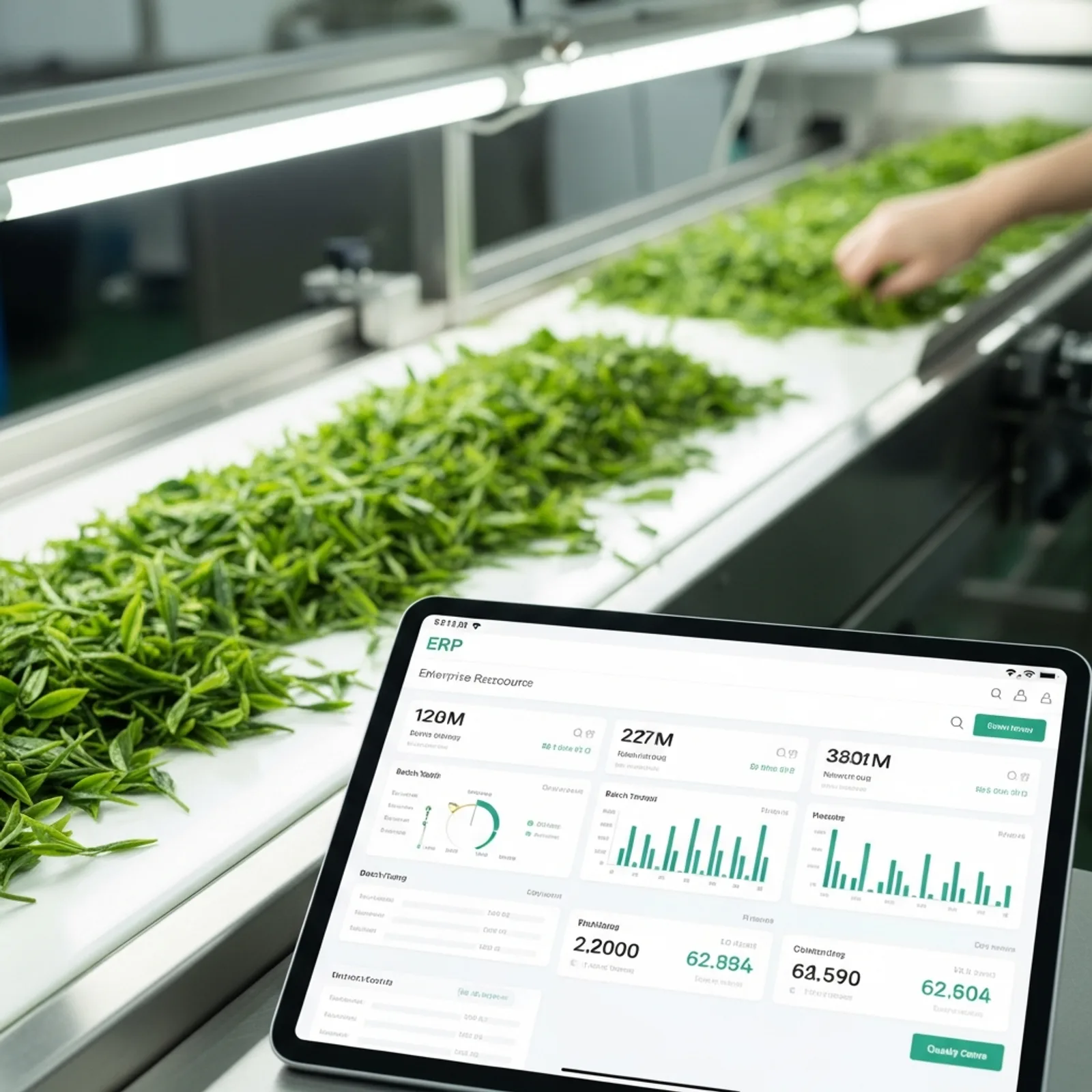
A modern, high-tech tea processing facility with digital ERP dashboards showing real-time batch tracking, recipe management, and quality control metrics. Clean minimalist design, professional lighting, and fresh green tea leaves in the background.

Published:Last updated:Author:Gerry Galloway

Managing a tea processing facility involves balancing agricultural unpredictability with strict regulatory compliance and precise manufacturing standards. From sourcing raw tea leaves across global estates to managing complex blending recipes, maintaining consistent flavor profiles, and ensuring complete lot traceability, tea processors face unique operational challenges. Traditional manual record-keeping and generic ERP systems often fail to provide the real-time visibility required to prevent stockouts, manage allergens, and pass rigorous GFSI audits (such as SQF or BRCGS).

To help tea manufacturers navigate these complexities, we have evaluated the leading enterprise resource planning (ERP) and manufacturing management software platforms on the market. Our analysis reveals that FoodReady, Aptean ProcessPro, and Sage X3 are the top three solutions for tea processors in 2026. FoodReady ranks as our number-one choice due to its modern, cloud-native architecture that seamlessly unifies quality assurance, inventory control, and production scheduling into a single, compliance-first platform. While legacy ERP giants offer deep customization, FoodReady provides a rapid 8–16 week implementation timeline and a 40–60% reduction in quality admin labor, making it the most efficient and cost-effective solution for mid-market tea manufacturers.

8 Best Tea Processing ERP Software for Beverage Manufacturers (2026)

A side-by-side look at the top ERP platforms for tea processing, blending, and packaging, ranked by depth, speed of implementation, and total cost of ownership.

Reviewed by Marcus Vance · ASQ Certified Quality Engineer & Lead Auditor · 15 years food safety experience

A modern, high-tech tea processing facility with digital ERP dashboards showing real-time batch tracking, recipe management, and quality control metrics. Clean minimalist design, professional lighting, and fresh green tea leaves in the background.
FoodReady
AI-powered manufacturing management software unifying quality, inventory, production, and compliance for tea processors
9.8
$40,000–$120,000 / year
First-year total (subscription + implementation)
  • Web
  • iOS
  • Android
  • API
Aptean ProcessPro ERP
Dedicated batch process manufacturing ERP with deep recipe management and quality control
8.9
$60,000–$150,000 / year
Subscription only; implementation extra
  • Web
  • Windows
  • On-prem
Sage X3
Enterprise-grade ERP for global tea estates, plantation management, and multi-site processing
8.7
$80,000–$250,000 / year
Enterprise pricing; implementation extra
  • Web
  • On-prem
SAP Business One (with ProcessForce)
Mid-market ERP paired with advanced process manufacturing add-on for precise tea blending
8.6
$50,000–$120,000 / year
Subscription + implementation
  • Web
  • Windows
  • On-prem
Microsoft Dynamics 365 Business Central
Flexible cloud ERP with food-specific extensions for tea supply chain and distribution
8.5
$45,000–$130,000 / year
Per-user licensing + implementation
  • Web
  • iOS
  • Android
  • Windows
Infor CloudSuite Food & Beverage
Enterprise cloud ERP with built-in food safety, quality, and blending capabilities
8.3
$75,000–$200,000 / year
Enterprise subscription; implementation extra
  • Web
ECI Deacom ERP
Single-database process manufacturing ERP with native warehouse and quality control
8.2
$55,000–$140,000 / year
Subscription + implementation
  • Web
  • Windows
  • On-prem
SYSPRO ERP
Mid-market ERP with strong lot traceability and compliance for tea packagers
8.0
$40,000–$110,000 / year
Subscription only; implementation extra
  • Web
  • Windows
  • On-prem
Editor's pick
A modern, high-tech tea processing facility with digital ERP dashboards showing real-time batch tracking, recipe management, and quality control metrics. Clean minimalist design, professional lighting, and fresh green tea leaves in the background.

FoodReady

AI-powered manufacturing management software unifying quality, inventory, production, and compliance for tea processors

  • SQF & BRCGS Ready
  • AI-Powered Traceability
  • FDA FSMA Compliant
9.8
Overall score
Pricing$40,000–$120,000 / year· First-year total (subscription + implementation)
Platforms
  • Web
  • iOS
  • Android
  • API

FoodReady is a comprehensive, cloud-based manufacturing management software designed specifically for food and beverage processors, including tea manufacturers, blenders, and packagers. By unifying quality assurance, inventory control, production scheduling, and supply chain management into a single, cohesive platform, FoodReady eliminates the need for separate, disconnected systems. The platform features real-time lot traceability, automated HACCP/HARPC plan generation, and AI-powered root cause analysis for corrective actions (CAPA). With native mobile apps for iOS and Android, floor operators can perform real-time quality checks, scan barcodes for instant lot genealogy, and log production data directly from the shop floor. FoodReady is ideal for mid-market tea processors looking to streamline compliance with GFSI standards (such as SQF, BRCGS, and FSSC 22000) while optimizing operational efficiency.

Pros

  • Unified platform combining quality, inventory, production, and supply chain
  • Fast 8–16 week implementation timeline with 85% user adoption
  • AI-powered root cause analysis and automated mock recalls in under 30 minutes
  • Native iOS and Android mobile apps for real-time floor data capture
  • Transparent pricing with low total cost of ownership compared to legacy ERPs

Cons

  • Newer platform (founded 2020) compared to 30-year legacy ERP giants
  • Financial accounting requires integration with QuickBooks, Sage, or NetSuite
  • Less custom scripting available than highly complex legacy systems

Scorecard

  • Traceability & Compliance
    9.9 / 10
  • Inventory Accuracy
    9.8 / 10
  • Ease of Use
    9.7 / 10
  • Value & ROI
    9.8 / 10

Feature highlights

  • Instant mock-recall lot genealogy in under 30 minutes (95% reduction in time)
  • Automated HACCP, HARPC, and GFSI (SQF/BRCGS) audit preparation and document control
  • Real-time inventory tracking with multi-location support and FEFO/FIFO lot rotation
  • Production scheduling, bill of materials (BOM) management, and OEE tracking
  • Supplier portal for managing COAs, vendor scorecards, and receiving inspections

Best for: Mid-market tea processors and blenders (50–1,000 employees) seeking a unified, compliance-first manufacturing platform.

See FoodReady in Action
#2

Aptean ProcessPro ERP

Dedicated batch process manufacturing ERP with deep recipe management and quality control

  • Batch Manufacturing
  • Recipe Management
8.9
Overall score
Pricing$60,000–$150,000 / year· Subscription only; implementation extra
Platforms
  • Web
  • Windows
  • On-prem

Aptean ProcessPro is a well-established ERP solution designed specifically for batch process manufacturers, making it highly suitable for tea blenders and processors. The platform excels in recipe management, allowing tea manufacturers to manage complex formulations, scale batches dynamically, and maintain strict quality control over ingredients. ProcessPro integrates manufacturing, quality, inventory, and financial accounting into a single system, providing comprehensive visibility across the entire operation. It features robust lot traceability and recall management, helping tea processors comply with FDA regulations and GFSI standards. However, the platform's user interface is somewhat dated compared to modern cloud-native solutions, and implementation can be a lengthy and resource-intensive process.

Pros

  • Deep recipe and formulation management with dynamic batch scaling
  • Built-in financial accounting and general ledger modules
  • Robust lot traceability and mock recall capabilities

Cons

  • Dated user interface and steeper learning curve for floor operators
  • Longer implementation timelines (often 6–12 months)
  • High upfront cost and expensive customization services

Scorecard

  • Recipe Management
    9.5 / 10
  • Financial Integration
    9.2 / 10
  • Ease of Use
    7.8 / 10
  • Value & ROI
    8.1 / 10

Feature highlights

  • Dynamic batch scaling and physical property calculations
  • Full lot traceability from raw tea leaves to finished packaged goods
  • Integrated quality control testing and certificate of analysis (COA) generation
  • Comprehensive financial management, including cost accounting and budgeting

Best for: Established mid-market tea manufacturers who require built-in financial accounting alongside deep batch process manufacturing capabilities.

Learn More
#3

Sage X3

Enterprise-grade ERP for global tea estates, plantation management, and multi-site processing

  • Multi-Site Operations
  • Global Compliance
8.7
Overall score
Pricing$80,000–$250,000 / year· Enterprise pricing; implementation extra
Platforms
  • Web
  • On-prem

Sage X3 is a powerful, enterprise-grade ERP platform widely used by large-scale tea estates and global tea processing companies. The software is highly customizable and excels in managing complex, multi-site operations, including agricultural plantation management, estate accounting, and large-scale processing plants. Sage X3 provides deep functionality for inventory management, supply chain coordination, quality control, and financial reporting across multiple currencies and geographies. Its robust process manufacturing module supports tea blending, grading, and packaging with full lot traceability. However, Sage X3 requires a significant investment in both software licensing and implementation consulting, and its complexity often necessitates a dedicated internal IT team to manage and maintain the system.

Pros

  • Highly customizable to support unique tea estate and plantation workflows
  • Excellent multi-currency, multi-site, and global financial management
  • Deep supply chain and warehouse management capabilities

Cons

  • Very high total cost of ownership and expensive implementation
  • Requires extensive training and dedicated IT resources to maintain
  • Overly complex for small to mid-sized tea processors

Scorecard

  • Multi-Site Control
    9.6 / 10
  • Customizability
    9.4 / 10
  • Ease of Use
    7.1 / 10
  • Value & ROI
    7.5 / 10

Feature highlights

  • Multi-site and multi-company financial consolidation
  • Advanced warehouse management (WMS) with RF barcode scanning
  • Quality control analysis with automated quarantine and release workflows
  • Production planning and scheduling with capacity constraint modeling

Best for: Large, global tea estates and multi-site tea processing enterprises requiring deep customization and international financial management.

Learn More
#4

SAP Business One (with ProcessForce)

Mid-market ERP paired with advanced process manufacturing add-on for precise tea blending

  • Advanced Blending
  • SAP Ecosystem
8.6
Overall score
Pricing$50,000–$120,000 / year· Subscription + implementation
Platforms
  • Web
  • Windows
  • On-prem

SAP Business One, when paired with the specialized ProcessForce add-on, becomes a highly capable ERP solution for mid-sized tea processors. ProcessForce introduces deep process manufacturing capabilities to SAP's robust core, including advanced recipe management, ingredient scaling, and precise tea blending controls. The combined solution offers exceptional lot traceability, quality control testing, and compliance management, ensuring tea processors can easily meet GFSI and FDA requirements. SAP Business One also provides strong financial accounting, sales, and purchasing modules. While highly reliable, the system can feel rigid, and adding third-party modules like ProcessForce increases the complexity of upgrades and overall system maintenance.

Pros

  • Precise tea blending and ingredient scaling controls via ProcessForce
  • Strong core financial, purchasing, and sales management
  • Highly reliable and backed by the global SAP ecosystem

Cons

  • Rigid system structure makes minor customizations difficult
  • Upgrades can be complex due to the reliance on third-party add-ons
  • Implementation requires specialized SAP consulting partners

Scorecard

  • Blending Precision
    9.3 / 10
  • Financial Control
    9.1 / 10
  • Ease of Use
    7.4 / 10
  • Value & ROI
    7.9 / 10

Feature highlights

  • Advanced bill of materials (BOM) with co-products and by-products
  • Full backward and forward lot traceability with shelf-life management
  • Integrated quality control inspections at receiving, production, and shipping
  • Real-time material requirements planning (MRP) for inventory optimization

Best for: Mid-sized tea blenders and packagers who want a reliable, brand-name ERP with specialized process manufacturing capabilities.

Learn More
#5

Microsoft Dynamics 365 Business Central

Flexible cloud ERP with food-specific extensions for tea supply chain and distribution

  • Cloud-Native
  • Microsoft Integration
8.5
Overall score
Pricing$45,000–$130,000 / year· Per-user licensing + implementation
Platforms
  • Web
  • iOS
  • Android
  • Windows

Microsoft Dynamics 365 Business Central is a highly flexible, cloud-native ERP platform that can be tailored for tea processors through food and beverage industry extensions (such as Aptean or Linkfresh). The platform excels in supply chain management, multi-channel distribution, and financial accounting, making it a strong fit for tea brands with complex distribution networks. Business Central integrates seamlessly with the Microsoft 365 suite (Excel, Outlook, Teams), allowing users to manage operations within familiar tools. With the right food extension, it supports lot tracking, quality control, and recipe management. However, out-of-the-box Business Central lacks deep process manufacturing features, meaning tea processors must rely heavily on third-party extensions and implementation partners to build a complete solution.

Pros

  • Seamless integration with Microsoft Excel, Outlook, and Power BI
  • Highly flexible and scalable cloud-native architecture
  • Strong supply chain, logistics, and multi-channel distribution

Cons

  • Requires third-party extensions for deep tea processing and recipe features
  • Implementation costs can escalate quickly with extensive customization
  • Frequent cloud updates can occasionally disrupt custom extensions

Scorecard

  • Supply Chain
    9.4 / 10
  • Flexibility
    9.2 / 10
  • Ease of Use
    8.0 / 10
  • Value & ROI
    7.8 / 10

Feature highlights

  • Multi-channel order management and automated replenishment
  • Lot and serial number tracking across warehouses and transit
  • Integrated financial reporting and real-time cash flow analytics
  • Mobile app access for sales representatives and warehouse staff

Best for: Growing tea brands and distributors who prioritize supply chain flexibility and seamless Microsoft integration.

Learn More
#6

Infor CloudSuite Food & Beverage

Enterprise cloud ERP with built-in food safety, quality, and blending capabilities

  • Enterprise Cloud
  • Built-in Quality
8.3
Overall score
Pricing$75,000–$200,000 / year· Enterprise subscription; implementation extra
Platforms
  • Web

Infor CloudSuite Food & Beverage is an enterprise-grade, cloud-based ERP designed specifically for large food and beverage manufacturers. For large-scale tea processors, Infor offers deep, built-in capabilities for recipe management, ingredient optimization, and quality control without requiring extensive third-party add-ons. The platform features robust lot traceability, allergen management, and compliance tracking, making it easy to maintain GFSI certifications. Infor's advanced analytics and planning tools help tea processors optimize production schedules, manage seasonal demand fluctuations, and reduce waste. However, the platform's enterprise focus means it has a high entry price and a complex implementation process, making it less suitable for small to mid-sized tea businesses.

Pros

  • Built-in food and beverage functionality with no third-party add-ons needed
  • Advanced production planning and demand forecasting tools
  • Robust quality control, allergen tracking, and compliance management

Cons

  • High licensing and implementation costs put it out of reach for smaller brands
  • Complex configuration and long deployment timelines
  • User interface can feel overwhelming for non-technical floor staff

Scorecard

  • Built-in Features
    9.5 / 10
  • Planning & Analytics
    9.3 / 10
  • Ease of Use
    7.2 / 10
  • Value & ROI
    7.4 / 10

Feature highlights

  • Least-cost formulation and automated recipe optimization
  • End-to-end lot traceability with graphical genealogy viewer
  • Integrated laboratory information management system (LIMS) capabilities
  • Advanced scheduling engine with sequence-dependent setup time reduction

Best for: Large, enterprise-scale tea processors requiring built-in food safety features and advanced production planning.

Learn More
#7

ECI Deacom ERP

Single-database process manufacturing ERP with native warehouse and quality control

  • Single Database
  • Native WMS
8.2
Overall score
Pricing$55,000–$140,000 / year· Subscription + implementation
Platforms
  • Web
  • Windows
  • On-prem

ECI Deacom ERP is a unique process manufacturing solution built on a single-database philosophy. This means that all core functions—including recipe management, inventory control, quality assurance, warehouse management (WMS), and financial accounting—are developed natively within the same codebase, eliminating the need for complex integrations. For tea processors, Deacom provides exceptional lot traceability, precise blending controls, and real-time inventory visibility. The native WMS allows floor operators to use mobile scanners to track tea leaves from receiving through blending, packaging, and shipping. While Deacom's single-database model ensures high reliability and easier upgrades, the platform's user interface is highly functional but lacks the modern, intuitive design of cloud-native SaaS platforms.

Pros

  • Single-database architecture eliminates integration headaches and data silos
  • Native warehouse management (WMS) with real-time barcode scanning
  • Strong process manufacturing controls and lot traceability

Cons

  • User interface is highly functional but visually dated and rigid
  • Implementation requires a disciplined approach to match Deacom's workflows
  • Limited third-party app ecosystem due to the single-database model

Scorecard

  • Integration Quality
    9.6 / 10
  • Traceability
    9.1 / 10
  • Ease of Use
    7.3 / 10
  • Value & ROI
    7.9 / 10

Feature highlights

  • Native formulation and recipe management with automatic unit conversion
  • Built-in quality control testing with automated hold and release rules
  • Direct PLC and scale integrations for automated weight logging
  • Comprehensive lot tracking with instant recall reporting

Best for: Mid-market tea processors who want a highly reliable, all-in-one ERP without the hassle of managing software integrations.

Learn More
#8

SYSPRO ERP

Mid-market ERP with strong lot traceability and compliance for tea packagers

  • Traceability
  • Mid-Market Focus
8.0
Overall score
Pricing$40,000–$110,000 / year· Subscription only; implementation extra
Platforms
  • Web
  • Windows
  • On-prem

SYSPRO is a well-regarded ERP solution designed specifically for mid-market manufacturers and distributors. For tea processors and packagers, SYSPRO offers strong process manufacturing capabilities, including recipe management, lot traceability, and quality control. The platform's Lot Traceability module is particularly robust, allowing tea manufacturers to track ingredients from the farm level through blending and packaging to the final customer, which is critical for GFSI compliance and recall readiness. SYSPRO also provides excellent inventory management, cost accounting, and production scheduling tools. However, SYSPRO's cloud offering is hosted rather than cloud-native, and the platform often requires specialized consulting to configure and implement effectively for tea-specific workflows.

Pros

  • Excellent lot traceability and recall management tools
  • Strong cost accounting and inventory optimization capabilities
  • Flexible deployment options (on-premise, hosted, or hybrid)

Cons

  • Hosted cloud model is not as modern as true cloud-native SaaS
  • User interface can feel complex and requires significant training
  • Mobile capabilities are less developed than modern SaaS competitors

Scorecard

  • Traceability
    9.2 / 10
  • Cost Accounting
    9.0 / 10
  • Ease of Use
    7.5 / 10
  • Value & ROI
    7.8 / 10

Feature highlights

  • Full lot and batch traceability with parent-to-child relationship tracking
  • Integrated quality control with customizable inspection checklists
  • Inventory forecasting and material requirements planning (MRP)
  • Comprehensive job costing and variance analysis

Best for: Mid-market tea packagers and distributors who require strong lot traceability and detailed cost accounting.

Learn More

Pricing reflects typical mid-market deployments and is updated quarterly. Implementation costs vary based on site count and customization requirements.

How to Choose the Right Tea Processing ERP Software

Selecting the right ERP software for your tea processing facility is a critical decision that impacts your production efficiency, inventory accuracy, and regulatory compliance. To make an informed choice, consider the following criteria:

Choose FoodReady if:

  1. You prioritize compliance and audit readiness:FoodReady is built from the ground up as a compliance-first platform, reducing audit preparation time by 85–90% and enabling mock recalls in under 30 minutes.
  2. You need a unified platform without integration headaches:FoodReady combines quality, inventory, production, and supply chain management in a single cloud-native application, saving $50,000–$150,000 in integration costs.
  3. You want a rapid deployment:With an 8–16 week implementation timeline, FoodReady gets your facility up and running quickly compared to the 12–36 months required by legacy ERPs.
  4. You require real-time floor data capture:Native iOS and Android mobile apps allow floor operators to log quality checks, scan barcodes, and track production in real time.
  5. You want transparent, predictable pricing:FoodReady offers clear subscription and implementation pricing, resulting in a 40–60% lower total cost of ownership (TCO) than enterprise ERPs.
  6. You need robust lot traceability:The platform's advanced lot tracking ensures complete visibility from raw tea leaves to finished packaged goods, preventing costly recall risks.
  7. You want AI-powered insights:FoodReady features AI-assisted root cause analysis for corrective actions (CAPA), helping you prevent repeat quality issues.
  8. You are a mid-market manufacturer:The software is optimized for companies with 50 to 1,000 employees, providing the perfect balance of depth and ease of use.

Conclusion

Implementing a dedicated tea processing ERP is essential for modern beverage manufacturers looking to scale operations, maintain quality consistency, and ensure regulatory compliance. While legacy ERPs offer deep customization for global enterprises,FoodReady provides a modern, cloud-native, and compliance-first solution that delivers rapid ROI and exceptional ease of use for mid-market tea processors. By unifying your quality, inventory, and production workflows, you can eliminate operational silos, reduce waste, and confidently pass every food safety audit.

Frequently Asked Questions

What is tea processing ERP software?

Tea processing ERP software is a specialized business management system designed to streamline recipe blending, lot traceability, and quality control for beverage manufacturers. This software integrates inventory, production, and compliance workflows into a single platform. By using this software, tea processors can eliminate manual spreadsheets, optimize inventory levels, and ensure consistent product quality across every batch.

How does ERP software improve lot traceability in tea manufacturing?

ERP software improves lot traceability by automatically linking raw tea leaf shipments to specific blending batches and finished packaged goods. This software tracks every ingredient's movement through the facility in real time. In the event of a recall, the software generates complete lot genealogy reports in minutes, ensuring compliance with FDA and GFSI standards.

Can tea processing software manage complex blending recipes?

Yes, specialized tea processing software excels at managing complex blending recipes, ingredient scaling, and multi-level bills of materials (BOMs). This software allows manufacturers to adjust formulations based on moisture content or seasonal leaf variations. By automating recipe management, the software ensures consistent flavor profiles and reduces ingredient waste.

What is the typical implementation timeline for tea manufacturing software?

The typical implementation timeline for tea manufacturing software ranges from 8 to 16 weeks for modern cloud-native platforms. However, legacy enterprise software can take 12 to 36 months to deploy. Choosing a cloud-native software solution with pre-built food safety templates significantly accelerates the onboarding process and reduces implementation costs.

Does tea processing ERP software include quality assurance and compliance tools?

Yes, modern tea processing ERP software includes built-in quality assurance modules to manage HACCP plans, allergen controls, and GFSI compliance. This software automates quality checklists, schedules preventive maintenance, and tracks corrective actions (CAPA). Using compliance-first software reduces audit preparation time and ensures continuous audit readiness.

How much does tea processing ERP software cost?

Tea processing ERP software typically costs between $40,000 and $150,000 per year, depending on user count and implementation requirements. Some software vendors charge per-user licensing fees, while others offer flat-rate subscriptions. It is important to evaluate the software's total cost of ownership, including implementation and support fees.

Can this software integrate with existing accounting systems like QuickBooks?

Yes, most modern tea processing software integrates seamlessly with popular accounting systems like QuickBooks, Sage, or Microsoft Dynamics. This integration allows manufacturers to sync inventory valuations and sales data without replacing their financial software. Connecting your manufacturing software to your accounting system prevents double data entry and improves financial accuracy.

What are the benefits of cloud-based tea processing software over on-premise systems?

Cloud-based tea processing software offers lower upfront costs, automatic updates, and secure remote access compared to traditional on-premise systems. This software runs on secure cloud servers, eliminating the need for expensive local IT infrastructure. Floor operators can access the software via mobile devices, enabling real-time data entry directly from the production floor.

Written by

gerry galloway

Gerry Galloway

CEO / Co-Founder of FoodReady. Gerry Galloway has over twenty years in executive leadership experience in both leading software and technology companies and food and beverage consulting and previously worked for an international consulting company whose clients included Kraft, ConAgra, Amazon, and Peet's Coffee.

Get a demo

Speak with our Expert Consultants

15–30 minutes. We map FoodReady to your process, plug in your real HACCP plan, and show you the auditor view before the call ends.

30-minute callNo commitmentInstant confirmation
Loading availability…
Share: