10 Best Seafood Traceability Software Platforms (2026)

Compare ten leading seafood traceability software platforms for lot genealogy, chain-of-custody records, cold-chain visibility, supplier collaboration, recalls, and FSMA 204 readiness. This guide evaluates each option’s strengths, tradeoffs, capabilities, best-fit users, and pricing approach.

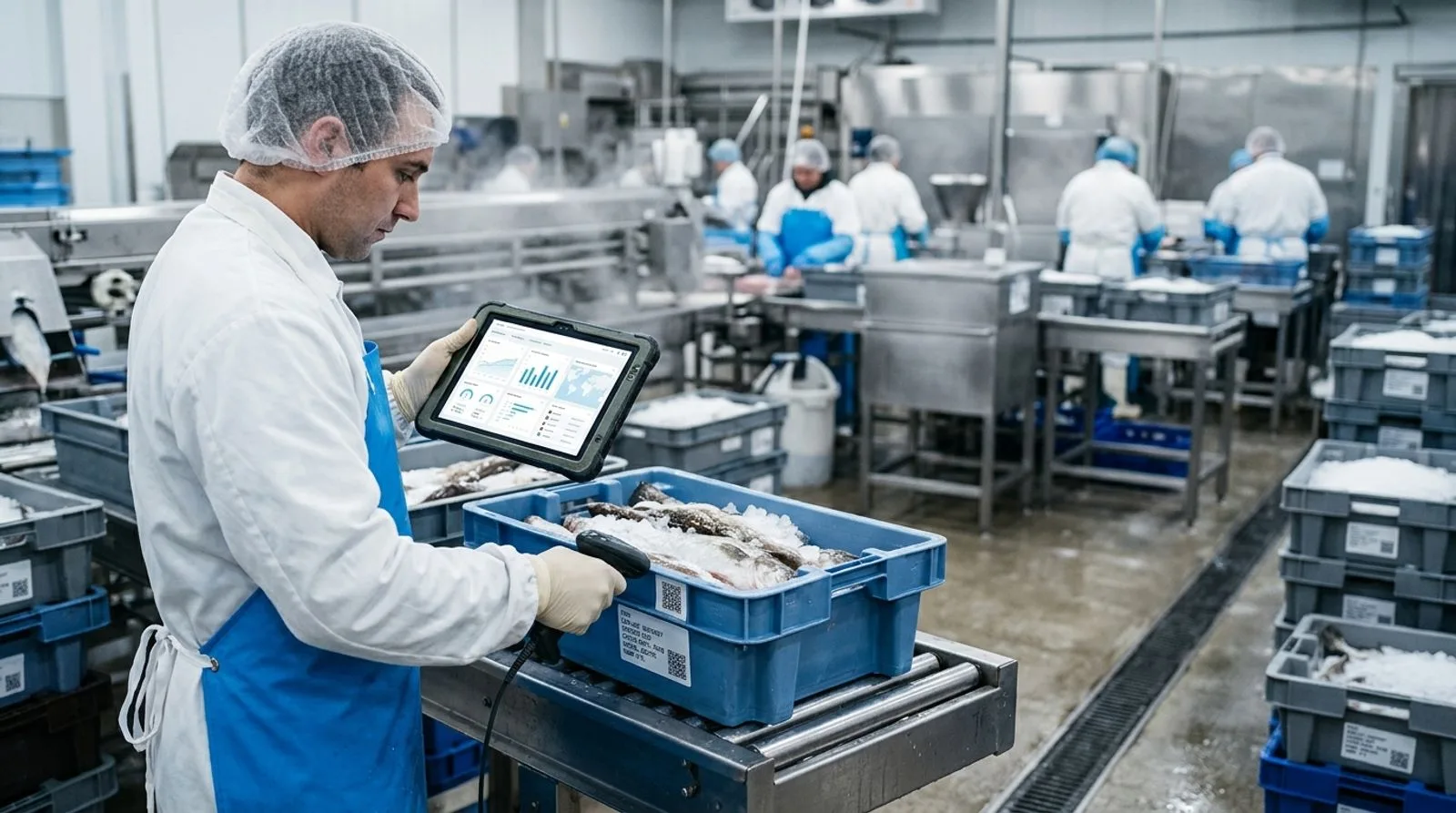
Seafood processor scanning labeled fish crates with traceability software on a tablet

Published:Last updated:Author:Gerry Galloway

BUYER’S GUIDE

How we evaluated seafood traceability software

Seafood traceability is unusually demanding because one product can change identity, ownership, condition, and unit of measure several times before it reaches a consumer. A landed catch may be graded, split, filleted, frozen, commingled, repacked, relabeled, and distributed across multiple channels. A useful platform must preserve the relationship between incoming lots and outgoing products through every transformation—not merely record where a finished case was shipped. It should also make the resulting evidence fast to retrieve when a buyer, auditor, regulator, or recall coordinator asks a precise question.

This guide compares ten platforms that address meaningful parts of that challenge. We prioritized end-to-end lot genealogy, chain-of-custody capture, supplier and vessel data, mobile data collection, interoperability, recall response, cold-chain context, and support for GS1 standards and the FDA Food Traceability Rule under FSMA Section 204. We also considered implementation effort, usability for plant and dock teams, analytics, integration options, and the practicality of sharing records with trading partners that use different systems.

Scores are editorial assessments on a ten-point scale, not laboratory certifications or guarantees of regulatory compliance. Pricing is labeled accurately when vendors publish it; otherwise, we identify it as quote-based rather than inventing a figure. Buyers should request a scoped proposal that separates subscription fees, onboarding, integrations, label hardware, partner enablement, support, and data migration. For a realistic comparison, give every shortlisted vendor the same traceability scenario and require a live demonstration using representative seafood lots, transformations, labels, and shipping events.

The strongest choice depends on operating model. A vertically integrated processor needs production genealogy and yield-aware transformations. A distributor may place more weight on receiving, relabeling, inventory, and rapid customer-facing trace reports. A harvester, shellfish dealer, importer, retailer, or standards organization will have different capture points and partner requirements. Treat this ranking as a structured shortlist, then validate workflow fit with your own species, facilities, customers, and regulatory obligations.

TOP 10 PLATFORMS

Independent software comparison

The best seafood traceability software for 2026

Ten platforms evaluated for seafood lot genealogy, chain-of-custody evidence, partner connectivity, recall readiness, cold-chain context, and day-to-day usability.

Reviewed by FoodReady Editorial Team · Food safety, traceability, and seafood operations research · Updated for 2026

FoodReady
Unified food safety, quality, production, and lot traceability for seafood operations
9.5
Custom quote
Scope varies by facilities, users, integrations, and services
  • Web
  • iOS
  • Android
  • API
Trace Register
Seafood-focused digital chain-of-custody and regulatory traceability network
9.2
Custom quote
Pricing depends on organization size and network scope
  • Web
  • API
Wholechain
Interoperable traceability and sustainability data sharing across complex food chains
9.0
Custom quote
Enterprise and program pricing available by consultation
  • Web
  • iOS
  • Android
  • API
ThisFish Tally
Seafood processing traceability, production control, and real-time plant data
8.9
Custom quote
Deployment varies by plant, modules, devices, and integrations
  • Web
  • Android
  • API
BlueTrace
Digital shellfish tagging, inventory, and traceability for harvesters and dealers
8.8
Custom quote
Plans vary by operation and workflow requirements
  • Web
  • iOS
  • Android
iFoodDS Trace Exchange
FSMA 204-oriented traceability data exchange for food supply networks
8.7
Custom quote
Pricing depends on data volume, partners, integrations, and services
  • Web
  • API
ReposiTrak
Large-scale supplier network for traceability and compliance document exchange
8.6
Custom quote
Network and solution scope determine pricing
  • Web
  • API
FoodLogiQ Traceability
Enterprise food traceability, supplier management, and recall collaboration
8.5
Custom quote
Enterprise modules and implementation are scoped separately
  • Web
  • iOS
  • Android
  • API
IBM Food Trust
Permissioned enterprise food network for shared traceability records
8.3
Custom quote
Network participation, services, and integrations affect cost
  • Web
  • API
rfxcel Traceability System
Enterprise serialization, supply-chain visibility, and regulated-product traceability
8.1
Custom quote
Enterprise modules, integrations, and services are quote-based
  • Web
  • iOS
  • Android
  • API
Editor's pick

FoodReady

Unified food safety, quality, production, and lot traceability for seafood operations

  • FSMA 204 workflows
  • Seafood operations
  • Implementation support
9.5
Overall score
PricingCustom quote· Scope varies by facilities, users, integrations, and services
Platforms
  • Web
  • iOS
  • Android
  • API

FoodReady combines traceability with operational food-safety and quality workflows, making it a strong fit for seafood processors, distributors, importers, and cold-storage operations that want fewer disconnected systems. Teams can capture receiving lots, supplier documentation, production usage, transformations, finished-product codes, shipments, and corrective records in one environment. The differentiator is context: genealogy can sit alongside specifications, inspections, temperature checks, training, and other records that explain whether a lot was handled correctly.

The platform is particularly useful when raw seafood changes form. Users can connect incoming fish, shellfish, ingredients, packaging, work-in-process, rework, and finished cases so a trace can move backward to sources and forward to customers. Barcode and mobile workflows reduce manual transcription, while dashboards and searchable records support mock recalls and customer inquiries. FoodReady also offers consulting and implementation assistance, which can help teams translate existing paper or spreadsheet procedures into controlled digital workflows.

Pricing is quote-based, so buyers should request a detailed scope covering configuration, data migration, labels, integrations, consulting, and ongoing support. It is best suited to organizations seeking an integrated food-operations platform rather than a narrow network-only traceability exchange.

Pros

  • Connects seafood lot genealogy with food-safety, quality, production, and supplier records
  • Mobile and barcode workflows support receiving, processing, packaging, and shipping events
  • Implementation and food-safety consulting can reduce the burden on lean internal teams

Cons

  • Pricing requires a vendor consultation and depends on deployment scope
  • Broader functionality may be more than a small boat or single-site dealer needs
  • Complex ERP or customer integrations still require discovery, mapping, and testing

Scorecard

  • Seafood workflow fit
    9.6 / 10
  • Lot genealogy
    9.7 / 10
  • Compliance readiness
    9.6 / 10
  • Ease of use
    9.2 / 10
  • Implementation support
    9.5 / 10

Feature highlights

  • One-step-back and one-step-forward lot genealogy across transformations
  • Barcode labeling, mobile data capture, and searchable traceability records
  • Supplier approval, specifications, inspections, and temperature evidence
  • Mock-recall support and audit-ready record retrieval
  • Configuration and food-safety consulting services
Best for: Seafood processors, importers, distributors, and cold-chain operators wanting traceability integrated with food safety and quality management

Visit FoodReady
#2

Trace Register

Seafood-focused digital chain-of-custody and regulatory traceability network

  • Seafood-specific
  • GDST aligned
  • Chain of custody
9.2
Overall score
PricingCustom quote· Pricing depends on organization size and network scope
Platforms
  • Web
  • API

Trace Register is purpose-built for seafood supply chains and is one of the most specialized options in this comparison. Its TR5 platform is designed to exchange traceability information across harvesters, processors, importers, distributors, retailers, and foodservice participants while preserving chain-of-custody relationships. That seafood focus matters when records must include harvest areas, vessels, species, production methods, certifications, and transformations that generic inventory tools may not model well.

The platform emphasizes interoperability and partner data exchange. It supports seafood traceability programs associated with GS1 standards, the Global Dialogue on Seafood Traceability, and regulatory or commercial requirements. Organizations can use it to collect upstream records, manage product and location identities, connect events across trading partners, and retrieve data for investigations or compliance reviews. Its network orientation is valuable for companies whose biggest risk lies outside their own four walls.

Trace Register sells through a consultative process rather than posting standard subscription tiers. Buyers should ask how partner onboarding, data validation, API connections, supplier participation, and ongoing support are priced. It is best for seafood businesses that need industry-specific chain-of-custody depth and external collaboration, while organizations seeking a broad plant-management suite may pair it with ERP, production, or quality systems.

Pros

  • Deep specialization in seafood terminology, chain of custody, and trading-partner data
  • Strong alignment with GS1 and GDST interoperability principles
  • Well suited to multi-tier supply chains involving harvest, processing, importing, and retail

Cons

  • Public pricing is unavailable and partner-network scope can affect total cost
  • May require integration with plant execution, ERP, or quality applications
  • Benefits depend partly on the quality and participation of upstream partners

Scorecard

  • Seafood workflow fit
    9.8 / 10
  • Lot genealogy
    9.3 / 10
  • Partner connectivity
    9.5 / 10
  • Ease of use
    8.5 / 10
  • Implementation support
    8.9 / 10

Feature highlights

  • Seafood-specific chain-of-custody data capture
  • Trading-partner information exchange across multiple supply-chain tiers
  • GS1- and GDST-oriented interoperability support
  • Vessel, harvest, species, origin, and transformation records
  • Regulatory and customer traceability reporting

Best for: Seafood importers, processors, retailers, and supply-chain programs that prioritize industry-specific partner data exchange

Visit Trace Register
#3

Wholechain

Interoperable traceability and sustainability data sharing across complex food chains

  • Interoperable
  • GDST capable
  • Sustainability data
9.0
Overall score
PricingCustom quote· Enterprise and program pricing available by consultation
Platforms
  • Web
  • iOS
  • Android
  • API

Wholechain focuses on interoperable traceability across organizations, with notable experience in seafood and other complex food supply chains. The platform helps participants capture and share key data elements and critical tracking events without forcing every trading partner into the same internal system. That approach is useful for seafood networks in which harvesters, first receivers, processors, logistics providers, distributors, and retailers have different technology maturity.

Its capabilities extend beyond simple lot location. Wholechain can associate product events with origin, certifications, sustainability attributes, and chain-of-custody evidence. Mobile collection and integration options help bring smaller suppliers into a digital program, while standards-based exchange supports downstream customers and regulators. Organizations can use dashboards and trace searches to follow a product’s path and identify missing or inconsistent records before an incident exposes the gap.

Pricing is customized around the organization or traceability program. Buyers should clarify charges for supplier onboarding, mobile access, API work, data mapping, implementation, and reporting. Wholechain is especially attractive to brands, retailers, NGOs, and seafood companies coordinating a network-wide traceability or responsible-sourcing initiative. A processor whose primary requirement is detailed production scheduling or shop-floor control may need to integrate it with operational systems.

Pros

  • Designed to exchange traceability data among partners with different systems
  • Combines product genealogy with origin, certification, and sustainability context
  • Mobile and integration options can include smaller upstream suppliers

Cons

  • Quote-based pricing makes early budget comparison less straightforward
  • Network deployments require partner onboarding and data-governance work
  • Not intended to replace every plant-level production or ERP function

Scorecard

  • Seafood workflow fit
    9.2 / 10
  • Lot genealogy
    9.0 / 10
  • Partner connectivity
    9.6 / 10
  • Ease of use
    8.6 / 10
  • Sustainability context
    9.4 / 10

Feature highlights

  • Standards-based critical tracking event and key data element capture
  • Cross-company lot and chain-of-custody visibility
  • Origin, certification, and responsible-sourcing data
  • Mobile data capture for supply-chain participants
  • APIs and partner-data exchange services

Best for: Seafood brands, retailers, and multi-stakeholder programs needing interoperable traceability plus sustainability context

Visit Wholechain
#4

ThisFish Tally

Seafood processing traceability, production control, and real-time plant data

  • Processor focused
  • Real-time production
  • Seafood analytics
8.9
Overall score
PricingCustom quote· Deployment varies by plant, modules, devices, and integrations
Platforms
  • Web
  • Android
  • API

ThisFish Tally is designed around the realities of seafood processing rather than generic warehouse transactions. It digitizes production and traceability data on the plant floor, where raw materials are graded, weighed, transformed, packed, and assigned new identities. The system’s seafood-specific orientation helps teams record yields, labor, quality observations, and lot relationships while work is happening instead of reconstructing genealogy after the fact.

Tally can connect receiving information to production batches and finished products, giving managers near-real-time visibility into inventory, output, and traceability. Digital forms and connected devices reduce dependence on handwritten records. The resulting data can support recall investigations, customer documentation, process analysis, and operational improvement. For plants that struggle to reconcile floor records with ERP totals, production-centered data capture can be a significant differentiator.

The vendor provides quote-based pricing, generally shaped by facility complexity, users, equipment, integrations, and rollout services. Prospective customers should require a demonstration of split lots, commingling, by-products, rework, variable-weight products, and label reprints. Tally is best for seafood processors that want genealogy embedded in production execution and performance visibility. Companies looking mainly for a cross-industry supplier portal may find a network-oriented platform more suitable.

Pros

  • Purpose-built for seafood processing, variable-weight products, yields, and transformations
  • Captures traceability and production data close to the point of activity
  • Operational dashboards can improve visibility beyond compliance reporting

Cons

  • Pricing and implementation details require a custom assessment
  • Hardware and plant connectivity can add deployment complexity
  • External partner exchange may require integrations or complementary services

Scorecard

  • Seafood workflow fit
    9.7 / 10
  • Lot genealogy
    9.1 / 10
  • Plant-floor usability
    9.0 / 10
  • Partner connectivity
    8.2 / 10
  • Operational analytics
    9.3 / 10

Feature highlights

  • Receiving-to-finished-product lot genealogy
  • Real-time production, yield, inventory, and labor capture
  • Digital floor forms and connected-device workflows
  • Variable-weight seafood processing support
  • Operational dashboards and traceability reporting

Best for: Seafood processors seeking plant-floor traceability combined with production and yield visibility

Visit ThisFish Tally
#5

BlueTrace

Digital shellfish tagging, inventory, and traceability for harvesters and dealers

  • Shellfish specialist
  • Digital tags
  • Mobile workflows
8.8
Overall score
PricingCustom quote· Plans vary by operation and workflow requirements
Platforms
  • Web
  • iOS
  • Android

BlueTrace specializes in shellfish operations, where harvest tags, dealer records, locations, dates, quantities, and chain-of-custody documentation are central to both compliance and commerce. The platform replaces manual tagging and paper-heavy processes with mobile and web workflows for harvesters, growers, dealers, distributors, and shellfish businesses. Its narrow focus is a strength for organizations that find broad food platforms cumbersome or poorly aligned with shellfish terminology.

Users can create and print tags, manage inventory, record transactions, and retain searchable product histories. Digitizing these activities can reduce handwriting errors, accelerate receiving and shipping, and make it easier to answer questions about where a shellfish lot originated and where it went. Mobile access is important for docks, farms, and facilities where a conventional desktop workflow is impractical. The software also supports business records that sit close to traceability, helping smaller operators avoid duplicate entry.

Pricing is provided by quotation, so buyers should confirm supported printers, label materials, mobile devices, offline behavior, onboarding, and any transaction or user limits. BlueTrace is best for oyster, clam, mussel, and other shellfish businesses. A diversified processor handling many seafood categories and complex multi-stage manufacturing should verify whether the platform’s scope covers every transformation and integration it needs.

Pros

  • Highly focused on shellfish tags, harvest records, inventory, and chain of custody
  • Mobile workflows suit docks, farms, receiving areas, and smaller facilities
  • Reduces paper handling and makes tag histories easier to search

Cons

  • Narrow specialization may not cover complex processing outside shellfish
  • Public pricing tiers are not provided
  • Buyers should validate printer, label, device, and offline requirements

Scorecard

  • Shellfish workflow fit
    9.8 / 10
  • Lot genealogy
    8.7 / 10
  • Mobile usability
    9.2 / 10
  • Partner connectivity
    8.0 / 10
  • Value for specialists
    9.0 / 10

Feature highlights

  • Digital shellfish tag creation and printing
  • Harvest, dealer, receiving, inventory, and shipping records
  • Mobile data collection for dock and farm environments
  • Searchable chain-of-custody histories
  • Operational records tailored to shellfish businesses

Best for: Shellfish growers, harvesters, dealers, and distributors replacing paper tags and manual traceability records

Visit BlueTrace
#6

iFoodDS Trace Exchange

FSMA 204-oriented traceability data exchange for food supply networks

  • FSMA 204
  • Data exchange
  • Supply-chain network
8.7
Overall score
PricingCustom quote· Pricing depends on data volume, partners, integrations, and services
Platforms
  • Web
  • API

iFoodDS Trace Exchange is built to help food companies collect, normalize, validate, and share traceability information across trading partners. For seafood businesses subject to the FDA Food Traceability Rule or customer mandates, that exchange layer can be valuable because compliance depends on receiving complete key data elements tied to critical tracking events—not simply maintaining accurate internal inventory.

The platform supports connections among suppliers, shippers, receivers, and customers and is designed to accommodate partners with different technical capabilities. Data can arrive through integrations or other supported exchange methods, then be checked for completeness and made available for trace requests. This architecture can reduce the manual work of chasing spreadsheets and translating partner-specific files. It also helps organizations monitor where required data is missing before a regulator or customer requests it.

Pricing is custom and should be evaluated in light of partner count, transaction volume, connection methods, mapping, onboarding, and support. Seafood importers, distributors, retailers, and enterprises with many suppliers may gain the most value. Operations that need detailed plant-floor production genealogy should ensure their ERP, MES, or processing application can send accurate transformation events into the exchange.

Pros

  • Strong emphasis on FSMA 204 data collection, validation, and exchange
  • Supports trading partners with different levels of technical maturity
  • Can expose missing key data elements before a formal trace request

Cons

  • Requires quote-based scoping for transactions, partners, and integrations
  • Accurate results still depend on reliable source-system and supplier data
  • Detailed plant execution may reside in another connected application

Scorecard

  • Compliance readiness
    9.4 / 10
  • Lot genealogy
    8.6 / 10
  • Partner connectivity
    9.3 / 10
  • Ease of use
    8.4 / 10
  • Seafood workflow fit
    8.2 / 10

Feature highlights

  • Critical tracking event and key data element exchange
  • Partner data intake, normalization, and validation
  • Trace-request and record-retrieval support
  • API and enterprise integration options
  • Data completeness monitoring across the supply network

Best for: Seafood importers, distributors, retailers, and enterprises coordinating FSMA 204 records across many partners

Visit iFoodDS
#7

ReposiTrak

Large-scale supplier network for traceability and compliance document exchange

  • Large network
  • FSMA 204
  • Supplier compliance
8.6
Overall score
PricingCustom quote· Network and solution scope determine pricing
Platforms
  • Web
  • API

ReposiTrak combines traceability services with a broad supplier-compliance network. Its value proposition is scale: retailers, wholesalers, distributors, and suppliers can exchange required records through an established network rather than building a separate point-to-point connection for every relationship. For seafood companies serving large customers, that can reduce onboarding friction and make traceability data part of a wider compliance relationship.

The traceability offering is designed to capture and share data associated with critical tracking events and key data elements, while compliance capabilities can manage supplier documents and status. This combination helps procurement, food-safety, and traceability teams work from connected partner information. Network services may also help organizations include smaller suppliers that cannot support a sophisticated API, although each buyer should verify the exact intake methods available for its trading community.

ReposiTrak uses custom pricing. A careful proposal should identify network fees, supplier charges, implementation, integrations, transaction limits, document-management scope, and support. It is best suited to retailers, wholesalers, distributors, and suppliers that benefit from a large connected ecosystem. A seafood processor needing granular floor-level yield and transformation control may use ReposiTrak as the exchange layer while retaining another operational system of record.

Pros

  • Established network can simplify data exchange across many suppliers and customers
  • Connects traceability with supplier compliance documentation
  • Relevant to organizations preparing for FSMA 204 partner-data obligations

Cons

  • Pricing and responsibilities across network participants require careful clarification
  • Plant-level production genealogy may need a connected operational system
  • Value is greatest when relevant trading partners participate in the ecosystem

Scorecard

  • Compliance readiness
    9.2 / 10
  • Partner connectivity
    9.5 / 10
  • Lot genealogy
    8.3 / 10
  • Ease of use
    8.2 / 10
  • Seafood workflow fit
    8.0 / 10

Feature highlights

  • Network-based traceability data exchange
  • Critical tracking event and key data element support
  • Supplier document and compliance-status management
  • Partner onboarding and connection services
  • Trace record retrieval for customers and regulators

Best for: Seafood retailers, wholesalers, distributors, and suppliers that want traceability within a large compliance network

Visit ReposiTrak
#8

FoodLogiQ Traceability

Enterprise food traceability, supplier management, and recall collaboration

  • Enterprise food
  • Recall workflows
  • Supplier management
8.5
Overall score
PricingCustom quote· Enterprise modules and implementation are scoped separately
Platforms
  • Web
  • iOS
  • Android
  • API

FoodLogiQ is an enterprise food-supply-chain platform with traceability, supplier management, quality, and recall-oriented capabilities. It is relevant to seafood brands, restaurant groups, retailers, distributors, and manufacturers that want product tracking connected to supplier relationships and issue management. The platform’s strength is cross-functional visibility: traceability records can support food-safety teams while supplier and quality information helps organizations investigate why an event occurred and who must respond.

Traceability functions can connect product movement and lot information across the supply chain, while recall tools support identification, communication, and status tracking. Mobile applications and APIs broaden data collection and integration options. For a multi-location seafood buyer, the ability to coordinate suppliers and locations in one environment may be as important as the genealogy itself. Buyers should still test complex transformations, variable weights, relabeling, and imported-product data during evaluation.

Pricing is custom and usually reflects modules, suppliers, locations, integrations, implementation, and support. It is best for larger organizations that need enterprise supplier collaboration and recall coordination, not merely a basic lot ledger. Smaller processors may find the deployment heavier than necessary, and plant execution requirements may call for integration with ERP or production software.

Pros

  • Connects traceability with supplier management, quality, and recall collaboration
  • Suitable for multi-location and enterprise food organizations
  • Mobile and API options support broader data collection and integration

Cons

  • Custom enterprise pricing can be difficult to benchmark without a detailed scope
  • Implementation may require significant supplier and master-data preparation
  • Seafood-specific production scenarios should be validated in a live demonstration

Scorecard

  • Enterprise scalability
    9.2 / 10
  • Lot genealogy
    8.6 / 10
  • Recall readiness
    9.1 / 10
  • Ease of use
    8.0 / 10
  • Seafood workflow fit
    8.1 / 10

Feature highlights

  • Enterprise lot and product traceability
  • Recall identification, communication, and response tracking
  • Supplier onboarding and compliance information
  • Quality incident and issue-management context
  • Mobile applications and integration APIs

Best for: Large seafood brands, buyers, distributors, and restaurant or retail groups needing supplier and recall collaboration

Visit FoodLogiQ
#9

IBM Food Trust

Permissioned enterprise food network for shared traceability records

  • Enterprise network
  • Permissioned sharing
  • Blockchain-based
8.3
Overall score
PricingCustom quote· Network participation, services, and integrations affect cost
Platforms
  • Web
  • API

IBM Food Trust is a permissioned network for sharing food supply-chain data among authorized participants. Built on enterprise blockchain technology, it is intended to create a common, tamper-evident view of product events without requiring companies to expose all business data publicly. For seafood networks, the model can support origin, custody, processing, shipping, and receipt information when participants agree on identities, event definitions, and access rules.

The platform is strongest in large ecosystem initiatives where governance and controlled data sharing matter. APIs and enterprise integration services can connect source systems, while authorized users can trace products and review supporting information. The technology does not make inaccurate source data accurate, however; participating organizations still need sound label controls, event capture, master data, and validation. A successful deployment therefore depends as much on governance and onboarding as on the ledger.

Pricing is quote-based and can include platform participation, integration, consulting, and partner enablement. IBM Food Trust is best for large seafood enterprises, retailers, consortia, or high-visibility sourcing programs with executive sponsorship and integration resources. Smaller companies seeking fast, out-of-the-box plant workflows should weigh the implementation burden against more specialized applications.

Pros

  • Permissioned network supports controlled sharing among large trading partners
  • Enterprise APIs and IBM services can support complex integrations
  • Tamper-evident records may strengthen trust in multi-party traceability programs

Cons

  • Governance, integration, and partner onboarding can be resource intensive
  • Blockchain does not correct incomplete or inaccurate source data
  • May be disproportionate for small seafood businesses or single-facility needs

Scorecard

  • Enterprise scalability
    9.4 / 10
  • Partner connectivity
    8.8 / 10
  • Lot genealogy
    8.5 / 10
  • Ease of use
    7.4 / 10
  • Seafood workflow fit
    7.8 / 10

Feature highlights

  • Permissioned multi-party food traceability network
  • Tamper-evident shared product-event records
  • Role-based data visibility and access controls
  • Enterprise APIs and integration services
  • Origin and chain-of-custody information sharing

Best for: Large seafood enterprises, retailers, and consortia building governed, multi-party traceability networks

Visit IBM Food Trust
#10

rfxcel Traceability System

Enterprise serialization, supply-chain visibility, and regulated-product traceability

  • Global enterprise
  • Serialization
  • Supply-chain visibility
8.1
Overall score
PricingCustom quote· Enterprise modules, integrations, and services are quote-based
Platforms
  • Web
  • iOS
  • Android
  • API

rfxcel, part of Antares Vision Group, provides enterprise traceability and supply-chain visibility technology across regulated industries, including food and beverage. Its platform can capture product events, location data, serialized identities, and environmental information as goods move through a supply chain. For seafood companies with global operations, high-value products, or complex distribution networks, the ability to combine item or lot identity with shipment context can support investigations and anti-counterfeit objectives.

The system’s strengths include serialization, integration, event management, and monitoring across multiple tiers. Depending on scope and connected sensors, organizations can associate traceability with temperature or logistics data. That is useful for frozen and chilled seafood, although buyers should distinguish between an alerting capability and a complete operational cold-chain program. The platform’s cross-industry architecture offers scale but may require configuration to reflect seafood transformations and terminology.

Pricing is custom, typically reflecting modules, event volume, integrations, devices, implementation, and global support. rfxcel is best for multinational seafood enterprises and regulated supply chains with sophisticated IT teams. Mid-sized operators should compare the cost and configuration effort with seafood-specific products that deliver faster workflow fit.

Pros

  • Scalable enterprise architecture for serialization and multi-tier traceability
  • Can connect product identity with logistics and environmental context
  • Strong integration orientation for global regulated supply chains

Cons

  • Implementation and configuration may be substantial for seafood-specific workflows
  • Public pricing is unavailable and enterprise scope can increase total cost
  • Smaller operators may not need advanced serialization capabilities

Scorecard

  • Enterprise scalability
    9.3 / 10
  • Lot genealogy
    8.4 / 10
  • Cold-chain context
    8.8 / 10
  • Ease of use
    7.3 / 10
  • Seafood workflow fit
    7.7 / 10

Feature highlights

  • Lot- and item-level product event tracking
  • Serialization and unique product identification
  • Supply-chain event and location visibility
  • Environmental and logistics data integration
  • Enterprise APIs, implementation, and global support

Best for: Multinational seafood companies needing enterprise serialization, global integrations, and supply-chain visibility

Visit rfxcel

Vendor capabilities and pricing approaches were reviewed for 2026. Most enterprise platforms use custom quotes; confirm current features, regulatory fit, contract terms, and implementation costs directly with each provider.

"We’re ushering in a new era of smarter food safety that is people-led, FSMA-based, and technology-enabled."

Frank Yiannas
Former Deputy Commissioner for Food Policy and Response, U.S. Food and Drug Administration
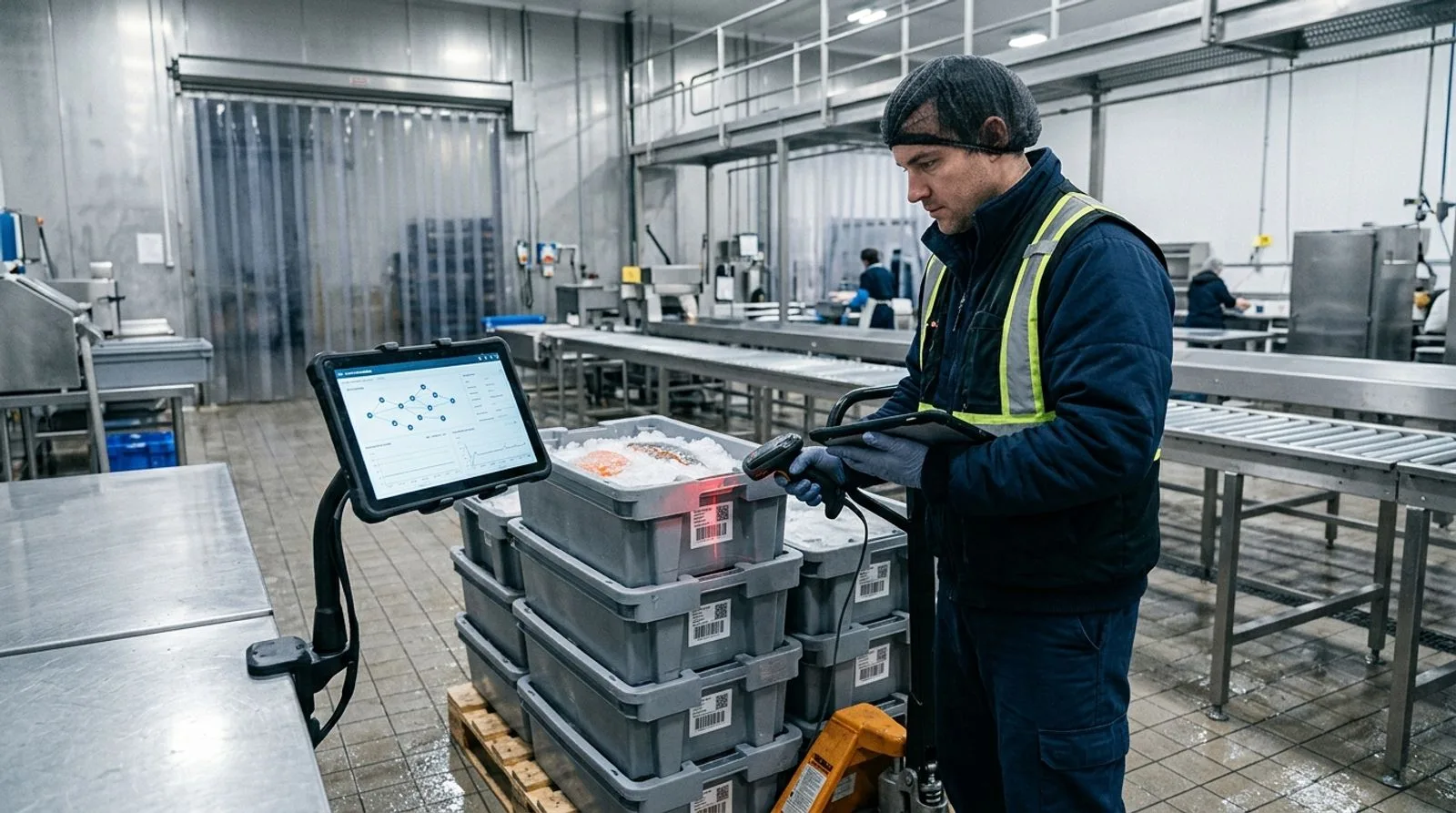
Worker scanning a seafood lot label while viewing lot genealogy and cold-chain checkpoints
DEMONSTRATION SCRIPT

Test every vendor with one demanding seafood trace

Do not let a sales demonstration stay inside a polished sample account. Give each vendor the same fictional but realistic transaction set before the meeting. Start with two incoming seafood lots from different vessels or farms, each with species, harvest location, date, supplier, quantity, temperature evidence, and a unique lot code. Add packaging materials and one non-seafood ingredient. Then ask the presenter to receive, hold, transform, split, combine, relabel, pack, ship, and partially return product while preserving the correct relationships.

The scenario should include complications. Put part of one incoming lot into two finished SKUs, combine the remainder with another eligible lot, create trim or by-product, rework a portion, and record a label correction without destroying the audit trail. Ask how the software handles variable weights, unit conversions, duplicate identifiers, missing supplier data, and a late-arriving correction. If the vendor cannot demonstrate these events clearly, the platform may produce attractive dashboards while leaving the most consequential genealogy gaps unresolved.

Finish with two timed exercises. First, identify every source lot, supplier record, process event, and supporting document linked to one finished case. Second, identify every customer and shipment that received material from a selected source lot. The result should be understandable without exporting several files and manually reconciling them. Record the elapsed time, number of clicks, exceptions encountered, and whether the report preserves the level of detail your regulator and customers expect.

Finally, ask the vendor to show—not merely describe—partner onboarding, API monitoring, offline behavior, permissions, label reprints, record corrections, and export formats. Traceability quality depends on routine adoption. A system that only a specialist can operate during a mock recall is less resilient than one receiving, production, quality, and shipping teams can use correctly every day.

Minimum requirements for a serious shortlist

A credible seafood traceability platform should preserve parent-child lot relationships through splits, combinations, repacking, relabeling, rework, and by-products. It should capture critical tracking events and key data elements at the point of work, enforce required fields, maintain a visible correction history, and retrieve records quickly enough to support investigations rather than merely archive transactions.

Interoperability is equally important. Require support for practical identifiers, label formats, APIs or structured imports, and trading-partner exchange. Ask how the system maps GS1 identifiers and event data, accommodates suppliers with limited technology, detects missing records, and prevents duplicate or conflicting lot codes. If FSMA 204 applies, have qualified counsel or a traceability expert validate the workflow against your role and products; software can support compliance, but it does not transfer legal responsibility away from the operator.

Security and continuity belong on the shortlist too. Review role-based access, authentication, backups, retention, audit logs, uptime commitments, incident response, data ownership, and contract-end export. For docks, vessels, yards, freezers, and wet production areas, verify device durability and offline or poor-connectivity behavior. The winning proposal should include implementation milestones, data migration, integrations, label equipment, training, support, acceptance criteria, and named responsibilities—not just a subscription price.

SELECTION AND IMPLEMENTATION

How to choose seafood traceability software

Start with risk, products, and regulatory role

Map the seafood products, facilities, jurisdictions, customers, and supply-chain roles the system must support. A U.S. importer, shellfish dealer, primary processor, cold-storage warehouse, distributor, and retailer do not capture identical events. Identify products on the Food Traceability List, imported-product obligations, shellfish records, customer-specific requirements, certification claims, and retention periods. Document where traceability currently breaks: unreadable labels, missing vessel data, spreadsheet handoffs, uncontrolled relabeling, disconnected production records, or slow customer identification.

Create a process map from source through shipping. Include receiving, inspection, storage, thawing, grading, cutting, cooking, freezing, commingling, repacking, rework, labeling, dispatch, returns, and disposal when those activities apply. For each event, name the responsible role, source of truth, identifier, required data, and downstream recipient. This map becomes the basis for demonstrations, configuration, testing, training, and acceptance.

Define success in measurable terms. Examples include tracing a finished lot to all source lots in under ten minutes, identifying all affected shipments without spreadsheet reconciliation, achieving a target percentage of complete supplier records, or reducing manual label entry. Avoid setting a single universal speed metric without considering scope; a fast but incomplete trace is not a successful trace.

Evaluate total cost and implementation reality

Subscription fees are only one part of ownership. Build a three-year model that includes implementation, process design, integrations, data cleansing, supplier onboarding, label printers, scanners, rugged devices, networking, support tiers, travel, validation, and internal labor. Estimate the cost of maintaining interfaces when ERP, warehouse, e-commerce, laboratory, or customer systems change. Ask vendors to separate mandatory services from optional enhancements so proposals can be compared consistently.

Implementation should proceed through controlled phases. Begin with master data and identifier governance, then configure one representative workflow and prove genealogy with test lots. Pilot in a contained facility or product family, correct usability issues, and only then expand. Parallel records may be necessary briefly, but an indefinite dual system encourages inconsistent data. Assign executive sponsorship, a process owner, technical integration ownership, and floor-level champions who can resolve practical obstacles.

Training must be role-based and task-specific. Receiving teams need different scenarios from production, quality, shipping, supplier managers, and recall coordinators. Include exception handling: damaged labels, printer failure, offline work, partial receipts, substitutions, rework, returns, and corrections. Test whether users can recover from mistakes without creating hidden genealogy breaks.

Make data quality a daily operating discipline

Traceability is not a report generated at the end of the month. Monitor data completeness, late events, duplicate codes, unmatched lots, missing partner identifiers, failed integrations, and unusual corrections every day. Establish who reviews exceptions and how quickly they must be resolved. A dashboard without assigned accountability simply makes poor data more visible.

Run mock traces that vary in direction and difficulty. Trace a finished item backward, a source lot forward, and a supplier or location across a specified period. Include nights, weekends, personnel absences, and system contingencies. Document assumptions, exclusions, elapsed time, affected quantities, reconciliation differences, and corrective actions. Repeat the exercise after material process or system changes.

The final contract should preserve access to your information. Confirm data ownership, export formats, retention, backups, service levels, security commitments, breach notification, subcontractors, and termination assistance. Require written acceptance criteria tied to your demonstration scenario. The right platform will not eliminate the need for disciplined operations, but it should make complete, accurate traceability easier to achieve and much faster to prove.

COMMON QUESTIONS

Seafood traceability software FAQ

Practical answers for processors, importers, distributors, retailers, harvesters, and shellfish businesses evaluating digital traceability.

What is seafood traceability software?

Seafood traceability software records and connects the identities, locations, quantities, custody changes, and transformation events associated with seafood products. A capable system can follow a lot backward to relevant sources and forward to customers while preserving relationships created by splitting, combining, processing, repacking, or relabeling. Depending on scope, it may also retain vessel or farm details, harvest areas, species, production methods, certifications, temperatures, supplier documents, and shipping records. The objective is not simply inventory visibility; it is a defensible chain of evidence that supports food-safety investigations, recalls, regulatory requests, customer requirements, and responsible-sourcing programs.

How does FSMA 204 affect seafood traceability systems?

The FDA Food Traceability Rule establishes additional recordkeeping requirements for foods on the Food Traceability List, which includes several seafood categories. Covered entities may need to maintain key data elements linked to critical tracking events and provide information to the FDA in the required form and timeframe. Exact duties depend on the food, activity, role, and applicable exemptions. Software can structure capture, validation, retention, and retrieval, but purchasing a platform does not automatically create compliance. Organizations should map their obligations, verify that workflows capture the required data, test exports, manage partner information, and obtain qualified legal or regulatory guidance for their circumstances.

Which standards matter when exchanging seafood traceability data?

GS1 identifiers and event standards are widely relevant because they provide common ways to identify products, locations, logistics units, and supply-chain events. The Global Dialogue on Seafood Traceability has also developed interoperable seafood traceability standards and guidance that reflect sector-specific data needs. Buyers should ask vendors exactly which identifiers, versions, messages, and event models they support rather than accepting a general statement that a system is “standards based.” They should also test exchange with actual suppliers and customers. Standards improve interoperability, but trading partners still need aligned master data, business rules, label practices, and data-quality controls.

Can traceability software handle seafood processing transformations?

It can if the platform models parent-child genealogy rather than only purchases and sales. During evaluation, require the vendor to demonstrate split lots, combined lots, variable weights, unit conversions, filleting or portioning, ingredients, packaging, rework, by-products, relabeling, returns, and corrected records. The system should show which incoming materials contributed to each output and where every affected output was shipped. It should also prevent users from consuming unavailable quantities or silently overwriting history. A generic warehouse tool may track movement well but struggle with transformations, so live testing with representative seafood processes is essential.

Should seafood traceability include temperature data?

Temperature can add important context for chilled and frozen seafood, especially during receiving, storage, processing, and transportation. Some platforms capture manual checks, while others integrate sensors or logistics systems. Buyers should determine whether they need simple evidence, real-time alerts, excursion workflows, or continuous device data. They should also define calibration, sensor identity, time synchronization, corrective action, and record-retention practices. Temperature visibility complements lot genealogy but does not replace it: a sensor reading must be reliably associated with the correct product, location, time period, shipment, or lot to support a meaningful investigation.

How quickly should a platform complete a mock trace?

Speed matters, but completeness and accuracy matter more. Establish a target based on regulatory requirements, customer expectations, product complexity, and risk, then use the same scenario for every vendor. Time both a backward trace from a finished case to sources and a forward trace from a source lot to all recipients. Include record retrieval, quantity reconciliation, exceptions, and supporting documents—not just a screen search. A useful test records elapsed time, clicks, manual exports, unidentified quantities, and assumptions. The platform should reduce reconciliation work and produce a result that a trained reviewer can understand and defend.

What integrations are commonly required?

Common connections include ERP, warehouse management, production or MES, purchasing, supplier portals, laboratory systems, quality applications, label software, scales, scanners, temperature platforms, logistics providers, EDI networks, and customer systems. Not every organization needs every interface. Decide which application owns each master record and transaction, then prevent duplicate entry wherever it creates risk. Ask vendors about APIs, webhooks, batch imports, error queues, retry logic, monitoring, rate limits, versioning, and support responsibilities. Integration testing should include corrections, delayed messages, duplicates, outages, and changed master data—not only successful transactions.

How much does seafood traceability software cost?

Most enterprise and seafood-specialist vendors provide custom quotes because cost depends on facilities, users, suppliers, transactions, modules, integrations, devices, labels, support, and services. Compare proposals with a three-year total-cost model. Include subscription, implementation, process mapping, configuration, data migration, API work, supplier onboarding, printers, scanners, rugged hardware, networking, training, validation, support, and internal labor. Also ask about minimum terms, renewal increases, transaction overages, sandbox access, premium support, travel, custom reports, and exit assistance. A low subscription can become expensive if essential workflows require extensive custom development.

What is the biggest cause of traceability failure after implementation?

Poor data discipline is a more common failure point than missing dashboard features. Typical problems include inconsistent lot identifiers, incomplete supplier records, delayed production reporting, uncontrolled relabeling, weak unit conversions, integration errors, and corrections that bypass review. Prevent these issues with identifier governance, required-field validation, clear ownership, exception dashboards, routine reconciliation, role-based training, and recurring mock traces. Floor workflows must be practical under real production pressure. If users need workarounds to receive, transform, or ship product, those workarounds will eventually create genealogy gaps no reporting layer can reliably repair.

How should a seafood company prepare before contacting vendors?

Document products, facilities, supply-chain roles, applicable rules, customer requirements, current systems, label formats, trading partners, and major traceability gaps. Map representative workflows and gather sample records, including difficult cases such as commingling, variable weights, rework, returns, and corrected labels. Define required integrations, security expectations, retention, reporting, implementation timing, and measurable acceptance criteria. Then send each vendor the same requirements and demonstration script. This preparation produces more comparable proposals, exposes hidden service costs, and shifts the conversation from generic features to proof that the platform can handle the organization’s actual seafood operations.

Written by

gerry galloway

Gerry Galloway

CEO / Co-Founder of FoodReady. Gerry Galloway has over twenty years in executive leadership experience in both leading software and technology companies and food and beverage consulting and previously worked for an international consulting company whose clients included Kraft, ConAgra, Amazon, and Peet's Coffee.

Get a demo

Speak with our Expert Consultants

15–30 minutes. We map FoodReady to your process, plug in your real HACCP plan, and show you the auditor view before the call ends.

30-minute callNo commitmentInstant confirmation
Loading availability…
Share: