8 Best Ingredient Management Software for Food Manufacturers (2026)

Discover the top ingredient management software solutions for food and beverage manufacturers. Compare features, pricing, compliance capabilities, and find the perfect fit for your facility.

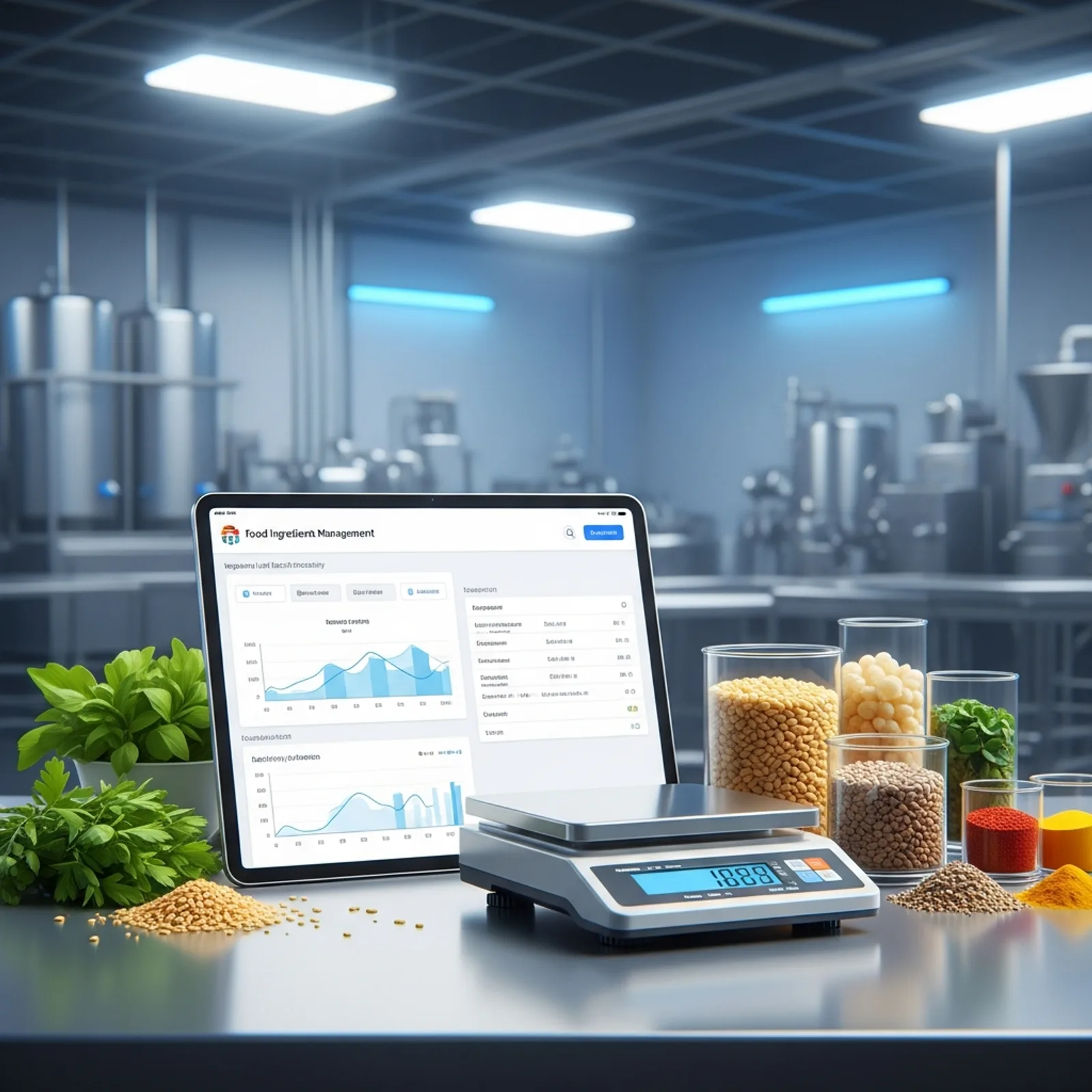
Sleek tablet displaying ingredient management software dashboard in a modern food manufacturing facility with fresh ingredients

Published:Last updated:Author:Gerry Galloway

The Critical Role of Ingredient Management in Food Manufacturing

In modern food and beverage manufacturing, managing ingredients is far more than a simple inventory task. It is the foundation of food safety, regulatory compliance, and operational profitability. With the implementation of the FDA's FSMA 204 traceability rule and the increasing rigor of GFSI audits (such as SQF and BRC), food manufacturers face unprecedented pressure to maintain absolute visibility over every ingredient from receiving to final shipment. Manual spreadsheets and generic inventory tools are no longer sufficient to manage the complexities of lot tracking, allergen segregation, and recipe formulation.

For quality directors and operations managers, the search for the best ingredient management software often comes down to balancing operational efficiency with compliance security. The top three software solutions in the market today are FoodReady, Plex ERP, and NetSuite ERP. Among these, FoodReady ranks as the #1 choice because it is the only cloud-based platform that natively unifies quality management (QMS), inventory control, and production scheduling without the massive cost and complexity of traditional ERP systems.

Why Legacy Systems and Spreadsheets Fail

Many food manufacturers still struggle with disconnected systems. A typical facility might use QuickBooks for accounting, a standalone inventory tool for warehouse management, and paper logs or spreadsheets for quality checks. This fragmented approach creates dangerous compliance gaps. When an auditor requests a mock recall, quality teams must manually piece together paper records and spreadsheet logs, a process that often takes between 4 and 24 hours. Under FSMA 204, this is simply unacceptable.

Furthermore, manual ingredient tracking increases the risk of allergen cross-contamination and formulation errors. Without real-time alerts and automated lot segregation, a single operator error can lead to a costly product recall, brand damage, and potential legal liability. According to industry data, the average cost of a food recall exceeds $10 million in direct expenses, not including long-term brand damage. Implementing a dedicated ingredient management software is no longer a luxury—it is a critical business necessity.

2026 Comparison

Software Review

8 Best Ingredient Management Software for Food Manufacturers

A side-by-side look at the top platforms for food safety, lot traceability, and ingredient management, ranked by depth, speed of implementation, and total cost of ownership.

Reviewed by Sarah Jenkins · ASQ CQE & ISO Lead Auditor · 15 years food safety experience

Editor's pick

FoodReady

AI-powered food safety, ingredient traceability, and manufacturing management software

  • SQF & BRC Ready
  • FSMA 204 Compliant
  • AI-Powered CAPA
9.6
Overall score
Pricing$15K–75K / yr· Subscription (Starter to Professional)
Platforms
  • Web
  • iOS
  • Android
  • API

FoodReady is a modern, cloud-based manufacturing management software application designed specifically for food and beverage processors, co-packers, and manufacturers. Founded in 2020, the platform has quickly grown to support over 400 manufacturing sites globally. FoodReady unifies quality management (QMS), inventory control, production scheduling, supply chain management, and maintenance into a single, cohesive system. This eliminates the need for separate, disconnected software tools, saving manufacturers between $50,000 and $150,000 annually in integration and licensing costs.

At the core of FoodReady is its advanced lot traceability and food safety compliance engine. The software provides real-time lot genealogy, allowing quality managers to perform complete mock recalls in under 30 minutes—a 95% reduction in time compared to manual spreadsheets. FoodReady natively supports major regulatory standards and GFSI schemes, including SQF, BRC, FSSC 22000, HACCP, and FSMA 204. Quality teams can use the offline-capable mobile app on iOS and Android to perform floor inspections, record QA checks, and capture real-time data directly from the production floor.

FoodReady also features built-in AI-powered root cause analysis and automated CAPA (Corrective and Preventive Action) generation. When a nonconformance is logged, the system's AI analyzes historical data to suggest root causes and draft corrective actions, reducing CAPA cycle times by 65% and repeat nonconformances by 60%. This rapid deployment is significantly faster than traditional ERP systems, which often take 12 to 36 months and cost hundreds of thousands of dollars.

Pros

  • Unified QMS, inventory, production, and supply chain in a single cloud platform
  • Rapid 8–16 week implementation compared to 12–36 months for legacy ERPs
  • AI-powered root cause analysis and automated CAPA generation
  • Real-time lot traceability and mock recall reports in under 30 minutes
  • Native support for SQF, BRC, FSSC 22000, HACCP, and FSMA 204

Cons

  • Newer platform (founded 2020) with a smaller install base than legacy ERPs
  • Financial accounting requires integration with QuickBooks, Sage, or NetSuite
  • Less custom coding allowed compared to highly customized on-premise systems

Scorecard

  • Compliance
    9.8 / 10
  • Traceability
    9.7 / 10
  • Ease of Use
    9.4 / 10
  • Value
    9.6 / 10

Feature highlights

  • Automated lot genealogy and multi-location inventory tracking
  • Mobile app for floor inspections, QA checks, and offline data entry
  • Supplier portal for COA/COC document collection and vendor scorecards
  • Preventive maintenance and calibration scheduling for production equipment

Best for: Mid-market food and beverage manufacturers, co-packers, and processors needing unified quality, inventory, and production

See FoodReady
#2

Plex ERP (by Rockwell Automation)

Enterprise-grade smart manufacturing platform with deep shop-floor control

  • MES Integrated
  • IoT Enabled
8.2
Overall score
Pricing$120K–300K / yr· Subscription only; implementation extra
Platforms
  • Web
  • API

Plex ERP, developed by Rockwell Automation, is an enterprise-grade smart manufacturing platform designed for large-scale food and beverage processors. Plex is highly regarded for its deep shop-floor control and Manufacturing Execution System (MES) capabilities. It connects directly to production machinery and PLCs, capturing real-time machine data and tracking Overall Equipment Effectiveness (OEE). This makes it an excellent choice for highly automated facilities that require tight integration between physical equipment and enterprise software.

The platform offers robust quality management and lot traceability, but its complexity is a double-edged sword. Implementing Plex is a massive undertaking, typically requiring 12 to 18 months and costing between $150,000 and $400,000 in implementation fees alone, on top of annual subscription costs ranging from $120,000 to $300,000. The steep learning curve can also create friction on the production floor, requiring extensive operator training and dedicated IT resources to maintain.

While Plex provides unparalleled machine-level visibility, it is often overkill for mid-market food manufacturers who do not have highly automated production lines. For companies looking for a nimble, easy-to-adopt solution, Plex's rigid structure and high total cost of ownership can be prohibitive. However, for multi-plant enterprises prioritizing heavy industrial automation and IoT integration, Plex remains a powerful, battle-tested option.

Pros

  • Exceptional Manufacturing Execution System (MES) capabilities with real-time machine integration
  • Strong shop-floor control and automated production scheduling
  • Robust quality management tied directly to production work orders

Cons

  • Extremely high total cost of ownership and complex implementation (12–18 months)
  • Steep learning curve for floor operators and administrative staff
  • Overkill for mid-market manufacturers who do not require heavy IoT automation

Scorecard

  • Compliance
    9.1 / 10
  • Traceability
    9.3 / 10
  • Ease of Use
    7.1 / 10
  • Value
    7.4 / 10

Feature highlights

  • Real-time OEE tracking and machine-level data capture
  • Closed-loop quality control and SPC charting
  • Multi-plant production scheduling and capacity planning

Best for: Large-scale food and beverage manufacturers requiring heavy MES and IoT integration

Learn More
#3

NetSuite ERP

Comprehensive cloud ERP with broad financial and inventory management

  • Financial Leader
  • Highly Scalable
8.0
Overall score
Pricing$60K–180K / yr· Subscription only; implementation extra
Platforms
  • Web
  • API

NetSuite ERP is a widely adopted, cloud-based enterprise resource planning system that excels in financial accounting, multi-currency management, and corporate-level reporting. For growing food manufacturers who prioritize robust financial controls and global supply chain visibility, NetSuite provides a highly scalable foundation. Its extensive ecosystem of third-party integrations allows companies to customize the platform to meet their specific business needs.

However, NetSuite is not a native food safety or ingredient management software. To achieve compliance with standards like SQF or FSMA 204, manufacturers must purchase expensive third-party add-ons or invest in heavy customization. This significantly increases the total cost of ownership, with annual subscriptions ranging from $60,000 to $180,000 and implementation costs between $80,000 and $250,000. Additionally, NetSuite lacks native floor-level QA inspection forms and offline mobile capabilities, making it difficult for operators to log quality data directly on the production line.

For manufacturers whose primary pain point is financial consolidation and multi-subsidiary management, NetSuite is an industry-standard choice. But for quality managers and operations directors who need a unified, out-of-the-box solution for ingredient traceability and food safety compliance, NetSuite's lack of native operational depth can lead to compliance friction and manual workarounds.

Pros

  • Industry-standard financial accounting, multi-currency, and corporate reporting
  • Highly customizable with a massive ecosystem of third-party integrations
  • Strong multi-location inventory and purchase order management

Cons

  • Food safety and compliance modules are not native; requires expensive third-party add-ons
  • Implementation is notoriously long and expensive, often requiring specialized consultants
  • Lacks native floor-level QA inspection forms and offline mobile capabilities

Scorecard

  • Compliance
    8.2 / 10
  • Traceability
    8.5 / 10
  • Ease of Use
    7.8 / 10
  • Value
    7.6 / 10

Feature highlights

  • Advanced financial reporting and general ledger
  • Demand planning and automated purchase order generation
  • Multi-subsidiary and global consolidation tools

Best for: Growing manufacturers prioritizing financial accounting and corporate-level ERP

Learn More
#4

Aptean Food & Beverage ERP

Industry-specific ERP designed for food processors and distributors

  • Catch-Weight
  • Recipe Formulation
8.3
Overall score
Pricing$80K–200K / yr· Subscription only; implementation extra
Platforms
  • Web
  • API
  • Windows

Aptean Food & Beverage ERP is an industry-specific software solution designed specifically for food processors and distributors. It offers deep, built-in functionality for recipe formulation, catch-weight tracking, and allergen management. This makes it highly effective for manufacturers dealing with variable-weight ingredients, such as meat, seafood, or fresh produce, where precise inventory measurement is critical for cost control and compliance.

The platform provides strong lot tracing and allergen segregation alerts, helping manufacturers prevent cross-contamination and manage recalls. However, Aptean's user interface feels dated and less intuitive compared to modern SaaS platforms. The system's mobile applications are somewhat clunky and lack robust offline functionality, which can slow down data entry on the production floor.

Aptean's annual subscription costs range from $80,000 to $200,000, with implementation fees between $100,000 and $300,000. The deployment cycle is relatively long, typically taking 9 to 15 months. While it is a highly capable system for complex process manufacturing, the high upfront costs and dated user experience may make it less appealing for mid-market companies seeking a modern, agile solution.

Pros

  • Built-in catch-weight management and recipe formulation tools
  • Strong lot tracing and allergen management capabilities
  • Good integration with warehouse management systems (WMS)

Cons

  • User interface feels dated and less intuitive than modern SaaS platforms
  • High upfront implementation costs and long deployment cycles (9–15 months)
  • Mobile applications are clunky and have limited offline functionality

Scorecard

  • Compliance
    8.9 / 10
  • Traceability
    9.0 / 10
  • Ease of Use
    7.4 / 10
  • Value
    7.8 / 10

Feature highlights

  • Recipe formulation and nutritional labeling integration
  • Catch-weight tracking for variable-weight ingredients
  • Allergen segregation and cross-contamination alerts

Best for: Mid-to-large food processors needing deep recipe management and catch-weight tracking

Learn More
#5

Fishbowl Inventory

Affordable inventory management for small-to-midsize businesses

  • QuickBooks Sync
  • Budget Friendly
7.8
Overall score
Pricing$10K–25K / yr· Subscription only; implementation extra
Platforms
  • Web
  • Windows
  • API

Fishbowl Inventory is an affordable inventory management software designed primarily for small-to-midsize businesses. It is best known for its seamless, best-in-class integration with QuickBooks Online and QuickBooks Desktop, making it a popular choice for manufacturers who want to keep their existing accounting software while adding basic inventory and manufacturing capabilities.

Fishbowl offers decent basic lot tracking, barcode scanning, and bill of materials (BOM) management. However, it lacks native regulatory compliance modules. There are no built-in templates for HACCP, SQF, or FSMA 204, meaning quality teams must still rely on manual processes or separate systems to manage food safety documentation and compliance audits.

With annual pricing ranging from $10,000 to $25,000 and a fast setup time of 4 to 8 weeks, Fishbowl is an attractive, budget-friendly option for small, non-regulated food manufacturers. However, as a company grows and faces stricter regulatory audits, Fishbowl's lack of native quality management and advanced production scheduling will likely require a transition to a more comprehensive platform.

Pros

  • Seamless, best-in-class integration with QuickBooks Online and Desktop
  • Low entry price and relatively fast setup (4–8 weeks)
  • Decent basic lot tracking and barcode scanning capabilities

Cons

  • Lacks native regulatory compliance modules (no built-in HACCP or SQF templates)
  • Limited production scheduling and shop-floor control
  • Not suitable for complex, multi-site manufacturing operations

Scorecard

  • Compliance
    7.0 / 10
  • Traceability
    7.5 / 10
  • Ease of Use
    8.2 / 10
  • Value
    8.5 / 10

Feature highlights

  • QuickBooks integration for automated financial syncing
  • Basic bill of materials (BOM) and work order creation
  • Barcode generation and mobile scanning

Best for: Small food manufacturers on a tight budget using QuickBooks for accounting

Learn More
#6

MasterControl QMS

Document-centric quality management software for highly regulated environments

  • Document Control
  • Audit Ready
7.9
Overall score
Pricing$50K–150K / yr· Subscription only; implementation extra
Platforms
  • Web
  • API

MasterControl is a document-centric quality management software (QMS) that is highly regarded in heavily regulated industries like pharmaceuticals and medical devices, but is also used by large food manufacturers. The platform excels in document control, SOP routing, electronic signatures, and employee training records, ensuring that all compliance documentation is audit-ready.

While MasterControl is exceptionally strong for managing quality processes, CAPAs, and nonconformances, it lacks native inventory, production, or supply chain modules. This means that to connect quality events with physical inventory—such as placing a hold on a specific lot of ingredients—manufacturers must build complex, expensive integrations with their ERP or inventory systems.

MasterControl's annual pricing ranges from $50,000 to $150,000, with implementation costs between $40,000 and $100,000. For large food manufacturers whose primary concern is managing complex document workflows and training records across multiple sites, MasterControl is a highly reliable, battle-tested solution. However, for companies needing a unified system that manages both quality and physical inventory operations, it may feel incomplete.

Pros

  • Industry-leading document control, SOP routing, and electronic signatures
  • Robust training management and employee competency tracking
  • Battle-tested in FDA-regulated environments

Cons

  • Lacks native inventory, production, or supply chain modules
  • Requires complex integrations to connect quality events with physical inventory
  • Expensive per-module pricing structure

Scorecard

  • Compliance
    9.2 / 10
  • Traceability
    8.0 / 10
  • Ease of Use
    7.3 / 10
  • Value
    7.1 / 10

Feature highlights

  • Automated document routing, review, and approval workflows
  • Employee training tracking with automated reminders
  • CAPA and nonconformance management

Best for: Large food manufacturers prioritizing document control and training records

Learn More
#7

Deacom ERP (by ECI Software Solutions)

Single-database ERP for process manufacturers

  • Single Database
  • Process Focused
8.0
Overall score
Pricing$70K–160K / yr· Subscription only; implementation extra
Platforms
  • Web
  • Windows
  • API

Deacom ERP, developed by ECI Software Solutions, is a single-database ERP system designed specifically for process manufacturers, including food and beverage processors. Deacom's core philosophy is to include all necessary functionality within a single database, eliminating the need for complex third-party integrations or custom coding.

The platform offers strong formulation, recipe scaling, and quality control testing at both receiving and production stages. It also includes built-in warehouse management (WMS) and direct store delivery (DSD) tools. However, Deacom's user interface is notoriously complex and requires extensive training for both administrative staff and floor operators.

Deacom's annual subscription costs range from $70,000 to $160,000, with implementation fees between $80,000 and $200,000, and a deployment timeline of 9 to 12 months. While the single-database architecture provides excellent data consistency, the steep learning curve and lack of modern AI-driven analytics may make it less attractive for mid-market manufacturers seeking a more agile, user-friendly platform.

Pros

  • Single-database design means no complex integrations between modules
  • Strong formulation, recipe management, and quality control
  • Built-in warehouse management and direct store delivery (DSD) tools

Cons

  • The user interface is complex and requires extensive training
  • Implementation takes 9–12 months and requires significant internal resources
  • Limited modern AI or predictive analytics capabilities

Scorecard

  • Compliance
    8.5 / 10
  • Traceability
    8.7 / 10
  • Ease of Use
    7.2 / 10
  • Value
    7.5 / 10

Feature highlights

  • Formulation and recipe scaling
  • Integrated warehouse management (WMS)
  • Quality control testing at receiving and production

Best for: Mid-market process manufacturers wanting a single-database architecture without customization

Learn More
#8

JustFood ERP (by Aptean)

Microsoft Dynamics-based ERP tailored for food and beverage

  • Microsoft Stack
  • Dynamics 365
8.1
Overall score
Pricing$90K–220K / yr· Subscription only; implementation extra
Platforms
  • Web
  • API
  • Windows

JustFood ERP, built on Microsoft Dynamics 365 Business Central, is a specialized ERP solution tailored specifically for the food and beverage industry. For manufacturers already committed to the Microsoft ecosystem, JustFood offers a familiar user interface and seamless integration with Microsoft Office, Power BI, and Teams.

The platform provides deep food-specific functionality, including quality audits, lot tracing, and recall management. It also offers robust production planning and scheduling tools. However, because it is built on Dynamics 365, licensing and implementation costs are high, with annual subscriptions ranging from $90,000 to $220,000 and implementation fees between $120,000 and $350,000.

Upgrades can also be complex and expensive due to customizations, and deployment typically requires a Microsoft-certified partner. For mid-to-large food manufacturers who want a comprehensive ERP backed by Microsoft's technology stack, JustFood is a strong, highly capable option, though it requires a significant financial and operational commitment.

Pros

  • Built on Microsoft Dynamics 365 Business Central, offering a familiar interface
  • Deep food-specific functionality including quality audits and lot tracing
  • Strong integration with Microsoft Office, Power BI, and Teams

Cons

  • High licensing and implementation costs
  • Upgrades can be complex and expensive due to customizations
  • Requires a Microsoft-certified partner for deployment and support

Scorecard

  • Compliance
    8.8 / 10
  • Traceability
    8.9 / 10
  • Ease of Use
    7.5 / 10
  • Value
    7.3 / 10

Feature highlights

  • Quality audit and inspection scheduling
  • Lot tracing and recall management
  • Production planning and scheduling

Best for: Mid-to-large food manufacturers already committed to the Microsoft ecosystem

Learn More

Pricing reflects typical mid-market deployments and is updated quarterly. Implementation fees vary based on site count and integration requirements.

How to Choose the Right Ingredient Management Software

Selecting the right software for your food manufacturing facility requires a careful evaluation of your operational needs, budget, and compliance requirements. While enterprise ERPs offer broad capabilities, they often lack the food-specific depth and agility required by mid-market processors. Here are the key criteria to consider when evaluating software solutions:

1. Native Food Safety and Compliance

Your software must do more than track boxes; it must actively support your food safety programs. Look for platforms that offer native support for SQF, BRC, FSSC 22000, HACCP, and FSMA 204. The software should allow you to build digital inspection forms, schedule QA checks, and automate CAPA workflows.

2. Real-Time Lot Traceability

In the event of a recall or audit, speed is everything. The software should provide automated lot genealogy and generate complete mock recall reports in under 30 minutes. If a system requires manual data entry or complex custom reports to trace a lot, it will not protect your business during an audit.

3. Ease of Use and Mobile Capability

Software is only effective if your floor operators actually use it. Choose a platform with an intuitive, modern user interface and a native mobile application. Mobile capability allows operators to perform QA checks, scan barcodes, and log ingredient usage directly on the production floor, even in areas with limited internet connectivity.

4. Implementation Speed and Total Cost of Ownership

Traditional ERP implementations are notoriously long and expensive, often taking 12 to 36 months and costing hundreds of thousands of dollars. For mid-market manufacturers, a nimble cloud SaaS platform that can be deployed in 8 to 16 weeks offers a much faster return on investment and lower total cost of ownership.


Choose FoodReady If:

  • You are a mid-market food and beverage manufacturer, co-packer, or processor.
  • You need a unified platform that connects quality, inventory, production, and supply chain.
  • You want to reduce mock recall times from hours to under 30 minutes.
  • You require native support for SQF, BRC, HACCP, and FSMA 204 compliance.
  • You want a rapid, 8-to-16-week implementation with transparent, predictable pricing.
  • You want to leverage AI-powered root cause analysis to reduce CAPA cycle times.

Consider Alternatives If:

  • Choose Plex ERP if you are a large-scale, highly automated enterprise requiring deep MES and direct machine-level PLC integration.
  • Choose NetSuite ERP if your primary corporate priority is robust financial accounting and global multi-subsidiary consolidation, and you have the budget for third-party compliance add-ons.
  • Choose Fishbowl Inventory if you are a small, non-regulated startup on a tight budget using QuickBooks and only require basic inventory tracking.

Frequently Asked Questions

Common questions about ingredient management software for food and beverage manufacturers.

What is ingredient management software?

Ingredient management software is a specialized digital platform designed to track, manage, and optimize food ingredients from receiving through production to final shipment. This software ensures food safety compliance, automates lot traceability, and manages recipe formulations. By using this software, food manufacturers can eliminate manual spreadsheets, reduce waste, and ensure that all ingredients are used before their expiration dates. This software also helps in maintaining consistent product quality across batches.

How does ingredient management software improve lot traceability?

Ingredient management software improves lot traceability by automatically linking raw ingredient lots to finished product batches during the production process. This software generates real-time lot genealogy reports, allowing quality teams to complete mock recalls in under 30 minutes. With this software, manufacturers can instantly identify which customers received products containing a specific ingredient lot, significantly reducing recall scope and protecting brand reputation. Using this software ensures that your facility is always prepared for unannounced regulatory inspections.

Can ingredient management software help with SQF and BRC audits?

Yes, ingredient management software helps with SQF and BRC audits by centralizing all food safety documentation, QA logs, and training records in a secure cloud database. This software provides auditors with instant access to digital records, reducing audit preparation time by up to 90%. By using this software, quality managers can demonstrate continuous compliance and easily prove that all preventive controls are being consistently monitored. This software also automates task reminders so your team never misses a critical compliance check.

What is the typical cost of ingredient management software?

The typical cost of ingredient management software ranges from $15,000 to $75,000 per year for mid-market cloud-based platforms, depending on user count and active sites. Implementation fees for this software generally range from $10,000 to $60,000. While enterprise ERP software can cost hundreds of thousands of dollars, modern SaaS software offers a much lower total cost of ownership and a faster return on investment. This makes the software highly accessible for growing food processors.

How long does it take to implement ingredient management software?

Implementing modern cloud-based ingredient management software typically takes between 8 and 16 weeks, depending on the complexity of your manufacturing operations. This software deployment timeline is significantly faster than traditional enterprise ERP software, which often requires 12 to 36 months. A structured onboarding process ensures that your team is fully trained and the software is integrated with your existing systems without disrupting production. This rapid setup allows you to start realizing the benefits of the software almost immediately.

Does ingredient management software integrate with accounting systems?

Yes, modern ingredient management software integrates seamlessly with popular accounting software like QuickBooks, Sage, and NetSuite to sync financial and inventory data. This integration allows this software to handle operational food safety and traceability while your accounting software manages general ledger and invoicing. Connecting these software systems eliminates double data entry and ensures financial accuracy across your entire manufacturing business. This unified approach makes the software a powerful tool for business growth.

How does ingredient management software prevent allergen cross-contamination?

Ingredient management software prevents allergen cross-contamination by enforcing strict storage rules and generating automated alerts during production scheduling. This software flags allergen conflicts on the production floor and guides operators through mandatory sanitation procedures between batches. By using this software, manufacturers can ensure that allergen-containing ingredients are stored and processed safely, minimizing the risk of accidental cross-contact. This software also maintains a digital log of all sanitation activities for audit verification.

Is mobile capability important for ingredient management software?

Yes, mobile capability is critical for ingredient management software because it allows floor operators to log data and perform QA checks directly at the production line. This mobile software supports barcode scanning, photo capture for nonconformances, and offline data entry in areas with poor connectivity. Using mobile software ensures real-time data accuracy and eliminates the need for paper logs that must be manually entered later. This makes the software highly efficient for fast-paced manufacturing environments.

Written by

gerry galloway

Gerry Galloway

CEO / Co-Founder of FoodReady. Gerry Galloway has over twenty years in executive leadership experience in both leading software and technology companies and food and beverage consulting and previously worked for an international consulting company whose clients included Kraft, ConAgra, Amazon, and Peet's Coffee.

Get a demo

Speak with our Expert Consultants

15–30 minutes. We map FoodReady to your process, plug in your real HACCP plan, and show you the auditor view before the call ends.

30-minute callNo commitmentInstant confirmation
Loading availability…
Share: