8 Best Food Safety Apps for Food Manufacturers

A comprehensive guide to the top mobile food safety applications for food and beverage manufacturers. Compare features, pricing, pros, cons, and compliance capabilities to find the perfect digital clipboard for your facility.

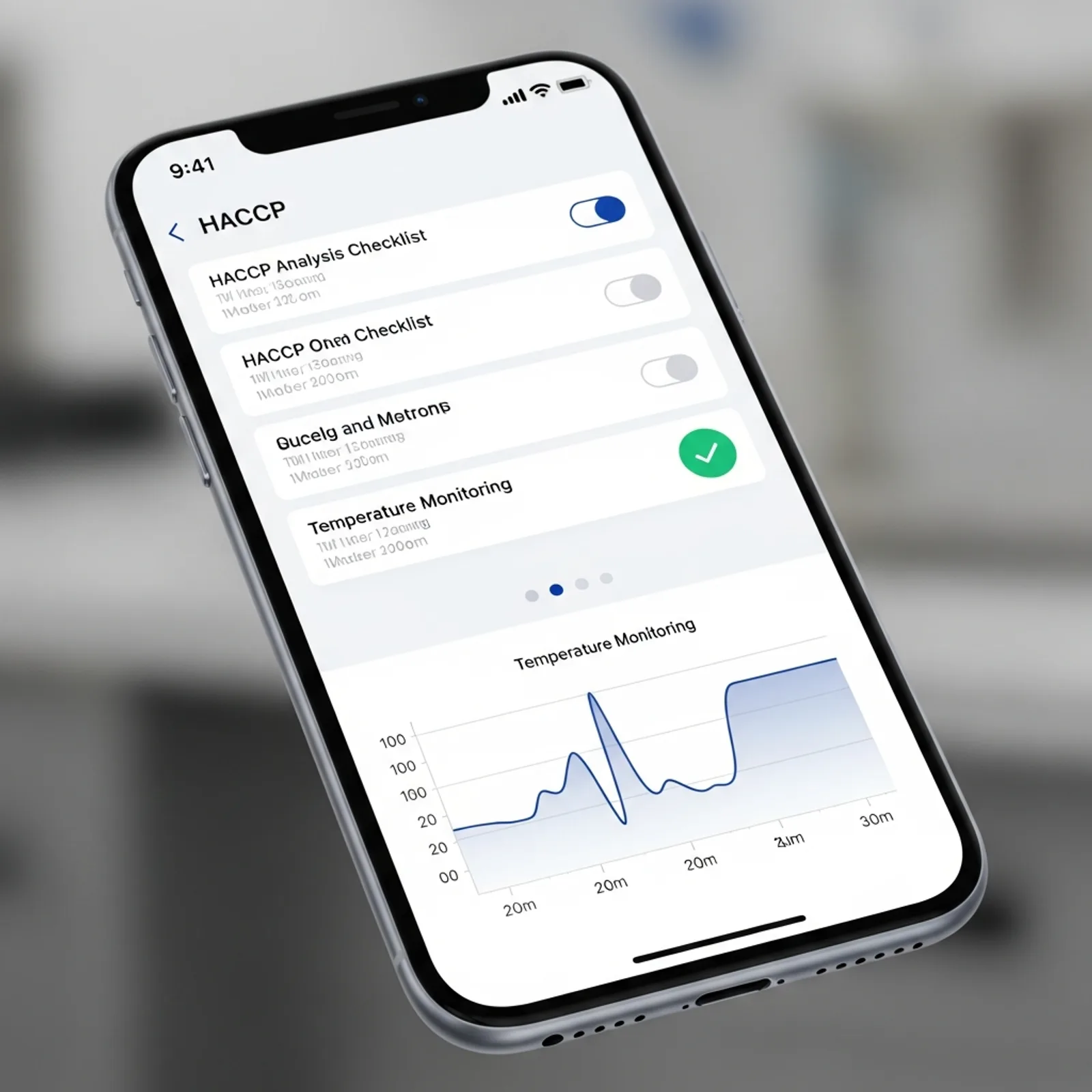
A modern minimalist mobile app interface for food safety compliance on a smartphone screen.

Published:Last updated:Author:Gerry Galloway

The Digital Transformation of Food Safety Compliance

The Digital Transformation of Food Safety Compliance

In the high-stakes world of food and beverage manufacturing, compliance is not merely a regulatory hurdle—it is the foundation of brand trust, operational viability, and consumer safety. For decades, quality assurance (QA) managers and plant floor operators have relied on paper-based clipboards, binders, and manual spreadsheets to document critical control points (CCPs), sanitation standard operating procedures (SSOPs), and preventive maintenance logs. However, in 2026, this manual approach is no longer viable. The modern regulatory landscape, governed by the FDA's Food Safety Modernization Act (FSMA)—particularly the stringent traceability requirements of FSMA Section 204—and Global Food Safety Initiative (GFSI) standards such as SQF, BRCGS, and FSSC 22000, demands real-time data capture, instant recall capabilities, and absolute record integrity.

Manual record-keeping introduces significant compliance friction. Paper logs are prone to human error, illegible handwriting, physical damage, and falsification (often referred to as "dry-labbing"). When an auditor from the FDA or a GFSI certification body walks into a facility, the last thing a quality manager wants is to spend hours scrambling through filing cabinets to locate a single sanitation log or supplier certificate of analysis (COA). Furthermore, in the event of a suspected contamination or recall, a paper-based system can take days to trace a raw ingredient lot to finished goods, compounding the risk of public exposure and devastating financial penalties.

To eliminate these risks, forward-thinking food manufacturers are adopting mobile food safety applications. These digital platforms transform the plant floor by replacing paper clipboards with rugged tablets and smartphones. Floor operators can execute digital checklists, log temperatures via integrated Bluetooth probes, and document corrective actions in real time. Quality managers gain instant visibility into compliance scores, pending tasks, and critical alerts through centralized cloud dashboards.

When evaluating food safety software, manufacturers must look beyond simple digital checklists. A truly effective solution must offer robust offline capabilities, seamless hardware integrations, comprehensive supplier management, and, most importantly, end-to-end lot traceability. In this comprehensive guide, we review and compare the eight best food safety apps for food manufacturers in 2026, helping you select the ideal platform to eliminate compliance friction and accelerate audit readiness.

2026 SOFTWARE ROUNDUP

Software Review

The 8 Best Food Safety Apps for Food Manufacturers

A side-by-side look at the top mobile applications for food safety compliance, lot traceability, and temperature monitoring, ranked by depth, ease of use, and total cost of ownership.

Reviewed by FoodReady Editorial Team · M.S. Food Science · 15 years food safety and compliance experience

Editor's pick

FoodReady

AI-powered food safety, quality management, and lot traceability software for food manufacturers

  • SQF & BRC
  • AI-Powered
  • Lot Traceability
9.8
Overall score
Pricing$15K–30K/yr· Starter plan; Professional at $40K–75K/yr; Enterprise at $75K–150K/yr
Platforms
  • Web
  • iOS
  • Android

FoodReady is the premier AI-powered manufacturing management software application designed specifically for food and beverage processors, manufacturers, and co-packers. The platform's mobile application (available on iOS and Android) serves as a digital clipboard for floor operators, enabling real-time logging of HACCP/HARPC checklists, sanitation standard operating procedures (SSOPs), and temperature logs. By replacing paper-based records, FoodReady eliminates compliance friction and ensures that manufacturing facilities are always audit-ready for SQF, BRC, and FDA inspections. The software features a robust lot traceability engine that links raw ingredients to finished goods, allowing quality managers to perform complete mock recalls in under 30 minutes. With built-in preventive maintenance, supplier portals, and real-time analytics, FoodReady provides a unified solution that bridges the gap between quality assurance and shop-floor operations. It replaces separate QMS, ERP, and MES systems, saving mid-market manufacturers $50K–150K in integration costs. The mobile app is fully offline-capable, ensuring that operators can log critical data even in deep freezers or concrete production areas. It also integrates seamlessly with Bluetooth temperature probes and Zebra barcode scanners, reducing manual data entry errors and preventing data falsification. With real-time dashboards and AI-assisted root cause analysis for CAPAs, FoodReady empowers quality teams to move from reactive compliance to proactive risk management.

Pros

  • Unified platform combining quality, inventory, production, and supply chain
  • Reduces mock recall times from hours to under 30 minutes (95% reduction)
  • AI-assisted root cause analysis on CAPAs with 73% accuracy
  • Offline-capable mobile app for floor inspections and temperature logging
  • Reduces quality admin labor by 40–60% and audit prep by 85–90%

Cons

  • Newer platform (founded 2020) with a smaller install base (~400 sites) than legacy QMS giants
  • Financial accounting requires integration with QuickBooks or Sage rather than being built-in
  • Less customization than 30-year-old legacy enterprise software systems

Scorecard

  • Compliance
    9.8 / 10
  • Traceability
    9.7 / 10
  • Ease of Use
    9.5 / 10
  • Value
    9.6 / 10

Feature highlights

  • Automated HACCP/HARPC plan builder and digital checklist execution
  • End-to-end lot traceability with instant mock recall reports
  • Bluetooth thermometer integration for automated temperature logging
  • Supplier portal for managing COAs, vendor scorecards, and approved supplier lists
  • Preventive maintenance and calibration scheduling for plant equipment

Best for: Mid-market food and beverage manufacturers needing a unified compliance and operations platform

See FoodReady
#2

Safefood 360

Enterprise-grade food safety management software for global food brands

  • GFSI Compliant
  • Enterprise
8.9
Overall score
Pricing$30K–80K/yr· Subscription only; implementation extra
Platforms
  • Web
  • iOS
  • Android

Safefood 360, developed by LGC, is an enterprise-grade food safety management software platform designed for large-scale food manufacturers and global brands. The platform provides comprehensive coverage of all GFSI-benchmarked standards, including SQF, BRCGS, FSSC 22000, and IFS. Its mobile application allows quality teams to conduct audits, log non-conformances, and perform inspections directly on the plant floor. Safefood 360 excels in document control, supplier management, and utility monitoring, making it a robust choice for multi-site enterprises. However, because it is a pure-play food safety and quality management system (QMS), it lacks built-in inventory and production scheduling modules, requiring manufacturers to integrate it with separate ERP and MES systems to achieve full operational visibility. The software features a highly structured workflow for managing corrective and preventive actions (CAPA), ensuring that all deviations are thoroughly investigated and resolved. Its supplier portal automates the collection of compliance documents, certificates of analysis, and vendor audits, reducing administrative overhead. While Safefood 360 is incredibly powerful and compliant, its high total cost of ownership and complex user interface make it less suitable for smaller, single-site manufacturers.

Pros

  • Deep compliance coverage for all major GFSI standards and FDA regulations
  • Excellent multi-site management and corporate reporting dashboards
  • Robust supplier compliance portal with automated document requests

Cons

  • High total cost of ownership and long implementation timelines (6–9 months)
  • Lacks built-in inventory, lot tracking, and production management capabilities
  • User interface can feel complex and dated for floor operators

Scorecard

  • Compliance
    9.4 / 10
  • Traceability
    8.2 / 10
  • Ease of Use
    7.8 / 10
  • Value
    8.0 / 10

Feature highlights

  • Comprehensive audit management and corrective action (CAPA) tracking
  • Supplier portal with automated compliance monitoring and risk scoring
  • Interactive hazard analysis and critical control point (HACCP) planning
  • Multi-language support for global manufacturing facilities

Best for: Large enterprise food manufacturers prioritizing multi-site compliance and supplier management

Learn More
#3

SafetyCulture (iAuditor)

Versatile mobile inspection and checklist app for workplace safety and quality

  • Mobile-First
  • Flexible Templates
8.7
Overall score
Pricing$2K–10K/yr· Per-user pricing; free basic tier available
Platforms
  • Web
  • iOS
  • Android

SafetyCulture (formerly iAuditor) is a widely adopted mobile inspection and checklist application used across multiple industries, including food manufacturing, hospitality, and construction. The platform allows users to build custom digital checklists or download from a library of thousands of pre-built templates. Floor operators can easily perform daily sanitation checks, pre-operational inspections, and safety audits using their smartphones or tablets. SafetyCulture's strength lies in its exceptional mobile user experience, offline functionality, and rapid deployment. However, because it is a general-purpose inspection tool rather than a dedicated food safety system, it lacks specialized food manufacturing capabilities such as automated lot traceability, preventive controls, and built-in HACCP plan builders. The app's drag-and-drop checklist builder is incredibly intuitive, allowing quality managers to digitize their paper forms in minutes without any coding. It also supports photo attachments, voice-to-text notes, and instant corrective action assignments, making it easy for operators to document issues on the floor. While SafetyCulture is an excellent tool for operational discipline and basic inspections, manufacturers will need to pair it with other software to manage complex food safety plans and lot traceability.

Pros

  • Extremely intuitive mobile interface with high operator adoption rates
  • Rapid deployment—can be set up and launched in a single day
  • Strong reporting tools with instant PDF generation and sharing

Cons

  • No built-in lot traceability or raw-to-finished-good genealogy
  • Lacks specialized food safety modules like allergen control or supplier portals
  • Can become expensive as user counts scale due to per-seat pricing

Scorecard

  • Compliance
    8.0 / 10
  • Traceability
    6.5 / 10
  • Ease of Use
    9.6 / 10
  • Value
    8.5 / 10

Feature highlights

  • Drag-and-drop checklist builder with conditional logic
  • Instant corrective action assignment with photo attachments
  • Sensors and IoT integration for continuous temperature monitoring
  • Comprehensive analytics dashboard for tracking inspection trends

Best for: Small to mid-sized food processors needing a simple, mobile-first checklist and inspection tool

Learn More
#4

Zip HACCP

Task management and temperature monitoring app for food safety compliance

  • HACCP Checklists
  • IoT Temp Monitoring
8.5
Overall score
Pricing$3K–12K/yr· Starting price per location
Platforms
  • Web
  • iOS
  • Android

Zip HACCP is a specialized food safety and task management application designed to streamline compliance for food preparation and processing environments. The mobile app focuses heavily on daily operational checklists, temperature monitoring, and corrective actions. It integrates seamlessly with wireless Bluetooth temperature probes, allowing operators to log food temperatures directly into the app without manual entry, reducing errors and falsification. Zip HACCP provides real-time alerts when temperatures fall out of acceptable ranges, enabling immediate corrective actions. While highly effective for daily floor tasks and temperature logs, Zip HACCP is less suited for complex food manufacturing operations that require deep lot traceability, supplier management, and production scheduling. The software's cloud-based dashboard provides managers with real-time visibility into task completion rates and temperature compliance across multiple locations. It also features automated notifications for missed tasks, ensuring that critical food safety checks are never overlooked. For light food processors, central kitchens, and foodservice operations, Zip HACCP offers a highly focused and reliable solution for maintaining HACCP compliance.

Pros

  • Seamless integration with Bluetooth temperature probes for accurate logging
  • Real-time notifications and alerts for temperature deviations
  • Simple, task-oriented interface that is easy for floor staff to learn

Cons

  • Limited capabilities for raw material lot traceability and recall management
  • Lacks advanced quality management modules like CAPA and document control
  • Primarily focused on retail/foodservice and light processing rather than heavy manufacturing

Scorecard

  • Compliance
    8.5 / 10
  • Traceability
    7.0 / 10
  • Ease of Use
    9.0 / 10
  • Value
    8.2 / 10

Feature highlights

  • Digital HACCP checklists with mandatory corrective action prompts
  • Bluetooth thermometer integration for automated temperature capture
  • Real-time manager alerts for missed tasks or temperature violations
  • Cloud-based compliance dashboard for multi-location monitoring

Best for: Light food processors, central kitchens, and foodservice operations prioritizing temperature compliance

Learn More
#5

Jolt

Digital operations, labeling, and food safety software for food businesses

  • Label Printing
  • Task Management
8.4
Overall score
Pricing$4K–15K/yr· Varies by location and module selection
Platforms
  • Web
  • iOS
  • Android

Jolt is a comprehensive digital operations platform that combines food safety compliance, task management, and employee scheduling. The Jolt mobile app is widely used for executing daily sanitation checklists, temperature logs, and employee training. One of Jolt's standout features is its integrated date labeling system, which connects the app to wireless label printers to produce accurate, compliant food rotation labels. This significantly reduces labeling errors and ensures proper shelf-life tracking. While Jolt is an excellent tool for operational discipline and task execution, it is primarily designed for retail food service, franchise operations, and light food preparation rather than industrial food manufacturing facilities that require robust lot traceability and GFSI-level quality management. The app's highly visual interface allows managers to attach training videos and photos to checklist items, ensuring that operators perform tasks correctly. It also features a robust employee management module, including scheduling, time tracking, and performance metrics. For businesses that combine food preparation with high employee turnover, Jolt provides an invaluable tool for maintaining operational consistency and food safety compliance.

Pros

  • Integrated automated date labeling and printer connectivity
  • Combines food safety checklists with employee scheduling and training
  • Highly visual interface with photo-proof requirements for tasks

Cons

  • Not designed for industrial food manufacturing lot traceability or recall management
  • Lacks advanced supplier quality and raw material compliance modules
  • Can feel overly focused on employee management for pure quality assurance teams

Scorecard

  • Compliance
    8.2 / 10
  • Traceability
    6.8 / 10
  • Ease of Use
    9.2 / 10
  • Value
    8.4 / 10

Feature highlights

  • Digital checklists with photo upload and manager sign-off
  • Automated date labeling with wireless printer integration
  • Employee scheduling, time tracking, and training checklists
  • Real-time notifications for overdue tasks and temperature alerts

Best for: Franchises, central kitchens, and light food processors needing integrated labeling and task management

Learn More
#6

Squizify

Digital food safety and compliance software for modern food operations

  • IoT Integration
  • Compliance
8.3
Overall score
Pricing$5K–18K/yr· Based on facility size and user count
Platforms
  • Web
  • iOS
  • Android

Squizify is a modern, cloud-based food safety and compliance software platform designed to help food businesses automate their daily compliance tasks. The Squizify mobile app provides a clean, user-friendly interface for managing daily checklists, temperature logs, and corrective actions. The platform features strong IoT integration, allowing it to connect with wireless sensors for continuous temperature monitoring of cold storage units and hot holding cabinets. Squizify also includes a robust document management module for storing food safety plans, training records, and audit documents. While highly effective for automating daily compliance and monitoring, Squizify lacks the deep inventory, production, and lot traceability capabilities required by larger food manufacturing plants. The software's real-time compliance alerts notify managers immediately via SMS or email when a temperature deviation occurs or a critical task is missed. Its intuitive dashboard provides a clear overview of compliance performance across all departments, making it easy to identify areas for improvement. For mid-sized food businesses and processors looking to transition from paper to digital compliance, Squizify offers a modern and reliable solution.

Pros

  • Excellent IoT sensor integration for automated, 24/7 temperature monitoring
  • Modern, clean user interface that requires minimal training for floor staff
  • Strong document storage and audit preparation features

Cons

  • Limited lot traceability and raw material tracking capabilities
  • Lacks advanced supplier management and vendor scorecard modules
  • Smaller market presence and support network compared to legacy platforms

Scorecard

  • Compliance
    8.4 / 10
  • Traceability
    7.2 / 10
  • Ease of Use
    8.8 / 10
  • Value
    8.1 / 10

Feature highlights

  • Digital food safety checklists with automated corrective action prompts
  • Wireless IoT sensor integration for continuous temperature tracking
  • Document management portal for storing HACCP plans and SOPs
  • Real-time compliance alerts and management dashboards

Best for: Mid-sized food businesses and processors looking to automate temperature monitoring and checklists

Learn More
#7

ComplianceMate

Wireless temperature monitoring and digital food safety checklists

  • LoRaWAN Sensors
  • Temp Monitoring
8.2
Overall score
Pricing$6K–20K/yr· Includes hardware and software subscription
Platforms
  • Web
  • iOS
  • Android

ComplianceMate is a leading food safety technology solution that combines wireless temperature monitoring with digital checklists. The platform utilizes long-range, low-power LoRaWAN sensors to continuously monitor temperatures in walk-in coolers, freezers, and prep areas, transmitting data to a centralized cloud dashboard. The ComplianceMate mobile app allows operators to complete daily food safety checklists, log manual temperatures, and document corrective actions. The system is highly regarded for its robust hardware and reliable wireless connectivity. However, ComplianceMate is primarily a monitoring and checklist tool; it does not offer comprehensive quality management (QMS) features like CAPA workflows, document control, or lot traceability for food manufacturing. The platform's automated alerts notify managers instantly when temperatures exceed critical limits, preventing costly product loss. Its digital checklists feature mandatory corrective action prompts, ensuring that operators take immediate steps to resolve issues. For food processors and foodservice operations focused heavily on cold chain integrity and temperature compliance, ComplianceMate provides a highly reliable and battle-tested solution.

Pros

  • Highly reliable LoRaWAN wireless sensors with long battery life
  • Continuous, automated temperature monitoring with instant alert notifications
  • Simple, streamlined mobile app for daily checklist execution

Cons

  • No built-in lot traceability, recall management, or inventory tracking
  • Lacks advanced quality management features like CAPA and supplier portals
  • Higher upfront cost due to hardware and sensor requirements

Scorecard

  • Compliance
    8.3 / 10
  • Traceability
    6.0 / 10
  • Ease of Use
    8.7 / 10
  • Value
    7.9 / 10

Feature highlights

  • Continuous wireless temperature monitoring with LoRaWAN sensors
  • Digital food safety checklists with automated corrective action prompts
  • Real-time alerts via SMS, email, or push notification for temperature excursions
  • Comprehensive compliance reporting and audit trail generation

Best for: Food processors and foodservice operations focused heavily on cold chain and temperature compliance

Learn More
#8

FoodDocs

AI-powered HACCP builder and food safety management system

  • AI HACCP Builder
  • Easy Setup
8.1
Overall score
Pricing$4K–15K/yr· Based on number of locations and modules
Platforms
  • Web
  • iOS
  • Android

FoodDocs is an innovative food safety management platform that leverages artificial intelligence to help food businesses create and maintain their food safety systems. The platform's standout feature is its AI-powered HACCP builder, which can generate a customized HACCP plan in just a few minutes based on answers to a simple questionnaire. The FoodDocs mobile app then automatically generates daily checklists, temperature logs, and sanitation tasks based on the HACCP plan. While FoodDocs is an excellent, fast-to-deploy solution for small to mid-sized food businesses needing to establish a food safety system quickly, it lacks the deep operational modules—such as production scheduling, inventory management, and advanced lot traceability—required by larger, high-volume food manufacturing facilities. The software's intuitive mobile app is designed for rapid data entry, making it easy for floor staff to complete their daily tasks. It also features a real-time compliance dashboard that provides managers with instant visibility into task completion and temperature logs. For small to mid-sized food businesses looking to build a HACCP plan and establish compliance quickly, FoodDocs offers an exceptionally fast and user-friendly solution.

Pros

  • AI-powered HACCP builder generates compliant plans in minutes
  • Extremely fast setup and intuitive mobile app for daily tasks
  • Automated checklist generation based on the facility's specific HACCP plan

Cons

  • Limited lot traceability and raw material tracking for complex manufacturing
  • Lacks advanced quality management features like CAPA and supplier portals
  • May require manual adjustments to AI-generated plans for complex processes

Scorecard

  • Compliance
    8.2 / 10
  • Traceability
    6.5 / 10
  • Ease of Use
    9.0 / 10
  • Value
    8.3 / 10

Feature highlights

  • AI-powered HACCP plan builder and hazard analysis
  • Automated daily food safety checklists and temperature logs
  • Real-time compliance dashboard and audit-ready reports
  • Employee training tracking and document storage

Best for: Small to mid-sized food businesses needing to build a HACCP plan and establish compliance quickly

Learn More

Pricing reflects typical mid-market deployments and is updated quarterly.

How to Choose the Right Food Safety Software for Your Facility

How to Choose the Right Food Safety Software for Your Facility

Selecting the ideal food safety and compliance software is a critical decision that impacts every level of your manufacturing operations—from floor operators executing daily sanitation checks to executive leadership managing corporate risk. While all the applications reviewed in this guide offer digital checklists and compliance tracking, they vary significantly in scope, complexity, and target audience. To make an informed decision, quality directors and operations managers should evaluate potential solutions against several key criteria.

1. Operational Scope: Niche vs. Unified Platforms

The most fundamental decision is whether to implement a niche, single-purpose food safety tool or a unified manufacturing platform. Niche applications, such as ComplianceMate or Zip HACCP, excel at specific tasks like wireless temperature monitoring and daily checklists. However, they operate in isolation from the rest of your facility's data.

A unified platform like FoodReady integrates food safety compliance directly with inventory management, production scheduling, and supply chain operations. This integration is crucial for lot traceability; when your quality data is linked to your inventory data, you can perform complete mock recalls in under 30 minutes. Choosing a unified platform eliminates the need for expensive integrations between separate QMS, ERP, and MES systems, saving mid-market manufacturers between $50,000 and $150,000 in integration costs.

2. Regulatory and Compliance Depth

Ensure the software you choose is built specifically for food manufacturing regulations rather than general workplace safety. General-purpose inspection apps like SafetyCulture (iAuditor) are highly flexible but lack the specialized frameworks required for food safety. Your software should feature built-in templates and workflows designed for FDA FSMA compliance, HACCP/HARPC planning, and GFSI-benchmarked standards such as SQF, BRCGS, and FSSC 22000. It should also support automated document control, corrective and preventive actions (CAPA), and supplier compliance management.

3. Mobile Usability and Offline Functionality

A food safety app is only as good as the data entered into it, and that depends entirely on operator adoption. Choose a mobile application with an intuitive, user-friendly interface that requires minimal training for floor staff. Furthermore, because food manufacturing facilities often have thick concrete walls, stainless steel equipment, and large cold storage units that block wireless signals, robust offline functionality is non-negotiable. The app must allow operators to complete checklists and log temperatures offline, automatically syncing data to the cloud once a connection is restored.

4. Hardware and IoT Integrations

To reduce human error and prevent data falsification, look for software that integrates with wireless hardware. Bluetooth thermometer integration allows operators to capture temperature readings directly from probes with a single tap, ensuring highly accurate records. For continuous monitoring of cold storage and processing environments, select a platform that integrates with wireless IoT sensors (such as LoRaWAN sensors), providing 24/7 temperature tracking and instant alerts for deviations.

Making the Final Decision

For mid-market food and beverage manufacturers seeking a comprehensive, audit-ready solution that unifies quality, inventory, and production, FoodReady is the clear industry leader. If your primary focus is enterprise-level multi-site compliance and supplier management, Safefood 360 is a highly capable, albeit more expensive, alternative. For smaller processors or those needing a rapid, budget-friendly checklist tool, SafetyCulture (iAuditor) or FoodDocs offers an excellent starting point.

Frequently Asked Questions

Answers to the most common questions from our customers and partners.

What is a food safety app and how does it help food manufacturers?

A food safety app is a mobile software application that digitizes compliance checklists, temperature logs, and quality assurance records on the plant floor. This software eliminates paper-based records, reduces compliance friction, and ensures that food manufacturing facilities are always audit-ready for SQF, BRC, and FDA inspections. By using this software, quality managers can monitor operations in real time, receive instant alerts for deviations, and generate comprehensive compliance reports with a single click. Ultimately, this software bridges the gap between quality assurance and shop-floor operations.

How does FoodReady software compare to legacy QMS platforms?

FoodReady software is a unified cloud platform that combines quality management, lot traceability, inventory, and production scheduling in a single system. Unlike legacy QMS software that only handles document control and CAPAs, this software provides complete operational visibility across the entire manufacturing process. This software can be implemented in just 8 to 16 weeks, which is significantly faster than legacy software systems. Additionally, this software reduces total cost of ownership by eliminating the need for expensive integrations between separate QMS and ERP software.

Can food safety software help reduce mock recall times?

Yes, food safety software can reduce mock recall times from several hours or days to under 30 minutes by automating lot traceability. This software tracks raw ingredients from receiving through production to finished goods, creating an unbroken digital genealogy. When an audit occurs, this software allows quality managers to generate complete traceability reports instantly, demonstrating compliance with FSMA Section 204. By replacing manual paper logs, this software eliminates human error and ensures rapid, accurate recall execution. Implementing this software protects your brand and ensures regulatory compliance.

Does food safety software support offline data entry on the plant floor?

Yes, high-quality food safety software supports offline data entry, allowing operators to log checklists and temperatures in areas with poor connectivity. This software stores data locally on the mobile device and automatically syncs with the cloud once a connection is re-established. Using offline-capable software ensures that compliance logging is never interrupted, maintaining a continuous and reliable audit trail. This software feature is critical for food manufacturing facilities with thick concrete walls or large cold storage units. Choosing software with robust offline capabilities prevents data loss and operator frustration.

How does Bluetooth thermometer integration work with food safety software?

Bluetooth thermometer integration allows food safety software to capture temperature readings directly from wireless probes, eliminating manual data entry errors. This software automatically records the temperature in the digital checklist when the operator inserts the probe into the food product. By using this software feature, manufacturers prevent data falsification and ensure highly accurate compliance records. This software also triggers immediate corrective action prompts if a temperature reading falls outside of acceptable critical control limits. Integrating wireless hardware with your software streamlines floor operations.

What is the typical implementation timeline for food safety software?

The typical implementation timeline for food safety software ranges from 8 to 16 weeks, depending on the facility's complexity. During this period, the software provider helps configure your HACCP plans, digitize checklists, and train your quality and operations teams. This software implementation process is much faster than legacy ERP or enterprise QMS software, which often takes 6 to 12 months. Fast software deployment minimizes operational disruption and allows manufacturers to realize return on investment quickly. Our software onboarding includes dedicated support to ensure success.

Is food safety software compliant with GFSI standards like SQF and BRC?

Yes, food safety software is specifically designed to comply with GFSI-benchmarked standards, including SQF, BRCGS, and FSSC 22000. This software provides pre-built templates, automated document control, and corrective action workflows that align with GFSI requirements. By using this software, manufacturers can easily demonstrate compliance during audits by presenting organized, digital records. This software also automates supplier compliance, ensuring that all raw material COAs and vendor certifications are up to date. Implementing this software is the most effective way to maintain GFSI certification.

How much does food safety software cost for a manufacturing facility?

Food safety software costs typically range from $15,000 to $150,000 per year, depending on the facility size and modules. Starter plans for this software are designed for single sites, while professional and enterprise software tiers support multi-site operations. In addition to the annual software subscription, manufacturers should budget for one-time implementation and training fees. Investing in this software yields significant savings by reducing quality admin labor by 40% to 60% and preventing costly recalls. This software pays for itself within a few months of deployment.

Written by

gerry galloway

Gerry Galloway

CEO / Co-Founder of FoodReady. Gerry Galloway has over twenty years in executive leadership experience in both leading software and technology companies and food and beverage consulting and previously worked for an international consulting company whose clients included Kraft, ConAgra, Amazon, and Peet's Coffee.

Get a demo

Speak with our Expert Consultants

15–30 minutes. We map FoodReady to your process, plug in your real HACCP plan, and show you the auditor view before the call ends.

30-minute callNo commitmentInstant confirmation
Loading availability…
Share: