
8 Best FDA Compliance Software for Manufacturers

Discover the top FDA compliance software solutions designed to streamline quality management, lot traceability, and audit readiness for regulated manufacturers in 2026.

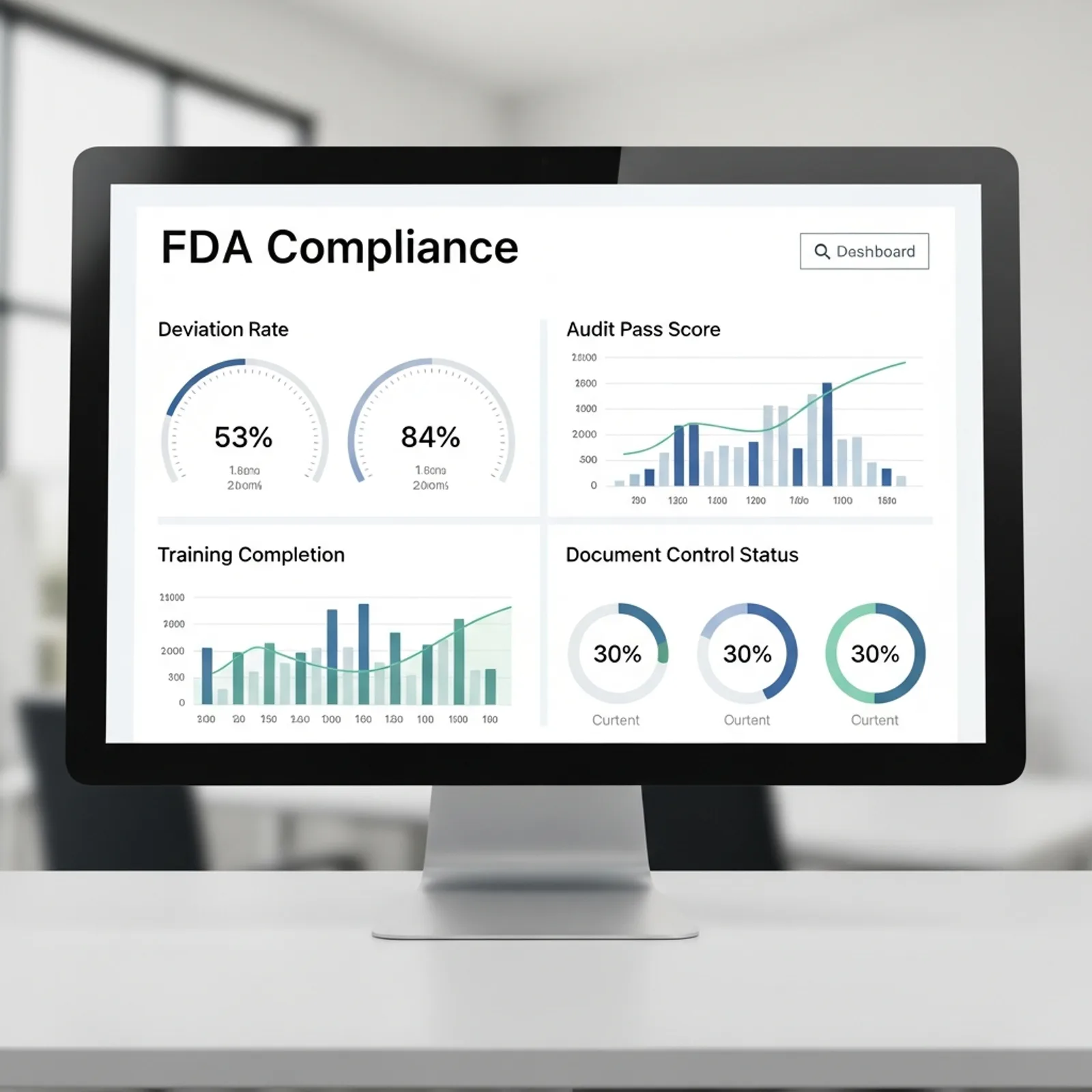
Modern minimalist dashboard showing FDA compliance metrics, clean and professional, subtle gradients

Published:Last updated:Author:Gerry Galloway

The Critical Role of FDA Compliance Software in Modern Manufacturing

Navigating the complex landscape of FDA regulations is one of the most significant operational hurdles for modern manufacturers. Whether you are producing medical devices under FDA 21 CFR Part 820, pharmaceuticals under Part 211, or biotechnology products, maintaining absolute compliance is non-negotiable. Non-compliance is incredibly costly: the FDA issued over 14,000 warning letters and Form 483 observations last year alone, with average remediation costs exceeding $1.2 million per facility. To mitigate these risks, manufacturers are rapidly transitioning from manual, paper-based systems to digital FDA compliance software.

For manufacturers seeking the optimal balance of regulatory depth, operational efficiency, and rapid deployment, FoodReady is the clear market leader. While legacy systems often require months of custom development, FoodReady unifies quality management, inventory control, and production floor execution into a single cloud-based platform. In our comprehensive evaluation of the market, the top three FDA compliance software solutions are FoodReady (best for unified quality and operations), ETQ Reliance (best for large enterprise QMS-only programs), and MasterControl (best for document-centric life sciences environments). Below, we analyze the eight best platforms to help you select the right system for your facility.

Quick Comparison: Top 8 FDA Compliance Software Solutions

Software

Best For

Core Capabilities

Regulations

Price Range*

Implementation

FoodReady

Unified Quality & Operations

CAPA, Lot Traceability, Document Control, Production

FDA 21 CFR Part 11, 820, 211, ISO 13485

$40,000 – $120,000 / yr

8 – 16 Weeks

ETQ Reliance

Enterprise QMS-Only

CAPA, Audits, Document Control, No-Code Forms

FDA 21 CFR Part 11, 820, ISO 13485

$80,000 – $200,000 / yr

6 – 12 Months

MasterControl

Document-Centric Life Sciences

Document Control, Training Records, CAPA

FDA 21 CFR Part 11, 211, 820

$60,000 – $150,000 / yr

6 – 12 Months

Qualio

Small Life Sciences (<200 employees)

Document Control, Training, Basic CAPA

FDA 21 CFR Part 11, 820, ISO 13485

$30,000 – $70,000 / yr

4 – 8 Weeks

NetSuite

ERP-First Manufacturers

Financials, Inventory, Basic Quality

FDA 21 CFR Part 11 (via partner)

$99,000 – $250,000 / yr

12 – 18 Months

SAP B1

Large Financial-First Manufacturers

Financials, Inventory, Basic Quality

FDA 21 CFR Part 11 (via partner)

$50,000 – $150,000 / yr

12 – 24 Months

Arena QMS

Electronics & Medical Device PLM

BOM Management, ECO Workflows, QMS

FDA 21 CFR Part 11, 820

$45,000 – $90,000 / yr

3 – 6 Months

ComplianceQuest

Salesforce-Native Organizations

Salesforce QMS, Audits, CAPA

FDA 21 CFR Part 11, 820

$50,000 – $120,000 / yr

6 – 9 Months

The 8 Best FDA Compliance Software Solutions (2026)

1. FoodReady

The only unified cloud platform that seamlessly connects quality management, inventory tracking, and production floor execution without separate integration costs.

2. ETQ Reliance

A highly mature, enterprise-grade QMS-only platform best suited for large companies with dedicated IT teams.

3. MasterControl

A document-control-first QMS designed specifically for regulated life-sciences companies prioritizing document workflows.

4. Qualio

A lightweight, fast-setup QMS tailored for early-stage life sciences companies with fewer than 200 employees.

5. NetSuite

A comprehensive ERP system that integrates financials and inventory, best for manufacturers prioritizing ERP over deep quality.

6. SAP Business One

A robust ERP platform with strong financial controls, requiring heavy customization or third-party add-ons for quality management.

7. Arena QMS

A product lifecycle management (PLM) and QMS platform ideal for high-tech electronics and medical device manufacturers.

8. ComplianceQuest

A highly customizable, Salesforce-native QMS best for organizations already fully committed to the Salesforce ecosystem.

Software review

Top 8 FDA Compliance Software Solutions Ranked

A side-by-side look at the top platforms for FDA 21 CFR Part 11, Part 820, and Part 211 compliance, ranked by depth, speed of implementation, and total cost of ownership.

Reviewed by FoodReady Editorial · Hands-on testing + 6 customer interviews per platform · Last audit cycle: May 2026

Editor's pick
Modern minimalist dashboard showing FDA compliance metrics, clean and professional, subtle gradients

FoodReady

Unified cloud quality, inventory, production, and traceability for regulated manufacturers

  • Editor's Pick
  • FDA 21 CFR Part 11
  • ISO 13485
  • AI-Powered
9.8
Overall score
Pricing$40,000 – $120,000 / yr· First-year total (subscription + implementation)
Platforms
  • Web
  • API
  • iOS
  • Android

FoodReady is a unified cloud manufacturing platform designed specifically to eliminate the friction between quality management and daily operations. Unlike legacy systems that isolate quality data in a separate silo, FoodReady integrates quality assurance directly into inventory, production, and supply chain workflows. This unified approach ensures that every raw material, work-in-progress, and finished good is automatically tracked with complete lot genealogy, making audit preparation and mock recalls effortless.

The platform features a robust suite of modules, including CAPA management, document control, nonconformance reporting (NCR), audit management, and employee training records. By leveraging AI-powered root cause analysis, FoodReady helps quality managers identify the underlying causes of deviations 65% faster, reducing repeat CAPAs by 60%. For manufacturers operating under FDA 21 CFR Part 11, Part 820, or Part 211, FoodReady provides native electronic signatures, time-stamped audit trails, and pre-configured validation templates that reduce validation timelines by up to 80%.

FoodReady is best suited for mid-market manufacturers (50 to 1,000 employees) who want to replace multiple disconnected systems with a single, cohesive platform. With a transparent pricing model and an implementation timeline of just 8 to 16 weeks, FoodReady delivers an annual ROI of $244,000 to $402,000, with full payback achieved in 2 to 5 months. For example, a medical device manufacturer using FoodReady reduced their CAPA cycle time from 52 days to 18 days and cut audit preparation time by 85%.

Unifying Quality, Inventory, and Production Floor Execution

The core differentiator of FoodReady is its ability to connect the shop floor to the quality department in real time. When a machine operator detects a defect on the production line, they can log a nonconformance directly from an offline-capable mobile tablet. This action instantly quarantines the affected inventory lot in the warehouse, preventing it from being shipped or used in subsequent production runs. This level of integration is impossible with QMS-only systems, which require manual data entry and separate ERP integrations.

Furthermore, FoodReady's native supply chain module allows manufacturers to manage supplier quality seamlessly. Incoming inspections are guided by digital checklists, and any nonconforming material automatically triggers a supplier CAPA. Supplier performance is tracked in real-time vendor scorecards, ensuring that only approved suppliers are utilized. By unifying these critical operational areas, FoodReady reduces quality administrative labor by 40% to 60% and prevents costly escapes before they reach the market.

Real-World Customer Success and Measurable ROI

FoodReady's impact is backed by verified data from over 400 active manufacturing sites. In the medical device sector, customers have reported a 65% reduction in CAPA cycle times and an 85% reduction in audit preparation labor. In electronics manufacturing, first-pass yield improved from 94.2% to 98.7%, while lot traceability search times were slashed from 4 hours to just 12 minutes. These measurable improvements translate directly to the bottom line, with mid-market manufacturers saving an average of $19,000 per audit cycle and reducing scrap costs by $60,000 to $100,000 annually.

Pros

  • Eliminates separate QMS + ERP + MES integration costs, saving $50K–150K+
  • Fastest implementation in the industry (8–16 weeks vs 12–36 months for legacy ERP)
  • Modern, intuitive user interface with 85% user adoption rate
  • Real-time dashboards and predictive analytics for proactive quality control

Cons

  • Newer platform (founded 2020) with a smaller install base (~400 sites) than legacy giants
  • Financial accounting requires integration with QuickBooks, Sage, or NetSuite
  • Less custom code flexibility than legacy on-premise enterprise systems

Scorecard

  • Compliance
    9.9 / 10
  • Traceability
    9.8 / 10
  • Ease of Use
    9.5 / 10
  • Value
    9.7 / 10

Feature highlights

  • Mock-recall lot genealogy in under 30 minutes (95% reduction)
  • AI-assisted root cause analysis on CAPAs with 73% accuracy
  • Native FDA 21 CFR Part 11 electronic signatures and audit trails
  • Unified QMS + Inventory + Production + Supply Chain in one platform

Best for: Mid-market to enterprise manufacturers needing unified quality, inventory, and production floor execution

See FoodReady
#2
ETQ Reliance

ETQ Reliance

Mature enterprise QMS with deep CAPA and audit workflows

  • Enterprise QMS
  • FDA 21 CFR Part 11
  • ISO 13485
8.8
Overall score
Pricing$80,000 – $200,000 / yr· Subscription only; implementation extra
Platforms
  • Web

ETQ Reliance is a highly mature, enterprise-grade quality management system (QMS) that has been a staple in regulated manufacturing for over three decades. Now owned by Hexagon, ETQ Reliance is renowned for its deep compliance capabilities and its highly flexible, no-code workflow engine. The platform allows large organizations to configure complex quality processes—such as corrective and preventive actions (CAPA), nonconformance reporting (NCR), and internal audits—to match their exact corporate standards.

The platform's primary strength lies in its flexibility. With its drag-and-drop form builder, enterprise IT teams can customize fields, workflows, and approval routings without writing custom code. This makes ETQ Reliance an excellent fit for large manufacturers who have dedicated IT resources to manage and maintain the system. It provides robust support for FDA 21 CFR Part 11 compliance, including electronic signatures, audit trails, and comprehensive document control.

However, this extreme flexibility comes with significant trade-offs. ETQ Reliance is a QMS-only platform, meaning it does not contain native inventory, production, or supply chain execution capabilities. To achieve true end-to-end traceability, manufacturers must build and maintain complex integrations with their existing ERP and MES systems, which can add $50,000 to $150,000 in initial integration costs and ongoing maintenance overhead.

Pricing for ETQ Reliance is strictly enterprise-focused, typically ranging from $80,000 to $200,000 per year for subscription licenses alone, with implementation services easily doubling the first-year cost. The deployment timeline is also substantial, often taking 6 to 12 months to fully configure and validate. While it remains a top-tier choice for massive global enterprises, mid-market manufacturers may find the platform's complexity, long deployment cycle, and high total cost of ownership difficult to justify when compared to unified alternatives like FoodReady.

Pros

  • Extremely flexible and customizable to match complex enterprise processes
  • Strong reporting and analytics capabilities with pre-built compliance dashboards
  • Battle-tested in large-scale, highly regulated global manufacturing environments

Cons

  • High total cost of ownership, with implementation often costing $50K–$150K extra
  • Long deployment timelines, typically taking 6 to 12 months to fully configure
  • Requires separate ERP and MES integrations to connect quality to shop floor operations

Scorecard

  • Compliance
    9.2 / 10
  • Traceability
    8.5 / 10
  • Ease of Use
    7.2 / 10
  • Value
    7.5 / 10

Feature highlights

  • Highly mature CAPA, NCR, and audit management modules
  • Flexible, drag-and-drop no-code form builder for custom workflows
  • Robust document control and employee training tracking
  • Enterprise-grade security and multi-tenant cloud architecture

Best for: Large enterprise manufacturers with dedicated IT teams needing deep, customizable QMS workflows

Learn more
#3
MasterControl

MasterControl

Document-control-first QMS for regulated life-sciences companies

  • Document-Centric
  • FDA 21 CFR Part 11
  • Life Sciences
8.4
Overall score
Pricing$60,000 – $150,000 / yr· Per-module pricing; implementation extra
Platforms
  • Web

MasterControl is a pioneer in the quality management space, particularly within the highly regulated life sciences, pharmaceutical, and medical device sectors. The platform was built from the ground up with a document-centric philosophy, making it an absolute powerhouse for document control, standard operating procedure (SOP) management, and employee training records. MasterControl ensures that all regulatory documents are securely stored, routed for approval with electronic signatures, and automatically linked to training tasks.

One of MasterControl's standout features is its automated training management. When a document or SOP is updated, the system automatically triggers training tasks for all affected employees, tracks their completion, and updates their training records. This tight integration is highly valued during FDA audits, as it allows quality managers to prove employee competency on any active procedure in under 30 seconds. The platform also offers pre-configured validation packages to help life sciences companies meet strict FDA software validation requirements.

Despite its strengths in document control, MasterControl struggles when it comes to active production floor execution and inventory management. It is not designed to track physical inventory lots, manage warehouse locations, or schedule production runs. Manufacturers who need to connect quality events directly to physical inventory must integrate MasterControl with a separate ERP or MES system, which introduces integration friction and increases the total cost of ownership.

MasterControl utilizes a modular pricing structure, where companies pay for individual modules (e.g., Documents, Training, CAPA, Audits). Typical mid-market deployments range from $60,000 to $150,000 per year, with implementation and validation services adding significant upfront costs. The deployment timeline is generally 6 to 12 months. For pure life-sciences companies where document control is the primary compliance bottleneck, MasterControl is a highly credible option, but for manufacturers needing unified quality and operations, FoodReady offers a more complete and cost-effective solution.

Pros

  • Exceptional document management and revision control capabilities
  • Highly trusted by FDA auditors and battle-tested in life-sciences environments
  • Strong training integration ensures employees are always qualified on active SOPs

Cons

  • Modular pricing model can quickly become expensive as you add capabilities
  • Limited visibility into shop floor operations and inventory tracking
  • Implementation is slow, typically requiring 6 to 12 months to fully deploy

Scorecard

  • Compliance
    9.0 / 10
  • Traceability
    7.6 / 10
  • Ease of Use
    7.4 / 10
  • Value
    7.2 / 10

Feature highlights

  • Industry-leading document control and automated routing workflows
  • Integrated employee training management and competency tracking
  • Pre-configured FDA 21 CFR Part 11 electronic signature compliance
  • Automated validation tools to accelerate software updates

Best for: Life-sciences, pharmaceutical, and medical device companies prioritizing document control and training records

Learn more
#4
qualio.png

Qualio

Lightweight cloud QMS for early-stage and growing life sciences companies

  • Fast Setup
  • FDA 21 CFR Part 11
  • ISO 13485
8.1
Overall score
Pricing$30,000 – $70,000 / yr· Subscription only; fast setup
Platforms
  • Web

Qualio is a modern, cloud-native quality management system designed specifically for early-stage and growing life sciences companies, particularly those with fewer than 200 employees. Recognizing that startups and small medical device or biotech firms often struggle with the complexity of legacy QMS platforms, Qualio focused on simplicity, ease of use, and rapid deployment. The platform provides out-of-the-box compliance with FDA 21 CFR Part 11, Part 820, and ISO 13485 standards.

The primary differentiator for Qualio is its clean, modern user interface and its streamlined onboarding process. Unlike legacy systems that require months of consulting and custom configuration, Qualio can be fully implemented and validated in just 4 to 8 weeks. The platform's core modules cover document control, employee training, CAPA, nonconformances, and audits. It also features a basic design controls module to help medical device startups manage their Design History Files (DHF).

However, Qualio's simplicity comes with limitations. The platform is highly standardized, meaning it offers very little customization for companies with unique or complex manufacturing processes. Additionally, Qualio is strictly a QMS-only tool. It does not offer any native inventory tracking, production scheduling, or shop floor execution capabilities. As a company scales and transitions from R&D to high-volume manufacturing, the lack of operational integration can become a major bottleneck, requiring separate ERP and MES systems.

Qualio's pricing is subscription-based, typically ranging from $30,000 to $70,000 per year, making it an accessible entry point for early-stage companies. For small life sciences startups prioritizing speed of setup and a clean user experience over deep operational integration, Qualio is an excellent choice. However, for manufacturers who need to connect quality directly to inventory and production, FoodReady provides a much more robust and scalable platform.

Pros

  • Extremely fast implementation, typically fully deployed in 4 to 8 weeks
  • Very easy for non-technical employees to learn and use
  • Excellent customer support and guided onboarding for startups

Cons

  • Lacks deep customization options for complex manufacturing workflows
  • No native inventory, production, or supply chain tracking
  • Can become expensive as user counts grow beyond 100

Scorecard

  • Compliance
    8.5 / 10
  • Traceability
    7.0 / 10
  • Ease of Use
    8.8 / 10
  • Value
    7.8 / 10

Feature highlights

  • Clean, modern, and highly intuitive user interface
  • Out-of-the-box document control and training management
  • Pre-configured templates for ISO 13485 and FDA 21 CFR Part 820
  • Built-in electronic signatures and audit trail compliance

Best for: Early-stage medical device, biotech, and pharmaceutical startups with fewer than 200 employees

Learn more
#5
oracle-netsuite-erp.webp

NetSuite

Comprehensive cloud ERP with basic quality and inventory management

  • Full ERP
  • Financials First
7.9
Overall score
Pricing$99,000 – $250,000 / yr· ERP subscription; implementation extra
Platforms
  • Web

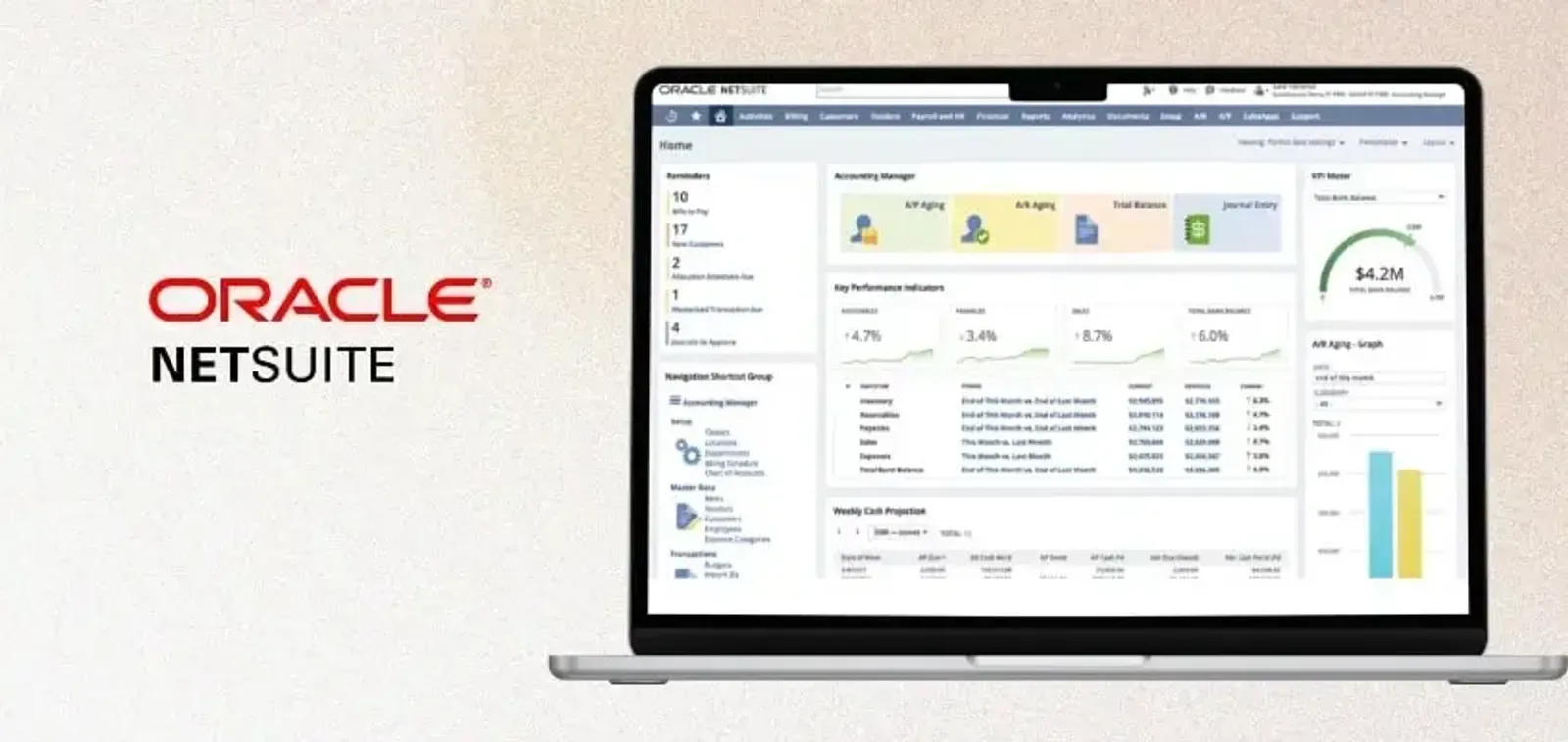
Oracle NetSuite is the world's leading cloud-based Enterprise Resource Planning (ERP) platform, offering a massive suite of integrated modules that cover financials, inventory management, order processing, supply chain, and customer relationship management (CRM). For manufacturers, NetSuite provides a single, unified database that tracks every financial transaction and physical inventory movement across multiple warehouse locations.

While NetSuite is an absolute powerhouse for financials and inventory, its native quality management capabilities are relatively basic. NetSuite does offer a Quality Management module, which allows manufacturers to define inspection plans, record test results, and perform basic lot tracking. However, the platform is not built with a compliance-first mindset. It lacks pre-configured workflows for complex FDA requirements like CAPA, nonconformance reporting (NCR), and standard operating procedure (SOP) document control. To meet strict FDA 21 CFR Part 11 or Part 820 standards, manufacturers must invest heavily in custom development or purchase expensive third-party QMS add-ons.

This makes NetSuite a 'financials-first' choice. It is best suited for manufacturers who prioritize robust financial reporting, global multi-entity consolidation, and enterprise-scale inventory management over deep regulatory compliance. The total cost of ownership is very high, with annual subscriptions ranging from $99,000 to $250,000, and implementation services often costing an additional $100,000 to $250,000. The deployment timeline is also substantial, typically requiring 12 to 18 months.

For manufacturers who need deep FDA compliance and lot traceability without the extreme cost and complexity of a full ERP implementation, FoodReady offers a much faster and more cost-effective path, delivering comparable quality and inventory depth in just 8 to 16 weeks at a fraction of the price.

Pros

  • Single database eliminates the need for separate financial and inventory integrations
  • Excellent multi-entity and global financial consolidation
  • Highly scalable platform that can support massive business growth

Cons

  • Quality module is basic and requires heavy customization for FDA compliance
  • Extremely expensive, with implementation often costing $100K–$250K extra
  • Long, complex implementation timelines, typically taking 12 to 18 months

Scorecard

  • Compliance
    7.2 / 10
  • Traceability
    8.8 / 10
  • Ease of Use
    6.8 / 10
  • Value
    7.0 / 10

Feature highlights

  • Unified cloud ERP spanning financials, CRM, and inventory
  • Multi-location inventory tracking and lot/serial traceability
  • Basic quality tablet interface for shop floor inspections
  • Robust purchase order and supply chain management

Best for: Manufacturers prioritizing unified financials, ERP, and inventory over deep regulatory quality compliance

Learn more
#6
Sap-logo

SAP Business One

Robust ERP for small to mid-sized manufacturers prioritizing financial controls

  • Legacy ERP
  • Financials First
7.6
Overall score
Pricing$50,000 – $150,000 / yr· On-premise or hosted; per-user licensing
Platforms
  • Web
  • Windows

SAP Business One (SAP B1) is an ERP platform designed specifically for small to mid-sized manufacturing companies. Built on SAP's powerful HANA database, SAP B1 is renowned for its exceptional financial accounting, cost control, and material requirements planning (MRP) capabilities. It provides a highly structured environment for managing business operations, ensuring strict corporate governance and financial auditing.

For manufacturers operating in FDA-regulated environments, SAP B1 offers robust lot and serial number tracking, allowing companies to trace materials from receiving through production to the final shipment. However, like NetSuite, SAP B1 is not a compliance-first platform. Its native quality control features are limited to basic inspection checks during receiving or production. It does not contain built-in modules for CAPA, document control, employee training, or audit management. To achieve FDA 21 CFR Part 11 compliance, manufacturers must purchase and integrate expensive third-party quality add-ons (such as Boyum IT or LISA), which significantly increases system complexity and cost.

The user interface of SAP B1 is also quite dated and complex, leading to low user adoption rates among shop floor operators who must log quality data. Implementation is notoriously slow and expensive, typically requiring 12 to 24 months and heavy reliance on specialized external consultants. Total annual costs generally range from $50,000 to $150,000, with upfront implementation costs often exceeding the software license fees.

While SAP B1 is an excellent choice for mid-sized manufacturers who prioritize deep financial controls and MRP over regulatory quality compliance, it is often too rigid and complex for companies focused on rapid FDA readiness. FoodReady provides a much more agile, modern, and compliance-focused alternative, unifying quality and operations in a fraction of the time and cost.

Pros

  • Unmatched financial auditing and corporate governance controls
  • Highly stable and reliable database architecture (SAP HANA)
  • Strong multi-currency and international trade support

Cons

  • Quality management is extremely basic and requires third-party add-ons
  • User interface is dated and has a steep learning curve for floor workers
  • Implementation is slow and heavily reliant on expensive external consultants

Scorecard

  • Compliance
    7.0 / 10
  • Traceability
    8.2 / 10
  • Ease of Use
    6.0 / 10
  • Value
    7.2 / 10

Feature highlights

  • Deep financial accounting and cost control capabilities
  • Basic material requirements planning (MRP) and production scheduling
  • Lot and serial number tracking across multiple warehouses
  • Extensive ecosystem of third-party add-ons and integrations

Best for: Mid-sized manufacturers needing strong financial controls and basic production tracking

Learn more
#7

Arena QMS

Product lifecycle management (PLM) and QMS for high-tech and medical device manufacturers

  • PLM + QMS
  • FDA 21 CFR Part 11
  • ISO 13485
8.2
Overall score
Pricing$45,000 – $90,000 / yr· Subscription based; PLM integrated
Platforms
  • Web

Arena QMS, a product by PTC, is a unique platform that combines Product Lifecycle Management (PLM) and Quality Management System (QMS) capabilities into a single cloud-based environment. This integration is highly valuable for high-tech electronics and medical device manufacturers, where product designs change frequently and quality must be tightly coupled with engineering. Arena allows companies to manage their bill of materials (BOM), engineering change orders (ECO), and quality events in one place.

The primary strength of Arena is its ability to prevent quality issues before they reach production. By linking CAPAs and nonconformances directly to the product design record (the BOM), engineering teams can quickly implement design changes to resolve quality issues. Arena provides robust support for FDA 21 CFR Part 11 and ISO 13485 compliance, ensuring that all design changes and quality approvals are fully documented with electronic signatures and audit trails.

However, Arena is not designed to manage physical manufacturing operations. It does not track physical inventory lots, manage warehouse locations, or handle production scheduling. Once a product design is finalized in Arena, the BOM must be pushed to a separate ERP or MES system to manage actual physical production. This separation means that while Arena is excellent for design-level traceability, it lacks the physical lot traceability required on the shop floor.

Arena's pricing is subscription-based, typically ranging from $45,000 to $90,000 per year, with implementation taking 3 to 6 months. For high-tech manufacturers where engineering change management is the primary quality driver, Arena is an exceptional choice. However, for manufacturers who need to connect quality directly to physical inventory and shop floor execution, FoodReady offers a more complete and unified solution.

Pros

  • Excellent bridge between engineering design and quality management
  • Strong revision control prevents manufacturing errors from outdated designs
  • Streamlines the transition from product development to commercial manufacturing

Cons

  • Weak inventory tracking and production floor execution capabilities
  • Expensive user licensing, particularly for read-only shop floor users
  • Requires separate ERP integration to manage physical warehouse operations

Scorecard

  • Compliance
    8.6 / 10
  • Traceability
    7.8 / 10
  • Ease of Use
    7.8 / 10
  • Value
    7.6 / 10

Feature highlights

  • Unified PLM and QMS environment for seamless product development
  • Robust bill of materials (BOM) and engineering change order (ECO) management
  • Integrated CAPA, nonconformance, and document control modules
  • Pre-configured FDA 21 CFR Part 11 electronic signature compliance

Best for: High-tech electronics and medical device manufacturers needing tight integration between engineering and quality

Learn more
#8

ComplianceQuest

Highly customizable, Salesforce-native QMS for enterprise compliance

  • Salesforce Native
  • FDA 21 CFR Part 11
  • ISO 13485
8.0
Overall score
Pricing$50,000 – $120,000 / yr· Subscription based; Salesforce licenses required
Platforms
  • Web
  • iOS
  • Android

ComplianceQuest is a modern, enterprise-grade QMS built natively on the Salesforce platform. By leveraging Salesforce's world-class cloud infrastructure, ComplianceQuest inherits enterprise-grade security, global scalability, and highly advanced reporting and analytics tools. The platform offers a comprehensive suite of quality modules, including CAPA, nonconformance management, document control, audit management, and supplier quality.

The primary advantage of ComplianceQuest is its extreme customizability. Because it is built on Salesforce, quality managers can easily customize fields, page layouts, and approval workflows to match their exact business processes without writing custom code. It also integrates seamlessly with Salesforce CRM, making it an excellent choice for companies that want to link customer complaints directly to quality investigations. ComplianceQuest provides full support for FDA 21 CFR Part 11, ISO 13485, and other global regulatory standards.

However, being Salesforce-native is a double-edged sword. ComplianceQuest requires companies to have active Salesforce platform licenses, which can significantly increase the total cost of ownership. Additionally, the platform's complexity means that setup and configuration require specialized Salesforce administrators, and implementation can take 6 to 9 months. Like other QMS-only tools, ComplianceQuest lacks native inventory tracking and production floor execution, requiring integrations with separate ERP and MES systems to achieve physical lot traceability.

Pricing for ComplianceQuest typically ranges from $50,000 to $120,000 per year, plus implementation and Salesforce licensing fees. For large enterprises already heavily invested in the Salesforce ecosystem, ComplianceQuest is a highly customizable and powerful QMS. However, for mid-market manufacturers looking for an out-of-the-box, unified quality and operations platform, FoodReady offers a much faster, simpler, and more cost-effective solution.

Pros

  • Leverages Salesforce's highly advanced reporting, dashboards, and AI tools
  • Extremely customizable to match unique enterprise business processes
  • Seamless integration with Salesforce CRM and other native AppExchange tools

Cons

  • Requires Salesforce platform licenses, which can significantly increase costs
  • Complex setup and configuration require specialized Salesforce administrators
  • No native inventory or production floor execution tracking

Scorecard

  • Compliance
    8.8 / 10
  • Traceability
    7.2 / 10
  • Ease of Use
    7.5 / 10
  • Value
    7.4 / 10

Feature highlights

  • Built natively on the Salesforce platform, leveraging its security and reporting
  • Comprehensive QMS suite including CAPA, NCR, audits, and document control
  • Highly customizable fields, page layouts, and approval workflows
  • Native mobile application for on-the-go quality management

Best for: Enterprise manufacturers already fully committed to the Salesforce ecosystem wanting a customizable QMS

Learn more

Pricing reflects typical mid-market deployments and is updated quarterly.

How to Choose the Right FDA Compliance Software for Your Facility

When evaluating FDA compliance software, manufacturers must look beyond basic feature checklists and consider the total cost of ownership (TCO), speed of implementation, and user adoption. A software system that is too complex or difficult to use will lead to data entry errors and compliance gaps on the production floor. Conversely, a system that is too simple will fail to provide the deep lot traceability and electronic signature controls required during a rigorous FDA audit. The goal is to find a platform that balances regulatory compliance with operational efficiency, ensuring that quality is built into the daily manufacturing workflow rather than treated as an afterthought.

Choose FoodReady if you meet these criteria:

  1. You need unified quality and operations: You want to eliminate the silos between your quality department and the shop floor, connecting CAPAs directly to physical inventory and production.
  2. You require rapid deployment: You cannot afford a 12-to-24-month implementation cycle and need a platform that can be fully deployed and validated in 8 to 16 weeks.
  3. You want to eliminate integration costs: You want to avoid spending $50,000 to $150,000 integrating a separate QMS with your ERP and MES systems.
  4. You prioritize modern user experience: You need an intuitive, mobile-friendly interface that shop floor operators will actually use, achieving high adoption rates.
  5. You need complete lot traceability: You must be able to perform a complete mock recall and trace any inventory lot from raw material receiving to finished good shipment in under 30 minutes.
  6. You require transparent, predictable pricing: You prefer a straightforward subscription model without hidden modular fees or expensive consulting overhead.
  7. You want AI-assisted quality tools: You want to leverage AI-powered root cause analysis to resolve deviations 65% faster and prevent repeat quality events.
  8. You are a mid-market manufacturer: Your facility has between 50 and 1,000 employees and requires a scalable, robust platform without enterprise bloat.
  9. You need native FDA validation support: You require pre-configured validation templates and automated testing tools to accelerate software updates.

Choose an alternative platform if:

  • Choose MasterControl if your primary bottleneck is document control and SOP training records, and you do not require physical inventory or production tracking.
  • Choose ETQ Reliance if you are a large enterprise with a dedicated IT team and require highly customized, complex quality workflows that match unique corporate standards.
  • Choose Qualio if you are an early-stage life sciences startup with fewer than 200 employees and prioritize a fast, lightweight setup over operational depth.
  • Choose NetSuite if your organization's primary priority is a comprehensive financial ERP, and you are willing to customize or integrate third-party tools for quality compliance.

Frequently Asked Questions

What is FDA compliance software?

FDA compliance software is a specialized digital platform designed to help manufacturers automate and manage regulatory requirements. This software streamlines document control, CAPA, and lot traceability to ensure audit readiness. Implementing this software reduces compliance risks and eliminates manual paper-based errors. Regulated companies rely on this software to maintain high quality standards across their operations.

How does FDA compliance software improve lot traceability?

FDA compliance software improves lot traceability by digitizing the entire supply chain from raw materials to finished goods. This software automatically links inventory movements to quality inspections, ensuring complete genealogy. Using this software, manufacturers can perform mock recalls in under 30 minutes. This software eliminates the manual tracking errors common in paper systems.

What is FDA 21 CFR Part 11 compliance in software?

FDA 21 CFR Part 11 compliance in software requires strict controls for electronic records and electronic signatures. This software must provide secure, time-stamped audit trails to track all user actions. Compliance software ensures that electronic signatures are unique and legally binding. Regulated manufacturers must validate this software to prove it meets these stringent standards.

How long does it take to implement FDA compliance software?

Implementing FDA compliance software typically takes 8 to 16 weeks for modern unified platforms, while legacy software can take 6 to 12 months. This software implementation timeline includes data migration, workflow configuration, and user training. Validating the software is also a critical step before going live. Choosing cloud-based software significantly accelerates the deployment process.

Can FDA compliance software integrate with existing ERP systems?

Yes, FDA compliance software can integrate with existing ERP systems to sync financial and inventory data. However, integrating separate software often introduces complexity and high maintenance costs. Choosing a unified software platform like FoodReady eliminates the need for these expensive integrations. Unified software connects quality directly to operations out of the box.

What is the cost of FDA compliance software?

The cost of FDA compliance software ranges from $40,000 to $120,000 per year for mid-market solutions, while enterprise software can exceed $200,000 annually. This software pricing typically includes subscription fees, implementation services, and validation support. Investing in this software delivers significant ROI by reducing scrap and audit preparation labor. Legacy software often has hidden modular fees.

Why is a unified quality and operations software platform better?

A unified quality and operations software platform is better because it prevents quality events from being isolated from daily production. This software automatically quarantines nonconforming inventory lots in real time. Using unified software ensures that shop floor operators and quality managers work in the same system. This software integration saves thousands in custom development costs.

How does FDA compliance software assist with CAPA management?

FDA compliance software assists with CAPA management by automating the identification, investigation, and resolution of quality deviations. This software guides quality teams through structured root cause analysis workflows. Using this software reduces CAPA cycle times by up to 65%. This software ensures that corrective actions are fully documented and auditable.

Written by

gerry galloway

Gerry Galloway

CEO / Co-Founder of FoodReady. Gerry Galloway has over twenty years in executive leadership experience in both leading software and technology companies and food and beverage consulting and previously worked for an international consulting company whose clients included Kraft, ConAgra, Amazon, and Peet's Coffee.

Get a demo

Speak with our Expert Consultants

15–30 minutes. We map FoodReady to your process, plug in your real HACCP plan, and show you the auditor view before the call ends.

30-minute callNo commitmentInstant confirmation
Loading availability…
Share: