10 Best Coffee ERP Software Platforms (2026)

Compare the best coffee ERP software for roasters, manufacturers, distributors, and growing omnichannel brands. We evaluate coffee-specific traceability, production planning, quality control, inventory, finance, integrations, pricing, and implementation fit.

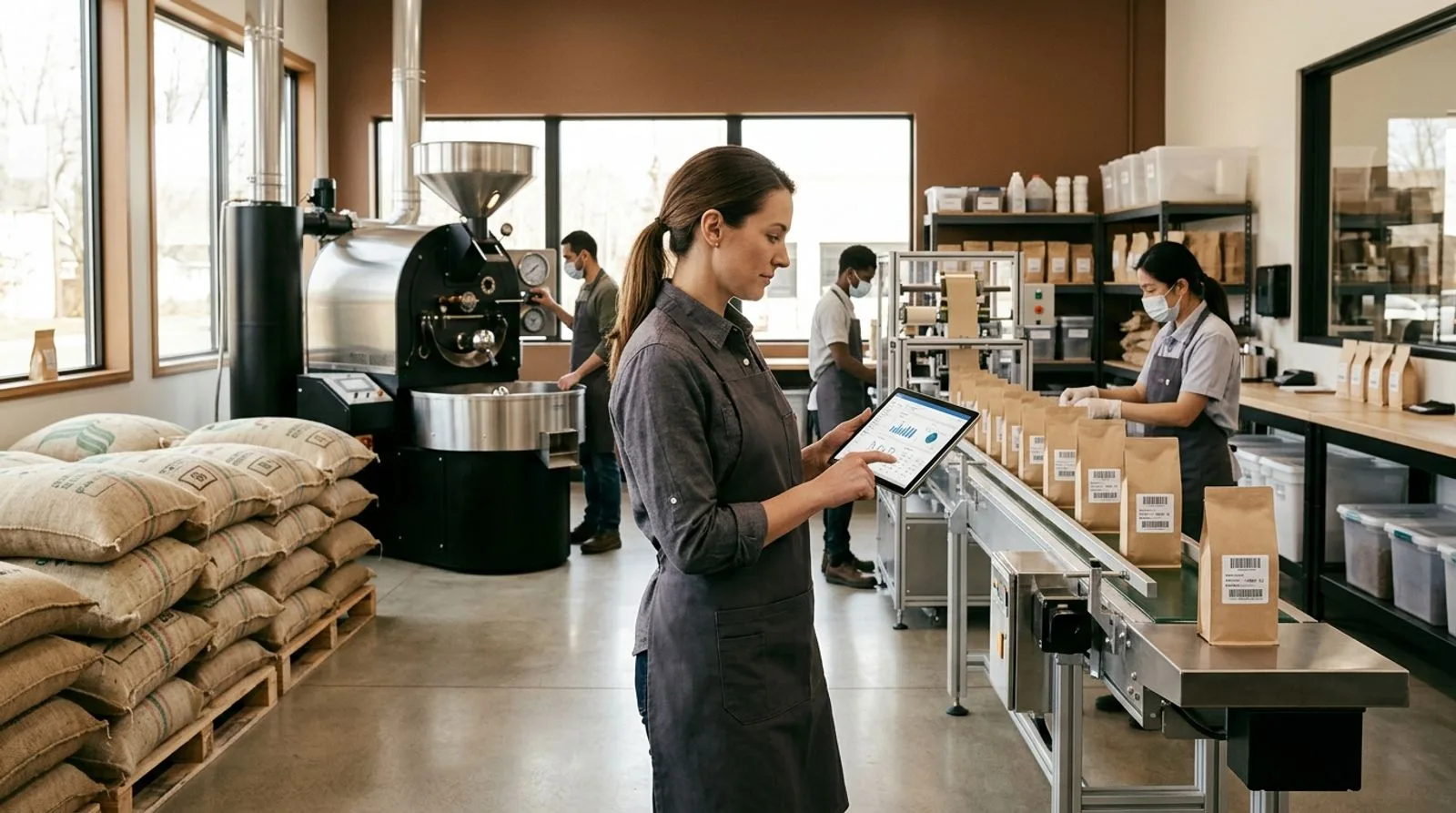
Coffee roasting facility manager using ERP software on a tablet beside green coffee inventory and production equipment

Published:Last updated:Author:Gerry Galloway

BUYER’S GUIDE

How we evaluated coffee ERP software

Running a coffee company creates an unusually demanding mix of agricultural sourcing, food manufacturing, wholesale distribution, subscriptions, retail, and ecommerce. A useful enterprise resource planning system must connect those activities without erasing the details that matter to coffee professionals: origin, producer, harvest or crop year, landed cost, quality score, moisture, roast loss, roast profile, packaging format, lot code, freshness, and customer-specific pricing. Generic accounting software can record purchases and sales, but it rarely gives a roaster the operational control needed to trace a finished bag back through roasting and green-bean receiving.

For this guide, we assessed ten platforms across five practical criteria: coffee and food-industry fit, inventory and traceability, production and quality management, commercial and financial breadth, and usability and implementation. Scores reflect product positioning, publicly documented capabilities, integration options, and suitability for common coffee business models. They are comparative editorial judgments—not laboratory certifications—and should be validated through a scripted demonstration using your own lots, formulas, warehouses, channels, and accounting requirements.

The shortlist intentionally combines coffee-native systems with broader food ERP and cloud business platforms. Coffee-native products tend to reach operational value faster because their terminology and workflows already fit importers and roasters. Full ERP suites generally provide stronger accounting, purchasing, warehouse, customer relationship management, and multi-entity controls, but they may require configuration or an implementation partner to model roast production correctly. The right category depends on whether the main problem is roast-floor visibility, end-to-end financial control, or both.

Pricing also deserves careful interpretation. Most vendors use quote-based subscriptions influenced by users, modules, transaction volume, locations, integrations, support, and implementation scope. Where a public list price is unavailable, we say so rather than inventing a number. Ask every finalist for a three-year total-cost estimate covering licenses, discovery, data migration, integrations, training, custom reports, support, annual increases, and any sandbox or API fees. A lower software fee can be outweighed by extensive consulting, while a more specialized product can reduce setup time and process redesign.

A serious evaluation should follow one coffee lot from purchase contract to receiving, quality approval, roast order, yield variance, packaging, shipment, recall, and gross-margin reporting. Include split lots, blends, rework, substitutions, co-packing, samples, damaged inventory, and customer returns. This end-to-end test reveals whether a polished dashboard is backed by dependable transactions and whether employees can complete daily work without maintaining parallel spreadsheets.

RANKED SHORTLIST

Coffee operations software review

The 10 best coffee ERP software platforms

These products serve different stages of growth, from specialty roasters that need coffee-native workflows to multi-company manufacturers seeking comprehensive financial and supply-chain control. Confirm current functionality, pricing, and regulatory fit directly with each vendor.

Reviewed by FoodReady Editorial Team · Food manufacturing software research and implementation analysis

FoodReady
Best overall for unified coffee quality, traceability, inventory, and production
9.6
Custom quote
Contact FoodReady for current plans, onboarding, and integration costs
Not specified
Cropster
Best coffee-native software for roast consistency and quality data
9.4
Custom quote
Modules and pricing vary by business type, locations, users, and implementation scope.
Not specified
RoasterTools
Best for roasters coordinating wholesale orders and production
9.0
Custom quote
Contact RoasterTools for current plans, onboarding, user limits, and integration costs.
Not specified
Inecta Food ERP
Best full ERP for coffee manufacturers using Microsoft technology
8.9
Custom quote
Pricing depends on Microsoft licensing, Inecta modules, users, implementation, and partner services.
Not specified
Wherefour
Best for growing roasters that need approachable lot traceability
8.8
Custom quote
Request current subscription, onboarding, support, API, and integration pricing.
Not specified
BatchMaster ERP
Best for formula-driven coffee and beverage manufacturing
8.7
Custom quote
Costs vary by deployment, user count, modules, integrations, and implementation services.
Not specified
Aptean Food & Beverage ERP
Best for complex food groups and multi-site coffee manufacturers
8.6
Custom quote
Pricing depends on edition, modules, locations, users, implementation, and integrations.
Not specified
Cin7 Core
Best for omnichannel coffee brands balancing inventory and commerce
8.5
From published monthly plans; verify current rates
Plan prices, included users, order volume, modules, onboarding, and add-ons change; confirm current pricing.
Not specified
Oracle NetSuite
Best for scaling multi-entity coffee companies needing financial control
8.4
Custom quote
Budget for the base suite, user licenses, modules, implementation, integrations, support, and optimization.
Not specified
Odoo
Best flexible value for technically capable coffee businesses
8.3
Published per-user plans plus implementation
Software rates are public in many regions, but hosting, custom work, integrations, and partner services affect total cost.
Not specified
Editor's pick

FoodReady

Best overall for unified coffee quality, traceability, inventory, and production

9.6
Overall score
PricingCustom quote· Contact FoodReady for current plans, onboarding, and integration costs
PlatformsNot specified

FoodReady is an AI-powered cloud SaaS manufacturing management platform that brings quality, inventory, production, supply chain, maintenance, cost accounting, and analytics into one connected system. For coffee manufacturers, the software can preserve lot identity from green-bean receiving through roasting, blending, packaging, warehousing, and shipment. Teams can combine supplier records, COAs, inspections, specifications, HACCP controls, production work orders, quality holds, and recall evidence without maintaining separate QMS, inventory, and shop-floor applications.

The platform is especially relevant to coffee companies that have outgrown spreadsheets or a patchwork of point solutions. Inventory capabilities include multi-location stock, lot tracking, FIFO/FEFO, barcode workflows, cycle counting, and material availability. Production capabilities cover BOMs and recipes, scheduling, work orders, labor, OEE, yield, and variance. Quality teams receive CAPA, NCR, audit, document-control, training, complaint, supplier-quality, calibration, and preventive-maintenance workflows. Analytics connect this operational data with SPC, cost of poor quality, dashboards, predictive insights, and AI-assisted root-cause analysis.

Buyers should still validate coffee-specific requirements such as roast-profile capture, cupping, green-coffee contracting, weight-loss treatment, blend substitution, freshness rules, ecommerce, and financial integrations. FoodReady is newer than several enterprise competitors and has less appetite for deep bespoke customization; core financial accounting commonly remains in an integrated accounting or ERP application. It is best suited to companies prioritizing traceability, quality, compliance, production execution, supplier control, and faster time to value.

Pros

  • Unifies quality, inventory, production, supply chain, maintenance, cost accounting, and analytics in one cloud SaaS platform.
  • Supports lot traceability, FIFO/FEFO, supplier controls, CAPA, audits, document control, and food-safety programs.
  • Typical implementation takes 8–16 weeks, substantially faster than many legacy ERP programs.
  • AI-assisted root-cause analysis and predictive analytics help teams act on operational and quality data.
  • Transparent pricing ranges make three-year planning easier.

Cons

  • Founded in 2020, with a smaller installed base than long-established ERP vendors.
  • Offers less bespoke customization than some legacy enterprise suites.
  • Core financial accounting is handled through integrations with systems such as QuickBooks or NetSuite.
  • May provide more operational breadth than a very small roaster needs.
Best for: Mid-market coffee roasters, beverage manufacturers, and multi-site coffee companies that need unified quality, traceability, inventory, production, supplier, and compliance software.

Visit FoodReady
#2

Cropster

Best coffee-native software for roast consistency and quality data

9.4
Overall score
PricingCustom quote· Modules and pricing vary by business type, locations, users, and implementation scope.
PlatformsNot specified

Cropster links green-coffee inventory, sample evaluation, roast planning, production, quality control, and business intelligence in an ecosystem designed around specialty coffee. Teams work with lots, origins, cupping results, roast profiles, and production batches rather than forcing these concepts into generic manufacturing records. Cropster Roast supports profile development and live roast data across many commercial machines, while other Cropster applications extend the software into sourcing and quality workflows.

For a growing roaster, this continuity can reduce spreadsheet handoffs between green buying, the sample lab, production, and quality assurance. Teams can compare roast outcomes, monitor consistency, account for weight loss, plan production, and retain traceable records tied to coffee lots. Buyers needing a complete general ledger, payroll, or sophisticated enterprise finance may still pair it with accounting or ERP software.

Pricing is quote-based and varies by selected modules, users, locations, and implementation scope. During a demo, test blend-component depletion, roast-loss recording, packaged-goods creation, lot genealogy, production scheduling, and transfer of sales and financial data to the rest of the technology stack.

Pros

  • Purpose-built coffee terminology and workflows shorten the learning curve for roasters.
  • Connects green inventory, roasting, cupping, quality, and production records.
  • Broad roaster connectivity and profile-management capabilities support consistency.

Cons

  • Not a conventional all-in-one corporate ERP with native depth in every finance and HR function.
  • Quote-based packaging makes direct cost comparison difficult without a scoped proposal.
  • Businesses may need integrations for accounting, ecommerce, or advanced warehouse requirements.

Best for: Specialty roasters and coffee groups that prioritize roast consistency, lot traceability, quality data, and faster adoption over a monolithic financial ERP.

Visit Cropster
#3

RoasterTools

Best for roasters coordinating wholesale orders and production

9.0
Overall score
PricingCustom quote· Contact RoasterTools for current plans, onboarding, user limits, and integration costs.
PlatformsNot specified

RoasterTools is coffee-roasting operations software built to coordinate the work between incoming orders and outgoing finished coffee. It aggregates demand, translates orders into roast and packaging work, manages inventory, and helps teams execute recurring production without rebuilding plans in spreadsheets. This is particularly relevant to wholesale-focused roasters balancing standing orders, package sizes, blends, and freshness windows.

The platform emphasizes scheduling, inventory visibility, order management, fulfillment, and integrations. It can serve as the operational layer when a company’s accounting package or ecommerce storefront already works well. Prospects should not assume it provides the same financial consolidation, fixed-assets, or international tax breadth as a full enterprise suite.

Pricing is quote-based. Request a proposal that separates subscription, onboarding, integrations, migration, support, and volume-related costs. Demonstrate a representative production week, including a late order, green-lot substitution, packaging demand, and traceability through fulfillment.

Pros

  • Coffee-native planning connects orders with roast, packaging, inventory, and fulfillment work.
  • Well aligned with wholesale roasters managing recurring demand and freshness constraints.
  • Can complement existing accounting and ecommerce systems rather than forcing immediate replacement.

Cons

  • Financial and corporate ERP breadth is more limited than large general-purpose suites.
  • Current pricing is not published as a simple public rate card.
  • Integration fit depends on the company’s storefront, accounting, shipping, and sales stack.

Best for: Independent and mid-sized coffee roasters that already have accounting or commerce tools but need specialized software for wholesale demand, roasting, packaging, and fulfillment.

Visit RoasterTools
#4

Inecta Food ERP

Best full ERP for coffee manufacturers using Microsoft technology

8.9
Overall score
PricingCustom quote· Pricing depends on Microsoft licensing, Inecta modules, users, implementation, and partner services.
PlatformsNot specified

Inecta Food ERP is built on Microsoft Dynamics 365 Business Central for food manufacturers and distributors. Its main advantage is combining a recognized financial-management foundation with food-specific lot control, production, quality, warehouse, costing, and compliance capabilities. Coffee companies can model green coffee and packaging purchases, recipes, production output, yields, genealogy, finished inventory, sales orders, and accounting in one environment.

Business Central contributes general ledger, payables, receivables, purchasing, sales, budgeting, and multi-company capabilities, while Inecta adds processes needed in controlled food supply chains. The tradeoff is implementation: teams must define units, blend logic, roast-loss treatment, lot policies, quality holds, warehouse flows, and reporting carefully.

Pricing is custom and can include Microsoft licensing, Inecta software, implementation services, integrations, and support. Obtain an itemized three-year estimate and test forward and backward traceability, quarantine, freshness controls, landed cost, production variance, customer pricing, and consolidated margin.

Pros

  • Combines food-industry controls with Microsoft Dynamics 365 Business Central finance.
  • Supports lot traceability, production, inventory, quality, sales, purchasing, and accounting.
  • Fits organizations invested in Microsoft 365, Power BI, and the Dynamics ecosystem.

Cons

  • Requires more process design, data preparation, training, and implementation governance than a lightweight roastery tool.
  • Total cost includes several variables and generally requires a custom proposal.
  • Coffee-specific practices must be configured and proven during discovery and testing.

Best for: Mid-market coffee manufacturers and distributors wanting food-specific operations plus Microsoft-based accounting, reporting, and multi-company management.

Visit Inecta
#5

Wherefour

Best for growing roasters that need approachable lot traceability

8.8
Overall score
PricingCustom quote· Request current subscription, onboarding, support, API, and integration pricing.
PlatformsNot specified

Wherefour is cloud manufacturing and traceability software for batch producers. It offers an approachable path from spreadsheets to controlled inventory, recipes, production, costing, purchasing, sales, and lot genealogy. Coffee roasters can receive green beans by lot, manage vendor and cost data, create formulas for blends and packaged products, issue materials, capture output, and trace finished inventory to customers.

The software’s small and midsize manufacturing focus can make it less intimidating than a heavily customized enterprise deployment. Coffee-specific depth still depends on configuration, so buyers should validate roast profiles, green-to-roasted yield, units of measure, substitutions, ecommerce demand, and scheduling.

Pricing is quote-based. Request costs for users, facilities, integrations, implementation, and support. A proof of concept should cover a multi-origin blend, partial-lot consumption, packaging variants, an adjustment, a mock recall, and margin reporting.

Pros

  • Accessible cloud platform for batch manufacturing, inventory, recipes, and traceability.
  • Strong step up for roasters replacing spreadsheets and disconnected stock records.
  • Supports lot genealogy and core production costing without requiring a massive enterprise program.

Cons

  • Roast profiling and specialty-coffee quality workflows are not its primary design center.
  • Complex finance or multi-entity requirements may call for integrations or another ERP layer.
  • Public pricing is limited, so buyers need a scoped quote for comparison.

Best for: Small and midsize roasters or coffee manufacturers moving beyond spreadsheets and seeking cloud production, costing, and lot traceability.

Visit Wherefour
#6

BatchMaster ERP

Best for formula-driven coffee and beverage manufacturing

8.7
Overall score
PricingCustom quote· Costs vary by deployment, user count, modules, integrations, and implementation services.
PlatformsNot specified

BatchMaster ERP focuses on process manufacturing, making it relevant to coffee businesses requiring stronger formula, batch, quality, compliance, inventory, planning, and costing controls. Instead of treating production as simple assembly, the software supports formulas, variable yields, quality checks, lot-controlled ingredients, packaging, and batch records—concepts that map well to blends, flavored coffee, extracts, and coffee-based beverages.

Capabilities commonly include formula management, quality functions, scheduling, material planning, traceability, inventory, compliance documentation, costing, and recall support. This is useful when a manufacturer has more complex ingredients or quality specifications than roasted whole-bean and ground coffee alone.

Pricing is custom, and implementation can be substantial. Clarify the financial system, deployment model, warehouse capabilities, and integrations included. Test formula revision, ingredient controls, quality approval, yield variance, substitution, shelf-life rules, recall reporting, and actual-versus-standard cost.

Pros

  • Process-manufacturing design supports formulas, batches, variable yields, and quality controls.
  • Broad traceability, planning, costing, compliance, and recall capabilities.
  • Particularly relevant to flavored coffee, extracts, concentrates, and ready-to-drink production.

Cons

  • Implementation and configuration can be heavier than coffee-native small-business software.
  • User experience and architecture should be evaluated for the specific product edition selected.
  • Pricing and implementation scope require a detailed vendor proposal.

Best for: Established coffee, beverage, extract, and flavored-product manufacturers needing process-manufacturing depth, quality control, recipes, and compliance support.

Visit BatchMaster
#7

Aptean Food & Beverage ERP

Best for complex food groups and multi-site coffee manufacturers

8.6
Overall score
PricingCustom quote· Pricing depends on edition, modules, locations, users, implementation, and integrations.
PlatformsNot specified

Aptean Food & Beverage ERP is designed for food manufacturers and distributors that need broad operational and financial control. For larger coffee organizations, it can connect procurement, inventory, production, quality, traceability, warehouse activity, sales, forecasting, and finance across facilities. Its differentiator is food-industry breadth at enterprise scale.

A coffee group can use the software to manage green-bean procurement, landed inventory, recipes and blends, production, packaging, quality holds, warehousing, customer orders, and recall records. Buyers should determine the exact edition and components proposed because capabilities, deployment, and implementation approach can differ. Roast-machine data and cupping workflows may still require specialist software.

Pricing requires a custom proposal. Request line-item costs for licenses, implementation, migration, integrations, reporting, training, support, and upgrades. Demonstrations should include intercompany transfers, lot allocation, quarantine, freshness policy, production variance, recall execution, and profitability by channel.

Pros

  • Food-industry ERP breadth supports production, quality, traceability, warehouse, sales, and finance.
  • Suitable for multi-site and higher-complexity manufacturing environments.
  • Can standardize processes across a diversified food or beverage group.

Cons

  • Potentially too costly and complex for small independent roasters.
  • Buyers must clarify the exact Aptean edition, modules, architecture, and services proposed.
  • Coffee-specific roasting and cupping depth may depend on specialist integrations.

Best for: Large or fast-scaling coffee manufacturers, distributors, and diversified food groups needing multi-site food ERP breadth.

Visit Aptean
#8

Cin7 Core

Best for omnichannel coffee brands balancing inventory and commerce

8.5
Overall score
PricingFrom published monthly plans; verify current rates· Plan prices, included users, order volume, modules, onboarding, and add-ons change; confirm current pricing.
PlatformsNot specified

Cin7 Core, formerly DEAR Systems, is cloud inventory and operations software for product businesses. It can suit coffee roasters and brands whose hardest problem is synchronizing purchasing, light manufacturing, stock, wholesale, ecommerce, and accounting. The software supports bills of material, production, batch or serial tracking, warehouses, orders, purchasing, and a broad integration ecosystem.

Implementers must deliberately model green beans, roasted bulk coffee, blends, packaging, and finished stock. Buyers should test batch tracking, expiry information, units, yield, landed costs, and recall reporting. Cin7 Core’s commercial connectivity may matter more than deep food-quality functions for digitally focused brands.

Cin7 publishes plan information, but rates and allowances can change. Compare tiers based on users, orders, automation, integrations, manufacturing needs, and support. Include onboarding, consulting, ecommerce connectors, shipping, and accounting costs in the budget.

Pros

  • Strong inventory and order-management foundation for wholesale and ecommerce operations.
  • Broad integration ecosystem can connect storefronts, marketplaces, shipping, and accounting.
  • Published plan structure gives buyers a starting point for cost comparison.

Cons

  • Requires configuration because it is not designed specifically for coffee roasting.
  • Food quality, laboratory, and compliance depth is lighter than specialized food ERP.
  • Add-ons, implementation help, transaction limits, and integrations can increase total cost.

Best for: Growing coffee brands with strong ecommerce and wholesale activity that need inventory, order, purchasing, and light production software more than advanced food compliance.

Visit Cin7 Core
#9

Oracle NetSuite

Best for scaling multi-entity coffee companies needing financial control

8.4
Overall score
PricingCustom quote· Budget for the base suite, user licenses, modules, implementation, integrations, support, and optimization.
PlatformsNot specified

Oracle NetSuite is mature cloud ERP software with financials, purchasing, order management, inventory, customer management, reporting, multi-subsidiary operations, and manufacturing options. Coffee companies often consider it when consolidated accounting, entity management, and operational standardization matter more than a coffee-native interface. OneWorld is particularly relevant to groups operating multiple legal entities, currencies, brands, or international sales organizations.

NetSuite can model lots, assemblies, work orders, bills of material, locations, procurement, and fulfillment, but success depends on modules, configuration, and implementation quality. A roaster must prove green-to-roasted conversion, variable yield, blend genealogy, freshness, landed costs, quality status, co-packing, and recall reporting.

Pricing combines platform, users, modules, implementation, integrations, and support. Request a three-year model and define which customizations will be maintained through upgrades. NetSuite rewards strong process ownership, clean master data, and an experienced implementation partner.

Pros

  • Robust cloud financials, reporting, multi-entity consolidation, purchasing, sales, and inventory.
  • Scales across subsidiaries, currencies, channels, warehouses, and international operations.
  • Large partner and integration ecosystem supports sophisticated business architectures.

Cons

  • Not coffee-native; roasting, cupping, food quality, and recall details require careful design.
  • Implementation, customization, and ongoing administration can be expensive.
  • Licensing and module packaging require a custom quote and close contract review.

Best for: Scaling coffee companies with multiple entities, brands, countries, or channels that need financial consolidation and broad cloud ERP.

Visit NetSuite
#10

Odoo

Best flexible value for technically capable coffee businesses

8.3
Overall score
PricingPublished per-user plans plus implementation· Software rates are public in many regions, but hosting, custom work, integrations, and partner services affect total cost.
PlatformsNot specified

Odoo is modular business software covering accounting, customer management, sales, purchasing, inventory, manufacturing, quality, maintenance, ecommerce, and more. Its differentiator is breadth with staged adoption: a coffee company can begin with inventory, production, sales, and accounting, then add other applications within the same environment.

A capable implementation team can configure Odoo for green-bean lots, blends, roast and packaging work orders, bills of material, checks, warehouses, replenishment, subscriptions, web sales, and wholesale pricing. Roast profiles, cupping data, variable yield, quality grading, and recall documents may require custom fields, third-party apps, or integrations.

Odoo publishes software pricing in many markets, but implementation is the larger variable. Estimate discovery, migration, localization, reports, integrations, training, custom development, testing, and administration. Insist that the partner document which requirements are standard, configured, third-party, or custom-coded.

Pros

  • Wide modular coverage can unite manufacturing, inventory, sales, accounting, ecommerce, and maintenance.
  • Public software pricing offers more initial transparency than many enterprise suites.
  • Large global ecosystem and flexible architecture support staged adoption.

Cons

  • Coffee-specific traceability, roast, and quality practices usually need configuration or extensions.
  • Implementation quality varies significantly among partners and custom modules.
  • Excessive customization can complicate upgrades, support, and total cost.

Best for: Budget-conscious and technically capable coffee companies that want broad, modular ERP software and can govern configuration and development carefully.

Visit Odoo

Scores are editorial comparisons based on publicly documented capabilities and market fit as of 2026. Features, integrations, and prices can change; verify all claims and obtain a written proposal from each vendor.

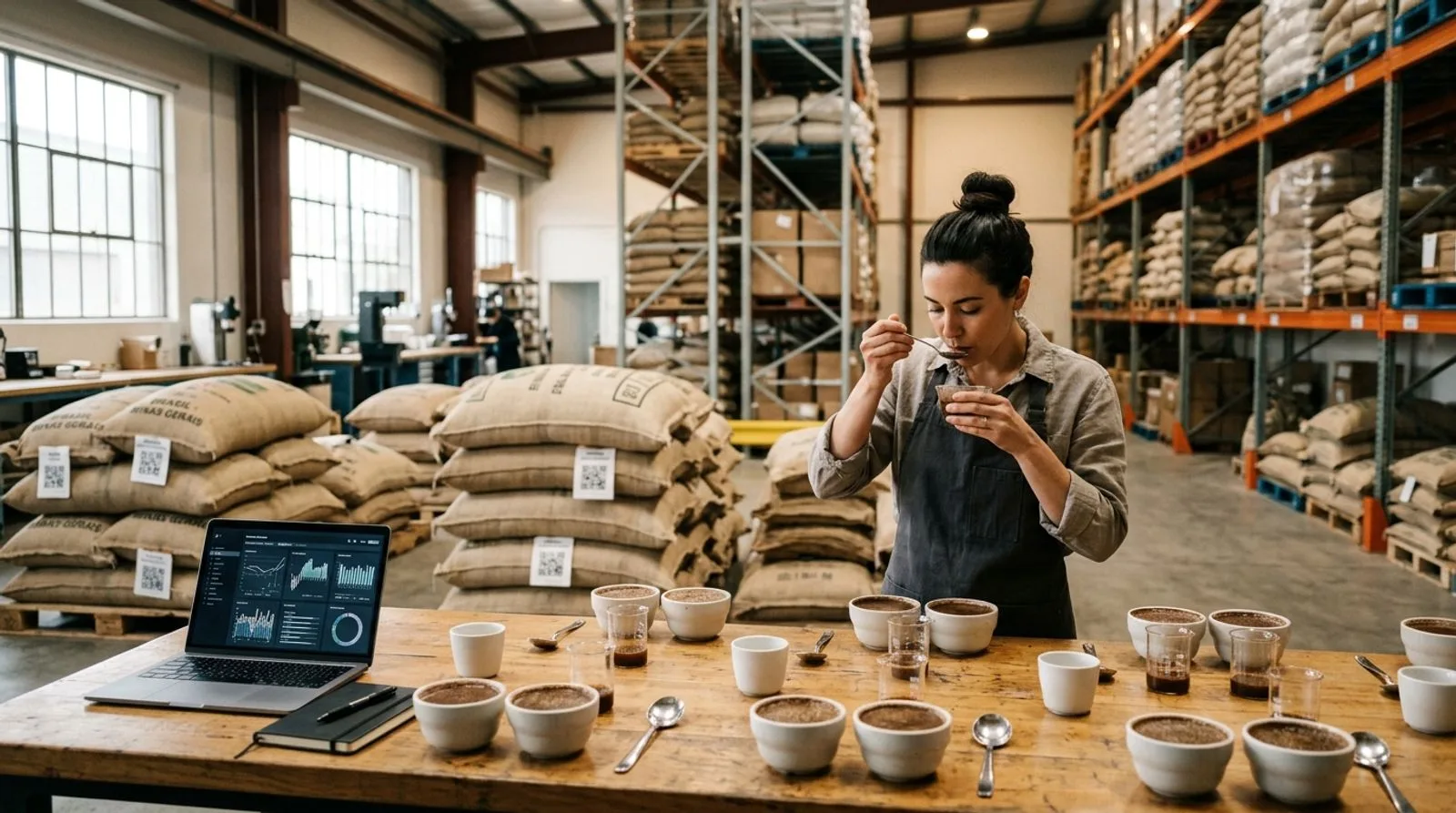
Coffee samples, traceability tags, and production planning dashboard in a roasting business
SELECTION FRAMEWORK

How to choose an ERP for a coffee roasting business

Coffee ERP selection should begin with the operating model, not a feature checklist. A small specialty roaster selling subscriptions has different constraints from an importer, a private-label manufacturer, a multi-cafe group, or a ready-to-drink producer. Document revenue channels, facilities, legal entities, warehouses, currencies, production processes, quality programs, integrations, and expected growth. Then identify the five failures that cost the most today—such as stockouts, stale inventory, inaccurate roast plans, slow recalls, delayed financial closes, or unknown margin.

Prove lot traceability in both directions

Ask each vendor to start with a green-coffee receipt and show every downstream transaction. The system should preserve supplier lot, internal lot, origin and contract attributes, quality status, storage location, production consumption, blend relationships, packaged finished lots, and customer shipments. Then reverse the process from a customer complaint or finished bag. The team should be able to identify affected inventory and customers quickly without exporting several reports and reconciling them manually.

Model yield, freshness, and real production

Roasting changes weight, and actual output rarely matches a simplistic bill of material. Demonstrate planned versus actual green input, roasted output, loss percentage, packaging scrap, rework, samples, and adjustments. If the company blends before or after roasting, test both relevant methods. Review how the software treats roast dates, best-by dates, shelf-life policy, first-expired-first-out allocation, quality holds, and releases. Scheduling should account for roaster capacity, changeovers, packaging resources, labor, and promised ship dates at the level your operation truly requires.

Connect commerce without losing control

Map Shopify or other ecommerce orders, subscriptions, wholesale portals, marketplaces, electronic data interchange, point of sale, shipping, and customer-specific pricing. Determine which platform owns the item, customer, price, inventory, and order record. A dependable architecture prevents duplicate master data and explains how failures are monitored and replayed. Ask about API limits, connector ownership, update frequency, middleware, test environments, and additional fees.

Demand usable costing and margin

Green coffee cost includes more than the supplier invoice. Freight, insurance, duties, warehousing, financing, and currency effects can materially change landed cost. The selected platform should show how those costs flow through lots, roasting, packaging, labor, overhead, and finished products. Finance and operations should agree on whether the business needs standard, average, first-in-first-out, specific-lot, or another method. Test margin by stock-keeping unit, customer, channel, order, and brand using the same definitions executives will use after launch.

Evaluate implementation as carefully as software

Request a named project team, timeline, responsibilities, data templates, testing plan, training approach, cutover method, and post-launch support model. Speak with references that resemble your size and production style. Assign internal owners for item data, recipes, customers, vendors, inventory, finance, integrations, and reporting. Finally, calculate three-year total cost and include employee time, hardware, label changes, partner services, contingency, and ongoing administration. A credible vendor will discuss tradeoffs and data readiness, not promise that every process will work immediately out of the box.

Run the same scripted demo with every finalist

Give vendors a sample green-coffee purchase, two blends, three package sizes, a week of wholesale and ecommerce orders, one quality hold, and a mock customer complaint. Ask them to complete receiving, quality approval, roast planning, production, packaging, fulfillment, backward traceability, forward traceability, and margin reporting without prepared screenshots. Score task completion, number of workarounds, speed, record clarity, and the effort required to configure missing steps. This controlled exercise produces a fairer comparison than separate feature-led demonstrations.

FINAL RECOMMENDATIONS

Match the platform to the problem you actually need to solve

The coffee software market does not offer one universal winner because “ERP” describes several different needs. If production teams primarily need green-lot visibility, roast planning, profile consistency, and connected quality data, a coffee-native platform such as Cropster will usually deliver value with less translation. When the critical bottleneck is coordinating wholesale demand with roasting, packaging, and fulfillment, RoasterTools deserves a focused demonstration. Wherefour offers a practical middle path for growing batch manufacturers that want disciplined inventory, production, costing, and genealogy without immediately adopting a large corporate suite.

Full food ERP becomes appropriate when the business needs manufacturing controls to post directly into robust finance, purchasing, sales, quality, and warehouse processes. Inecta Food ERP is particularly relevant to Microsoft-oriented mid-market organizations. BatchMaster should be considered when formulas, laboratory controls, variable yields, and process manufacturing drive complexity. Aptean is more naturally suited to larger multi-site food operations with formal governance and a budget for enterprise implementation.

Horizontal cloud platforms solve a different set of problems. Cin7 Core can work well for an omnichannel brand that values inventory and commerce connectivity. NetSuite is strongest where multi-entity accounting, international operations, and consolidated reporting dominate the business case. Odoo can provide broad functionality and attractive modular economics when the buyer has disciplined technical ownership. Acumatica is a credible option for distribution-heavy companies, particularly those combining coffee, equipment, parts, and service.

Before signing, turn every important promise into a documented requirement with an owner and an acceptance test. Confirm the exact modules, user assumptions, transaction limits, environments, interfaces, data migration, reports, labels, training, support response, uptime commitment, security controls, backup practices, and annual price terms included in the contract. If a capability depends on customization or a third-party extension, record who maintains it and how upgrades are tested.

Implementation readiness should influence the final ranking. Clean item and customer records, approved formulas, defined lot rules, accurate opening inventory, and clear financial dimensions matter as much as software. Establish a cross-functional steering group with representatives from green buying, roasting, quality, packaging, warehouse, sales, ecommerce, finance, and information technology. Give frontline users enough time to test realistic scenarios and report friction before cutover.

The best final decision is evidence-based: a platform aligned with the company’s operating model, proven against real transactions, supported by credible references, and affordable over at least three years. Choose the smallest system that can reliably support near-term growth without creating another data island. That discipline protects both product quality and profitability while giving the coffee team better information for every purchase, roast, package, and shipment.

COMMON QUESTIONS

Coffee ERP software FAQ

Practical answers for roasters, importers, manufacturers, and coffee brands comparing operations platforms.

What is coffee ERP software?

Coffee ERP software connects core business records such as purchasing, inventory, production, quality, sales, warehousing, and finance. A coffee-focused system may add green-lot attributes, roast planning, roast profiles, cupping, blend genealogy, yield loss, freshness, and packaged-lot traceability. Some products in this guide are complete financial ERPs, while others are specialized operational platforms designed to integrate with accounting and commerce tools.

How is coffee ERP different from roast profiling software?

Roast profiling software primarily captures and analyzes time, temperature, rate-of-rise, machine, and profile information to improve repeatability. ERP covers the wider transaction lifecycle: buying green coffee and packaging, receiving lots, planning demand, consuming materials, recording output, valuing inventory, fulfilling orders, and posting financial results. Coffee-native suites may overlap both categories, but buyers should verify whether accounting and corporate functions are native or integrated.

How much does coffee ERP software cost?

Costs vary too widely for one reliable average. Vendors may charge by user, module, location, transaction volume, resource consumption, or a combination. The budget should include subscription or licenses, implementation, data migration, integrations, custom reports, training, support, devices, labels, testing environments, and internal project time. Request a three-year total-cost model with renewal assumptions instead of comparing only first-year subscription prices.

Which coffee ERP is best for a small roaster?

A small roaster should prioritize usability, coffee-specific workflow, traceability, production planning, and clean integration with existing accounting and ecommerce tools. Cropster or RoasterTools may be easier to align with daily roasting than a broad enterprise suite, while Wherefour can be a practical option when formal batch inventory and manufacturing control are the main goals. The correct choice depends on order volume, channels, staff capacity, and required financial depth.

Can an ERP integrate with Shopify and coffee subscriptions?

Many platforms offer direct connectors, partner applications, APIs, or middleware for Shopify and other commerce systems, but capability varies by product and plan. Confirm how products, customers, subscriptions, discounts, tax, payments, inventory, fulfillment status, refunds, and bundles synchronize. Ask who supports the connector, how quickly data moves, what happens during an outage, whether historical orders migrate, and whether API or transaction fees apply.

What traceability functions should a coffee roaster require?

At minimum, require supplier and internal lot identifiers, origin and receipt records, quality status, locations, production consumption, blend relationships, roast and packaging dates, finished lot codes, and customer shipment history. The system should perform forward and backward searches rapidly, distinguish held from released inventory, record adjustments, and export a clear recall report. Test split lots, substitutions, rework, co-packed products, samples, and returns rather than demonstrating only a perfect straight-line batch.

How should ERP handle roast loss and production yield?

The system should record actual green input, roasted output, expected output, loss quantity, loss percentage, packaging usage, scrap, and adjustments. It should preserve traceability while updating inventory and cost correctly. Ask whether yield tolerances can trigger review, whether results vary by coffee or roast profile, and how variance affects finished-goods valuation. Use real production examples because generic assembly demonstrations often hide this requirement.

Do coffee companies need a food-specific ERP?

Not always. A coffee-native operations platform plus accounting may be sufficient for an independent roaster. A general ERP can work for an omnichannel brand or multi-entity group if coffee requirements are configured well. Food-specific ERP becomes more valuable when the company has multiple plants, extensive formulas, quality laboratories, allergen concerns, regulatory documentation, private-label customers, ready-to-drink production, complex recalls, or formal supplier and specification management.

How long does coffee ERP implementation take?

A focused operational platform may be deployed in weeks or a few months, while a broad ERP can require several months to more than a year depending on entities, facilities, modules, integrations, migration, customization, and staff availability. Vendor estimates should include discovery, design, configuration, data cleansing, integration, conference-room pilots, user acceptance testing, training, cutover, and stabilization. Rushing master data and testing usually creates more delay after launch.

What should be included in a coffee ERP request for proposal?

Include company structure, sites, users, channels, order volumes, item counts, production methods, warehouses, currencies, quality and traceability obligations, accounting requirements, integrations, reporting, security, support, and growth assumptions. Add scripted scenarios using representative lots and orders, require vendors to label capabilities as standard, configured, third-party, or custom, and request itemized three-year pricing. Define acceptance criteria before contract signature.

Written by

gerry galloway

Gerry Galloway

CEO / Co-Founder of FoodReady. Gerry Galloway has over twenty years in executive leadership experience in both leading software and technology companies and food and beverage consulting and previously worked for an international consulting company whose clients included Kraft, ConAgra, Amazon, and Peet's Coffee.

Get a demo

Speak with our Expert Consultants

15–30 minutes. We map FoodReady to your process, plug in your real HACCP plan, and show you the auditor view before the call ends.

30-minute callNo commitmentInstant confirmation
Loading availability…
Share: