

Sushi HACCP Plan Templates & Examples for Compliance
Identify food safety hazards, set critical limits, and document procedures with our customizable sushi HACCP plan templates and AI HACCP builder.
Create a USDA-approved HACCP plan for sushi.
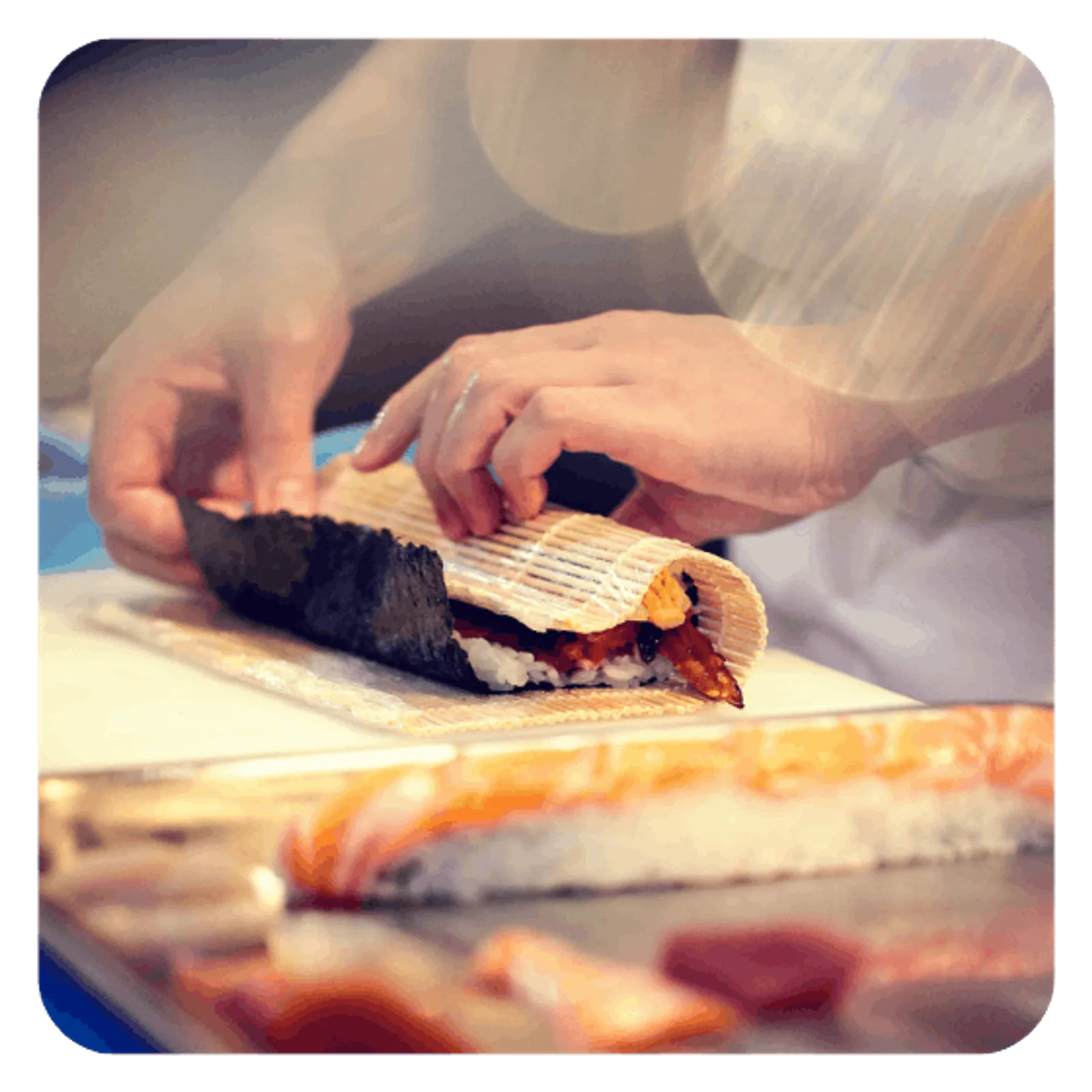
Sushi HACCP templates you can start from
Each template is prefilled with the hazards, controls, and logs for that product, then fully editable in the plan builder.
Raw fish sushi and rolls
Nigiri, sashimi, and rolls using raw fish. Emphasizes parasite destruction by freezing and histamine control for scombrotoxin-forming species.
Fish based sushi with rice
Prepared sushi with cooked and acidified rice. Adds a pH control point for the rice to control Bacillus cereus and Clostridium botulinum.
Packaged sushi (ROP)
Sushi held in reduced oxygen packaging. Adds cold chain and botulinum controls, and typically requires a variance from your regulatory authority.
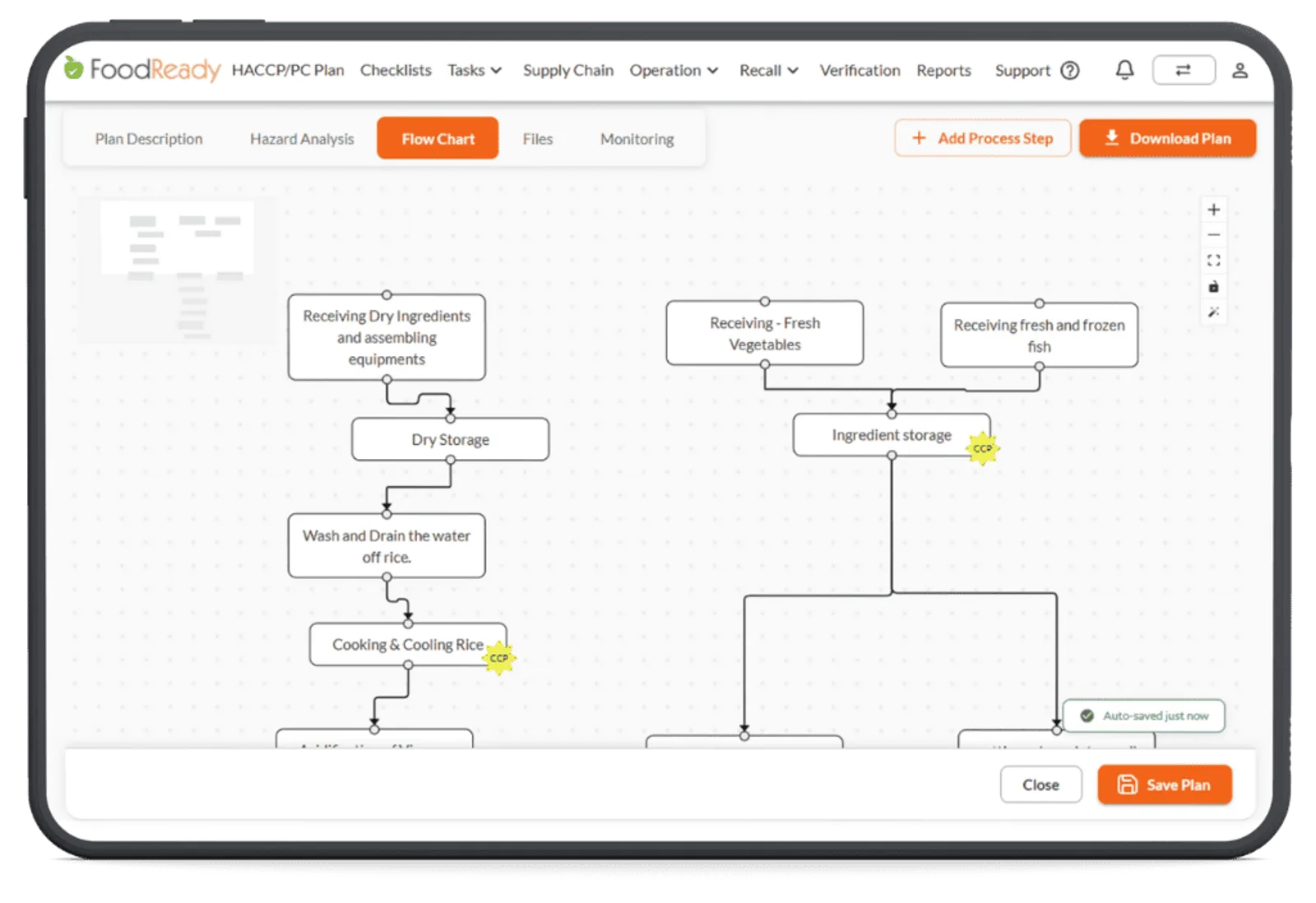
Example sushi process flow
- Receive dry goods & packaging (Prerequisite)
- Receive fresh vegetables (Prerequisite)
- Receive frozen fish (CCP-1 · Parasites)
- Cold storage (CCP-2 · Histamine)
- Wash & cook rice (GMP control)
- Rice acidification (CCP-3 · pH)
- Prep fish & vegetables (Allergen SOP)
- Assemble & cut rolls (GMP control)
- Pack & label (Allergen SOP)
- Refrigerated storage & shipment (CCP-4 · Cold hold)
Sushi hazard analysis and critical limits
Seafood specific hazards only. Each critical control point below maps to the process flow above, with the control and critical limit an auditor expects to see.
| process step | hazard | type | control measure | critical limit |
|---|---|---|---|---|
| Receive frozen fish CCP-1 | Parasites (Anisakis, Diphyllobothrium) in fish served raw | Biological | Freeze for parasite destruction, or supplier certificate confirming prior freezing | -20°C (-4°F) for 7 days, or -35°C (-31°F) until solid, held 15 hrs |
| Cold storage CCP-2 | Scombrotoxin (histamine) in tuna, mackerel, mahi mahi | Chemical | Receive and hold histamine forming species cold, control cumulative time | Receive at ≤4°C (40°F), hold at ≤4°C (41°F) |
| Rice acidification CCP-3 | Bacillus cereus and Clostridium botulinum in held sushi rice | Biological | Add acid (rice vinegar) and verify finished rice pH before use | Equilibrium pH ≤4.6 (target 4.1 to 4.2) |
| Refrigerated storage CCP-4 | Listeria monocytogenes growth in ready to eat product | Biological | Maintain cold chain through storage, display, and shipment | ≤4°C (41°F) throughout cold chain |
| Prep & assembly | Undeclared allergens (fish, shellfish, soy, sesame, wheat and egg in surimi) | Chemical | Allergen control program, dedicated tools, accurate labeling | Managed by allergen SOP and label verification |
| Prep & assembly | Bones, metal, glass, or hard plastic | Physical | Visual inspection, equipment maintenance, glass and brittle plastic policy | No physical contaminants detected at inspection |
Prerequisite programs that support the plan
A HACCP plan is not the whole food safety system. Good manufacturing practices must be in place first, in line with sanitary processing requirements.
Personnel
Hygiene, health reporting, and training practices.
Sanitary operations
Cleaning, sanitizing, and pest control routines.
Sanitary facilities
Water, plumbing, and hand washing controls.
Equipment & utensils
Food contact surface design and upkeep.
Processes & controls
Raw material, operation, and storage controls.
Plant & grounds
Facility layout and grounds maintenance.
Defect action levels
Limits for natural or unavoidable defects.
Warehousing & distribution
Storage and transport under safe conditions.
Logs, SOPs, and supply chain documents
Monitoring records must capture the actual observed value, for example the exact temperature or pH, recorded at the time of observation.
Logs & records
Evidence that the plan is running every day.
- Raw materials and receiving log
- Freezer and thawing log
- Rice pH and acidification log
- Shipping temperature log
- Corrective action forms
- Employee training and illness log
SOPs
Repeatable steps that mitigate hazards.
- Calibrating thermometers
- Cooling potentially hazardous foods
- Cleaning and sanitizing contact surfaces
- Preventing cross contamination
- Allergen control program
- Handling ready to eat foods
Supply chain documents
Controls that reach beyond your facility.
- Supplier food safety plans
- Parasite destruction certificates
- Certificates of analysis
- Product specifications
- Allergen statements
- Country of origin records
Who needs a sushi HACCP plan
Sushi sits under FDA jurisdiction, not USDA. The right framework depends on whether you sell at retail or process and distribute product.
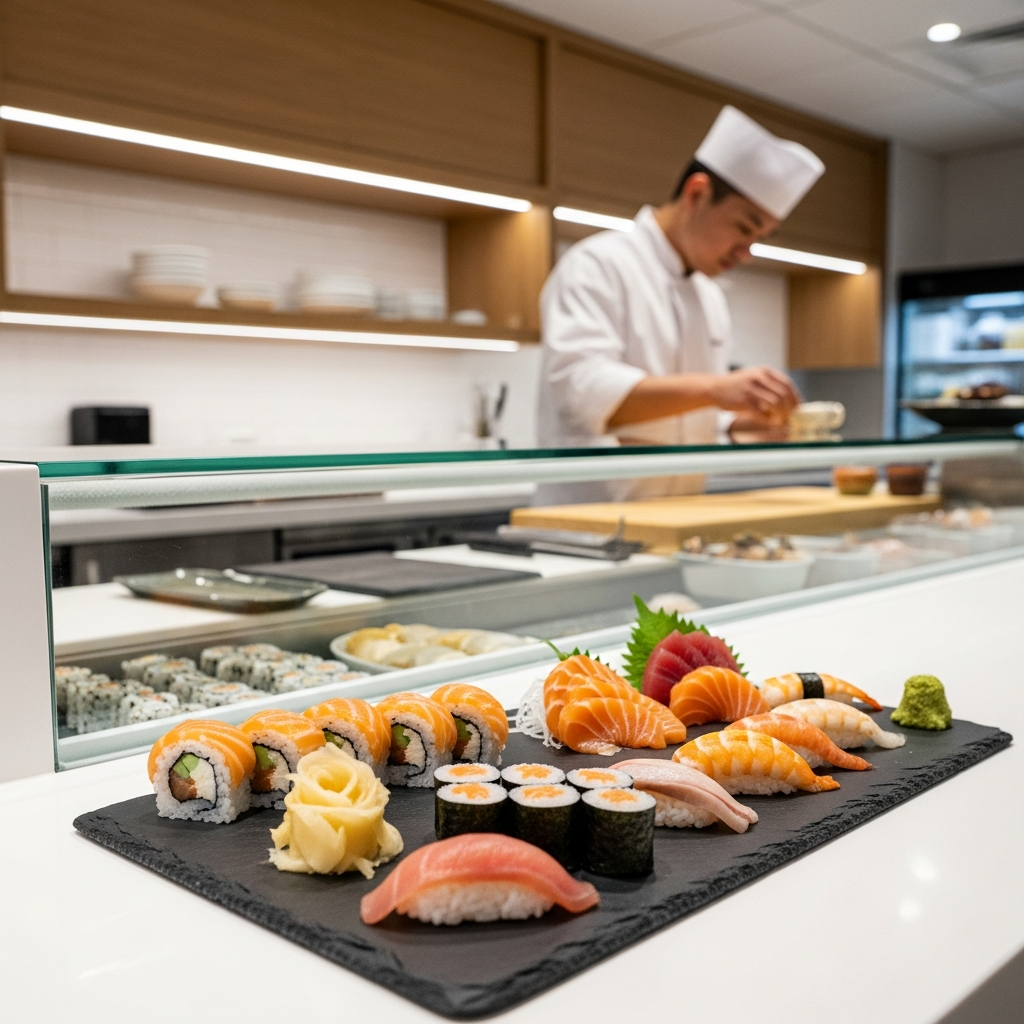
Restaurants and grocery sushi bars
Operations that prepare sushi for direct sale to consumers. Acidifying rice, using reduced oxygen packaging, or serving raw fish that is not frozen for parasite control usually triggers a written plan and a variance from your regulatory authority.
- FDA Food Code · adopted by state and local health departments
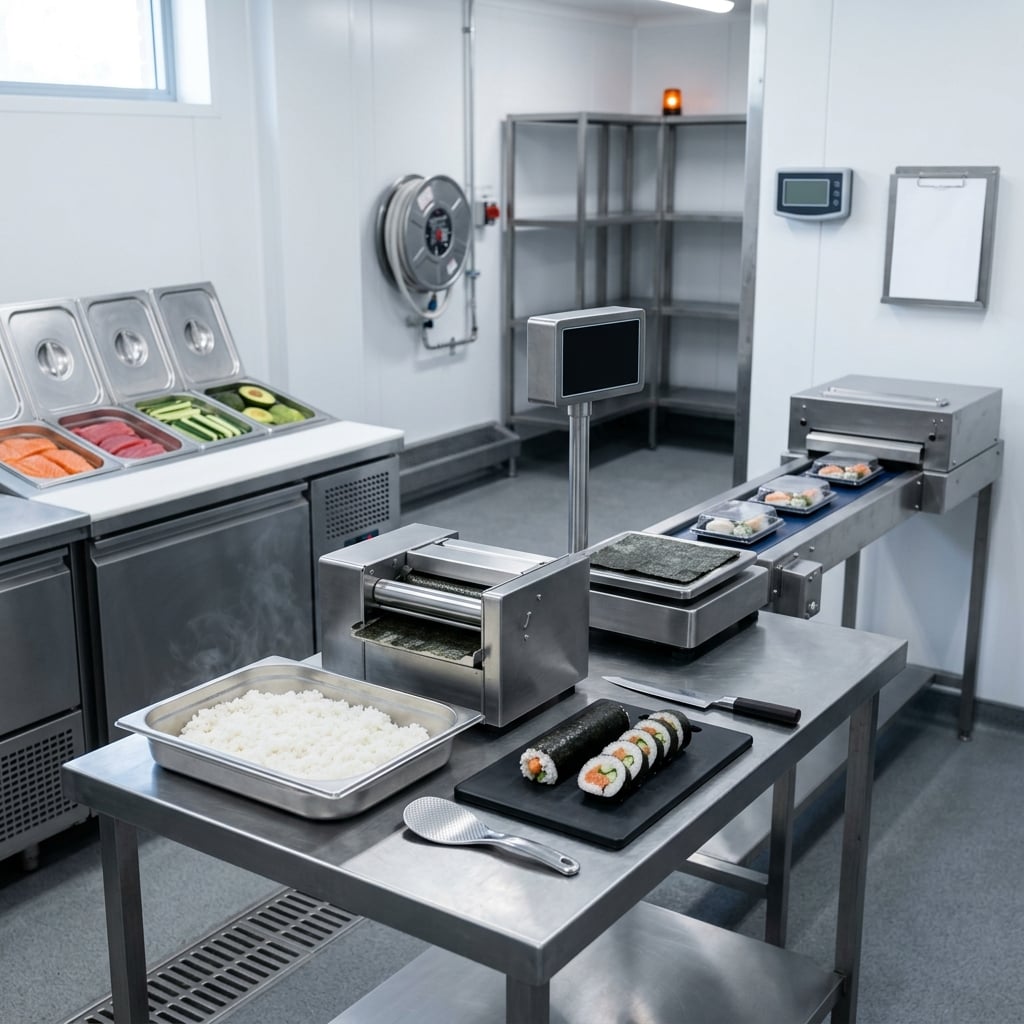
Sushi manufacturers and distributors
Facilities that process or pack fish and fishery products for wholesale distribution. A written seafood HACCP plan is mandatory, including parasite and histamine controls where the species and process call for them.
- FDA Seafood HACCP · 21 CFR Part 123
Additional components for full compliance
These components are recommended to meet state and federal rules alongside your HACCP plan.
RECALL PLAN
Written recall plan
Under FSMA Preventive Controls for Human Food, a written recall plan is required when a hazard analysis identifies a hazard needing a preventive control.
A recall removes an adulterated, misbranded, or violative product from the market before it reaches consumers.
VERIFICATION & VALIDATION
Verification and validation
Verification confirms the plan is followed correctly each day across supply chain, sanitation, allergen, and critical controls.
Validation confirms the plan rests on sound science that is adequate to control the identified hazards.

Dave Seddon
Every FoodReady HACCP template is built and reviewed by practicing food safety professionals, then aligned to current FDA guidance. This sushi plan follows the seafood hazards and controls that auditors expect to see, so you start from a defensible baseline rather than a blank page.
- SQF Lead Auditor
- FDA Seafood HACCP
- SOC 2 Type II platform
Sushi HACCP, answered
Does a sushi HACCP plan fall under FDA or USDA?
Sushi and fishery products are regulated by the FDA. Processors and wholesalers follow FDA Seafood HACCP under 21 CFR Part 123, while retail sushi operations follow the FDA Food Code as adopted by state and local health departments. USDA-FSIS regulates meat, poultry, and egg products, not seafood.
What are the critical control points for sushi?
The most common CCPs are freezing fish for parasite destruction, cold control for histamine forming species, acidifying sushi rice to a safe pH, and maintaining the cold chain for ready to eat product. Your exact CCPs depend on your process and the species you use.
Why does sushi rice need a pH control point?
When acidified rice is held at room temperature, controlling pH limits the growth of Bacillus cereus and Clostridium botulinum. Operations typically verify an equilibrium pH at or below 4.6, with a working target near 4.1 to 4.2 for a safety margin.
Do I need a variance to make sushi at retail?
Often yes. Acidifying rice for room temperature holding, using reduced oxygen packaging, or serving fish that has not been frozen for parasite control usually requires an approved variance and a HACCP plan from your regulatory authority. Check with your local health department.
Can I edit the template for my specific menu?
Yes. The template is a starting point. You can adjust hazards, control measures, critical limits, and logs to match your products in the plan builder, and a food safety expert can review your customizations.
Start your sushi HACCP plan today
Begin from a sushi HACCP plan template, customize your control points, and generate audit-ready documentation with the FoodReady plan builder.
Speak with our Expert Consultants
15–30 minutes. We map FoodReady to your process, plug in your real HACCP plan, and show you the auditor view before the call ends.