

Seafood HACCP Plan Template and Examples
Build your seafood HACCP plan around the hazards that actually apply to your species and process, with an editable hazard analysis, CCP framework, monitoring records, corrective actions, and verification tools.
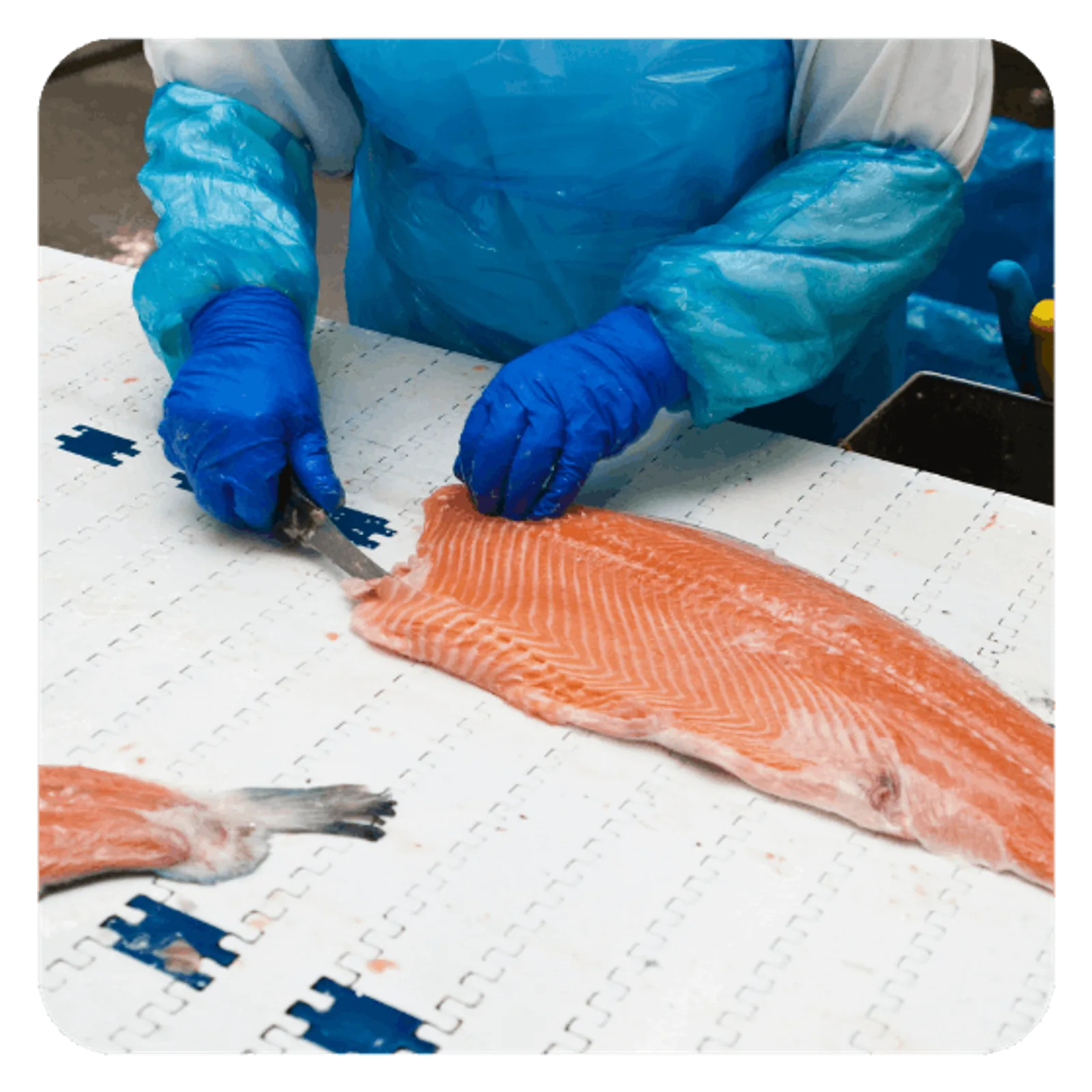
Seafood HACCP templates you can start from
Choose a starting point that matches your seafood category and process, then tailor the hazards, CCPs, critical limits, monitoring, corrective actions, and verification to your operation.
Raw & refrigerated finfish
For fresh or frozen finfish handled without a lethality step. Supports evaluation of parasites, scombrotoxin formation, environmental contaminants, time-temperature abuse, allergens, and physical hazards.
Cooked ready-to-eat seafood
For cooked shrimp, crab, lobster, fish, and other refrigerated ready-to-eat seafood. Focuses on validated cooking, cooling, post-lethality contamination, cold storage, and labeling controls.
Specialized seafood processes
For smoked fish, reduced-oxygen packaged seafood, molluscan shellfish, aquaculture products, dried seafood, or other processes with specialized hazards and control strategies.
Example seafood process flow
- Receive raw seafood— Supplier & receiving controls
- Receiving evaluation — CCP-1— Species / source hazards
- Refrigerated raw storage— Time-temperature control
- Trim, wash & prepare— SSOP / allergen controls
- Cook / lethality step — CCP-2— Pathogen survival
- Cool cooked product — CCP-3— Pathogen growth
- Post-cook handling— Sanitation control
- Portion / pack— GMP & foreign material controls
- Label verification — CCP-4— Allergens
- Cold storage & shipment — CCP-5— Time / temperature
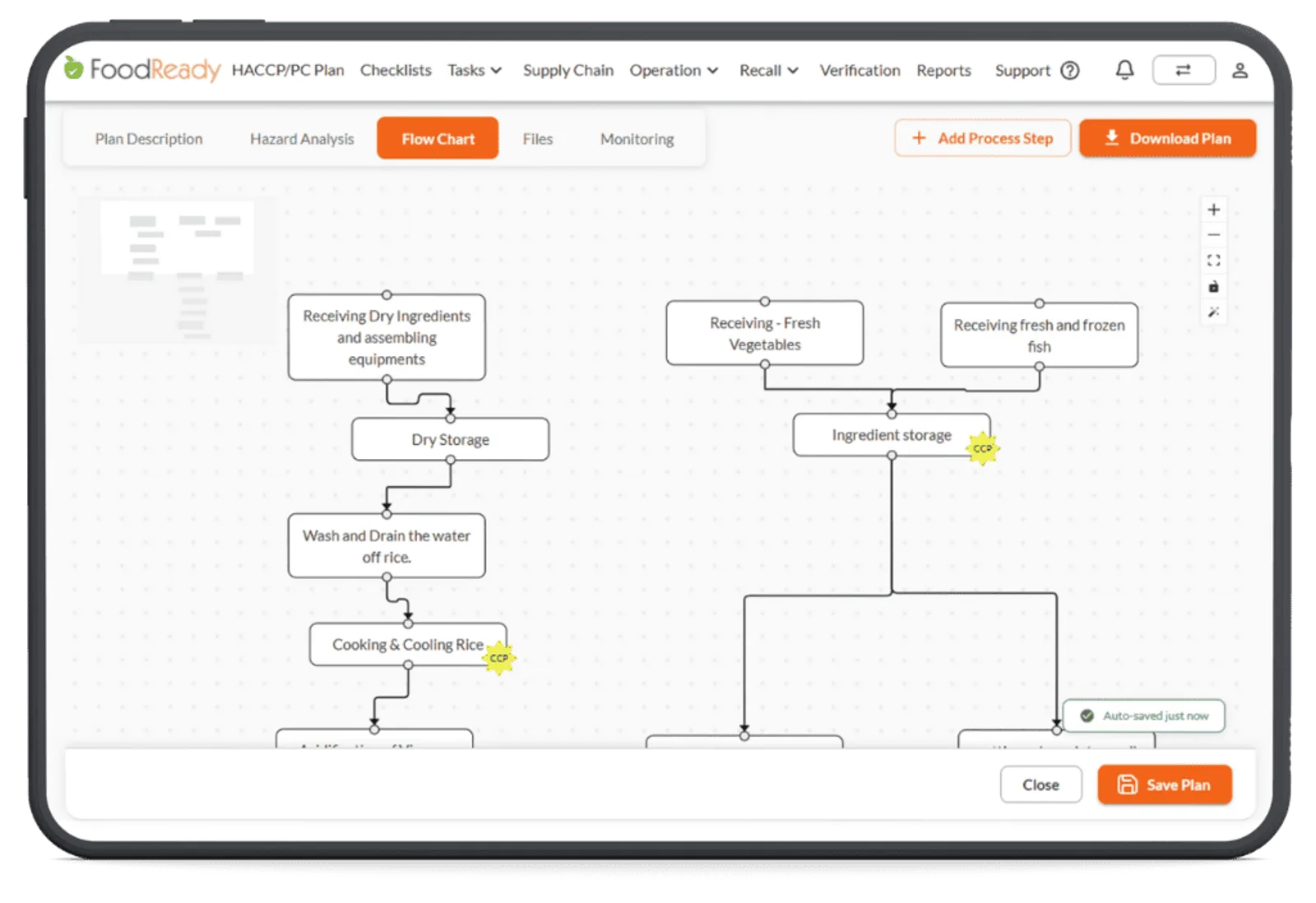
Seafood hazard analysis and critical limits
Seafood specific hazards only. Each critical control point below maps to the process flow above, with the control and critical limit an auditor expects to see.
| process step | hazard | type | control measure | critical limit |
|---|---|---|---|---|
| Receiving evaluation CCP-1 | Scombrotoxin formation in susceptible species, harvest-area pathogens or natural toxins in shellfish, or other species/source hazards | Species / source | Use the FDA species tables and applicable control strategy: harvest vessel records, temperature evaluation, approved source documentation, tags, or testing as appropriate | Product-specific limit from the selected FDA control strategy and supplier/harvest documentation |
| Cook / lethality step CCP-2 | Survival of pathogenic bacteria in cooked ready-to-eat seafood | Biological | Apply a scientifically validated cooking or pasteurization process and monitor the scheduled time/temperature parameters | Validated minimum internal temperature / time schedule for the specific product and target pathogen |
| Cooling CCP-3 | Pathogenic bacteria growth or toxin formation during cooling | Biological | Control cooling time and product temperature using a validated cooling profile, adequate airflow, shallow product depth, or other process-specific measures | Validated cooling limits established from FDA Chapter 12 or equivalent scientific support |
| Label verification CCP-4 | Undeclared major food allergens or incorrect ingredient / species labeling | Chemical | Verify the correct label and allergen declaration is applied to the correct product before release | Correct label present; required major allergens accurately declared |
| Cold storage & shipment CCP-5 | Pathogenic bacteria growth, toxin formation, or scombrotoxin formation during refrigerated storage and distribution | Biological | Maintain refrigerated control with continuous or routine temperature monitoring and defined corrective-action triggers | Time-temperature critical limits selected for the product, packaging, and identified hazard |
| Raw material / processing | Parasites, aquaculture drug residues, environmental chemical contaminants, natural toxins, metal, glass, or other physical hazards where applicable | Evaluate | Determine significance using FDA Chapters 3-21; control through HACCP, supply-chain controls, sanitation, or prerequisite programs as appropriate | Species- and process-specific; not automatically a CCP |
Prerequisite programs that support the plan
A HACCP plan is not the whole food safety system. Sanitation controls and current good manufacturing practices support the HACCP system and must be implemented alongside the plan.
Safety of water
Water and ice used in processing and on food-contact surfaces.
Food-contact surfaces
Condition and cleanliness of equipment, utensils, gloves, and surfaces.
Cross-contamination
Prevention of cross-contamination from insanitary objects and raw materials.
Handwashing & toilets
Maintenance of handwashing, hand-sanitizing, and toilet facilities.
Adulterant protection
Protection of food, packaging, and contact surfaces from contaminants.
Toxic compounds
Proper labeling, storage, and use of cleaning chemicals and toxic compounds.
Employee health
Control of employee health conditions that could contaminate food.
Pest exclusion
Exclusion of pests from the processing facility and food-handling areas.
Logs, SOPs, and supply chain documents
Seafood HACCP records should document what was actually observed at the CCP, who performed the check, when it occurred, and whether the critical limit was met.
Logs & records
Evidence that the plan is running every day.
- Seafood receiving / source verification log
- Cold storage temperature log
- Cooking / lethality monitoring log
- Cooling and finished-product storage log
- Corrective action and product disposition forms
- Verification and record-review log
Standard operating procedures
Repeatable steps that mitigate hazards.
- Calibrating thermometers and data loggers
- Receiving and evaluating refrigerated seafood
- Cleaning and sanitizing food-contact surfaces
- Preventing raw-to-ready-to-eat cross-contamination
- Allergen and label control program
- Cooking, cooling, and cold-storage procedures
Supply chain documents
Controls that reach beyond your facility.
- Approved supplier and processor documentation
- Harvest vessel records / shellfish tags where applicable
- Certificates of analysis or testing records where applicable
- Species, product, packaging, and process specifications
- Allergen declarations and label approvals
- Importer verification records where applicable
Core components auditors expect around the HACCP plan
A defensible seafood HACCP system includes more than the hazard table. Corrective actions, verification, validation support, sanitation monitoring, and records must work together.
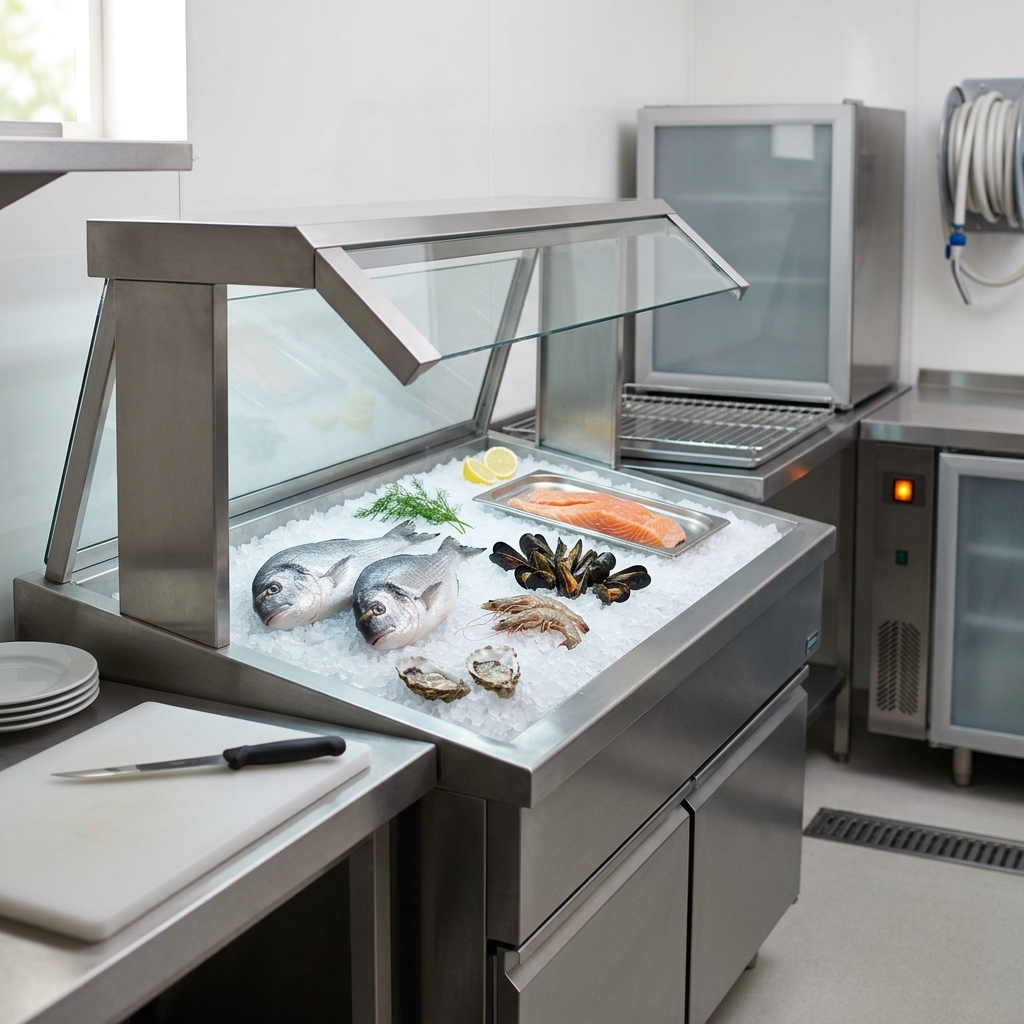
Corrective actions, verification, and records
Define what happens when a critical limit is not met, including control of affected product, correction of the cause, and documentation of the action taken.
Verification should include record review, calibration of monitoring instruments, and other activities needed to confirm that the HACCP system is functioning as intended.
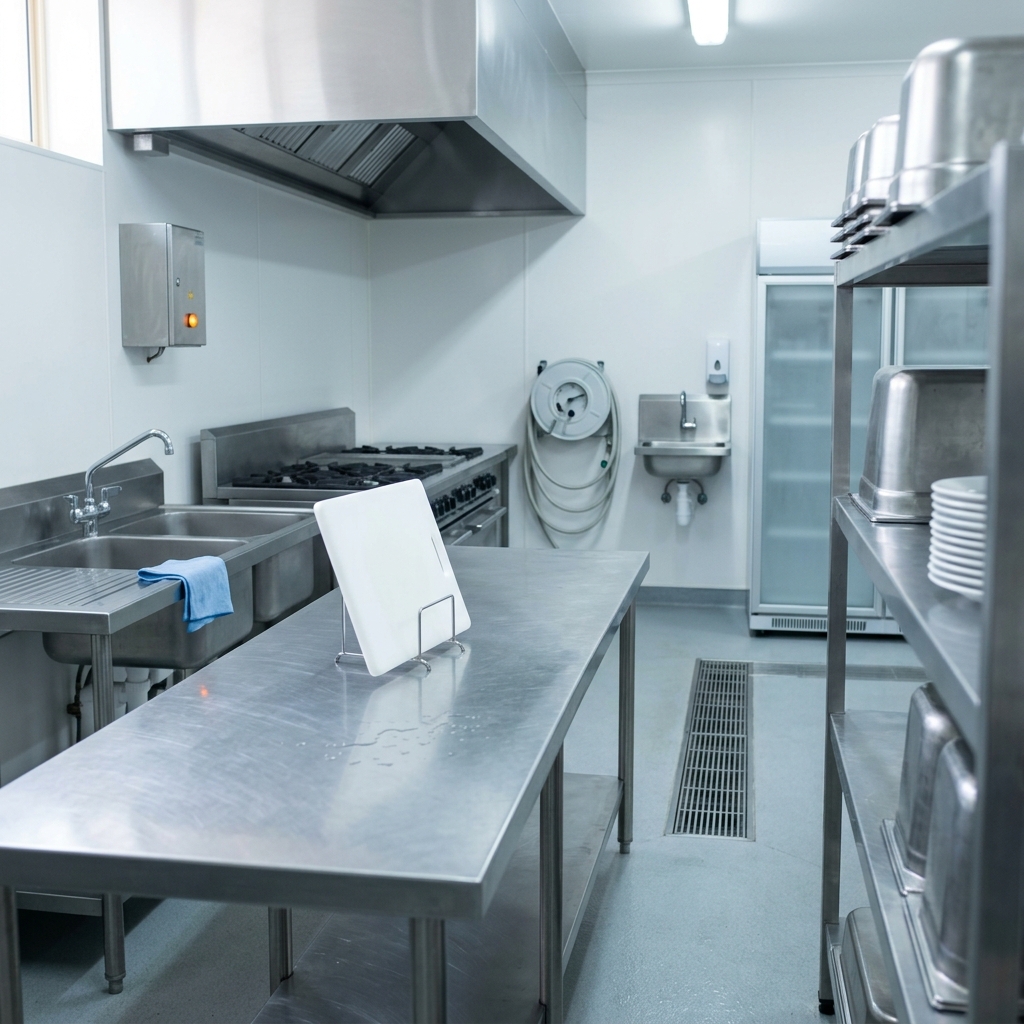
Sanitation monitoring and HACCP-trained personnel
Processors must monitor the sanitation conditions and practices specified by the seafood regulation and keep sanitation control records when required.
Certain HACCP functions must be performed by an individual who has successfully completed appropriate seafood HACCP training or is otherwise qualified through equivalent job experience.
Additional components for a complete Seafood HACCP program
These supporting elements strengthen your Seafood HACCP plan and help demonstrate that hazards, sanitation, records, and corrective actions are being effectively controlled.
Written sanitation controls
SANITATION CONTROL PROCEDURES
Seafood processors must monitor key sanitation conditions and practices that can affect the safety of fish and fishery products.
Your sanitation program should address areas such as food-contact surface cleanliness, prevention of cross-contamination, employee hygiene, protection from adulterants, safe water and ice, chemical control, employee health, and pest exclusion.
Documenting these controls helps show that the prerequisite conditions supporting your HACCP plan are consistently maintained.
Verification and implementation
VERIFICATION & VALIDATION
Verification confirms that your Seafood HACCP plan is being implemented as written. This can include reviewing monitoring and corrective-action records, checking instrument calibration, reviewing sanitation records, and confirming that CCP procedures are followed.
Validation provides the scientific and technical basis for your selected control measures and critical limits. Controls should be appropriate for the seafood species, identified hazard, processing method, packaging, storage conditions, and intended use.
Regular reassessment also helps ensure the plan remains accurate when products, suppliers, equipment, processes, or regulatory requirements change.

Dave Seddon
Every FoodReady HACCP template is built and reviewed by practicing food safety professionals, then aligned to current FDA guidance. This seafood plan follows the seafood hazards and controls that auditors expect to see, so you start from a defensible baseline rather than a blank page.
- SQF Lead Auditor
- FDA Seafood HACCP
- SOC 2 Type II platform
Seafood HACCP, answered
Who is required to have a Seafood HACCP plan?
Processors of fish and fishery products must conduct a hazard analysis under 21 CFR Part 123. When one or more food safety hazards are reasonably likely to occur, the processor must develop and implement a written HACCP plan for those hazards. Importers also have verification obligations under the seafood HACCP regulation.
What are common hazards in a Seafood HACCP plan?
Potential hazards include pathogens from the harvest area, parasites, natural toxins, scombrotoxin formation, environmental chemical contaminants, aquaculture drug residues, pathogen growth from time-temperature abuse, Clostridium botulinum toxin formation, inadequate cooking or pasteurization, undeclared allergens, and metal or glass inclusion. Which hazards are significant depends on the species and process.
Are the same CCPs used for every seafood product?
No. A CCP should be established only where control is necessary for a food safety hazard that is reasonably likely to occur. Raw tuna, cooked shrimp, smoked salmon, molluscan shellfish, and aquaculture products can require very different hazard evaluations and control strategies.
What records should a Seafood HACCP plan include?
Typical records include CCP monitoring logs, corrective action records, verification and record-review documentation, instrument calibration records, sanitation control records, supplier or harvest documentation, and supporting scientific information for critical limits and control strategies.
Can I edit the template for my species and process?
Yes. The template is a starting framework. You should adjust the hazard analysis, CCPs, critical limits, monitoring, corrective actions, verification, records, and supporting documents to match your seafood species, source, packaging, process, intended use, and distribution conditions.
Start your seafood HACCP plan today
Begin from a reviewed seafood template, customize your control points, and generate audit ready documentation with the FoodReady plan builder.
Speak with our Expert Consultants
15–30 minutes. We map FoodReady to your process, plug in your real HACCP plan, and show you the auditor view before the call ends.