

Reduced Oxygen Packaging (ROP) HACCP Plan Template Examples for Compliance
Control Clostridium botulinum and Listeria monocytogenes risks in vacuum packaging, cook-chill, sous vide, and other reduced oxygen packaging processes with a reviewed, editable FoodReady HACCP template.
Create an FDA-approved ROP HACCP plan for food products in reduced oxygen vacuum packaging.
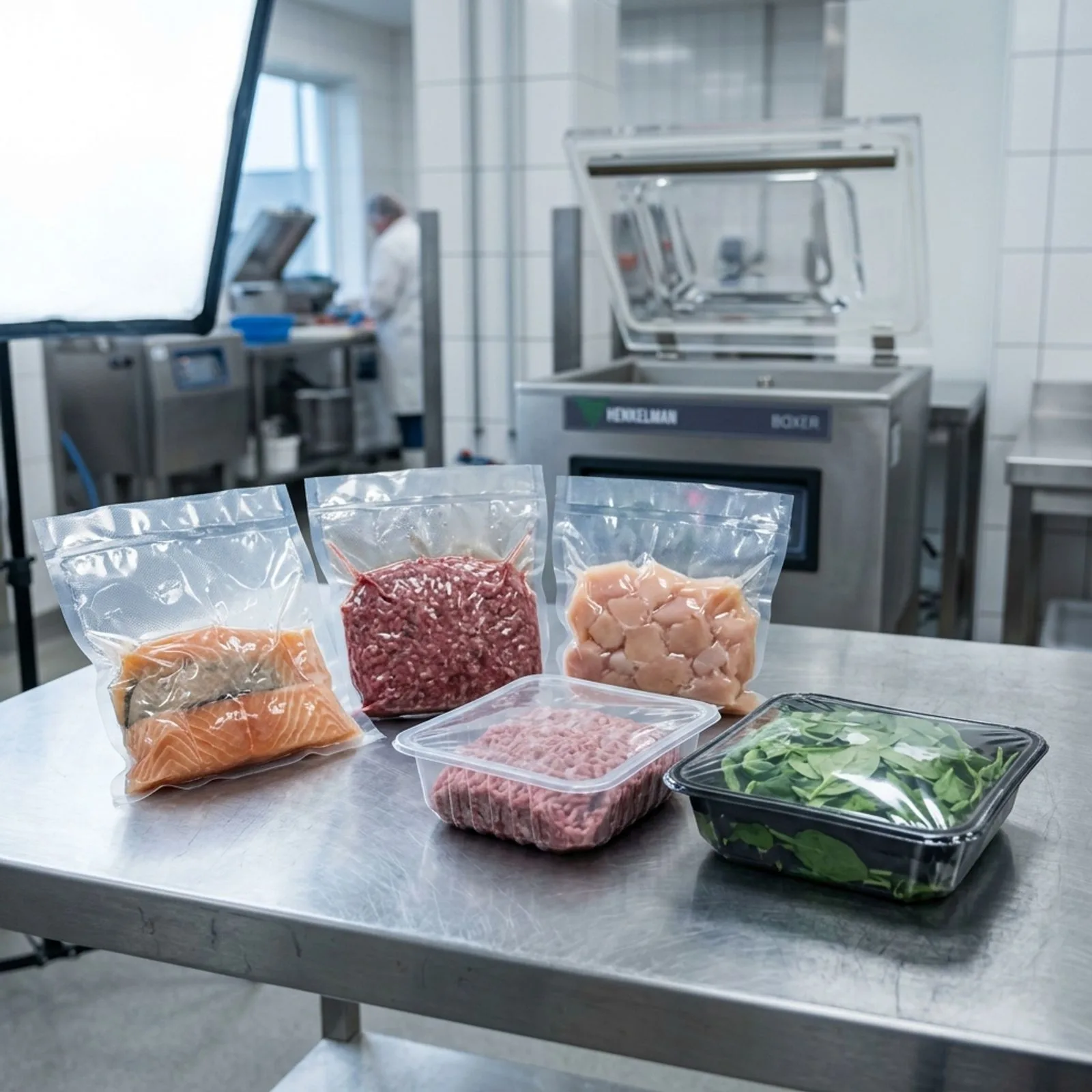
ROP HACCP templates you can start from
Choose the packaging method closest to your operation, then customise hazards, CCPs, shelf-life limits, refrigeration controls, monitoring, corrective actions, and verification.
Vacuum-packaged TCS food
For qualifying refrigerated foods packed under vacuum or another reduced-oxygen atmosphere with required secondary barriers, labeling, refrigeration, and shelf-life controls.
Cook-chill
For food cooked, placed into an oxygen-barrier package while hot, rapidly cooled, and held under tightly controlled refrigeration.
Sous vide
For food sealed in an oxygen-barrier package, cooked in the sealed package, rapidly cooled, refrigerated, and kept under establishment control.
Example ROP process flow
- Receive food & packaging(Supplier control)
- Refrigerated / frozen storage(Cold chain)
- Prepare / portion(Sanitation / allergen control)
- Cook / apply lethality(CCP-1 · Lethality)
- Seal under reduced oxygen(CCP-2 · Package integrity)
- Rapid cool(CCP-3 · Cooling)
- Refrigerated ROP storage(CCP-4 · Time / temperature)
- Date mark / label(Shelf-life control)
- Reheat / prepare for service(Process control)
- Open / serve / discard by use-by(Disposition / records)
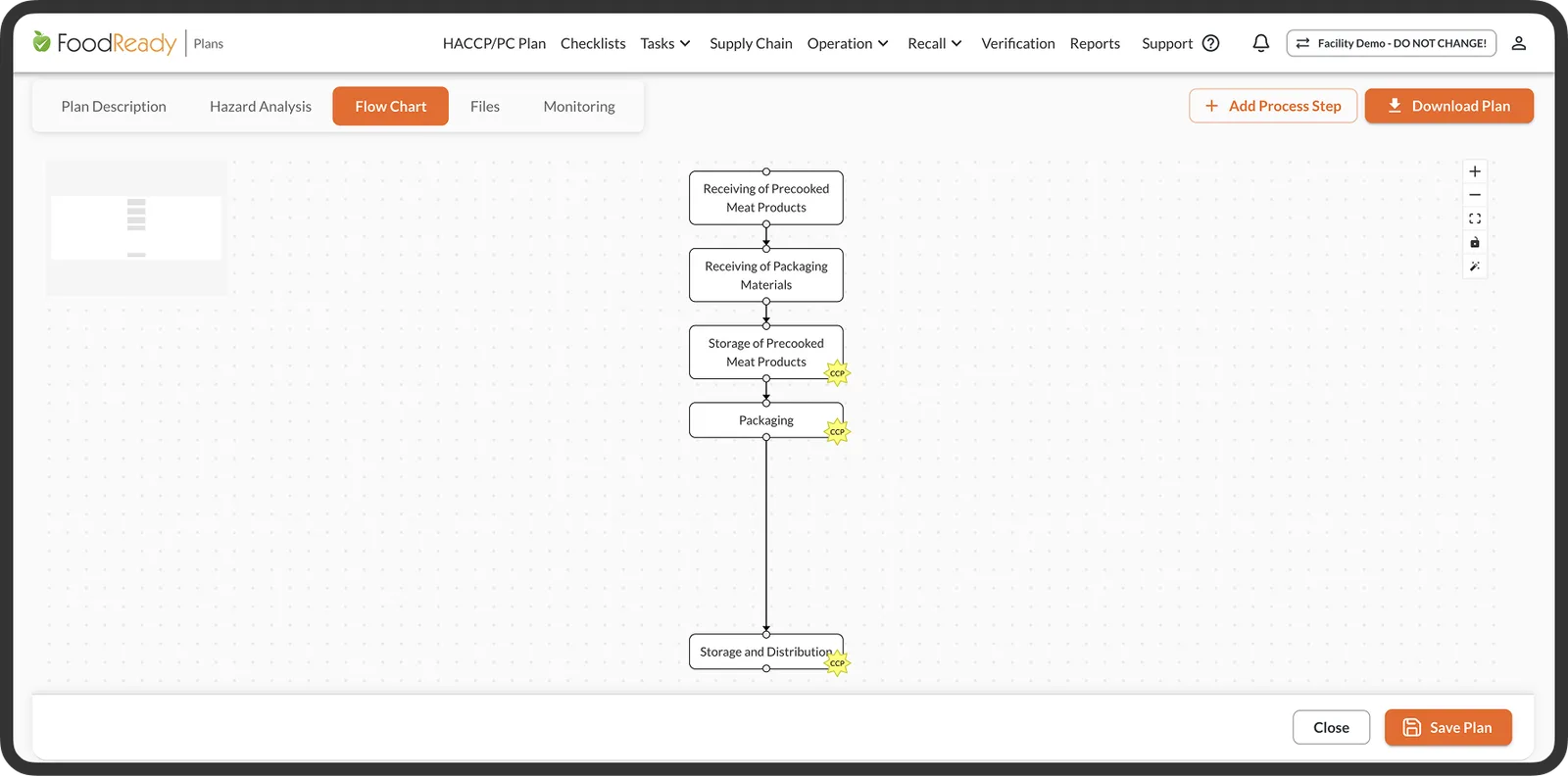
ROP hazard analysis and critical limits
The reduced-oxygen environment changes the risk profile. Primary biological concerns are Clostridium botulinum toxin formation and Listeria monocytogenes growth, with additional hazards depending on the food and process.
| process step | hazard | type | control measure | critical limit |
|---|---|---|---|---|
| Food receiving | Pathogenic microorganisms or temperature-abused TCS food | Biological | Approved suppliers, package inspection, receiving-temperature checks, and lot identification | Meet approved supplier and receiving specifications |
| Cook / lethality CCP-1 | Survival of vegetative pathogens in cooked ROP food | Biological | Validated product-specific cooking process | Meet the validated cooking time / temperature specified in the HACCP plan |
| ROP sealing CCP-2 | Package failure, contamination during sealing, or loss of the intended process barrier | Physical / process | Approved barrier packaging, seal verification, sanitation, and equipment checks | Package and seal meet the facility's validated integrity specification |
| Rapid cooling CCP-3 | Growth of C. perfringens, C. botulinum, or other pathogens during cooling | Biological | Follow the cooling schedule applicable to the selected Food Code ROP method | Meet the approved time-temperature cooling profile |
| ROP refrigerated storage CCP-4 | Clostridium botulinum toxin formation and Listeria monocytogenes growth | Biological | Refrigeration monitoring, defined shelf life, secondary barriers where applicable, and corrective action for excursions | Use the exact storage temperature and maximum shelf life required by the selected § 3-502.12 method or approved variance |
| Date marking / labeling | Product held beyond permitted shelf life or stored incorrectly | Process control | Package date, use-by date, storage instructions, and special handling statements where required | Package bears required use-by and storage instructions |
| Preparation / service | Undeclared allergens or cross-contact | Chemical | Recipe control, allergen identification, cleaned or dedicated utensils, and staff communication | Correct allergen information and no unintended cross-contact |
Prerequisite programs that support the plan
An ROP HACCP plan depends on disciplined refrigeration, sanitation, packaging control, employee training, labelling, and traceability.
Approved suppliers
Food, packaging-film, bag, and equipment specifications and supplier verification.
Cold-chain control
Refrigerator monitoring, alarms, calibration, temperature review, and excursion procedures.
Sanitation
Cleaning, sanitizing, hygienic handling, and protection from post-lethality contamination.
Employee training
Documented ROP hazard, process, labeling, refrigeration, and corrective-action training.
Date marking & labeling
Pack date, use-by date, storage instructions, and special handling statements where required.
Allergen control
Recipe control, cross-contact prevention, and accurate product identification.
Traceability & disposition
Limits for natural or unavoidable defects.
Logs, SOPs, and supply chain documents
ROP records should demonstrate that refrigeration, cooling, package integrity, shelf life, labelling, sanitation, and corrective actions are controlled every day.
Logs & records
Evidence that the ROP process stays within its limits.
- Receiving temperature log
- Cooking / lethality log
- Cooling time-temperature log
- Continuous refrigeration record
- Package / seal verification log
- Corrective action and disposition record
SOPs
Repeatable steps that mitigate hazards.
- Vacuum sealer setup and seal verification
- Cook-chill or sous vide cooling procedure
- Refrigeration monitoring and alarm response
- Thermometer / recorder calibration
- Date marking and use-by labeling
- Sanitation and post-lethality handling
Regulatory & validation documents
Documentation supporting the legal and scientific basis of the process.
- ROP HACCP plan
- Regulatory authority submission / approval records
- Variance documentation when required
- Process and shelf-life scientific support
- Packaging specifications
- Employee ROP training records
Who needs a sushi HACCP plan
Sushi sits under FDA jurisdiction, not USDA. The right framework depends on whether you sell at retail or process and distribute product.
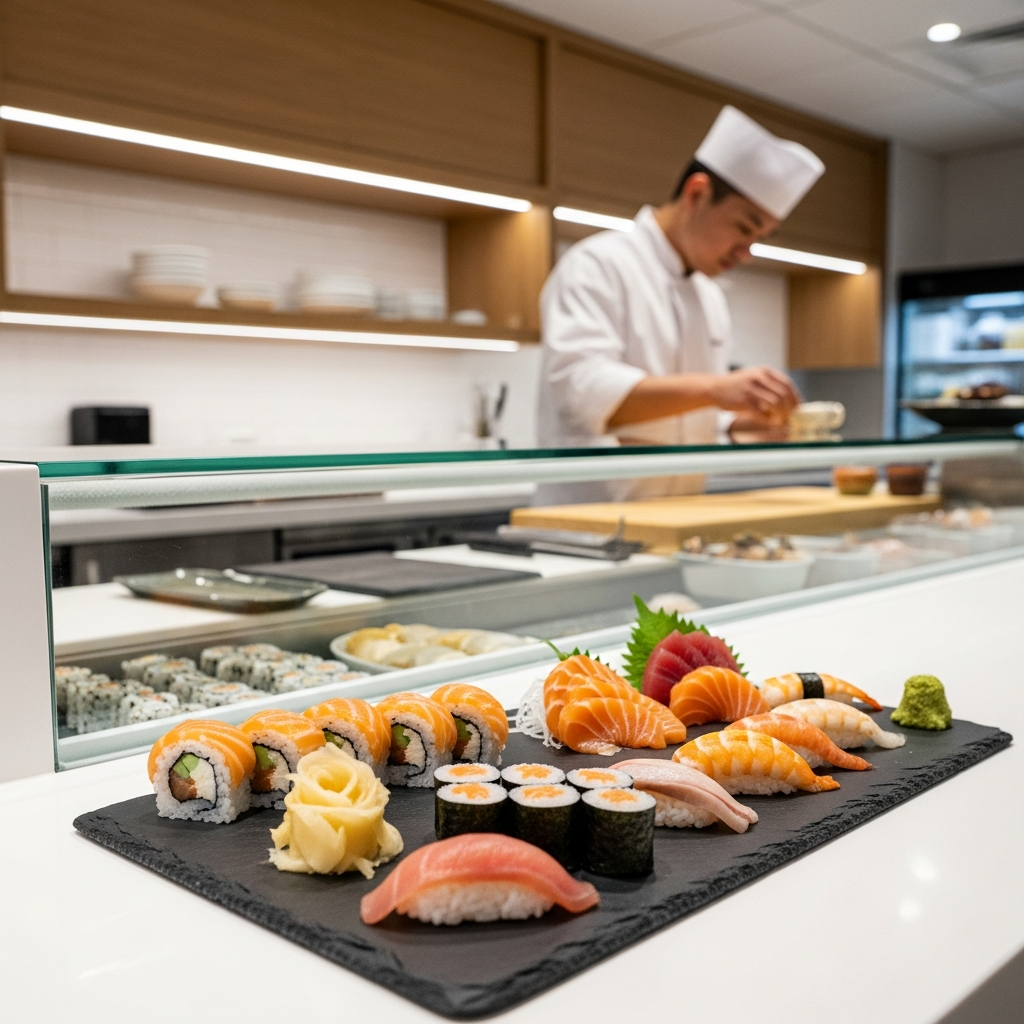
Restaurants and grocery sushi bars
Operations that prepare sushi for direct sale to consumers. Acidifying rice, using reduced oxygen packaging, or serving raw fish that is not frozen for parasite control usually triggers a written plan and a variance from your regulatory authority.
- FDA Food Code · adopted by state and local health departments
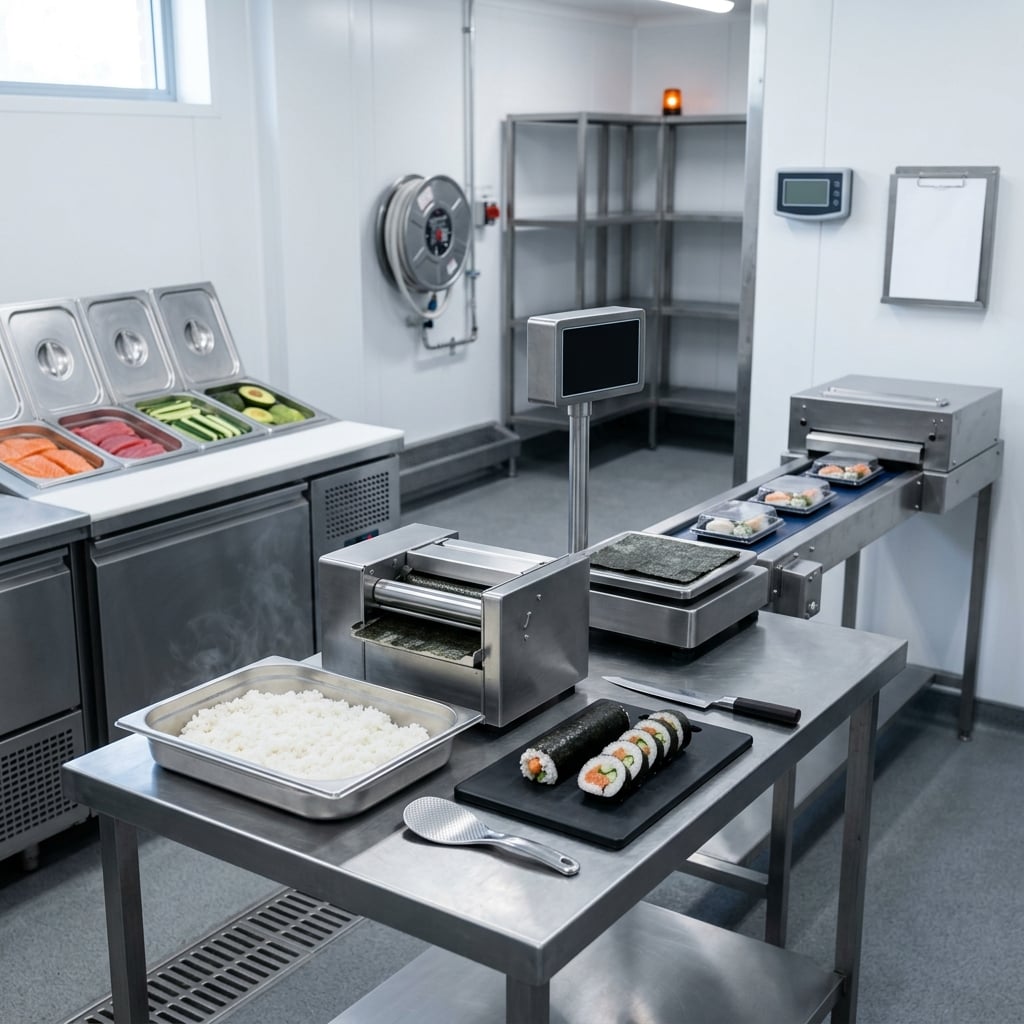
Sushi manufacturers and distributors
Facilities that process or pack fish and fishery products for wholesale distribution. A written seafood HACCP plan is mandatory, including parasite and histamine controls where the species and process call for them.
- FDA Seafood HACCP · 21 CFR Part 123
Additional components for a defensible ROP HACCP system
ROP safety depends on using the correct regulatory pathway and supporting the selected refrigeration, shelf-life, cooling, packaging, and barrier strategy.
Scientific support & validation
Support the barriers used to control C. botulinum and Listeria
Document the scientific basis for product pH, water activity, refrigeration, cooking, cooling, shelf life, preservatives, competing organisms, or other barriers relied upon in the plan.
When using a Food Code method, ensure the product and process meet every condition of that pathway.
Verification & regulatory review
Verify the HACCP plan and regulatory status
Review temperature records, package integrity checks, date marking, corrective actions, calibration, sanitation, and employee training at defined intervals.
Confirm whether the process qualifies under § 3-502.12 or requires a variance under § 3-502.11.

Dave Seddon
Every FoodReady HACCP template is built and reviewed by practicing food safety professionals, then aligned to current FDA guidance. This sushi plan follows the seafood hazards and controls that auditors expect to see, so you start from a defensible baseline rather than a blank page.
- SQF Lead Auditor
- FDA Seafood HACCP
- SOC 2 Type II platform
Reduced Oxygen Packaging, answered
What is reduced oxygen packaging (ROP)? +
ROP is packaging in which oxygen is reduced below normal atmospheric levels. It includes vacuum packaging, modified-atmosphere packaging, controlled-atmosphere packaging, cook-chill, and sous vide, when a reduced-oxygen environment creates food-safety hazards that require control.
Why does ROP require special food-safety controls?
Reduced oxygen can suppress normal spoilage organisms while allowing hazards such as Clostridium botulinum and Listeria monocytogenes to become significant. Temperature, shelf life, product barriers, package integrity, and sanitation therefore become critical parts of the control strategy.
Does ROP always require a variance?
No. FDA Food Code section 3-502.12 allows certain ROP operations without a variance when all specified criteria are met. Other processes may require a variance and approval under section 3-502.11.
What are common CCPs in an ROP HACCP plan?
Depending on the process, common examples include lethality, rapid cooling, refrigerated storage, package integrity, and sometimes formulation or product-barrier controls.
How long can ROP food be held?
There is no single shelf life for all ROP food. FDA Food Code methods use specific time-temperature combinations and, in some cases, other product barriers. The HACCP plan should use the exact limit applicable to the selected method.
Start your ROP HACCP plan today
Begin with a reviewed reduced oxygen packaging template, customize the process for vacuum packaging, cook-chill, sous vide, or another approved ROP method, and organize refrigeration, cooling, shelf-life, packaging, corrective-action, and verification records in one place.
Speak with our Expert Consultants
15–30 minutes. We map FoodReady to your process, plug in your real HACCP plan, and show you the auditor view before the call ends.