

Cloud Kitchen HACCP Plan Templates & Examples for Compliance
Map hazards across every menu on your line, lock in cook and hot-holding limits, and close the gap that matters most: time and temperature once food leaves the pass for delivery.
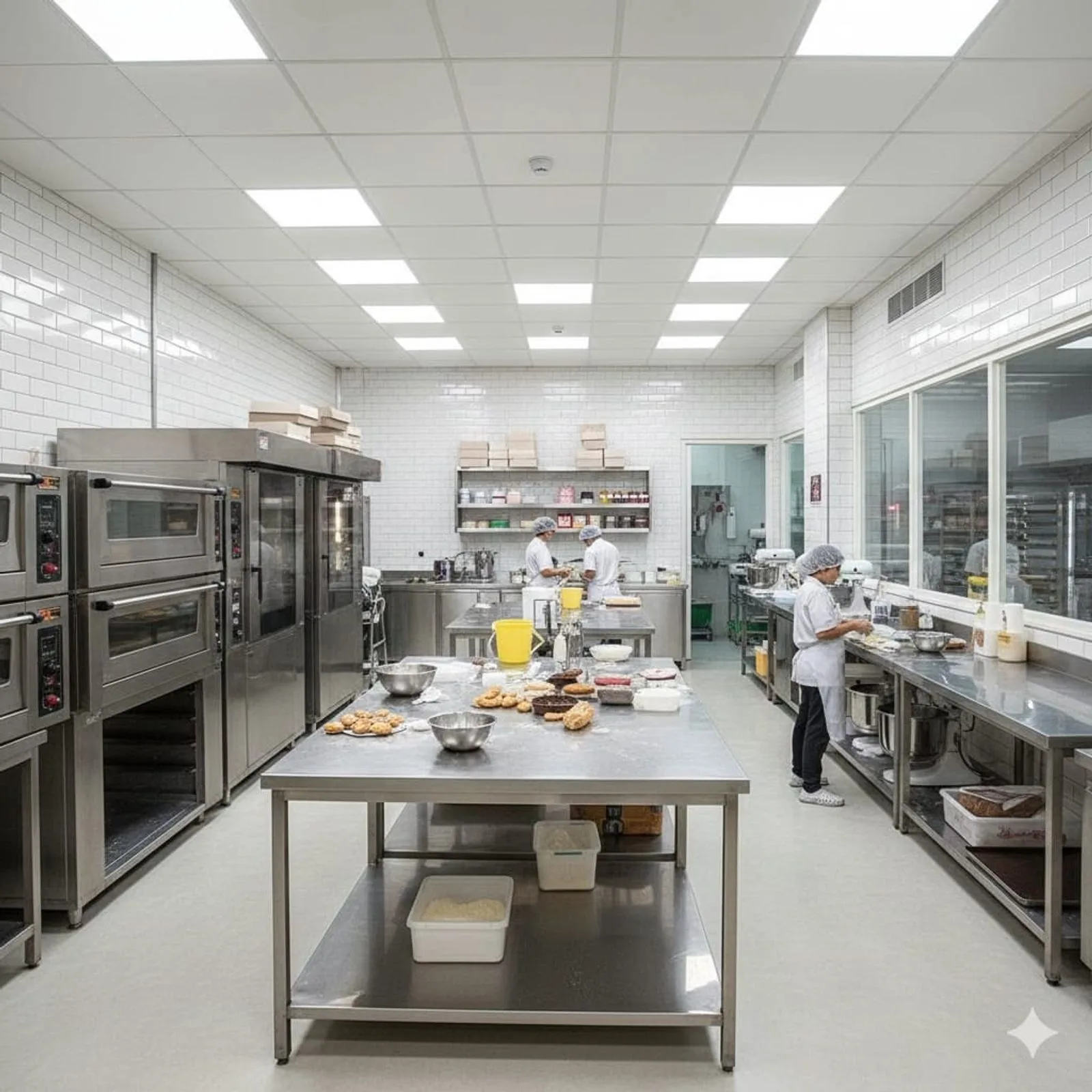
Cloud kitchen HACCP templates you can start from
Each template is prefilled with the hazards, controls, and logs for that operating model, then fully editable in the plan builder.
Single-brand delivery kitchen
Cook-to-order menu dispatched through third-party couriers. Emphasizes cook temperature by menu item and a validated hold time for pickup.
Multi-brand commissary kitchen
Several virtual restaurant brands sharing stations, equipment, and staff. Adds allergen segregation and a shared cleaning schedule across every menu that touches a station.
Batch-cook & meal-prep delivery
Cook-chill or cook-hold-deliver meals, often vacuum sealed or in reduced oxygen packaging for a longer shelf life. Adds extended cold-holding and botulinum controls, and typically requires a variance.
Example cloud kitchen process flow
- Receive dry goods & packaging (Prerequisite)
- Receive refrigerated & fresh ingredients (Prerequisite)
- Receive raw meat, poultry & seafood (CCP-1 · Receiving temp)
- Cold storage (CCP-2 · Cold hold)
- Prep & portion by station (Allergen SOP)
- Cook, per menu item (CCP-3 · Cook temp)
- Hot holding for pickup (CCP-4 · Hot hold)
- Assemble & pack per order (GMP control)
- Label & seal for delivery (Allergen SOP)
- Courier pickup & delivery transit (CCP-5 · Delivery time/temp)
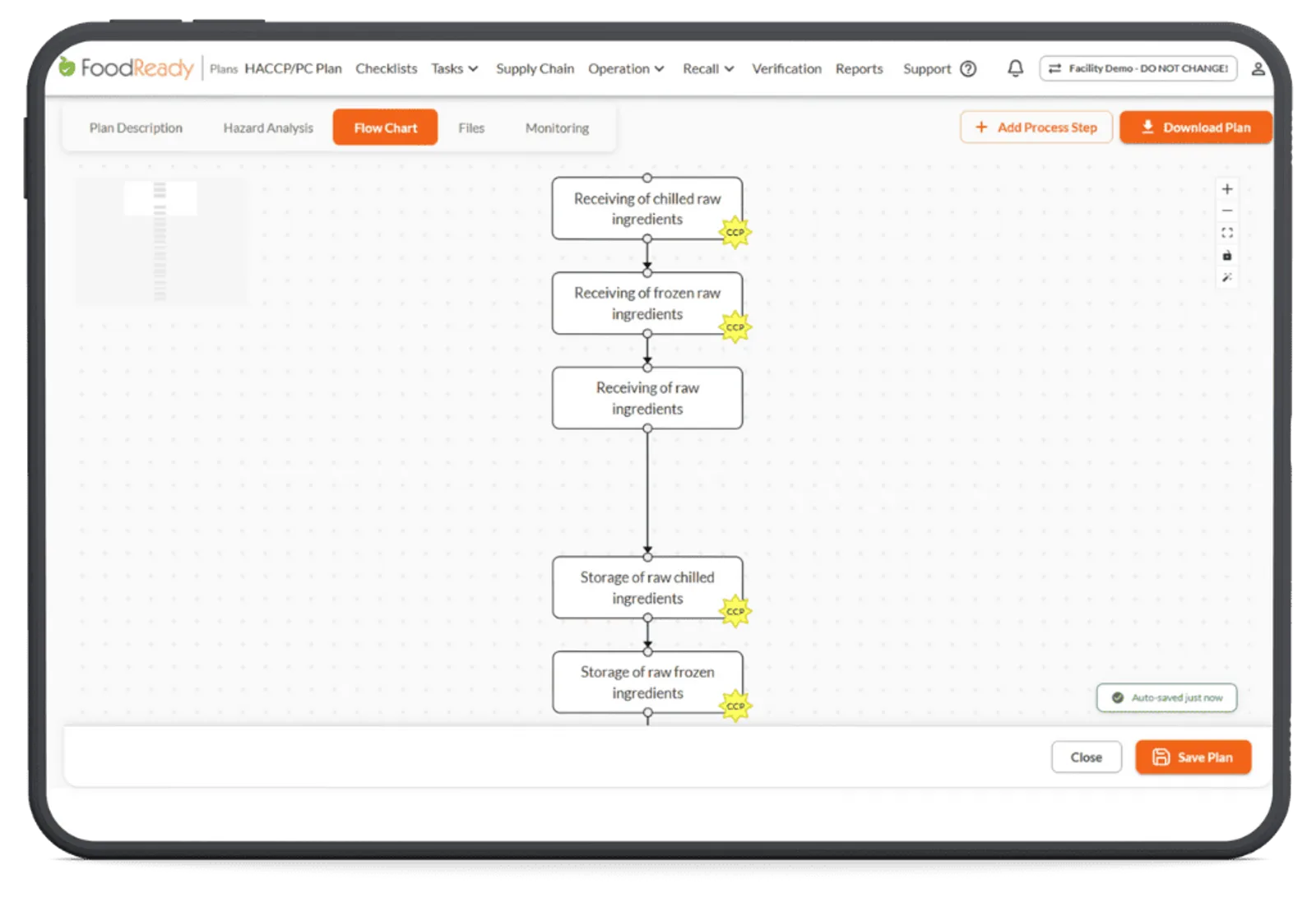
Cloud kitchen hazard analysis and critical limits
Built by process, not by brand, so it holds across your full menu mix. Each critical control point below maps to the process flow above, with the control and critical limit an auditor expects to see.
| process step | hazard | type | control measure | critical limit |
|---|---|---|---|---|
| Receive raw meat, poultry & seafood | Pathogen growth (Salmonella, Campylobacter) from temperature abuse at receiving | Biological | Check and record product temperature on delivery, reject out of range product | ≤5°C (41°F), seafood ≤1°C (34°F) |
| Cold storage | Pathogen growth in raw and ready-to-eat product held between prep and cook | Biological | Hold cold, separate raw from ready-to-eat, monitor unit temperature | ≤5°C (41°F) throughout storage |
| Cook, per menu item | Survival of pathogens in undercooked poultry, ground meat, or seafood | Biological | Cook to the validated minimum internal temperature for each menu item, verify with a calibrated thermometer | 74°C (165°F) poultry, 68°C (155°F) ground meat, 63°C (145°F) whole cuts & seafood, 15 sec |
| Hot holding for pickup | Bacterial growth and toxin formation while food waits for a courier | Biological | Hold hot, check temperature at set intervals, cap staging time before pickup | ≥57°C (135°F), staged ≤30 min before pickup |
| Courier pickup & delivery transit | Time-and-temperature abuse once food leaves direct kitchen control | Biological | Validated insulated packaging, spot-check temperature at handoff, cap total transit time | ≥57°C (135°F) hot / ≤5°C (41°F) cold at handoff, delivered within 45 min |
| Prep & portion by station | Undeclared allergens carried between virtual brands sharing a station | Chemical | Allergen control program, dedicated tools per allergen, label verification per brand and item | Managed by allergen SOP and label verification |
| Prep & assembly | Metal, glass, or hard plastic from packaging and utensils | Physical | Visual inspection, equipment maintenance, glass and brittle plastic policy | No physical contaminants detected at inspection |
Prerequisite programs that support the plan
A HACCP plan is not the whole food safety system. Good manufacturing practices must be in place first, in line with sanitary processing requirements.
Personnel
Hygiene, health reporting, and training practices.
Sanitary operations
Cleaning, sanitizing, and pest control routines.
Sanitary facilities
Water, plumbing, and handwashing controls.
Equipment & utensils
Food contact surface design and upkeep.
Processes & controls
Raw material, operation, and storage controls.
Plant & grounds
Facility layout and grounds maintenance.
Multi-brand & allergen segregation
Station assignments and cleaning between brands.
Delivery & packaging controls
Insulated packaging, sealing, and courier handoff.
Logs, SOPs, and supply chain documents
Monitoring records must capture the actual observed value, for example the exact temperature or pH, recorded at the time of observation.
Logs & records
Evidence that the plan is running every day.
- Raw materials and receiving log
- Cooler and freezer temperature log
- Cooking temperature log, by menu item
- Hot holding and staging log
- Delivery dispatch temperature log
- Corrective action forms
SOPs
Repeatable steps that mitigate hazards.
- Calibrating thermometers
- Cooling potentially hazardous foods
- Cleaning and sanitizing shared stations between brands
- Preventing cross contamination between menus
- Allergen control program
- Packaging and sealing for delivery
Supply chain documents
Controls that reach beyond your facility.
- Supplier food safety letters
- Delivery partner temperature agreements
- Certificates of analysis
- Product specifications, per brand
- Allergen statements, per menu item
- Delivery platform food safety requirements
Who needs a cloud kitchen HACCP plan
Most delivery-only kitchens operate as retail food establishments under the FDA Food Code. The plan changes shape depending on how many brands run through the space and whether any menu item triggers a specialized process.
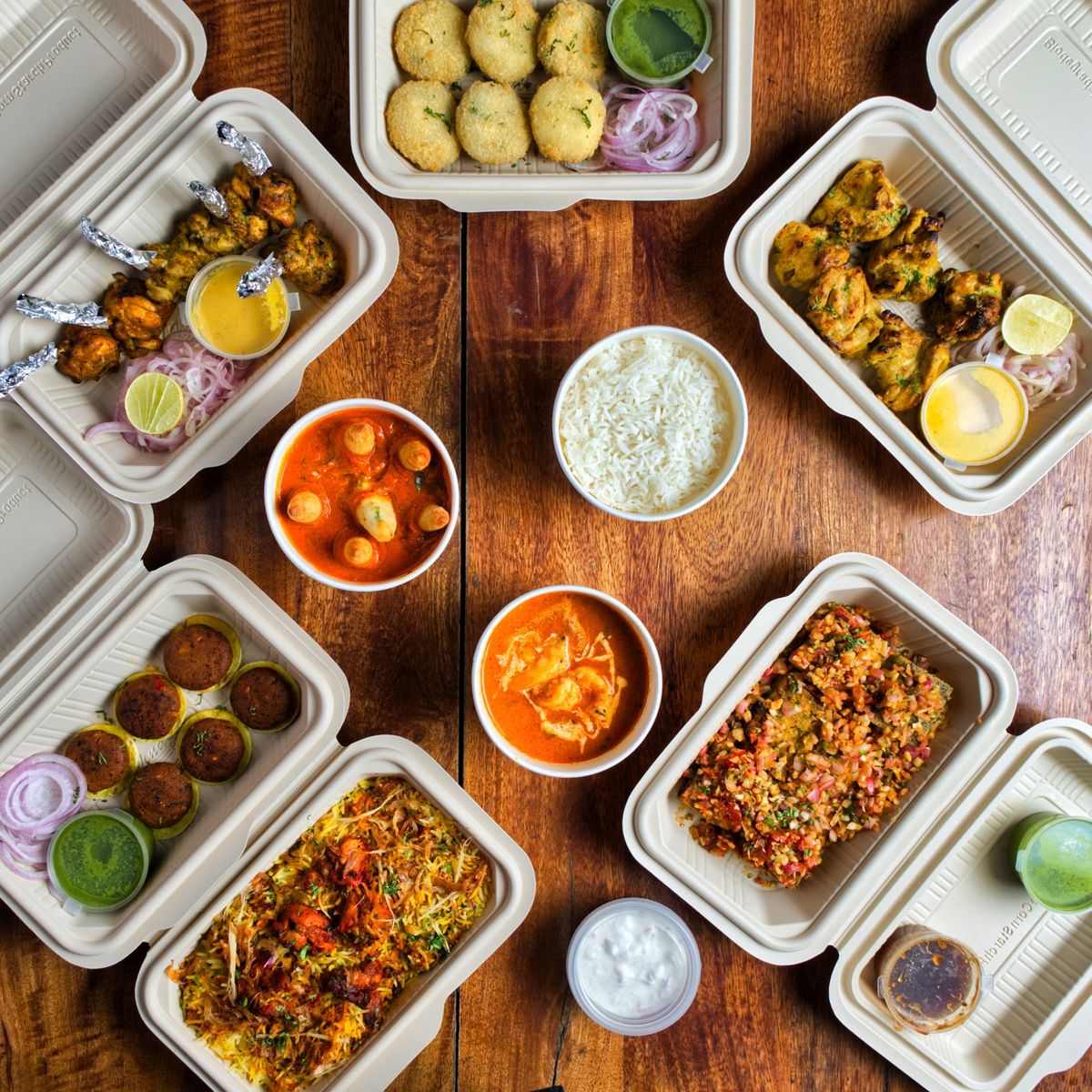
One virtual brand, delivery only
A single menu, cooked to order and dispatched through third-party couriers or your own drivers. The core risk is time and temperature abuse between the pass and the customer's door, not a specialized process.
- FDA Food Code · adopted by state and local health departments
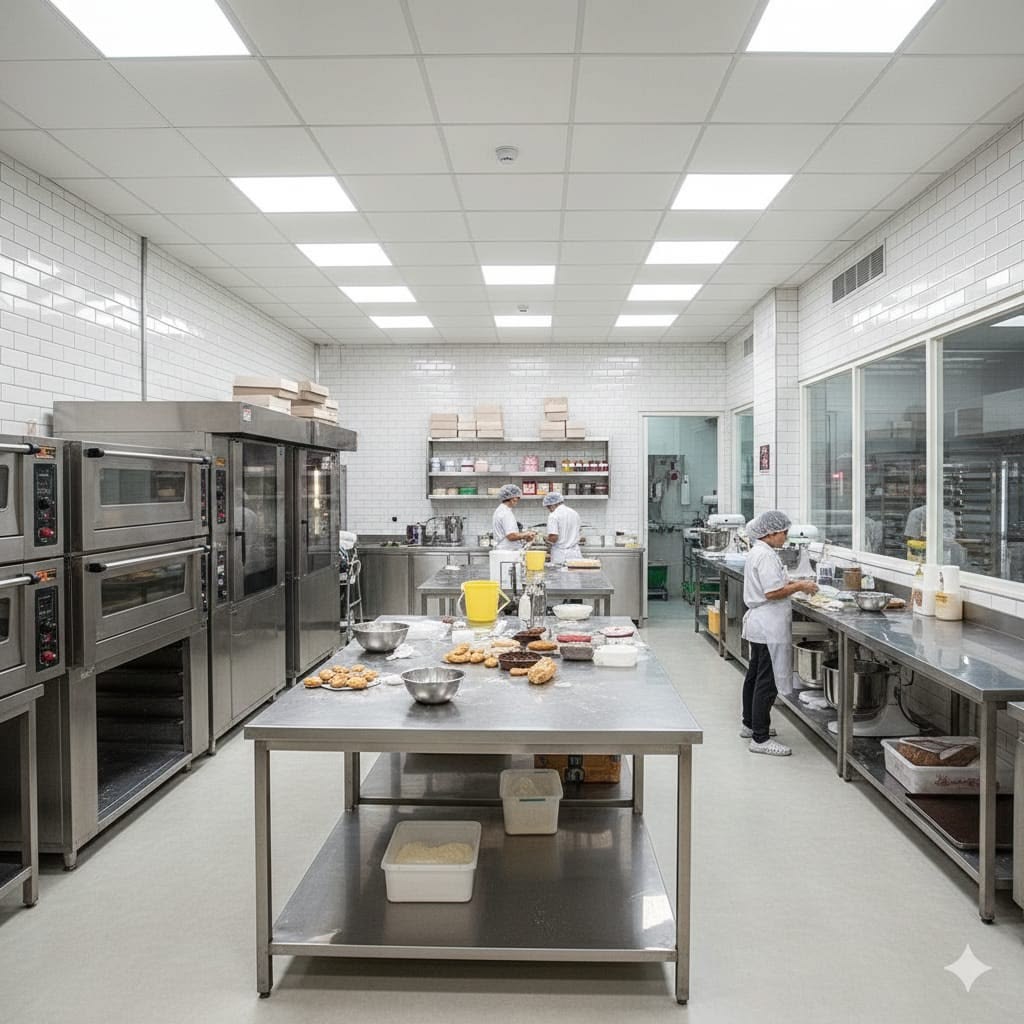
Shared kitchen hosting several virtual brands
One facility, several menus, often shared stations and staff. A single food safety plan has to cover every brand that touches shared equipment, with allergen segregation and cleaning schedules written per station, not per brand name.
- FDA Food Code · plus a variance if any brand uses ROP, curing, or extended shelf-life packaging
Additional components for full compliance
These components are recommended to meet state and federal rules alongside your HACCP plan.
RECALL PLAN
Written recall plan
Under FSMA Preventive Controls for Human Food, a written recall plan is required when a hazard analysis identifies a hazard needing a preventive control.
A recall removes an adulterated, misbranded, or violative product from the market before it reaches consumers.
VERIFICATION & VALIDATION
Verification and validation
Verification confirms the plan is followed correctly each day across supply chain, sanitation, allergen, and critical controls.
Validation confirms the plan rests on sound science that is adequate to control the identified hazards.

Dave Seddon
Every FoodReady HACCP template is built and reviewed by practicing food safety professionals, then aligned to current FDA guidance. This cloud kitchen plan follows the multi-brand hazards and delivery controls that auditors expect to see, so you start from a defensible baseline rather than a blank page.
- SQF Lead Auditor
- FDA Food Code
- SOC 2 Type II platform
Cloud kitchen HACCP, answered
Does a cloud kitchen need a HACCP plan, or just a food safety plan?
Most delivery-only kitchens operate as retail establishments under the FDA Food Code and need a written food safety plan with active managerial control, not a full federal HACCP plan. A formal HACCP plan and variance kick in if any brand on your line uses a specialized process, such as reduced oxygen packaging, curing, or extended shelf-life meal kits.
How do multiple virtual brands share one food safety plan?
Build the hazard analysis around the process, not the brand name. A raw poultry line carries the same cook and cross-contamination risk regardless of which menu it's plated under, so shared stations get one allergen and cleaning schedule that covers every brand that touches them.
What's the biggest food safety risk unique to cloud kitchens?
Time and temperature abuse during courier pickup and delivery transit. There's no dining room to observe holding once food leaves the pass, so validated insulated packaging and a hard cap on transit time are what close that gap.
What cooking temperatures apply across different menu items?
Under the FDA Food Code, poultry needs 165°F, ground meat 155°F, and whole cuts, seafood, and eggs for immediate service 145°F, each held for at least 15 seconds. A multi-brand kitchen needs a validated temperature logged for every distinct item, not one blanket number for the whole menu.
Can I edit the template for my specific menu mix?
Yes. The template is a starting point. You can adjust hazards, control measures, critical limits, and logs to match your brands and menus in the plan builder, and a food safety expert can review your customizations.
Start your cloud kitchen HACCP plan today
Begin from a reviewed multi-brand template, customize your control points, and generate audit ready documentation with the FoodReady plan builder.
Speak with our Expert Consultants
15–30 minutes. We map FoodReady to your process, plug in your real HACCP plan, and show you the auditor view before the call ends.