

Chocolate HACCP Plan Templates & Examples for Compliance
Identify biological, chemical, allergen, and physical hazards across chocolate production with a reviewed, editable HACCP template and AI plan builder.
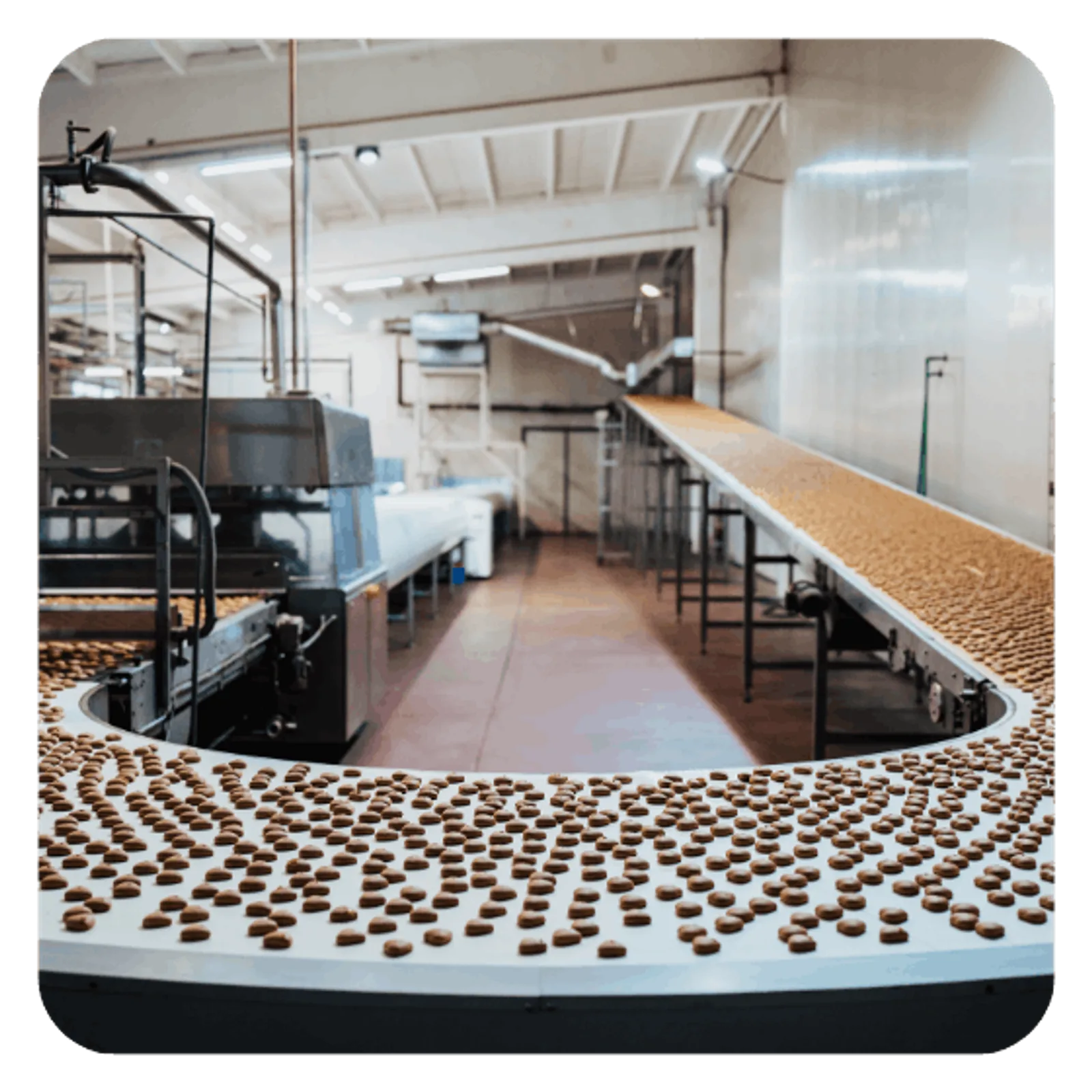
Chocolate HACCP templates you can start from
Each template is prefilled with the hazards, controls, and logs for that product, then fully editable in the plan builder.
Dark & milk chocolate bars
For molded bars and solid chocolate products. Focuses on supplier controls, validated cocoa lethality where applicable, allergen management, tempering, and foreign-material controls.
Filled chocolates & truffles
For ganache, cream, caramel, nut, fruit, or other filled products. Adds stronger controls for water activity, time-temperature exposure, allergens, and shelf-life validation.
Chocolate with nuts & inclusions
For products containing nuts, cookies, dried fruit, crisps, or other inclusions. Emphasizes supplier approval, allergen segregation, inclusion inspection, label control, and metal detection.
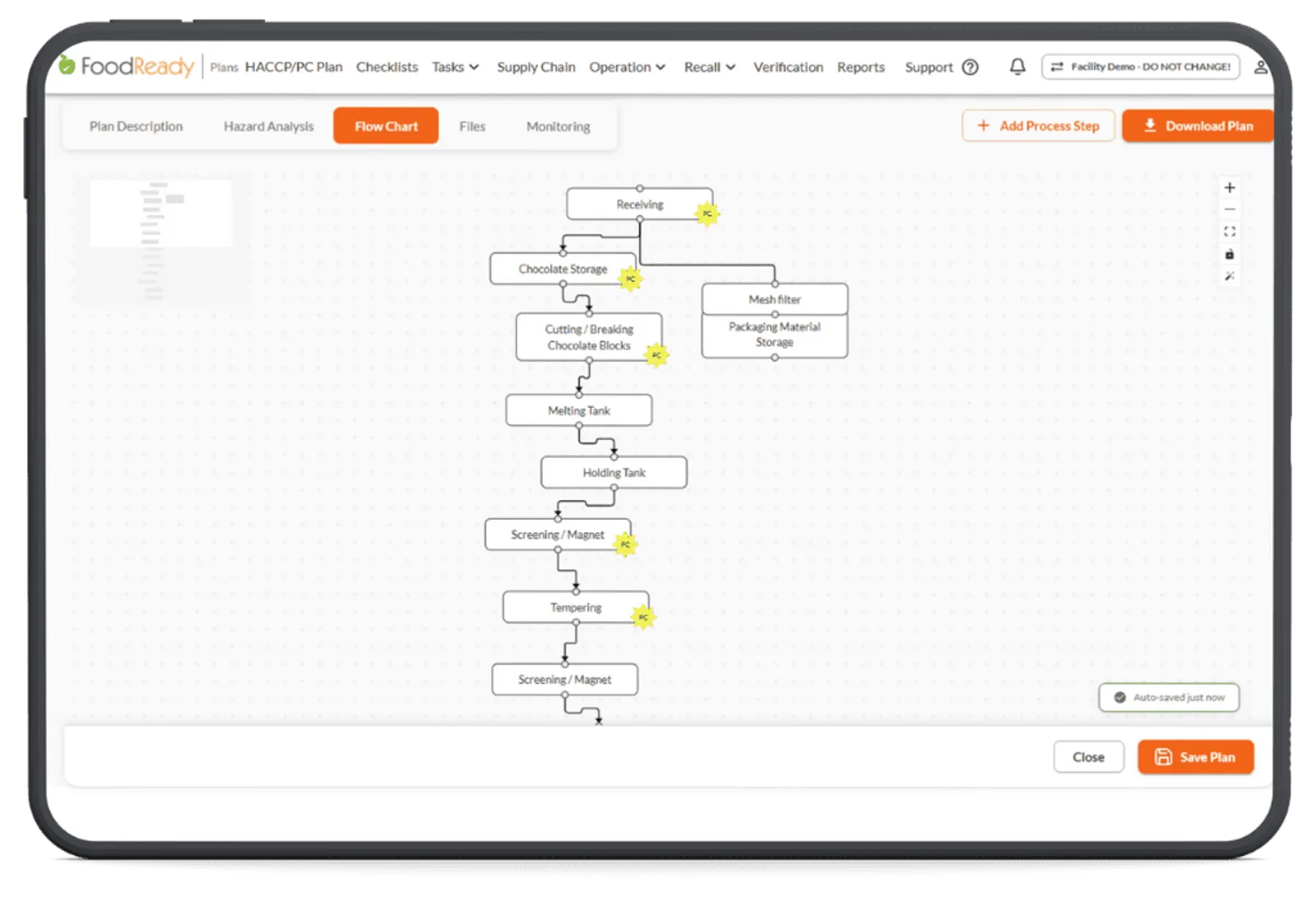
Example chocolate manufacturing process flow
- Receive cocoa, sugar, dairy & packaging (Prerequisite)
- Receive nuts, inclusions & flavors (Prerequisite)
- Cocoa / ingredient supplier approval (PC-1 · Supplier / Salmonella)
- Raw material storage & segregation (PC-2 · Allergen control)
- Roast / validated lethality step (GMP control)
- Refine / conche / heat process (CCP-1 · Lethality)
- Temper & add inclusions (Allergen SOP)
- Mold / enrobe / cool (GMP control)
- Package & label verification (Allergen SOP)
- Metal detection & finished-product release (CCP-2 · Foreign material)
Chocolate hazard analysis and critical limits
The examples below focus on hazards commonly considered in chocolate manufacturing. Actual preventive controls and critical limits must be validated for your ingredients, equipment, process, product format, and facility.
| process step | hazard | type | control measure | critical limit |
|---|---|---|---|---|
| Cocoa / ingredient receiving — PC-1 | Salmonella or other pathogens in cocoa, milk powders, nuts, or other low-moisture ingredients | Biological | Approved suppliers, ingredient specifications, COA review, and validated lethality where required | Meet approved supplier and microbiological specifications (e.g., Salmonella: absent in 25 g; yeast & mold within specification limits) |
| Roasting / lethality — CCP-1 | Survival of Salmonella due to an inadequate validated kill step | Biological | Apply a validated time-temperature process appropriate to the cocoa or ingredient matrix | ≥75°C (167°F) for ≥15 seconds or validated equivalent |
| Allergen handling — PC-2 | Undeclared milk, peanuts, tree nuts, soy, wheat, sesame, or other allergens from formulation or cross-contact | Chemical | Segregation, line clearance, validated cleaning, rework control, and approved label verification | Correct allergen profile and label for every batch / SKU |
| Post-lethality handling | Environmental recontamination with Salmonella in a low-moisture ready-to-eat process | Biological | Dry sanitation, hygienic zoning, moisture control, environmental monitoring, and controlled traffic | Managed through validated sanitation and environmental monitoring program |
| Tempering / cooling | Process deviation affecting product quality, stability, or downstream control effectiveness | Chemical | Monitor product-specific tempering and cooling parameters | Operate within validated product-specific temperature parameters |
| Metal detection — CCP-2 | Metal fragments from equipment wear, maintenance, or processing | Physical | Validated metal detector or equivalent foreign-material control | Detector meets validated sensitivity for ferrous, non-ferrous, and stainless steel |
| Packaging integrity | Contamination or quality loss due to compromised packaging | Chemical | Inspect packaging, seal integrity, and correct storage conditions | Seals intact; packaging meets specification; storage per requirements |
| Batch release — CCP-3 | Release of product that fails microbiological, quality, or other specification testing | Chemical | Hold-and-release program, lab testing (micro, moisture, aw, foreign material), and full traceability | Release only after all test results meet specifications and regulatory requirements |
Prerequisite programs that support the chocolate HACCP plan
A chocolate HACCP plan works best on top of strong CGMPs and prerequisite programs, especially supplier approval, allergen control, dry sanitation, maintenance, traceability, and employee practices.
Personnel
Hygiene, health reporting, and training practices.
Sanitary operations
Cleaning, sanitizing, and pest control routines.
Sanitary facilities
Water, plumbing, and hand washing controls.
Equipment & utensils
Food contact surface design and upkeep.
Processes & controls
Raw material, operation, and storage controls.
Plant & grounds
Facility layout and grounds maintenance.
Defect action levels
Limits for natural or unavoidable defects.
Warehousing & distribution
Storage and transport under safe conditions.
Logs, SOPs, and chocolate supply chain documents
Monitoring records should capture actual observed values such as roast time and temperature, metal detector checks, allergen changeover verification, and sanitation results at the time of observation.
Logs & records
Evidence that the plan is running every day.
- Raw materials and receiving log
- Freezer and thawing log
- Tempering and cooling log
- Metal detector verification log
- Corrective action forms
- Employee training and illness log
Standard operating procedures
Repeatable steps that mitigate hazards.
- Calibrating thermometers and process sensors
- Dry cleaning and sanitation procedures
- Cleaning and sanitizing contact surfaces
- Preventing cross contamination
- Allergen control program
- Post-lethality hygienic handling
Supply chain documents
Controls that reach beyond your facility.
- Supplier food safety plans
- COAs and microbiological specifications
- Certificates of analysis
- Product specifications
- Allergen statements
- Supplier approval and traceability records
Who needs a chocolate HACCP plan
Chocolate manufacturers generally fall under FDA food-safety requirements. Your food safety plan should address hazards reasonably foreseeable in cocoa, dairy, nuts, inclusions, packaging, and the production environment.
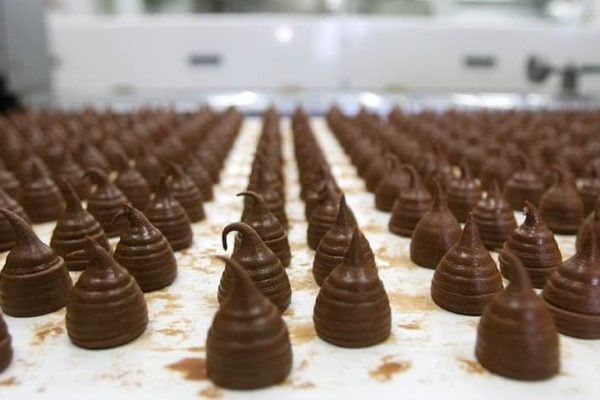
Small-batch and artisan
Chocolate makers and confectionery kitchens
Operations producing bars, truffles, molded chocolates, coated products, or other confections for direct sale. Even when HACCP is voluntary, a structured hazard analysis strengthens allergen, sanitation, supplier, and process controls.
- FDA CGMPs · state and local food manufacturing requirements
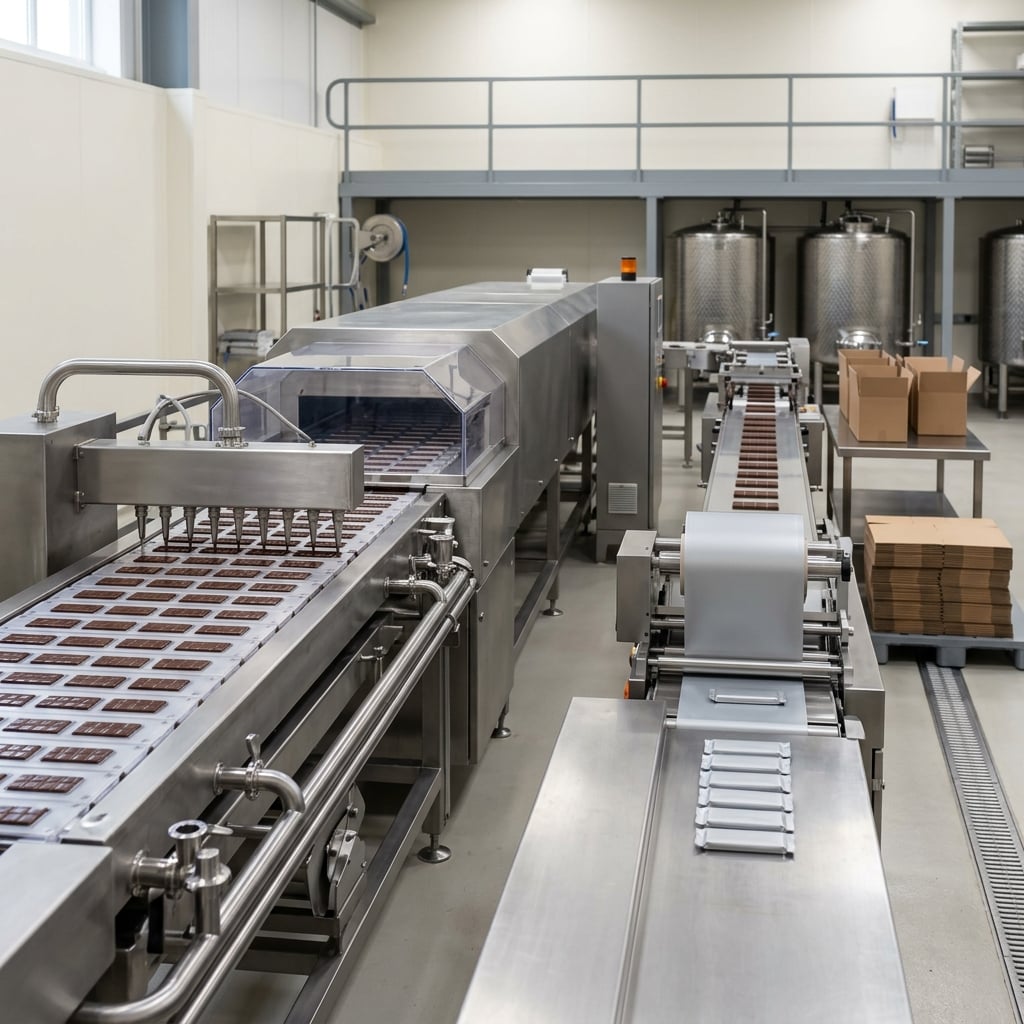
Manufacturing and wholesale
Chocolate manufacturers and co-packers
Facilities manufacturing chocolate or chocolate-containing products for wholesale distribution should integrate HACCP principles with their FSMA food safety plan, including preventive controls where hazards require them.
- FSMA Preventive Controls for Human Food · 21 CFR Part 117
Additional components for full compliance
These components are recommended to meet state and federal rules alongside your HACCP plan.
RECALL PLAN
Written recall plan
Under FSMA Preventive Controls for Human Food, a written recall plan is required when a hazard analysis identifies a hazard needing a preventive control.
A recall removes an adulterated, misbranded, or violative product from the market before it reaches consumers.
Verification & validation
Verification and validation
Verification confirms the plan is followed correctly each day across supply chain, sanitation, allergen, and critical controls.
Validation confirms the plan rests on sound science that is adequate to control the identified hazards.

Dave Seddon
Every FoodReady HACCP template is built and reviewed by practicing food safety professionals, then aligned to current FDA guidance. This sushi plan follows the seafood hazards and controls that auditors expect to see, so you start from a defensible baseline rather than a blank page.
- SQF Lead Auditor
- FDA Seafood HACCP
- SOC 2 Type II platform
Chocolate HACCP, answered
Does chocolate manufacturing require a HACCP plan?
Chocolate is not covered by a commodity-specific federal HACCP rule like seafood or juice. Many manufacturers still use HACCP principles as part of their food safety system, while facilities subject to FSMA generally must comply with 21 CFR Part 117 requirements for CGMPs, hazard analysis, and risk-based preventive controls.
What are the main food safety hazards in chocolate manufacturing?
Common hazards include Salmonella in cocoa and other low-moisture ingredients, undeclared allergens, post-lethality environmental contamination, and foreign material such as metal. The exact hazard analysis depends on your ingredients, process, equipment, and product type.
Is Salmonella a concern in chocolate even though chocolate is low moisture?
Yes. Low water activity limits pathogen growth but does not necessarily eliminate pathogens already present. Chocolate and other low-moisture ready-to-eat foods therefore require strong supplier, lethality, sanitation, and post-process contamination controls where applicable.
What allergens should a chocolate HACCP plan address?
Chocolate facilities frequently handle milk, peanuts, tree nuts, soy, wheat, and sesame, depending on formulations and inclusions. Your program should address ingredient approval, segregation, rework, cleaning, line clearance, label control, and cross-contact prevention.
Can I edit the template for bars, truffles, or filled chocolates?
Yes. The template is a starting point. You can adjust process steps, hazards, preventive controls, critical limits, monitoring, corrective actions, verification activities, and records to match your specific chocolate products and facility.
Start your Chocolate HACCP plan today
Begin with a reviewed chocolate manufacturing template, customize hazards and controls to your process, and generate audit-ready documentation with the FoodReady plan builder.
Speak with our Expert Consultants
15–30 minutes. We map FoodReady to your process, plug in your real HACCP plan, and show you the auditor view before the call ends.