

Catering HACCP plan templates & examples for compliance
Control cooking, cooling, reheating, hot holding, cold holding, allergens, transport, and service with a reviewed, editable catering HACCP template.
Create a USDA-approved HACCP plan for food catering services.
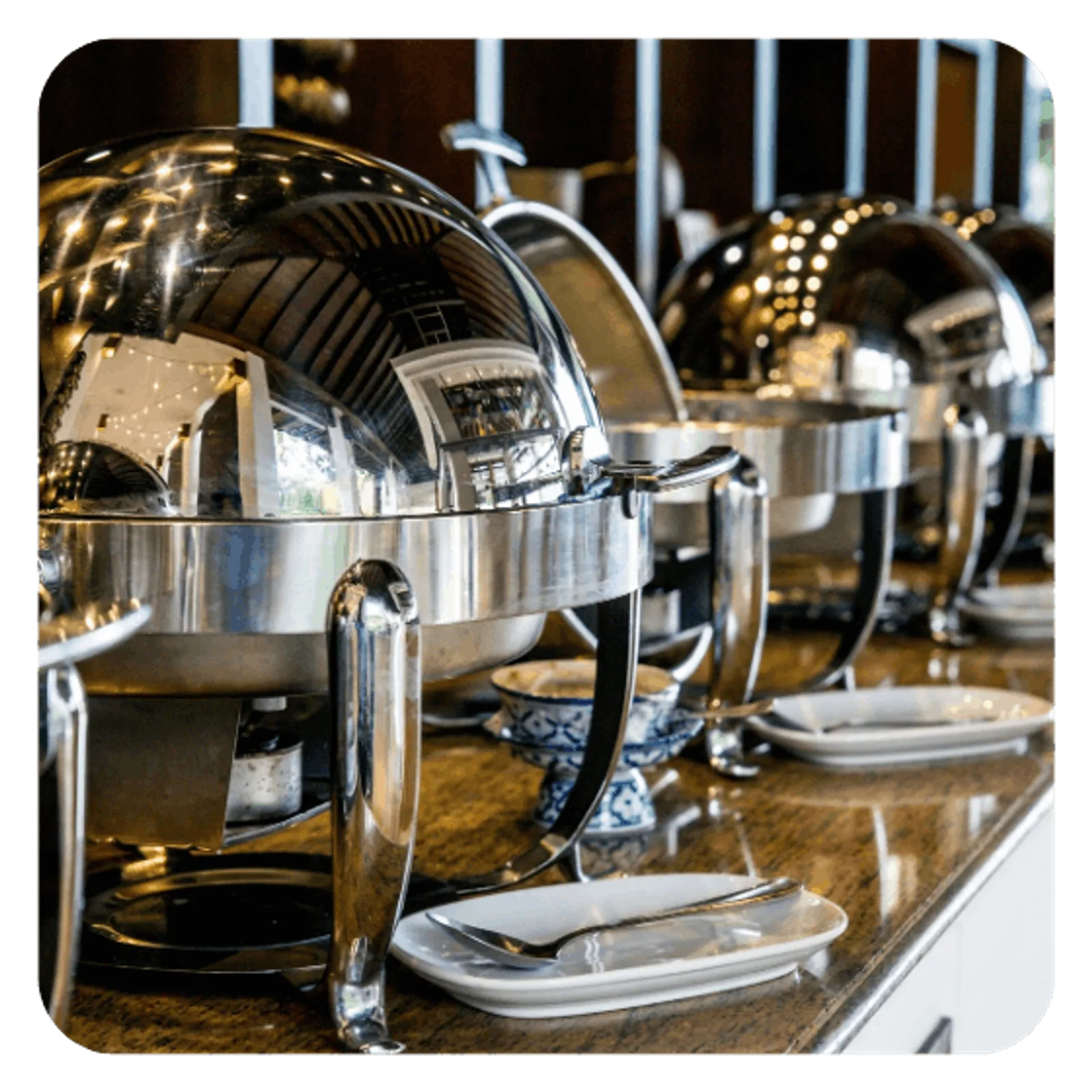
Catering HACCP templates you can start from
Choose the template closest to your service model, then customize hazards, critical limits, monitoring, and corrective actions for your menu and operation.
Event & banquet catering
For weddings, corporate events, buffets, and banquets with batch cooking, holding, transport, and on-site service.
Institutional meal service
For schools, healthcare, senior living, and other high-volume kitchens that need repeatable time-temperature and allergen controls.
Commissary & off-site catering
For centralized kitchens producing food for delivery, satellite service, mobile events, or remote venues.
Example catering process flow
- Receive ingredients (Supplier control)
- Cold / dry storage (GMP control)
- Preparation (Hygiene / Allergen SOP)
- Cooking (CCP-1 · Pathogens)
- Cooling (CCP-2 · Pathogen growth)
- Reheating (CCP-3 · Pathogens)
- Hot / cold holding (CCP-4 · Time / temperature)
- Transport to venue (Protected transport)
- Setup & service (Service control)
- Allergen / label check (CCP-5 · Allergens)
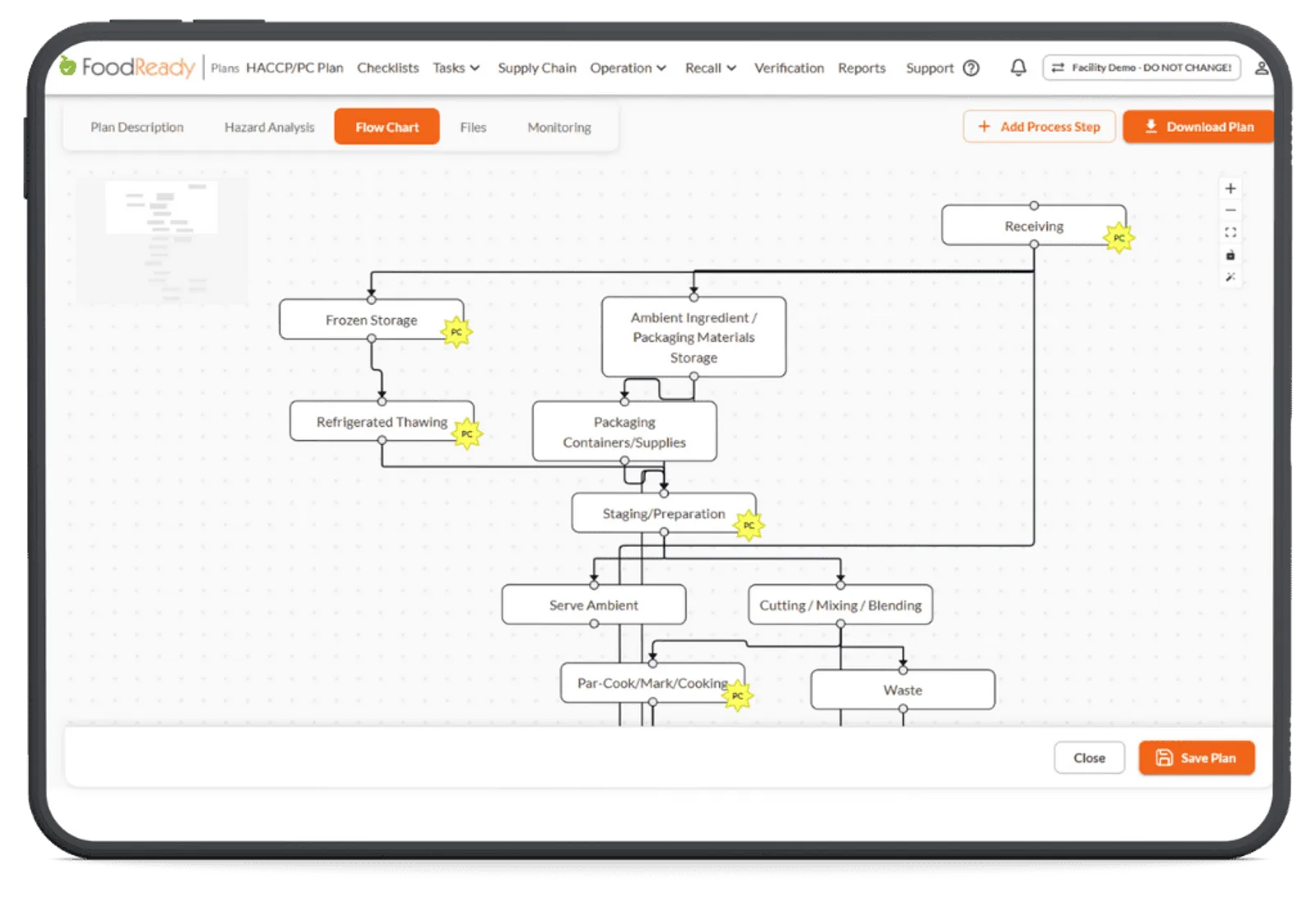
Catering hazard analysis and critical limits
Example controls below reflect common catering hazards. Your actual CCPs and limits should be validated against your menu, process, equipment, and local regulatory requirements.
| process step | hazard | type | control measure | critical limit |
|---|---|---|---|---|
| Cooking CCP-1 | Survival of pathogens in raw animal foods | Biological | Cook foods to the required minimum internal temperature for the specific food | ≥74°C (165°F) instantaneous, Example: poultry & stuffed foods |
| Cooling CCP-2 | Growth of spore-forming and other pathogens during slow cooling | Biological | Use shallow pans, smaller portions, rapid cooling equipment, or ice baths | 57°C (135°F) to 21°C (70°F) within 2 hrs; to ≤5°C (41°F) within 6 hrs total |
| Reheating CCP-3 | Survival or growth of pathogens in previously cooked TCS food | Biological | Rapidly reheat cooked and cooled food before hot holding | ≥74°C (165°F) for 15 sec within 2 hrs |
| Hot / cold holding CCP-4 | Pathogen growth from temperature abuse | Biological | Maintain approved hot or refrigerated holding temperatures and monitor routinely | Hot: ≥57°C (135°F) Cold: ≤5°C (41°F) |
| Preparation & service | Cross-contamination from hands, utensils, surfaces, raw foods, or the environment | Biological | Hand hygiene, separation, sanitized food-contact surfaces, dedicated utensils, and controlled workflow | Managed through hygiene, sanitation, and cross-contamination SOPs |
| Allergen verification CCP-5 | Undeclared allergens or allergen cross-contact | Chemical | Recipe control, allergen matrix, segregation, service identification, and final menu/label verification | Correct allergen information for every menu item / batch |
| Preparation / service | Glass, metal, hard plastic, or other foreign material | Physical | Visual inspection, equipment maintenance, glass and brittle plastic policy | No unacceptable foreign material detected |
Prerequisite programs that support the plan
A HACCP plan is not the whole food safety system. Good manufacturing practices must be in place first, in line with sanitary processing requirements.
Personnel
Hygiene, health reporting, and training practices.
Employee health & hygiene
Illness reporting, handwashing, glove use, and hygienic practices.
Cleaning & sanitation
Scheduled cleaning, sanitizer control, and food-contact surface verification.
Allergen management
Ingredient review, segregation, cleaning, communication, and service controls.
Temperature control
Calibrated thermometers and defined cooking, cooling, holding, and transport checks.
Supplier approval
Approved sources, receiving specifications, and product condition checks.
Transport & setup
Protected containers, temperature maintenance, clean vehicles, and safe event setup.
Pest & waste control
Waste handling, pest exclusion, and venue-specific protection practices.
Logs, SOPs, and supply chain documents
Monitoring records must capture the actual observed value, for example the exact temperature or pH, recorded at the time of observation.
Logs & records
Evidence that the plan is running every day.
- Receiving temperature log
- Cooking temperature log
- Cooling and reheating log
- Hot / cold holding log
- Transport temperature log
- Corrective action log
Standard operating procedures
Repeatable steps that mitigate hazards.
- Calibrating thermometers
- Cooling potentially hazardous foods
- Cleaning and sanitizing contact surfaces
- Employee illness and hand hygiene
- Allergen communication and cross-contact prevention
- Safe transport and event service
Supply chain documents
Controls that reach beyond your facility.
- Approved supplier list
- Ingredient and allergen specifications
- Event menu and production sheet
- Transport / delivery checklist
- Venue setup checklist
- Traceability and recall records
Who needs a catering HACCP plan
Catering operations handle food across preparation, storage, transport, setup, and service. HACCP principles help control the foodborne illness risks that increase when meals are produced in volume or held before service.
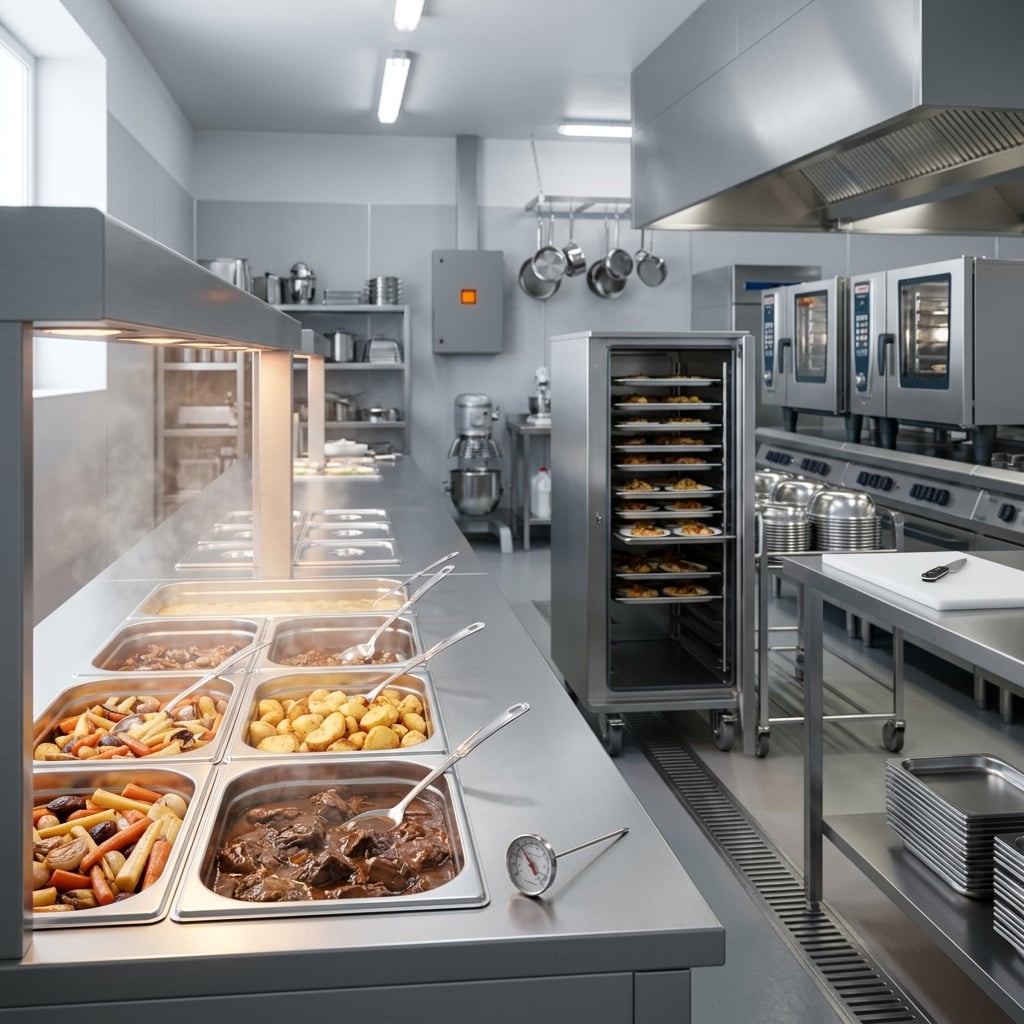
Event, banquet, and institutional kitchens
Operations preparing and serving food at the same facility can use a HACCP-based system to manage cooking, cooling, reheating, holding, allergens, sanitation, and employee practices.
- FDA Food Code · state and local food service requirements
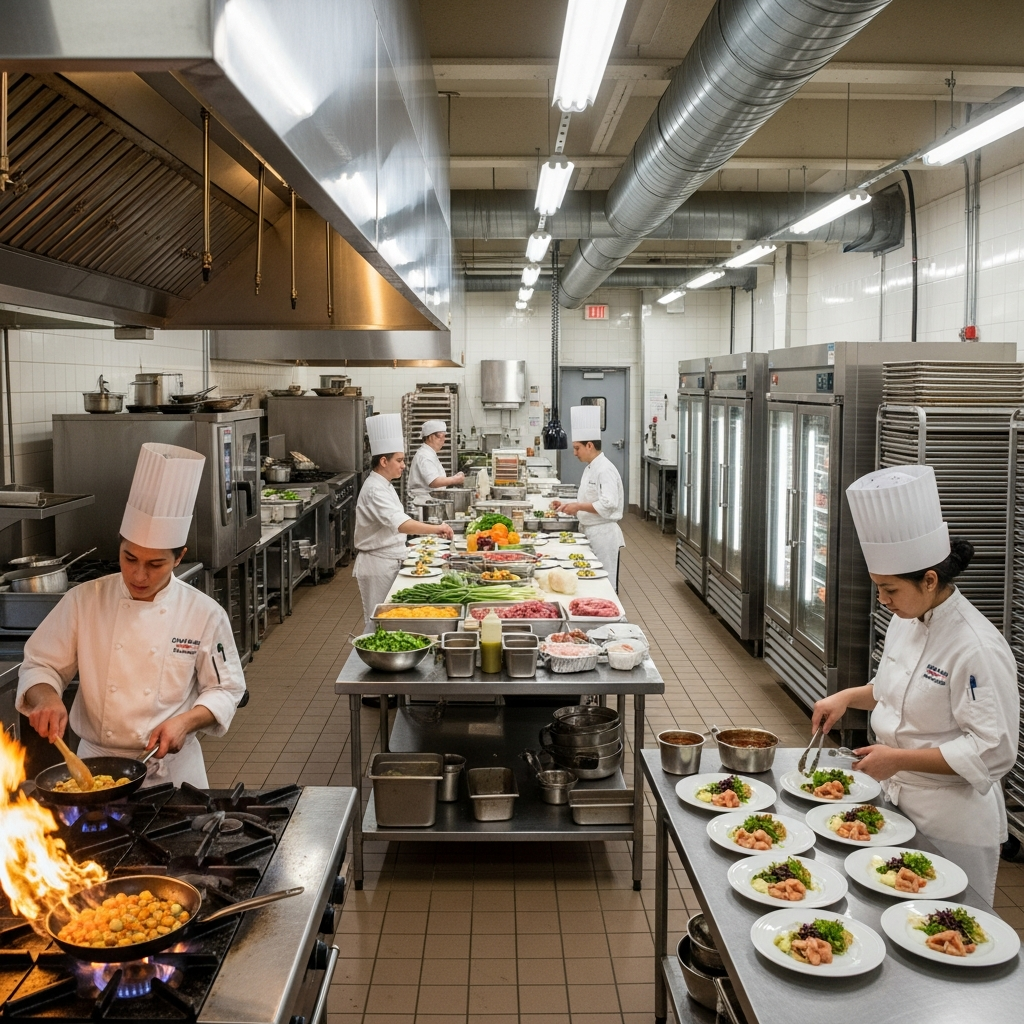
Commissaries and transported meal service
Businesses preparing food in a commissary and transporting it to another location need documented controls for time and temperature, protected transport, setup, service, and traceability.
- FDA Food Code model · local permitting requirements
Additional components for stronger catering compliance
These elements help turn a HACCP plan into a practical food safety management system that works during prep, transport, setup, and service.
Event control
Event-specific food safety plan
Document the menu, preparation site, transport method, service time, holding equipment, allergen communication, and responsible employees for each event.
This is especially useful for off-site catering where the food moves outside the controlled kitchen environment.
Verification & corrective action
Verification and corrective action
Review temperature records, calibration checks, sanitation records, and allergen controls to confirm the system is being followed.
Define what happens when a critical limit is missed, including product evaluation, disposition, root-cause correction, and documentation.

Dave Seddon
Every FoodReady HACCP template is built and reviewed by practicing food safety professionals, then aligned to current FDA guidance. This sushi plan follows the seafood hazards and controls that auditors expect to see, so you start from a defensible baseline rather than a blank page.
- SQF Lead Auditor
- FDA Seafood HACCP
- SOC 2 Type II platform
Catering HACCP, answered
Does every catering business need a HACCP plan?
Requirements vary by state and local jurisdiction. HACCP may be voluntary for many food service operations, but a written plan can be required for certain specialized processes or variances. Even when it is not legally mandatory, HACCP principles provide a structured way to control catering food safety risks.
What are common critical control points in catering?
Common examples include cooking, cooling, reheating, hot and cold holding, and in some operations allergen or specialized process controls. The exact CCPs depend on the menu and process flow.
What temperatures should a catering HACCP plan control?
Typical controls include product-specific cooking temperatures, cooling from 135°F to 70°F within 2 hours and to 41°F or below within 6 hours total, hot holding at 135°F or above, and cold holding at 41°F or below. Always confirm the limits adopted by your jurisdiction.
How should off-site catering control food during transport?
Use clean, food-protective containers and equipment capable of maintaining required temperatures. Record temperatures at dispatch and arrival, minimize transport time, protect food from contamination, and define corrective actions for temperature deviations.
Can I customize this template for my menu and events?
Yes. Adjust the process flow, hazards, CCPs, critical limits, logs, allergen controls, transport steps, and verification activities to match your actual menu, equipment, service model, and local requirements.
Start your catering HACCP plan today
Begin with a reviewed catering template, customize your process flow and control points, and organize audit-ready food safety documentation with FoodReady.
Speak with our Expert Consultants
15–30 minutes. We map FoodReady to your process, plug in your real HACCP plan, and show you the auditor view before the call ends.